
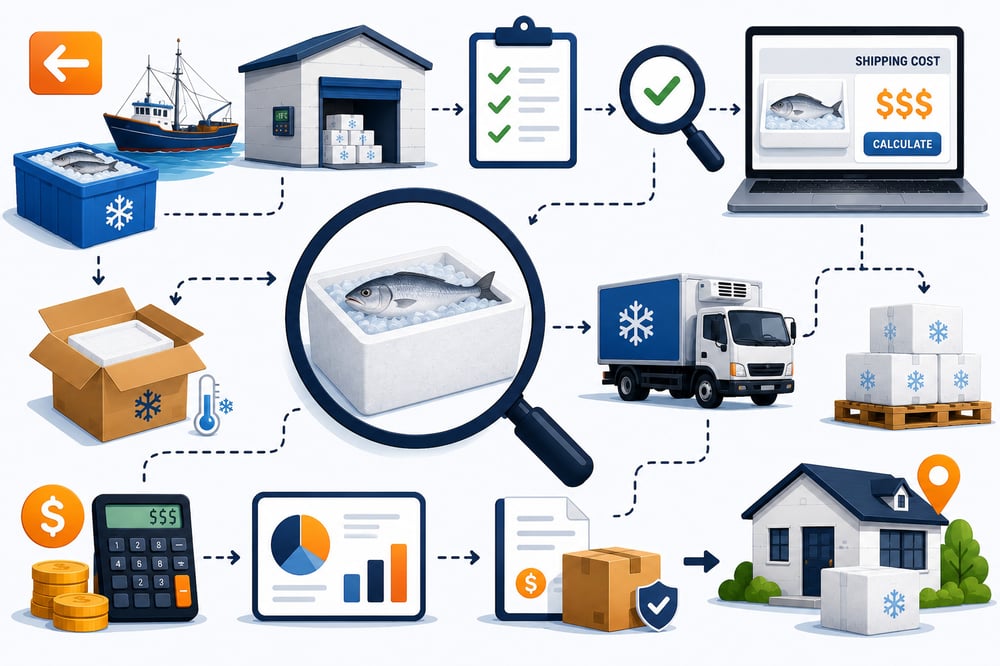
Shipping frozen fish domestically runs $30–$150+ per order, depending on weight, destination zone, packaging requirements, and how fast the shipment needs to arrive.
A 5 lb order of frozen salmon fillets shipping overnight in an insulated box with dry ice typically costs $45–$85. The same order on 2-day service runs $35–$65.
Ground service is rarely viable for frozen fish, and most shipments require overnight or 2-day air to maintain safe temperatures throughout transit.
Shipping Frozen Fish Rates by Service Level
Frozen fish shipping costs are dominated by two variables that don’t apply to standard parcel freight: the requirement for expedited service and the cost of temperature-maintaining packaging.
Here’s what domestic shipping looks like across service levels:
| Service Level | Transit Time | Estimated Cost | Best For |
| Overnight/Next-Day Air | 1 business day | $45–$150+ | All frozen fish shipments; only truly reliable option |
| 2-Day Air | 2 business days | $35–$85 | Shorter routes with insulated packaging and sufficient dry ice |
| Ground | 3–7 business days | $18–$45 | Not recommended for frozen fish |
| LTL Freight (bulk) | 3–5 business days | $150–$600+ | Wholesale or bulk frozen seafood shipments |
Variables That Impact Your Final Invoice
Frozen fish shipping doesn’t price like standard parcel freight. Temperature terms, packaging weight, and carrier surcharges all stack on top of the base rate before the label prints.
Packaging weight and materials are the first cost driver most brands underestimate. An insulated shipping box, sufficient dry ice or gel packs, and void fill can add 2–5 lbs to the packaged weight.
Dry ice costs $1–$3 per lb and is consumed during transit. Gel packs are an alternative for 2-day shipments.
Carrier zone distance determines how much of your per-shipment cost is geography. Overnight air rates are less zone-sensitive than ground, but coast-to-coast shipments still run $20–$40 more than regional moves on the same service level.
Declared value and insurance matter more for frozen fish than for most food categories. A 10 lb order of premium bluefin tuna or king crab can be worth $150–$400. Standard carrier liability covers $100 by default.
How to Package Frozen Fish for Shipping
Packaging is where most frozen fish shipping failures originate. An underpacked shipment that arrives thawed costs the brand the product value, the reshipment cost, and often the customer relationship.
Follow these steps before the label goes on:
- Use an insulated shipping box with walls at least 1.5 inches thick.
- Vacuum-seal fish portions individually before freezing. This reduces the surface area exposed to temperature fluctuation and extends the safe transit time
- Pre-chill the insulated box before packing by placing dry ice or frozen gel packs inside for 30–60 minutes before loading the product
- Layer dry ice on top of the product, not underneath; cold air sinks, and top placement maintains temperature longer
- Use 5–10 lbs of dry ice for overnight shipments; 8–15 lbs for 2-day shipments, depending on ambient temperature at origin and destination
- Seal all box seams with pressure-sensitive tape rated for cold temperatures; standard tape loses adhesion below freezing
- Label the outer box clearly with “Keep Frozen,” “Perishable,” and dry ice hazmat labels if applicable
For brands handling temperature-controlled fulfillment at volume, standardizing these packaging specs across every frozen fish SKU is what keeps spoilage rates and reshipment costs predictable at scale.
How to Cut Frozen Fish Shipping Costs at Scale
Most seafood brands overpay on frozen fish shipping because they’re treating every order as a one-off move rather than building a repeatable, optimized shipping method.
- Ship earlier in the week. Monday through Wednesday shipments arrive before the weekend without requiring Saturday delivery surcharges. Thursday and Friday shipments either need Saturday delivery ($16–$20 extra per package) or sit in a carrier facility over the weekend.
- Right-size your packaging. Every unnecessary inch of box dimension adds billable weight at overnight air rates. A packaging audit that reduces average box dimensions by 2 inches on each side can save $3–$8 per shipment on dimensional weight alone.
- Consolidate orders into larger shipments where possible. Wholesale and bulk orders shipped via LTL freight on refrigerated trucks cost significantly less per pound than individual overnight parcels. A 100 lb wholesale order via refrigerated LTL runs $150–$300 total; far below what 10 individual 10 lb overnight parcels would cost.
- Position inventory closer to your customer base. A seafood brand shipping from one coast pays overnight air rates on every cross-country order. Splitting inventory between an East Coast and West Coast fulfillment center reduces zone distance on roughly 40% of orders, cutting overnight air costs without changing service level.
Stop Losing Margin to Spoilage and Surcharges
Frozen fish shipping is unforgiving. A packaging decision made at the pack station determines whether a $200 seafood order arrives in perfect condition or generates a replacement claim, a customer service escalation, and a lost repeat purchase.
Fulfyld handles temperature-controlled fulfillment for food brands, with cold storage and pre-negotiated carrier rates for overnight and 2-day fulfillment services.
Talk to a Fulfyld specialist about your frozen fish shipping volume and what a temperature-controlled fulfillment operation looks like for your brand.
FAQs
How much does it cost to ship frozen fish overnight?
Overnight shipping for a standard 5–10 lb frozen fish order typically runs $45–$150 depending on carrier, zone, and packaging weight.
How much does it cost to ship frozen fish via 2-day shipping?
Two-day air shipping for a 5–10 lb frozen fish order typically runs $35–$85, depending on carrier and zone.
Can you ship frozen fish via USPS?
Yes, USPS accepts frozen fish shipments via Priority Mail Express, which offers overnight delivery to most domestic addresses.
How much dry ice do you need to ship frozen fish?
Overnight shipments typically require 5–10 lbs of dry ice, depending on ambient temperature at origin and destination.
What is the cheapest way to ship frozen fish?
USPS Priority Mail Express is often the cheapest overnight option for frozen fish under 10 lbs, particularly because USPS doesn’t charge a dry ice hazmat surcharge.
Is it legal to ship frozen fish to all states?
Shipping frozen fish is legal in most U.S. states, but certain species and product types face state-level restrictions. Some states restrict the shipment of live shellfish or require specific health certifications for certain seafood species.
Can a 3PL handle frozen fish fulfillment?
Yes, but not all fulfillment partners are equipped for it. Frozen fish requires cold storage at or below 0°F, temperature-controlled pick and pack environments, dry ice sourcing and handling capabilities, and carrier relationships with overnight and 2-day air services.