

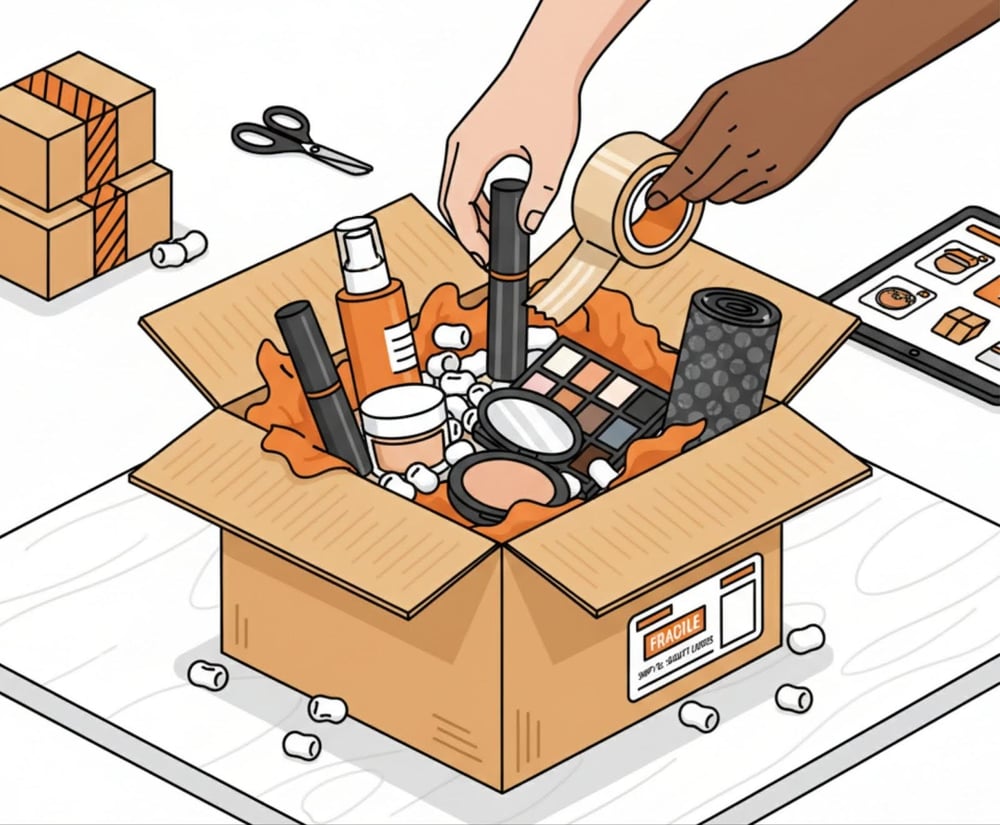
Did you know that improper packaging is one of the top reasons cosmetic products arrive damaged or leaking?
Whether you’re an e-commerce seller or a beauty enthusiast, learning how to package cosmetic products correctly is essential for protecting your products, reducing returns, and maintaining customer satisfaction.
In this guide, you’ll discover proven techniques and best practices to ensure your cosmetics reach their destination safely and beautifully presented.
What You’ll Learn
- Essential Materials & Tools
- Step-by-Step Packaging Process
- Special Considerations by Product Type.
- Shipping Regulations & Compliance
Step-by-Step Guide to Packaging Cosmetics for Shipping
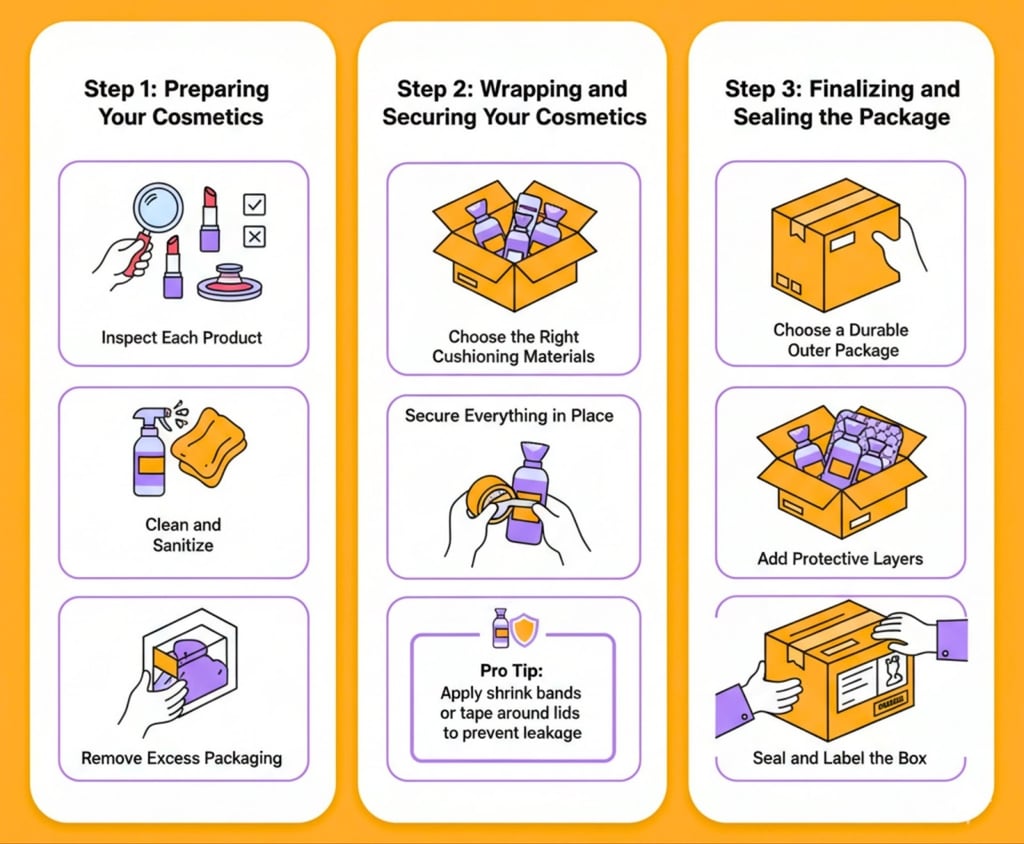
Now that you have the right materials and tools, it’s time to package your cosmetics safely. Proper packaging keeps your products intact while preserving their quality and customer trust.
Here’s a detailed step-by-step guide to help you protect your cosmetics throughout their shipping journey.
Step 1: Preparing Your Cosmetics for Packaging
Before you begin wrapping, preparation is key. Taking the time to inspect, clean, and streamline your products ensures that your cosmetics are in perfect condition and ready for shipment.
This step also helps prevent contamination and keeps your packaging efficient and professional.
Inspect Each Product
Start by examining every cosmetic item for defects, leaks, or packaging issues.
- Check for cracked containers, loose lids, or damaged labels.
- Replace any products that look compromised.
- Confirm all labels are legible and securely applied to meet compliance standards.
Clean and Sanitize
Keeping your products clean helps protect your brand’s image and the customer’s safety.
- Wipe away any dust, fingerprints, or residue.
- Use gentle, non-reactive cleaning agents.
- Sanitize where necessary to maintain product integrity and hygiene.
Remove Excess Packaging
Bulky or unnecessary wrapping can drive up shipping costs and risk product damage.
- Remove plastic seals or shrink wraps that don’t add protection.
- Keep packaging minimal but secure.
- Focus on efficiency and eco-friendly presentation.
Pro Tip: Streamlined cosmetic packaging not only saves space and cost; it also aligns your brand with sustainable, minimalist values.
Step 2: Wrapping and Securing Your Cosmetics
Once your products are ready, the next step is protection. Cosmetics can be delicate, especially those in glass bottles or compact containers. Proper wrapping and securing techniques will shield your items from shocks, leaks, or breakage during transit.
Choose the Right Cushioning Materials
The right materials make all the difference in shipping safety.
- Use bubble wrap, packing peanuts, or air pillows for cushioning.
- Wrap each product individually to avoid scratches or collisions.
- Pay extra attention to fragile or liquid items like perfumes and serums.
Secure Everything in Place
Even with wrapping, movement inside the box can cause damage.
- Arrange items tightly within the inner packaging.
- Fill gaps with soft filler material to prevent shifting.
- Seal everything with high-quality tape to keep items locked in position.
Pro Tip: For liquid cosmetics, apply shrink bands or tape around lids to prevent accidental leakage during shipping.
Step 3: Finalizing and Sealing the Package
With your cosmetics securely wrapped, it’s time to finish strong. The final step is all about choosing the right outer packaging, adding protection layers, and properly sealing and labeling your shipment for safe delivery.
Choose a Durable Outer Package
Your outer box is the first line of defense against impact.
- Opt for corrugated cardboard boxes or padded mailers designed for fragile goods.
- Select a box that fits your items snugly while leaving room for padding.
- Avoid oversized boxes to reduce movement and shipping costs.
Add Protective Layers
Layering adds an extra cushion of security.
- Place wrapped cosmetics in the center of the package.
- Surround them with filler materials on all sides.
- Shake the box gently. If anything shifts, add more cushioning.
Seal and Label the Box
Sealing and labeling correctly ensures your package stays closed and handled properly.
- Reinforce seams with heavy-duty packing tape.
- Clearly label with:
- Recipient’s address
- Return address
- “Fragile” or “Handle with Care” stickers if needed
- Consider branded tape or inserts for a polished presentation.
Pro Tip: A clean, well-labeled, and branded box elevates the customer unboxing experience, turning safe packaging into a marketing moment.
Essential Materials and Tools for Effective Cosmetic Packaging
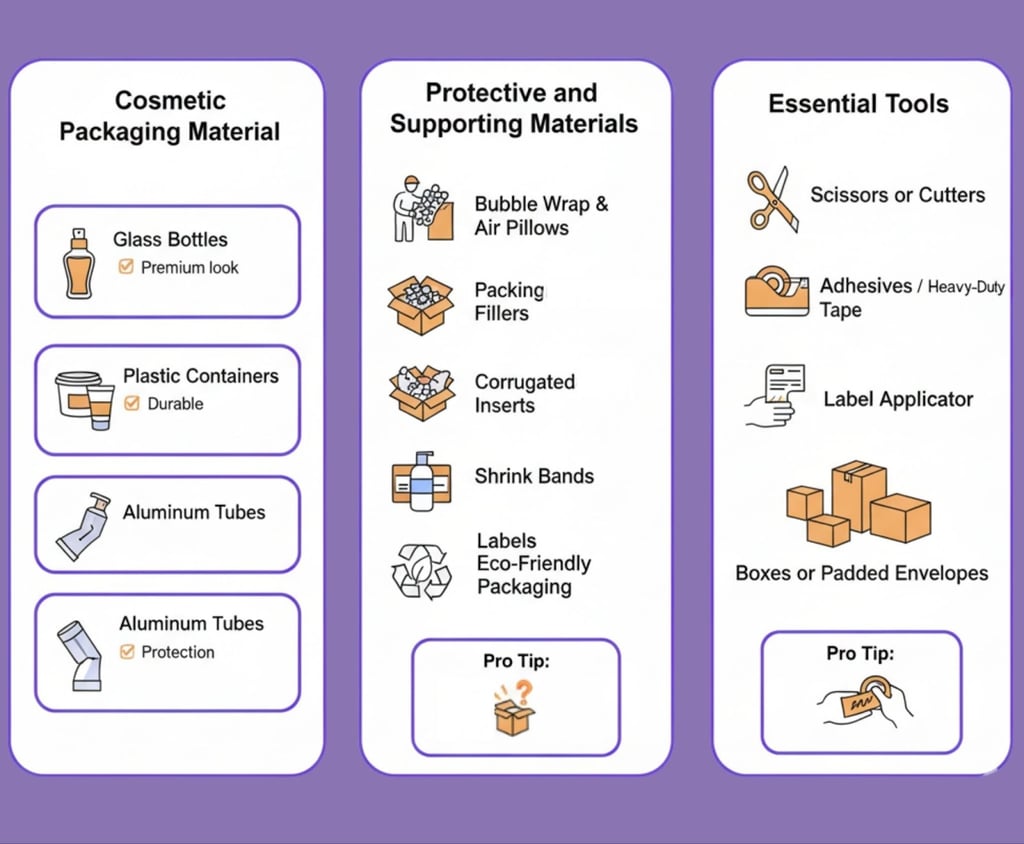
Before you begin the packaging process, it’s crucial to gather all the materials and tools you’ll need. The right combination ensures your cosmetics are not only secure during transit but also presented professionally.
Having everything ready streamlines your workflow and minimizes packaging errors, key to maintaining quality and customer satisfaction.
Choosing the Right Cosmetic Packaging Material
The packaging material you choose will depend on your product’s texture, fragility, and sensitivity to environmental factors.
Proper material selection protects against leaks, contamination, and impact while enhancing your brand’s visual appeal.
1. Glass Bottles: Elegant but Fragile
Glass bottles are the hallmark of luxury cosmetic brands. They offer chemical resistance and preserve product purity but require careful handling.
✅ Pros: Premium look, resistant to contamination, ideal for serums and perfumes.
⚠️ Cons: Fragile and heavier, requiring extra protective layers.
Tip: Use bubble wrap, corrugated inserts, or molded pulp trays to cushion glass containers during transit.
2. Plastic Containers: Lightweight and Versatile
Plastic packaging offers affordability and flexibility, perfect for lotions, creams, and balms.
✅ Pros: Durable, lightweight, and available in various shapes and sizes.
⚠️ Cons: Some cosmetic ingredients may react with plastic.
Tip: Perform a compatibility test to ensure your formulas don’t degrade or cause discoloration when stored in plastic.
3. Aluminum Tubes: Durable and Convenient
Aluminum packaging combines protection and portability, making it a favorite for creams and gels.
✅ Pros: Shields against air, moisture, and UV light; lightweight and recyclable.
⚠️ Cons: May react with certain ingredients.
Tip: Verify ingredient compatibility to prevent chemical reactions or product instability.
4. Glass vs. Plastic vs. Aluminum: Choosing the Best Fit
Each packaging type has strengths:
- Glass: Ideal for premium, eco-conscious brands seeking elegance.
- Plastic: Great for affordability, variety, and durability.
- Aluminum: Perfect for protection and convenience on the go.
Your final choice should reflect your brand image, product type, and customer expectations.
Protective and Supporting Materials
Once you’ve chosen the main containers, supporting materials provide essential cushioning and stability. These prevent leaks, cracks, and product deformation during transit.
- Bubble Wrap & Air Pillows: Absorb shocks and protect fragile containers from impact.
- Packing Peanuts or Paper Fillers: Fill voids to prevent movement inside the box.
- Corrugated Inserts: Keep bottles separated and upright.
- Shrink Bands or Seals: Add tamper evidence and leak protection.
- Labels: Display ingredients, usage instructions, and branding. Choose waterproof and oil-resistant labels for durability.
- Eco-Friendly Packaging: Recyclable boxes, paper fillers, and biodegradable wraps enhance sustainability and appeal to green consumers.
Pro Tip: Always test your packaging by performing a gentle shake test. If anything moves or rattles, add more padding before sealing.
Essential Tools for Cosmetic Packaging
Having the right tools on hand ensures precision, consistency, and secure packaging, essential for brands learning how to package makeup for shipping professionally.
- Scissors or Cutters: Trim bubble wrap, tape, and inserts to the exact fit.
- Adhesives: Use glue or double-sided tape to attach labels or decorative elements.
- Heavy-Duty Tape: Reinforce seams and secure packages using water-activated or pressure-sensitive options.
- Label Applicator or Roller: Helps apply labels evenly for a professional finish.
- Boxes or Padded Envelopes: Choose sturdy, right-sized outer packaging to minimize shifting during transit.
Pro Tip: Use branded tape or custom inserts to elevate your unboxing experience while maintaining product safety.
Special Considerations for Different Types of Cosmetics
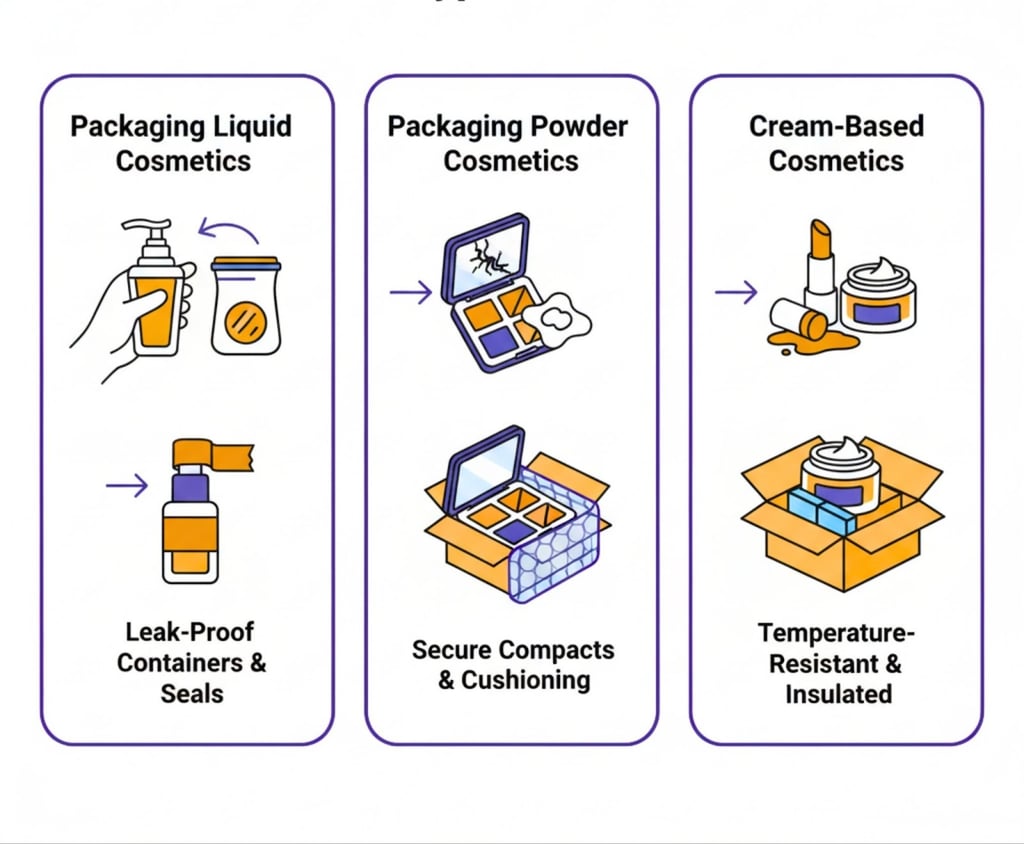
Not all cosmetics are created equal, and different types require specific packaging considerations to maintain their integrity during shipping.
Packaging Liquid Cosmetics
When packaging liquid cosmetics such as foundations, serums, or oils, it’s crucial to use leak-proof containers that are designed explicitly for liquids.
Additionally, placing the containers in waterproof bags or sealing them with a secure cap and adhesive can further prevent leakage during transit.
Packaging Powder Cosmetics
Fulfilling products like eyeshadows or blushes needs to be done with extra special care because items like these are prone to breakage and spills.
To protect them, use containers with secure lids and consider placing a piece of soft material, such as cotton or tissue paper, inside the container to prevent the powder from shifting.
Additionally, wrap the container in bubble wrap or place it in a protective case for added protection.
Packaging Cream-Based Cosmetics
Cream-based cosmetics, like lipsticks or creams, require careful packaging to prevent melting or damage due to temperature fluctuations.
It’s best to use sturdy, airtight containers made of materials that can withstand varying temperatures and place them in insulated packaging or cool packs if necessary.
And remember – proper packaging is only part of the process. How your products are stored, picked, and shipped matters just as much.
Partnering with a reliable makeup fulfillment provider ensures your cream-based cosmetics arrive in perfect condition every time.
Shipping Regulations for Safe and Compliant Cosmetic Packaging
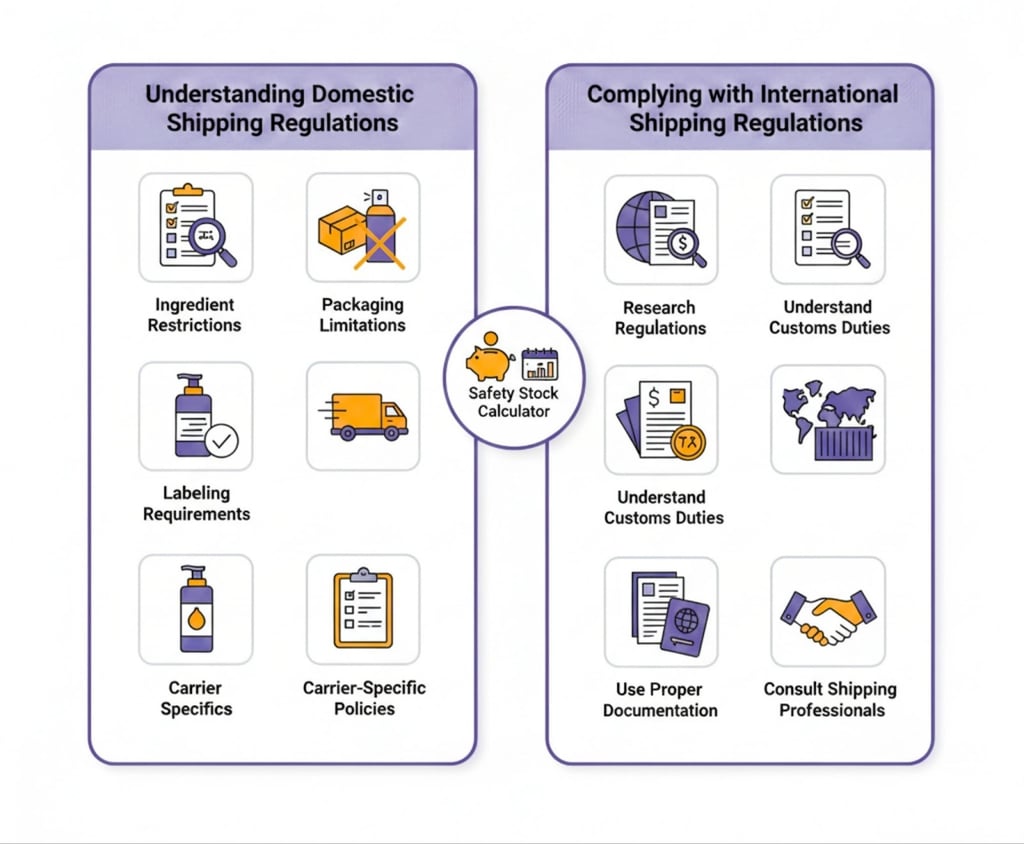
Understanding and complying with shipping regulations is essential for a smooth, hassle-free process when sending cosmetics to customers.
Whether you’re shipping locally or across borders, following packaging and labeling rules helps you avoid delays, fines, and product returns, while protecting your brand’s reputation.
Prevent stockouts during busy seasons by using our Safety Stock Calculator; it helps you calculate the ideal backup inventory for steady cosmetic order flow.
Understanding Domestic Shipping Regulations
When shipping cosmetics within your country, you must be aware of the regulations and standards set by local authorities or shipping carriers.
These rules ensure the safety of products during transit and compliance with national consumer protection laws.
Here’s what to keep in mind when preparing domestic shipments:
- Ingredient Restrictions: Some ingredients (like alcohol-based or flammable compounds) may require specific handling or packaging.
- Packaging Limitations: Certain shipping carriers restrict container sizes or types, especially for liquids and aerosols.
- Labeling Requirements: Always include clear product labels, ingredient lists, and safety warnings where necessary.
- Carrier-Specific Policies: Each courier may have unique packaging guidelines; check them before shipping to prevent rejection or delays.
Complying with International Shipping Regulations
If you plan to expand your business globally, international shipping introduces more complex rules. Each country has its own customs requirements and import restrictions for cosmetic goods, especially those containing chemicals, oils, or fragrances.
To ensure compliance and smooth customs clearance:
- Research Destination Regulations: Check if the destination country has restrictions on specific cosmetic ingredients or labeling formats.
- Understand Customs Duties: Some nations require declarations or taxes on cosmetic imports.
- Use Proper Documentation: Include invoices, product lists, and MSDS (Material Safety Data Sheets) if applicable.
- Follow Packaging Standards: Use secure, leak-proof containers that comply with international safety and transport laws.
- Consult Shipping Professionals: Work with a licensed export agent or fulfillment partner familiar with global cosmetic regulations.
Deliver Beauty, Not Breakage: Perfecting Your Cosmetic Shipping Process
Mastering how to package cosmetics protects your products, brand image, and customer trust. From materials to regulations, every detail matters.
As your business grows, managing packaging and logistics in-house can become overwhelming. That’s where a fulfillment partner like Fulfyld makes a difference.
With expertise in cosmetic and skincare fulfillment, Fulfyld manages storage, kitting, compliance, and shipping, all while preserving your brand’s premium presentation.Ready to simplify your cosmetic shipping process? Discover how Fulfyld’s eCommerce fulfillment services can help you scale confidently while keeping every shipment safe, compliant, and beautifully packaged.