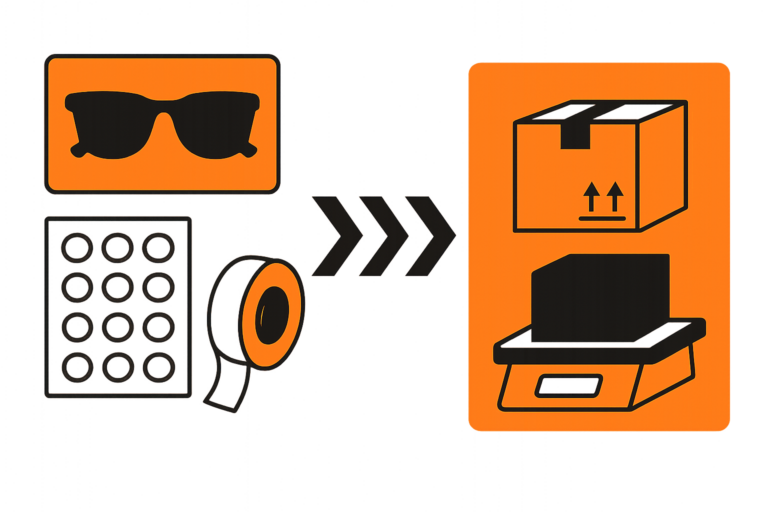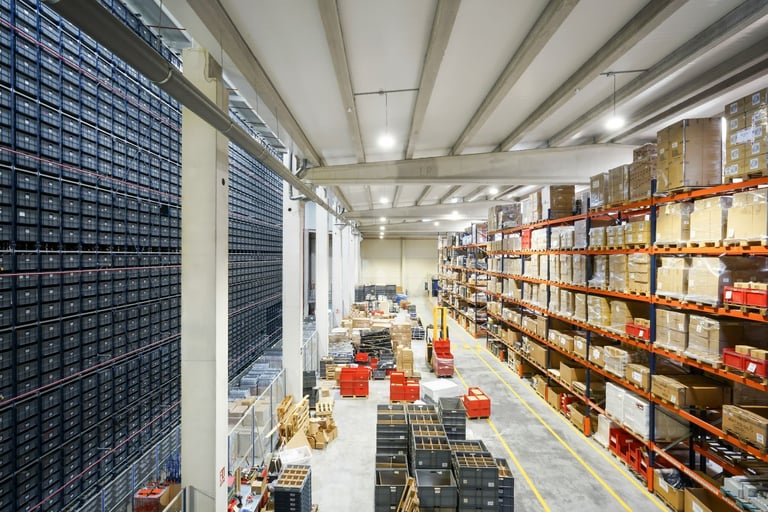

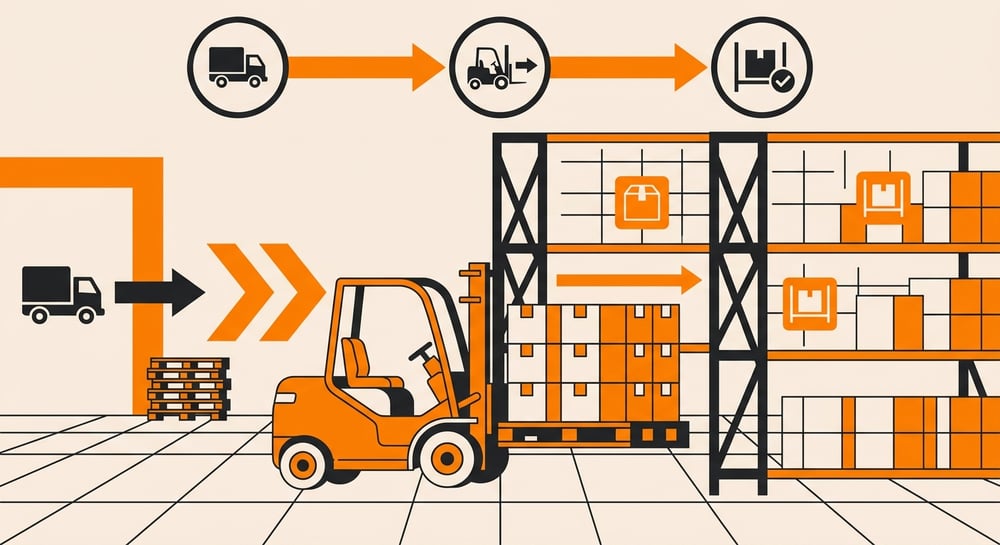
Quick answer: Putaway is the process of taking received inventory from the inbound dock and moving it to its designated storage location in the warehouse. It happens immediately after receiving, and it’s what makes inventory available for fulfillment. In a warehouse management system like Shipedge, putaway assigns each unit to a specific bin location so the system knows exactly where to send a picker when an order comes in.
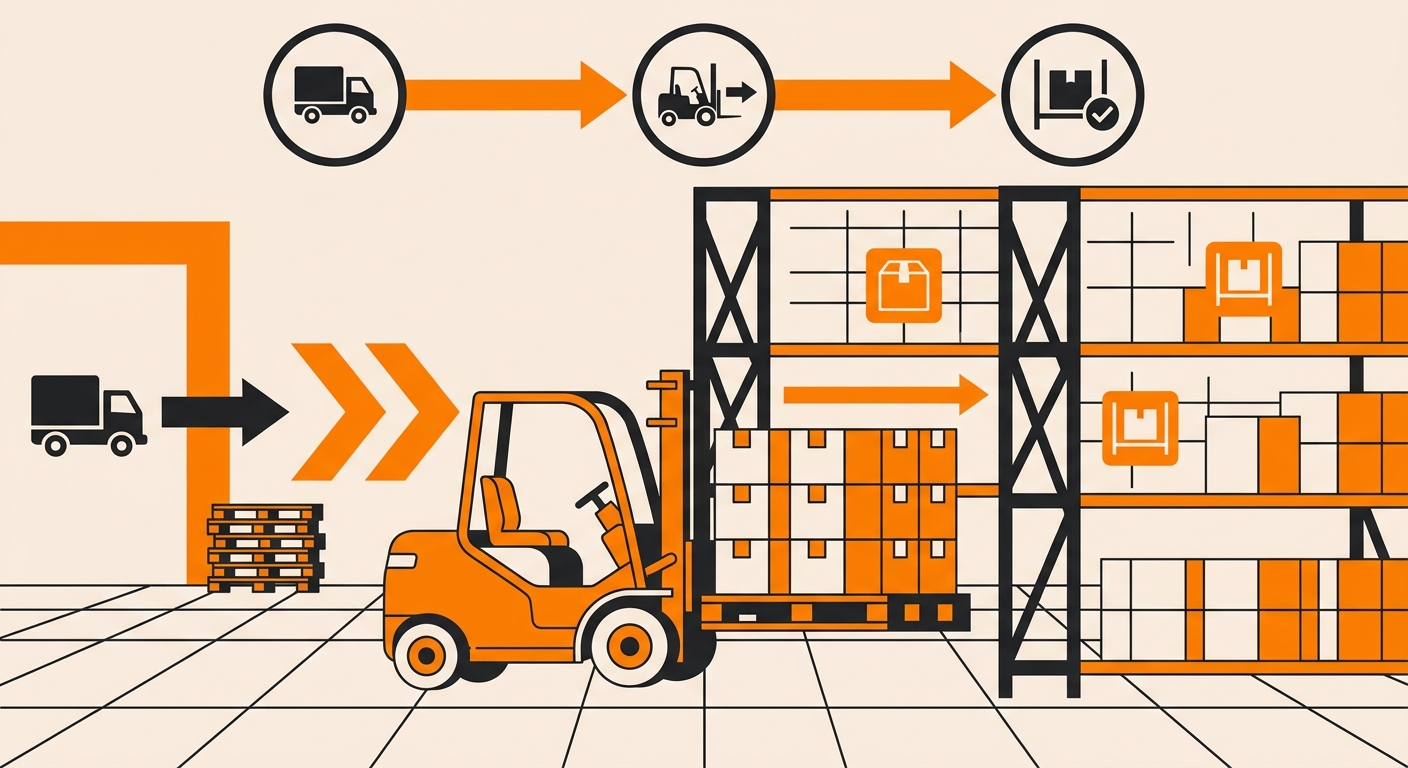
Why is Putaway Used in a Warehouse Context
Receiving and putaway are two distinct steps that are often discussed together but happen sequentially. Receiving is the process of verifying that incoming inventory matches what was expected.
Putaway is what happens next: taking that verified inventory off the receiving dock and placing it in its permanent or semi-permanent storage location within the warehouse.
Until putaway is complete, inventory exists in the system as received but is not yet in a pickable location. It can’t be included in a fulfillment order.
How the Putaway Process Works: Step-by-Step
The specifics vary by warehouse and WMS, but the general flow in a well-run 3PL operation looks like this:
Step 1: Inventory Is Received and Verified at the Dock
The receiving team unloads the freight, scans each unit or case against the replenishment record in the WMS, and confirms quantities. Any discrepancies, shorts, overages, or damage are noted before putaway begins.
Step 2: The WMS assigns a Bin Location
Once a SKU is scanned and confirmed as received, the warehouse management system directs the receiving associate to a specific bin location in the warehouse. This assignment can be fixed (the same SKU always goes to the same bin) or dynamic (the system selects an available bin based on product dimensions, velocity, zone logic, or other factors).
In either case, the WMS is doing the navigation, and the associate follows the directed path.
Step 3: The Associate Moves Inventory to the Assigned Location
Whether by hand cart, pallet jack, forklift, or on foot, the associate transports the inventory to the designated bin. In a 3PL warehouse storing multiple brands’ inventory, this bin is typically a labeled shelf location, floor pallet position, or rack slot with a unique alphanumeric identifier.
Step 4: The Putaway Is Confirmed in the WMS
Once the inventory is physically placed in the bin, the associate scans the location barcode and confirms the putaway in the WMS.
This creates the record that ties the SKU and quantity to that specific bin. From this point forward the system knows exactly where to send a picker when an order for that SKU comes in.
Step 5: Inventory Becomes Available for Fulfillment
With the bin assignment confirmed, the units are live in the system. If orders for that SKU have been queuing, they can now be picked and packed.
Common Putaway Strategies
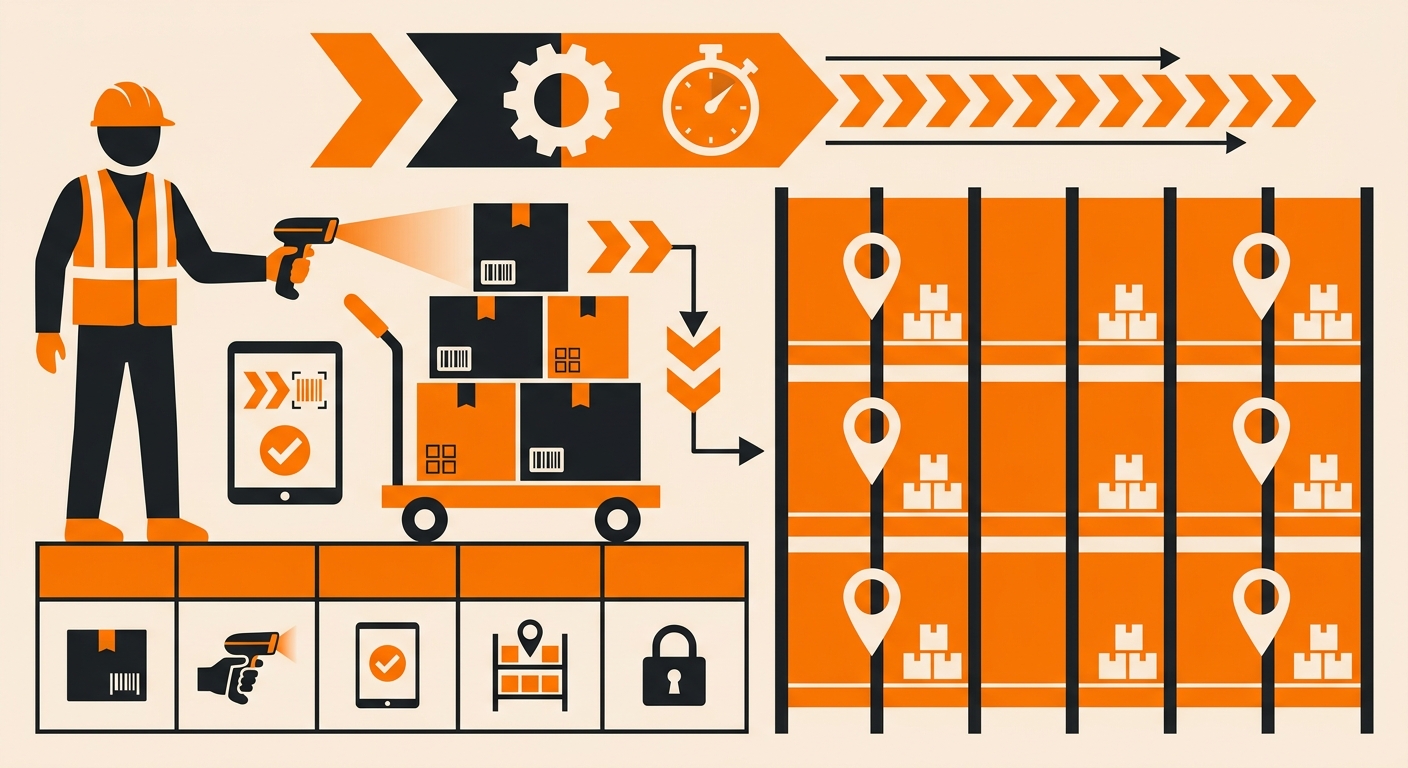
Not all warehouses use the same logic for where to store inventory. The right strategy depends on the type of products, the volume of orders, and the layout of the facility.
Fixed location putaway. Each SKU is always stored in the same bin. Simple to implement, easy for staff to learn and reliable for low-to-medium SKU counts. The trade-off is that fixed locations can waste space when a SKU’s stock level fluctuates significantly.
Dynamic location putaway. The WMS assigns available bin locations based on current inventory levels and available space rather than pre-assigned slots. More space-efficient, but requires a well-functioning WMS and disciplined scan confirmation. Without it, the system quickly loses track of where things are.
Velocity-based putaway (slotting). High-velocity SKUs are stored closest to the packing stations to minimize pick travel time. Low-velocity SKUs are stored in less accessible areas. In 3PL environments handling many brands, slotting decisions are managed by the warehouse operations team. When your top-selling SKU is stored efficiently, every order for it moves through fulfillment faster.
Zone-based putaway. The warehouse is divided into zones: refrigerated, hazmat, oversized, and standard, and inventory is directed to the appropriate zone based on its handling requirements. This is especially relevant for brands with temperature-sensitive, date-sensitive (FEFO), or specialty storage requirements.
Putaway Is Where Inventory Accuracy Begins
Receiving gets the inventory into the building. Putaway puts it where the warehouse can actually use it.
If you ever notice a discrepancy between what Fulfyld‘s system shows as available and what you expect to be in stock, putaway is one of the first things worth investigating.
Your account manager can pull a lot-level or bin-level inventory report from Shipedge to help diagnose exactly where inventory stands .