ShipBob vs ShipMonk: An In-Depth Fulfillment Comparison
Let’s be real, choosing a 3PL usually feels like picking the least painful option. Get it right, and you scale smoothly. Get it wrong, and your margins disappear into a black hole of “miscellaneous” fees no one can explain.
So forget the polished sales decks. This comparison between ShipBob and ShipMonk examines how these platforms perform when things get messy, like during the holiday rush.
We’re digging into where they actually deliver, where they fall apart, and the pricing traps that catch brands off guard.
Quick Overview: ShipBob vs. ShipMonk
Before diving into detailed comparisons, it helps to understand what each platform is designed to do and who they typically serve.
ShipBob is a technology-first 3PL designed to help fast-growing ecommerce brands scale efficiently and ship faster.
- Technology-driven fulfillment built for ecommerce brands
- Large, distributed warehouse network
- Reduces shipping times across regions
- Built to handle high-order volumes
- Strong integrations with major ecommerce platforms
- Automation tools to streamline operations
- Advanced analytics and performance reporting
- Supports both domestic and international expansion
On the other hand, ShipMonk stands out for its operational flexibility and support for brands with more customized needs.
- Flexible fulfillment provider
- Ideal for startups and subscription brands
- Handles more complex fulfillment requirements
- Offers kitting services
- Provides custom packaging options
- Specializes in subscription box fulfillment
- Good fit for brands needing operational flexibility
- Does not require a large warehouse footprint
Feature Comparison
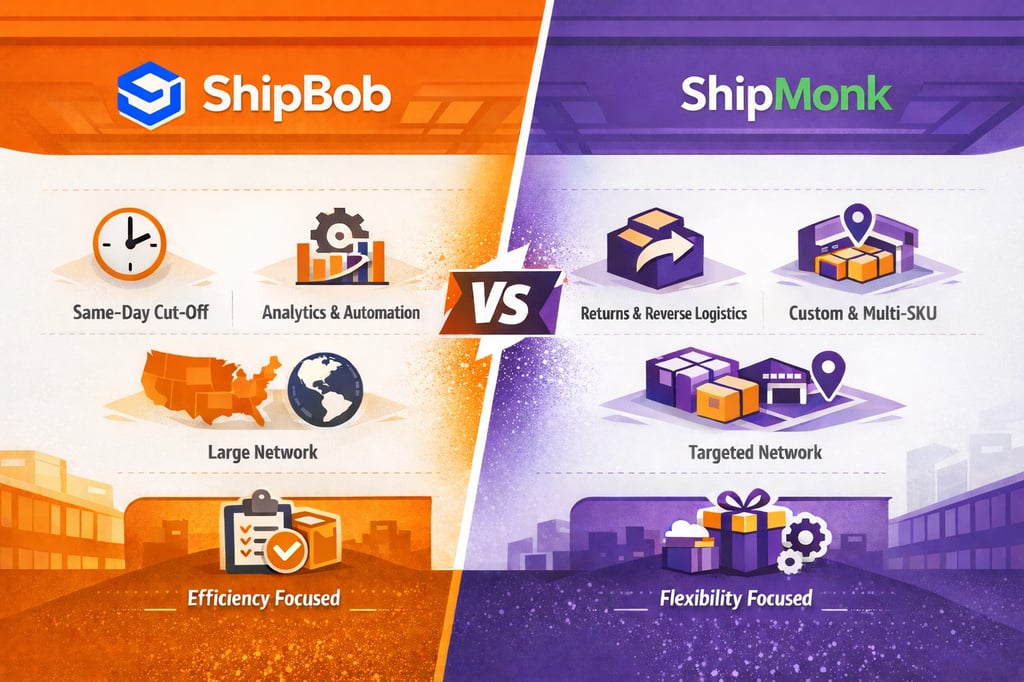
Both ShipBob and ShipMonk offer core fulfillment services, but they differ in how they approach scalability, automation, and flexibility. This section breaks down their key capabilities to help you understand which platform aligns better with your operational needs.
At a foundational level, both providers handle order picking, packing, shipping, and returns. The differences become more apparent when order complexity and volume increase.
Key fulfillment considerations:
- Same-day order processing cut-off times
- Returns handling and reverse logistics
- Ability to manage bundled or multi-SKU orders
Technology & Integrations
Fulfillment software shapes how smoothly orders move and how clearly inventory stays tracked. ShipBob and ShipMonk both connect with major ecommerce platforms, but they don’t solve the same problems in the same way.
What brands typically notice:
- ShipBob focuses on analytics and automation
- ShipMonk prioritizes flexibility and custom workflows
- Both support Shopify, WooCommerce, Amazon, and more
Fulfillment Network & Scalability
Where inventory sits has a direct impact on shipping times and costs. It also shapes how easily a brand can grow without reworking its fulfillment setup. ShipBob and ShipMonk take noticeably different approaches, largely based on the size of the brands they’re built to support and how wide those brands plan to ship.
Key differences to consider:
- ShipBob operates a large, distributed network across the U.S. and internationally, making it easier to place inventory closer to customers and support rapid growth.
- ShipMonk runs a smaller but strategically located warehouse network that works well for brands focused on one or two primary markets.
For businesses planning aggressive expansion or multi-region fulfillment, ShipBob’s broader footprint can offer an advantage. For brands with more targeted distribution needs, ShipMonk’s network is often sufficient and easier to manage.
Specialised Services
Beyond standard order fulfillment, some brands require additional services to support unique product offerings or customer experiences. This is where the differences between ShipBob and ShipMonk become more noticeable.
How each provider compares:
- ShipMonk excels in subscription fulfillment, kitting, and custom packaging, making it a strong choice for brands with complex or non-standard workflows.
- ShipBob supports customisation as well, but prioritizes efficiency and consistency over highly tailored fulfillment processes.
Pricing & Cost Structure
Pricing is often the deciding factor when choosing a 3PL. While both ShipBob and ShipMonk are transparent about their base fees, the total cost can vary depending on how your business scales.
Pricing Models Explained
Pricing is one of the biggest differences between ShipBob and ShipMonk.
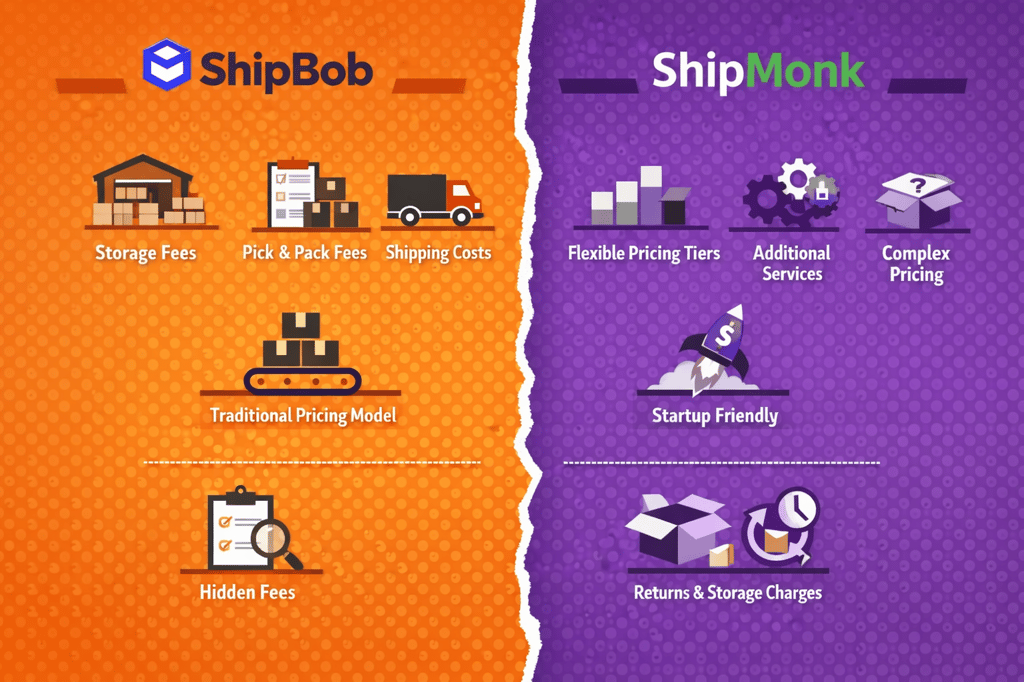
- ShipBob typically uses a more traditional fulfillment pricing model that includes storage fees, pick-and-pack fees, and shipping costs that vary by order size, weight, and destination. While transparent, these costs can add up as order volume increases.
- ShipMonk offers flexible pricing tiers that can be attractive to startups. However, its pricing structure may feel complex for some businesses, especially as additional services and handling requirements are added.
Storage, Pick & Pack, and Shipping Fees
Storage fees vary based on space usage and seasonality. ShipMonk is often considered more cost-effective for storage, particularly for smaller inventories.
ShipBob’s pick and pack fees are competitive at scale, but brands with lower volumes may find costs higher than expected. Shipping rates depend heavily on warehouse placement and order distribution.
Potential Hidden Costs
Both platforms may charge additional fees for receiving inventory, returns processing, special packaging, or long-term storage. Understanding these charges upfront is essential to avoid surprises as your fulfillment operation grows.
Pros & Cons
Every fulfillment provider has strengths and trade-offs. Understanding these upfront helps avoid mismatches between expectations and reality.
ShipBob
ShipBob is built for brands that prioritize speed, automation, and large-scale fulfillment. Its infrastructure is designed to support businesses shipping high order volumes across multiple regions.
ShipBob Pros
- Large, distributed fulfillment network with fast shipping coverage
- Advanced analytics and performance reporting tools
- Strong integrations with leading ecommerce platforms
- Well-suited for high-volume and fast-scaling brands
ShipBob Cons
- Costs can increase quickly as order volume and storage needs grow
- Less flexible for highly customised or non-standard fulfillment workflows
- Pricing structure may feel complex for smaller or early-stage businesses
ShipMonk
ShipMonk focuses on flexibility and customization, making it a popular choice for startups and brands with more specialised fulfillment requirements.
ShipMonk Pros
- Flexible fulfillment workflows and customisation options
- Strong support for subscription boxes, kitting, and bundling
- Competitive storage pricing for smaller inventories
- Lower barrier to entry for early-stage ecommerce brands
ShipMonk Cons
- Smaller warehouse network compared to ShipBob
- Fewer advanced analytics and automation features
- Scaling to very high order volumes may require operational adjustments
Best Use Cases: Which One Should You Choose?
Choosing between ShipBob and ShipMonk depends less on which platform is “better” and more on how well each one fits your business model. Factors like order volume, growth pace, and fulfillment complexity play a major role in determining which provider will support your operations most effectively.
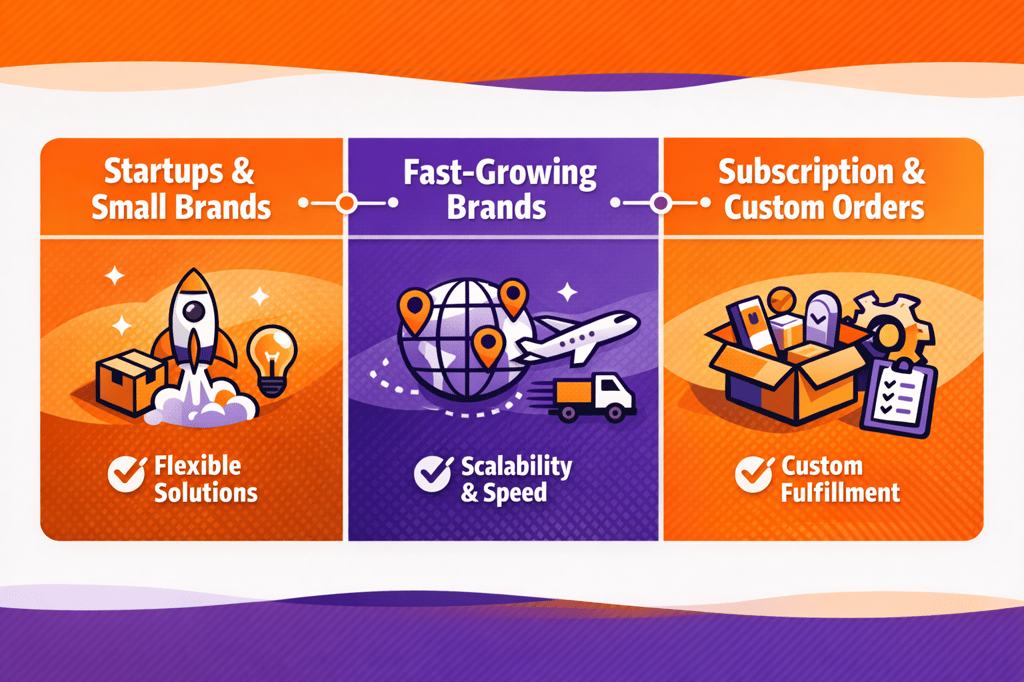
Best for Startups & Small Ecommerce Brands
ShipMonk is often a better fit for startups and early-stage brands that need flexibility without committing to a large-scale fulfillment operation.
Best for Fast-Scaling Brands
ShipBob is well-suited for brands experiencing rapid growth and needing nationwide or international shipping coverage with minimal delays.
Best for Subscription & Custom Fulfillment
Brands offering subscription boxes, bundled products, or highly customised orders tend to prefer ShipMonk’s adaptable workflows.
Why Many DTC Brands Choose Fulfyld Over ShipBob and ShipMonk
While ShipBob and ShipMonk are popular choices, many ecommerce brands also evaluate alternatives before committing to a long-term fulfillment partner. Below is a high-level comparison of Fulfyld vs ShipBob and Shipmonk.
Legend
- ✅ Included – Offered as part of the standard service
- ⚠️ Varies – Depends on volume, location, or operational setup
- ❌ Not standard – Not typically included or emphasised
| Feature | ShipBob | ShipMonk | Fulfyld |
| Pricing transparency | ⚠️ Moderate | ⚠️ Complex/Tiered | ✅ Flat-rate, predictable |
| Fulfillment speed | ✅ Fast | ✅ Fast | ✅ Same-day pick & pack |
| Warehouse network | ✅ Large | ⚠️ Medium | ✅ Strategically focused |
| Subscription fulfillment | ❌ Limited | ✅ Strong | ⚠️ Supported |
| Integrations | ✅ Extensive | ✅ Strong | ⚠️ Core ecommerce platforms |
| Customer support | ⚠️ Ticket-based | ⚠️ Mixed | ✅ Dedicated account support |
| Best for | ⚠️ High-volume scaling brands | ⚠️ Subscription & custom needs | ✅ DTC brands seeking simplicity |
For many growing DTC brands, the challenge with ShipBob and ShipMonk isn’t fulfillment performance; it’s complexity. Variable fees, layered pricing, and ticket-based support can make day-to-day operations harder to manage as order volumes increase.
Fulfyld simplifies fulfillment with a model built around clarity, speed, and hands-on support, making it easier for brands to scale without unexpected costs or operational friction.
What sets Fulfyld apart:
- Flat-rate pricing with predictable monthly costs
- Dedicated account support instead of ticket-only systems
- Faster onboarding with fewer moving parts
- Same-day pick and pack for DTC orders
Looking for Fulfillment That’s Easier to Manage?
There’s no such thing as a “perfect” 3PL. You’re really just looking for the one that makes the most sense for your business.
If you’re moving serious volume and need a tech-heavy operation with warehouses all over the world, ShipBob has the scale to handle it. If your brand is all about the unboxing experience, think premium or subscription boxes; ShipMonk is better suited for that kind of hands-on, detail-oriented fulfillment.
At the end of the day, your fulfillment partner shouldn’t feel like a vendor you have to manage. They should feel like part of your team.