Cash Flow Forecast Calculator: Manage Inflows, Outflows, and Growth With Precision
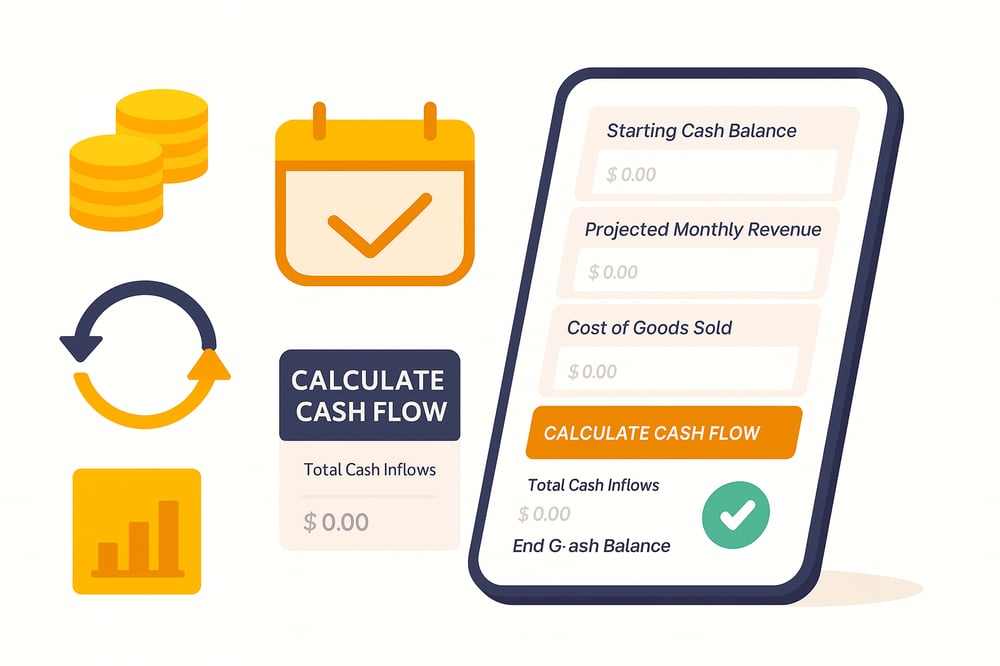
Managing your business finances effectively starts with knowing what’s coming in and what’s going out. This forecasting tool takes the guesswork out of financial planning by calculating your net cash flow and ending cash balance based on your revenue, costs, and expenses.
Whether you’re a startup founder or an established business owner, understanding your cash position can mean the difference between seizing opportunities and scrambling to cover costs.
Why Every Business Needs Cash Flow Forecasting
Cash flow is the lifeblood of any business, yet it’s one of the most commonly mismanaged aspects of financial planning. You might have impressive sales figures on paper, but if the money isn’t actually in your bank account when bills are due, you’re facing a serious problem.
Think of cash flow forecasting as your financial weather report. Just as you wouldn’t plan an outdoor event without checking the forecast, you shouldn’t make business decisions without knowing your future cash position.
Here’s what makes cash flow forecasting critical for business success:
- Prevents nasty surprises: You’ll know about potential shortfalls weeks or months in advance
- Enables strategic decisions: Should you hire that new employee or invest in equipment? Your forecast provides answers
- Improves credibility: Banks and investors want to see that you understand your numbers
- Reduces financial stress: Know exactly where you stand financially at all times
- Identifies opportunities: Spot surplus periods and plan strategic investments
Many business owners confuse profit with cash flow, but they’re fundamentally different. A profitable company can still fail if it runs out of cash.
You might have invoices worth thousands of dollars, but if customers pay in 60 days and your rent is due next week, those invoices won’t help you. Forecasting helps you bridge this gap by tracking the actual movement of money.
How to Use a Cash Flow Forecast Calculator Effectively
Getting started with a cash flow forecast calculator doesn’t require an accounting degree. It does require honesty and attention to detail. The quality of your forecast depends entirely on the accuracy of the information you put in.
Start by gathering these specific data points:
- Starting Cash Balance: Your current cash on hand (checking account balance)
- Expected Monthly Revenue: Projected sales or income for the period
- Cost of Goods Sold (COGS): Direct costs to produce or acquire your products
- Operating Expenses: Warehousing, fulfillment, payroll, software, rent, utilities
- Other Cash Outflows: Loan repayments, tax payments, or miscellaneous costs
Once you enter these figures, the calculator automatically computes your total cash inflows, total cash outflows, net cash flow, and most importantly, your ending cash balance. This shows whether you’ll have a surplus, break even, or face a shortfall.
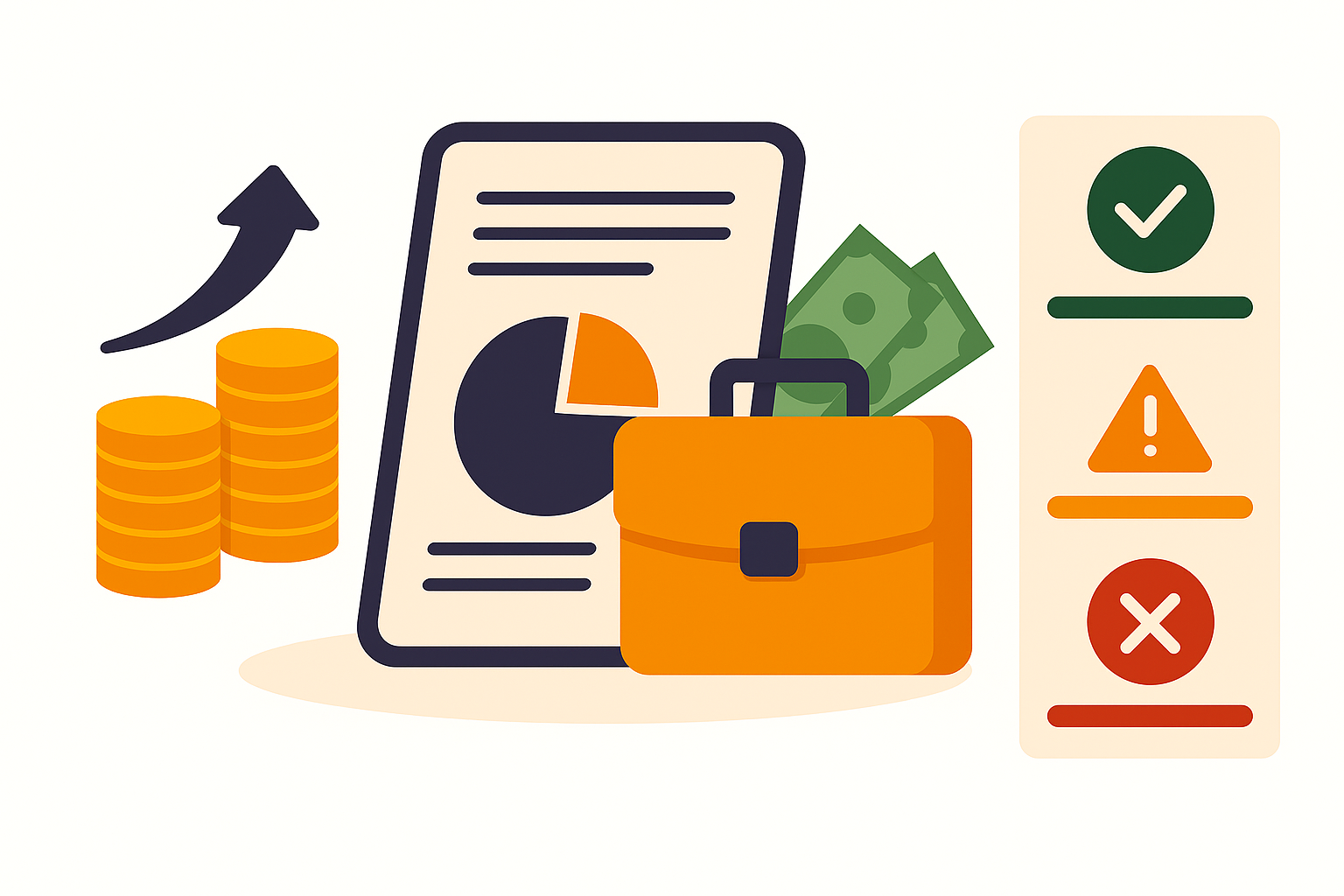
The calculator provides instant insights through color-coded status indicators:
- Green (Cash Surplus): Positive net cash flow, you’re generating more than you’re spending
- Yellow (Warning): Break-even or declining cash, you’re stable but need to monitor closely
- Red (Cash Shortfall): Negative ending balance, immediate action required to avoid problems
To maximize the value of your forecasts, follow these practical tips:
- Be realistic with revenue: Don’t overestimate sales, use conservative figures based on actual trends
- Include all expenses: Small recurring costs add up quickly, subscriptions, insurance, and quarterly taxes
- Account for COGS accurately: Include shipping, packaging, and all direct product costs
- Factor in payment timing: If customers typically pay in 45 days, adjust your revenue figures accordingly
- Run multiple scenarios: Test best-case, expected-case, and worst-case situations to prepare contingency plans
The calculator’s power lies in scenario planning. What if a major expense hits next month? What if revenue drops 20%? By testing different inputs, you develop strategies before problems materialize.
Common Cash Flow Challenges and Solutions

Even with the best planning, businesses face cash flow obstacles. The key is recognizing these challenges early through accurate forecasting and having strategies to address them.
High COGS eating into margins is a reality for many product-based businesses. When your cost of goods sold consumes 60-70% of revenue, even small fluctuations can create cash problems. Use the calculator to model different COGS scenarios and identify your break-even point.
If your COGS are too high, consider negotiating better supplier terms, optimizing your fulfillment costs, or adjusting pricing strategies.
Operating expense creep happens gradually. Warehousing costs increase, you add software subscriptions, and payroll grows. The calculator helps you see exactly how these expenses impact your ending cash balance.
Review your operating expenses monthly. Are you paying for services you no longer use? Can you renegotiate fulfillment or warehouse contracts?
Revenue fluctuations create uncertainty. One month you hit $100K in sales, the next drops to $60K. By testing different revenue scenarios in the calculator, you can determine how much cash reserve you need to weather slow periods.
Build a buffer equal to 2-3 months of operating expenses during high-revenue months.
Unexpected outflows always emerge. Equipment breaks, tax bills arrive, and loan payments come due. The “Other Cash Outflows” field in the calculator forces you to account for these irregular expenses.
Here’s how the calculator helps you navigate these challenges:
- Scenario testing: Input different revenue and expense combinations to see their impact on your cash position
- Early warnings: Spot negative cash flow before it happens, giving you time to adjust
- Clear visibility: See exactly which expenses are draining cash most significantly
- Data-driven decisions: Know whether you can afford that new hire or equipment purchase
- Break-even analysis: Understand the minimum revenue needed to maintain positive cash flow
Remember, the calculator shows you the math. Your job is to take action based on what it reveals about your cash position.
Making Data-Driven Financial Decisions
Armed with accurate cash flow calculations, you can move from reactive to proactive financial management. The calculator gives you four critical numbers: total inflows, total outflows, net cash flow, and ending balance. Each tells a different part of your financial story.
Your net cash flow shows whether you’re generating or burning cash this period. Positive means you’re building reserves. Negative means you’re drawing down your cash position.
Your ending cash balance reveals your actual cash position after all transactions. This is the number that determines whether you can make that next investment or need to take corrective action.
The calculator might reveal that delaying the hire by two months gives you a critical safety cushion.
Use the calculator to model specific business decisions:
- Inventory purchases: Add the cost to COGS and see if your cash position stays positive
- Marketing campaigns: Increase operating expenses and model the expected revenue lift needed to break even
- Fulfillment cost changes: Test how switching 3PLs or negotiating better rates impacts your bottom line
- Price adjustments: See how a 10% price increase (higher revenue) or 10% discount (lower revenue) affects cash flow
- Loan payments: Factor additional monthly payments into “Other Outflows” to understand the true cost
The color-coded status indicators provide instant clarity. Green means you have room to invest and grow. Yellow means proceed carefully and monitor closely. Red means immediate action is required: cut costs, boost revenue, or secure financing.
Your calculator results inform crucial business conversations:
- Banking discussions: Show lenders your projected cash flow and ending balance to justify credit lines
- Investor presentations: Demonstrate financial awareness by presenting multiple scenarios
- Vendor negotiations: Use cash flow data to negotiate better payment terms that align with your cash cycle
- Team planning: Share projections so everyone understands the financial constraints and opportunities
The businesses that thrive master cash flow through consistent monitoring. By running calculations weekly or monthly and comparing forecasts to actuals, you transform from someone who reacts to financial surprises to someone who anticipates and plans for them.
Best Practices for Accurate Cash Flow Forecasting
Creating accurate cash flow forecasts requires discipline and honesty. The calculator provides the math, but you provide the quality of inputs that determine whether those calculations help or mislead you.
Start with your actual starting cash balance. Don’t round up or include funds you hope to receive. Check your business checking account right now—that’s your starting number. This grounds your forecast in reality rather than wishful thinking.
Many businesses make the mistake of including accounts receivable in their starting cash. Don’t do this unless the money is actually in your bank account.
Be conservative with revenue projections. Look at your last 3-6 months of actual revenue. Unless you have confirmed orders or contracts, use the average or slightly below average as your expected monthly revenue.
It’s far better to be pleasantly surprised by higher revenue than to make decisions based on optimistic projections that don’t materialize.
Break down your COGS accurately. Include everything that goes into delivering your product: raw materials, packaging, shipping to customers, marketplace fees, and payment processing fees. If your gross margin is thinner than you thought, the calculator will reveal it.
This is especially important for e-commerce and fulfillment-dependent businesses where shipping and fees can eat 20-30% of revenue.
Don’t underestimate operating expenses. Make a list of every recurring monthly cost: warehouse rent, fulfillment fees, software subscriptions, payroll, utilities, insurance, and marketing. Add them up honestly.
Most businesses discover they’re spending more than they realized once they itemize everything.
Here are additional practices that separate good forecasts from great ones:
- Update weekly or monthly: Recalculate as soon as you have new data on revenue or expenses
- Track forecast vs. actual: Each month, compare your forecast to real results and adjust your assumptions
- Create three scenarios: Run best-case (high revenue), expected-case (average), and worst-case (low revenue) projections
- Account for seasonality: If December is always your biggest month, don’t assume that revenue continues in January
- Include irregular expenses: Quarterly taxes, annual insurance premiums, equipment maintenance, and spread these out monthly
The calculator is a tool for clarity. Use it honestly, and it will show you exactly where you stand financially. Use it optimistically, and it becomes just another spreadsheet that doesn’t reflect your real cash position.
Transform Cash Flow Uncertainty Into Predictable Growth
Financial clarity is the foundation of sustainable growth. When you understand where money is coming from and where it’s going, you can make decisions that strengthen your business instead of reacting to surprises.
Regular forecasting helps you prepare for slow periods, plan investments wisely, and maintain confidence in every financial move. With consistent tracking and realistic assumptions, you build a stable foundation that supports both day-to-day operations and long-term ambitions, turning financial uncertainty into measurable, predictable progress.
Frequently Asked Questions
What is a cash flow forecast calculator, and how does it work?
It’s a tool that calculates your ending cash position by tracking your inflows and outflows. You enter your starting cash balance, expected monthly revenue, cost of goods sold, operating expenses, and other outflows. The calculator shows your total inflows, total outflows, net cash flow, and ending cash balance, with color-coded status indicators showing whether you’re in surplus, warning, or shortfall territory.
Can a cash flow forecast calculator help prevent cash shortages?
Yes. By calculating your ending cash balance before the month begins, you spot potential shortfalls in advance. If the calculator shows a negative ending balance, you know to take action immediately, cut expenses, delay purchases, boost collections, or arrange financing. Without this visibility, you might not realize there’s a problem until checks start bouncing.
How accurate is this calculator?
Accuracy depends entirely on your input data. Use realistic revenue based on actual sales trends, include all COGS (shipping, fees, packaging), and list every operating expense honestly. The calculator performs the math perfectly, but if you enter optimistic revenue or forget expenses, your results will be misleading. Update with actual numbers monthly to refine your forecasting accuracy over time.