Falcon vs ShipDaddy Fulfillment: A Practical 3PL Comparison for DTC Brands

Choosing a fulfillment partner isn’t about chasing the biggest name. It’s about finding a 3PL that won’t slow you down, bury you in fees, or make everyday operations harder than they should be. That’s why these providers are a comparison many DTC brands end up making once order volume starts to climb.
Both providers support ecommerce fulfillment, but they approach operations, pricing, and scale very differently.
This guide breaks down how Falcon and ShipDaddy compare in real terms, then brings Fulfyld into the mix for brands that want fewer surprises and more control.
Quick Snapshot: Falcon vs ShipDaddy
Before digging into features and pricing, it helps to understand what each provider is built for.
Falcon Fulfillment
Falcon positions itself as a fulfillment partner for growing ecommerce brands that want structure, consistency, and nationwide reach. It’s designed to support scale without constant manual intervention.
ShipDaddy
ShipDaddy focuses on flexibility and hands-on service. It’s often chosen by brands with custom packaging needs, bundled products, or workflows that don’t fit neatly into rigid fulfillment systems.
Falcon Fulfillment
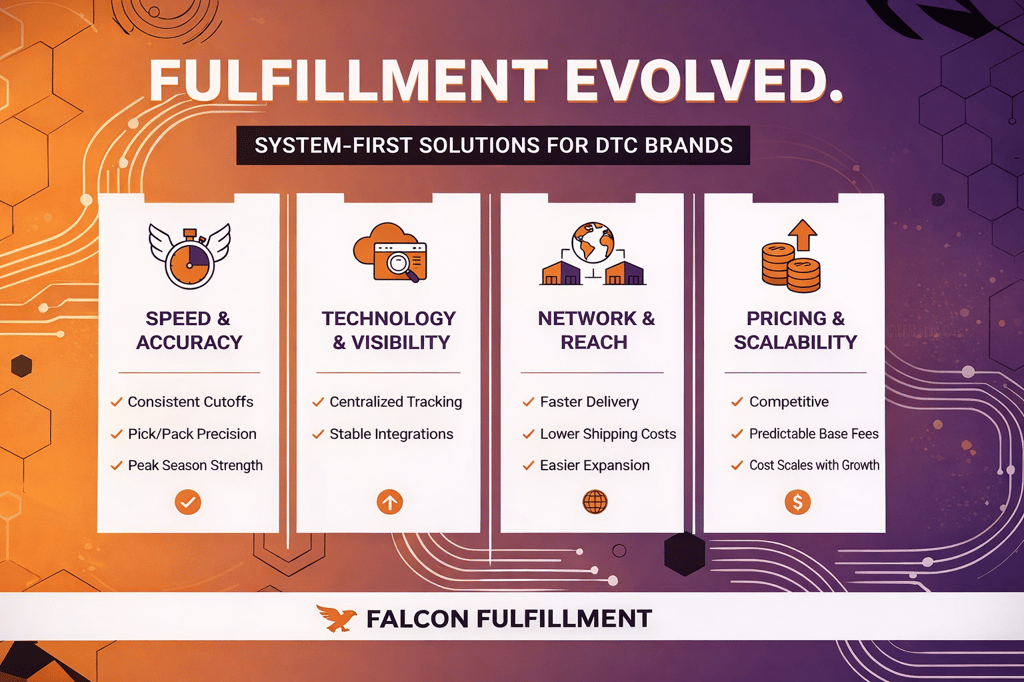
Falcon Fulfillment is designed for brands that value structure, consistency, and the ability to scale without constantly reworking their operations. It’s a system-first model that favors repeatability over customization.
Fulfillment Speed and Order Handling
Falcon focuses on keeping fulfillment predictable at volume. Orders follow standardized workflows that reduce manual handling and errors as daily order counts rise.
What brands typically experience:
- Consistent order cut-off times
- Reliable pick-and-pack accuracy
- Fewer process changes as volume increases
- Strong performance during peak sales periods
Technology and Inventory Visibility
Falcon’s software is built to support scale. Inventory levels, order statuses, and performance metrics are clearly tracked, which helps ops teams stay ahead of issues instead of reacting to them.
Key strengths:
- Centralized inventory tracking
- Clean dashboards for fulfillment performance
- Stable integrations with major ecommerce platforms
- Fewer manual workarounds
Warehouse Network and Geographic Reach
Falcon operates with a broader fulfillment footprint, allowing brands to distribute inventory closer to customers.
Why that matters:
- Faster delivery times across regions
- Lower shipping costs at scale
- Easier expansion into new markets
- Less reliance on a single warehouse
This setup is especially useful for nationwide DTC brands.
Pricing Model and Cost Behavior
Falcon uses a structured pricing approach based on storage, pick-and-pack, and shipping fees. Costs are easy to understand, but they scale with volume and inventory footprint.
Brands should expect:
- Competitive pricing at higher order volume
- Predictable base fees
- Higher total spend as storage and throughput increase
ShipDaddy Fulfillment
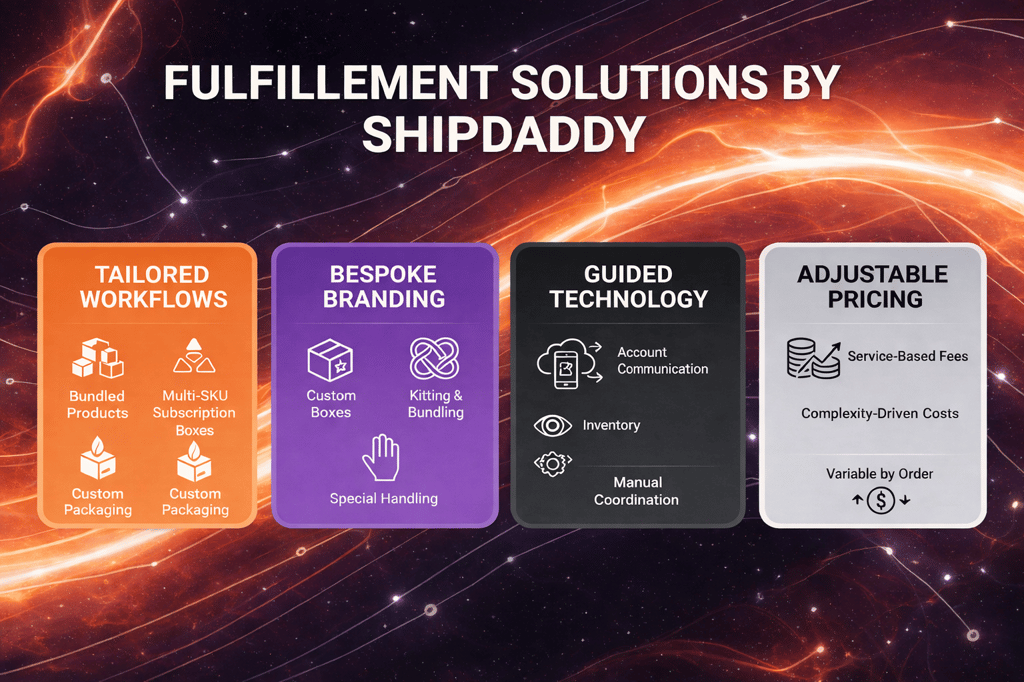
ShipDaddy takes a more hands-on approach. It’s often chosen by brands whose fulfillment needs don’t fit neatly into standardized systems.
Flexible Fulfillment Workflows
ShipDaddy supports more customized order flows, which makes it appealing to brands with varied SKUs or special packaging requirements.
Common use cases include:
- Bundled products
- Multi-SKU orders
- Subscription boxes
- Insert-heavy packaging
Custom Packaging and Value-Added Services
Customization is where ShipDaddy shines. Brands that care deeply about unboxing experiences or product presentation often lean this way.
Supported services include:
- Custom boxes and inserts
- Kitting and bundling
- Special handling instructions
- Subscription fulfillment
Technology and Day-to-Day Management
ShipDaddy’s tech supports ecommerce integrations, but the experience relies more on communication with the fulfillment team than on dashboards alone.
What brands notice:
- Adequate inventory visibility
- Fewer automated workflows
- More manual coordination
- Strong reliance on account communication
Pricing Structure and Cost Variability
ShipDaddy’s pricing can feel approachable early on, especially for brands with modest volume. As complexity increases, costs can become more layered.
Typical considerations:
- Fees vary by service and handling type
- Custom work adds line items
- Costs fluctuate with order complexity
Choose a Fulfillment Partner That Fits How You Actually Operate
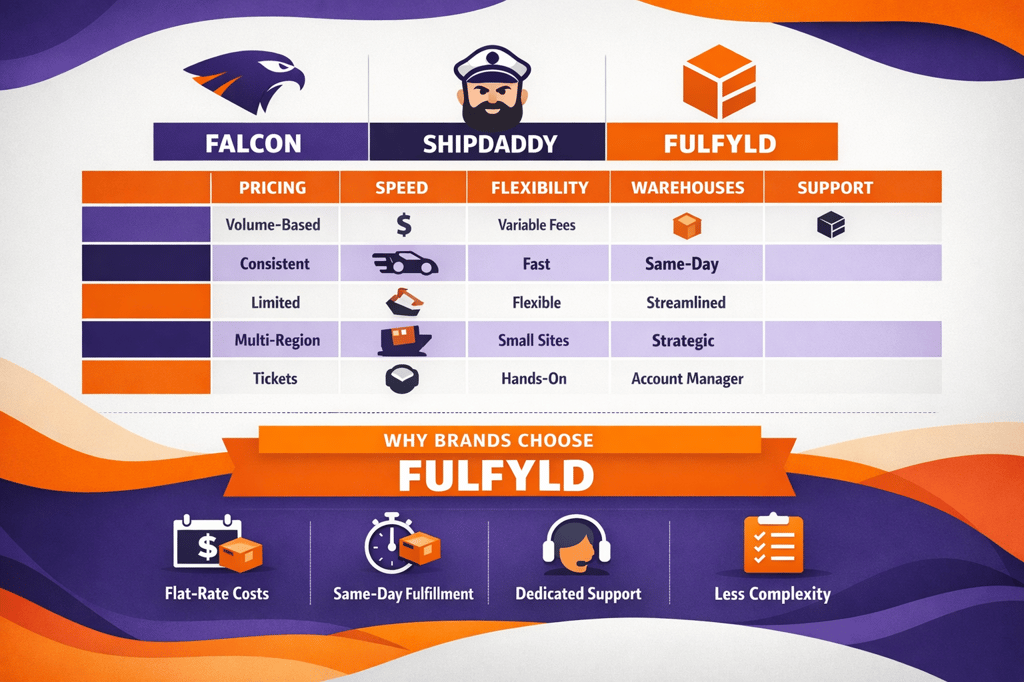
For many e-commerce teams, the real question isn’t whether Falcon is better than ShipDaddy. It’s whether either model supports how the business plans to run for six months or two years, from now. That’s where Fulfyld becomes part of the discussion.
When brands step back and compare Falcon vs Shipdaddy vs Fulfyld, the decision usually comes down to a few practical trade-offs:
- Predictable monthly costs versus variable, usage-based fees
- Standardized fulfillment systems versus operational flexibility
- Ticket-based support versus direct, account-level guidance
Fulfillment Model Comparison
The table below highlights how each stacks up across the areas that tend to matter most once order volume and complexity increase.
| Area of Comparison | Falcon | ShipDaddy | Fulfyld |
| Pricing approach | Structured, volume-based | Variable by service | Flat-rate, predictable |
| Fulfillment speed | Consistent at scale | Fast with coordination | Same-day pick & pack |
| Workflow flexibility | Limited | High | Streamlined |
| Warehouse strategy | Broad, multi-region | Smaller footprint | Strategically placed |
| Tech & visibility | Automated dashboards | Basic reporting | Clear, simplified |
| Support model | Ticket-based | Hands-on team | Dedicated account manager |
| Best fit for | High-volume growth | Custom-heavy ops | Brands prioritizing simplicity |
For teams that want fewer surprises as they grow, Fulfyld often stands out. Instead of layering fees or routing support through ticket queues, it focuses on keeping fulfillment easy to understand and easy to manage.
Fulfyld appeals to brands that value:
- Flat-rate pricing, they can forecast confidently
- Same-day pick and pack for DTC orders
- Direct access to an account manager
- Fewer operational variables as volume increases
That focus on clarity is why brands comparing other providers often see Fulfyld as the cleaner long-term option, not because it does more, but because it does what matters without the extra noise.
Ready to Pick a Fulfillment Partner That Won’t Slow You Down?
Falcon and ShipDaddy both solve real fulfillment problems, but in very different ways. Falcon is built to handle volume without friction. ShipDaddy is built to adapt when fulfillment isn’t straightforward. Fulfyld exists for teams that want fewer variables altogether.
The best 3PL isn’t the one with the most features. It’s the one that lets your team stop thinking about fulfillment and get back to growing the business.