
Domestic ground shipping for a fishing rod in a standard tube runs $15–$60, depending on carrier, length, and how the package is sized.
A rod packaged in a box under 48 inches drops to $10–$25 because it avoids oversized surcharges entirely.
This guide covers everything from what drives fishing rod shipping costs to packaging requirements that prevent damage claims.
Best Carriers for Shipping Fishing Rods
Carrier selection changes the math on rod shipping more than most sellers expect. The gap between retail rates at the counter and negotiated business rates is that 3PL runs 25–40% on a $30 shipment, which is real money at scale.
Here’s how the major options compare for fishing rods specifically:
| Carrier | Max Length | Oversized Surcharge | Insurance Included | Best For |
| USPS Priority Mail | 108″ combined | None (within limits) | $100 included | Short rods, budget shipments |
| USPS Parcel Select Ground | 130″ combined | None (within limits) | Limited | Low-cost ground, non-urgent |
| UPS Ground | 108″ length | Yes, over 48″ | $100 declared value | Oversized, high-value rods |
| FedEx Ground/Home Delivery | 108″ length | Yes, over 48″ | $100 declared value | Oversized ground, slight cost edge |
Retail consumer rates through carrier websites are always the ceiling, not the floor. Bulk and business accounts with negotiated rates reduce these costs by 15–40%, depending on volume.
Key Factors That Affect Fishing Rod Shipping Prices
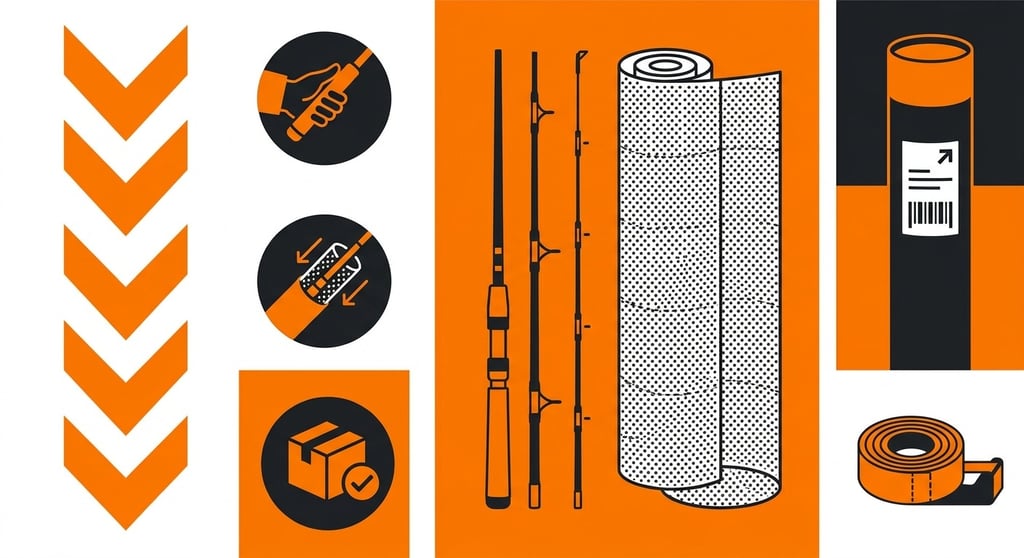
Fishing rods are one of the most deceptive items to ship. Most weigh between 4 and 16 ounces, but they’re long enough to trigger surcharges that double or triple the base rate before the package leaves your dock.
Three variables drive most of the variance in what you actually pay:
Dimensional weight is where the biggest surprises happen. Carriers calculate DIM weight as length × width × height ÷ 139 for UPS and FedEx domestic shipments, or ÷ 166 for USPS, then bill whichever is higher: actual or dimensional.
Length surcharges stack on top of DIM weight once your package crosses carrier thresholds. Freight carriers are the exception here, pricing by weight class rather than per-package surcharges, which can work in your favor on bulk rod shipments.
Carrier zone distance determines how much of your per-shipment cost is geography rather than package specs. Zones run from 1 (local) to 8 (cross-country), and a Zone 8 shipment can cost 60–80% more than the same package moving to a neighboring state.
How to Package a Fishing Rod to Prevent Damage Claims
Rod tip breakage is the most common damage type in fishing rod transit, and most of it is preventable. Every damage claim costs $50–$150 in handling alone before replacement product or customer churn enters the picture.
For brands handling fragile goods fulfillment at volume, packaging isn’t overhead; it’s loss prevention.
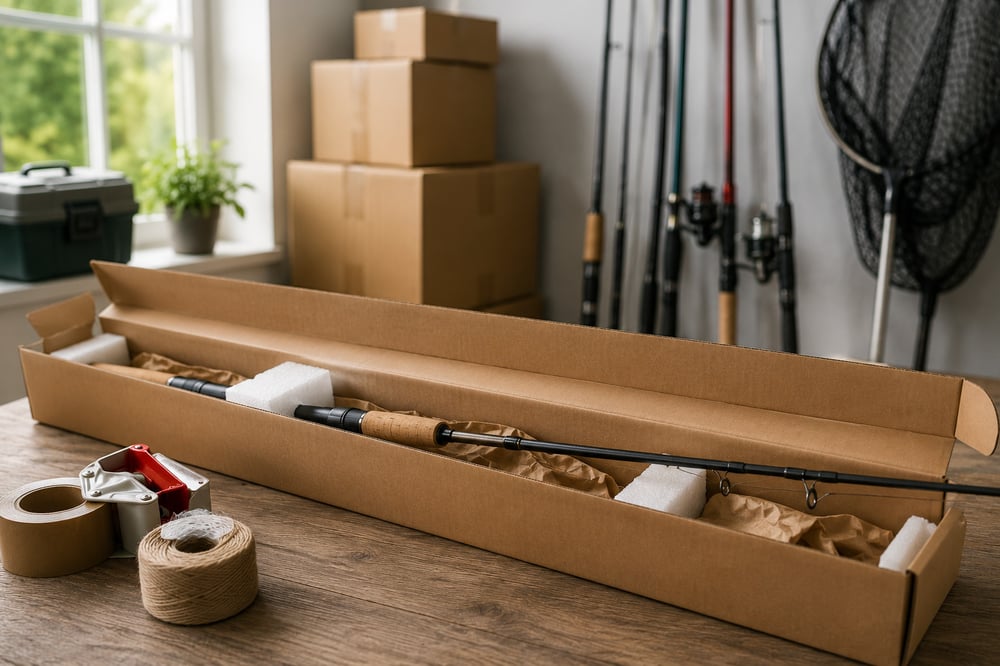
- Wrap the rod tip separately with a foam rod tip protector before anything else — this single step eliminates the majority of tip breakage claims
- Wrap the full rod in 2-inch bubble wrap, at least two full layers, secured with tape at both ends
- Slide the wrapped rod into a tube at least 1 inch wider than the rod handle to allow for padding without compression
- Fill any space inside the tube with kraft paper or packing peanuts — void space lets the rod shift and snap on impact
- Seal both tube ends with reinforced packing tape, minimum two passes per end
PVC tubes are the better choice for brands shipping at volume. They’re crush-resistant, reusable across multiple transit cycles, and hold up where cardboard degrades under stacked freight.
The packaging mistakes that show up most often in damage claims are worth knowing before they cost you.
Common Packaging Mistakes That Lead to Damage Claims

These errors show up repeatedly in damage claims:
- Using tubes too narrow to fit padding around the handle
- Skipping separate tip protection and relying on bubble wrap alone
- Leaving void space inside the tube
- Using thin-wall cardboard tubes that crush under stacked freight
- Shipping high-value rods without declared value or carrier insurance
That last point matters most on rods over $200. Without a declared value, carrier liability caps at $100 or less, depending on the service used.
How to Cut Fishing Rod Shipping Costs at Scale
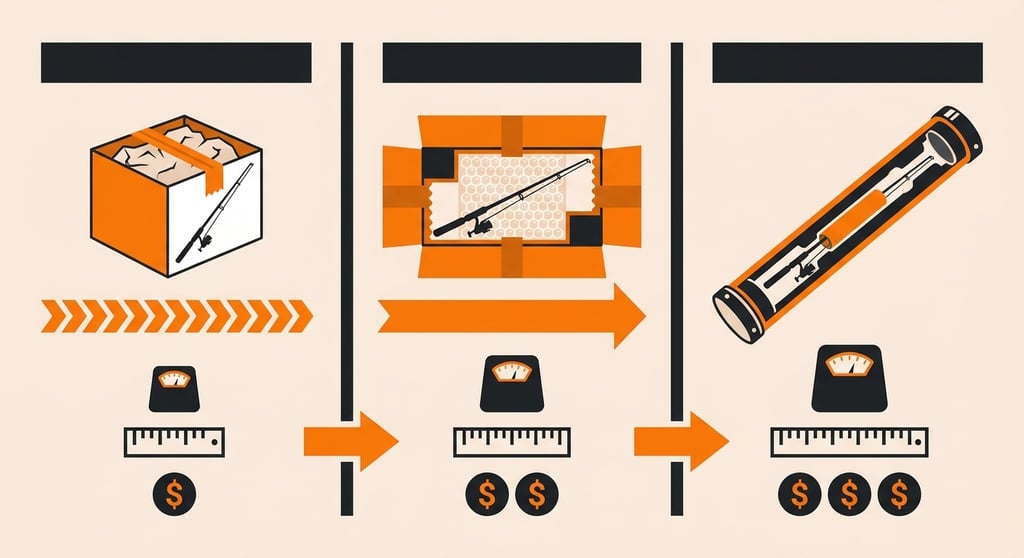
Most fishing rod brands treat carrier rates as fixed. They aren’t. What you actually pay is determined by how you ship, where you ship from, and your total volume.
Beyond rate negotiation, four cost levers move the number before you even contact a carrier:
Ship from a centrally located warehouse to reduce average zone distance. A rod shipping from a Midwest facility to California costs $8–$15 less than the same shipment from the East Coast.
Optimize package dimensions. Use the smallest tube diameter that still protects the rod. Even a single inch of unnecessary girth can push a package into a higher DIM weight bracket. The difference between 47.9 inches and 48 inches isn’t cosmetic; it’s the line between standard and oversized pricing.
Batch shipments to hit volume thresholds that qualify for lower rate tiers, and use flat-rate options for shorter rods that fit within carrier dimensional limits.
Offer multi-piece rod configurations to reduce package length and avoid oversized fees entirely. That single additional handling fee runs $31.45 per package — real money at scale.
Stop Overpaying on Long, Fragile Freight
Most fishing rod brands get burned not because they chose the wrong carrier, but because they didn’t account for dimensional weight and length surcharges before setting their checkout rates.
Fulfyld’s fulfillment network handles oversized and specialty item shipping with warehouse placement designed to reduce average zone distance on outbound orders, which matters especially for long packages where surcharges compound quickly.
FAQs
How much does it cost to ship a fishing rod domestically?
Domestic ground shipping for a fishing rod in a 6–9 ft tube runs $15–$45 via USPS, $18–$55 via FedEx, and $20–$60 via UPS. Rods packaged in a standard box under 48 inches drop to $10–$25 because they avoid oversized surcharges entirely.
How much does it cost to ship a fishing rod internationally?
International fishing rod shipping costs vary significantly by destination, declared value, and customs requirements. For high-value rods over $200, third-party insurance through providers like Shipsurance or Route is strongly recommended, typically costing $1–$3 per $100 of declared value.
What is the cheapest way to ship a fishing rod?
The cheapest approach is to ship a multi-piece or telescopic rod in a box under 48 inches. For brands shipping 50+ rods per month, a 3PL with negotiated rates cuts per-shipment costs by 25–40% compared to retail counter pricing.
Can you ship a fishing rod in a PVC tube?
Yes, and it’s the better choice for brands shipping at volume. PVC tubes are crush-resistant and reusable across multiple transit cycles, whereas cardboard tubes degrade over time.
What is the best carrier for shipping fishing rods?
For short rods and budget shipments, USPS Priority Mail is the strongest option. It includes $100 of coverage and has no oversized surcharge within its 108-inch combined limit.
For longer, higher-value rods, UPS Ground and FedEx Ground both accept packages up to 108 inches in length, though both apply a $31.45 additional handling fee once the longest side exceeds 48 inches.
Do fishing rods count as oversized packages?
Almost always, yes, if shipped as a one-piece rod in a full-length tube. Shipping a two-piece rod in a box under 48 inches is the most effective way to avoid oversized classification entirely.