
Shipping an engine involves complex logistics due to its weight, dimensions, and high value. From vintage car restorations to industrial equipment transport, understanding the costs involved is essential.
So, how much does it cost to ship an engine? Within the continental U.S., ground shipping typically ranges from $250 to $600, while international transport can exceed $2,000 depending on destination, packaging, and freight method.
With 76% of engine transporters requiring special certifications, knowing what affects pricing helps ensure safe and cost-effective delivery.
Factors to Consider for Engine Shipping Costs
The base cost to ship an engine typically falls between $250 and $2,500, depending primarily on the type of engine, shipping distance, and chosen service level. Here’s a breakdown of what people can expect to pay:
| Engine Type | Local Shipping (0-200 miles) | Regional (200-1000 miles) | Cross-Country | International |
| Small Car Engine (4-cylinder) | $150-300 | $250-450 | $400-600 | $800-1,500+ |
| Standard Car Engine (V6/V8) | $200-400 | $300-600 | $500-800 | $1,000-2,000+ |
| Diesel Truck Engine | $300-600 | $500-900 | $800-1,200 | $1,500-3,000+ |
| Industrial/Marine Engine | $400-800 | $700-1,200 | $1,000-2,000 | $2,000-5,000+ |
These baseline figures serve as a starting point, but several key factors can influence the final price quote significantly.
Key Factors That Affect Engine Shipping Costs
Let’s explore the main factors that can affect engine shipping costs.
Engine Weight and Dimensions
The heaviest cost determinant for engine shipping is its weight. Most passenger vehicle engines weigh between 300-700 pounds, while commercial truck or industrial engines can exceed 2,000 pounds.
Freight carriers calculate costs using dimensional weight (calculating the space the shipment occupies) and actual weight, charging whichever is greater.
Every additional pound increases fuel costs and handling requirements. For instance, a standard V8 engine weighing 500 pounds could cost 30-40% more to ship than a 300-pound four-cylinder engine, even when traveling the same distance.
Shipping Distance and Route
Shipping costs increase proportionally with distance, but not always linearly. While local transport might cost $1-2 per mile, long-distance rates often drop to $0.50-$0.70 per mile as fixed costs are distributed over more miles.
However, certain routes carry premium charges:
- Rural destinations typically add 15-25% to standard rates due to limited carrier availability
- Mountain passes or areas requiring specialized equipment can increase costs by 10-30%
- High-traffic urban centers may include additional fees for congestion and delivery challenges
Shipping Method and Speed
Engine shipping options include:
- LTL (Less Than Truckload) Freight: Most economical option for standard engines, typically costing 40-60% less than dedicated transport. Transit times usually range from 5-10 business days, depending on distance.
- Dedicated Transport: Private carriers specializing in engine transport offer expedited shipping with prices 50-100% higher than standard LTL but provide faster delivery (usually 2-5 days) and specialized handling.
- Air Freight: Reserved for emergencies or international shipping, costing 3-10 times more than ground options, but reducing transit time to 1-3 days for domestic shipments.
- Container Shipping: For international transport, costs range from $1,500-$5,000 depending on destination, with transit times of 1-8 weeks.
Packaging and Preparation
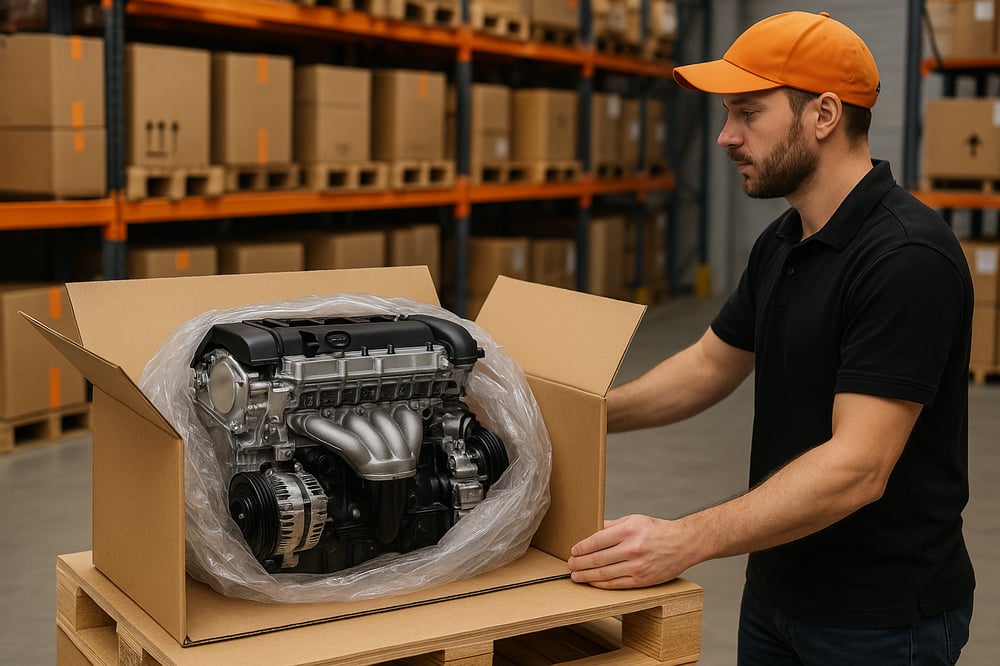
Proper engine packaging is critical and affects both safety and cost. Standard options include:
- Engine crates (wooden): $150-$300, providing excellent protection
- Engine stands (for transport only): $100-$200, suitable for shorter distances
- Custom palletizing: $80-$200, depending on materials and labor
Professional packaging services typically add $100-$300 to shipping costs but significantly reduce damage risk. Carriers often charge significantly higher insurance rates for improperly packaged engines.
Additional Costs to Consider When Shipping an Engine

Shipping an engine involves more than just freight charges—be prepared for additional costs that can impact your overall budget.
Insurance and Valuation
Insurance rates for engine shipping typically range from 1-5% of the declared value. Most carriers offer:
- Basic liability coverage (usually $0.60 per pound) is included at no extra cost
- Full-value protection at additional cost based on engine type and value
For a $5,000 engine, additional insurance might add $100-$250 to shipping costs. However, this coverage is essential—nearly 18% of all mechanical component shipments experience some form of handling damage during transit.
Pickup and Delivery Options
Standard shipping quotes typically include:
- Business address pickup/delivery during regular hours (included)
- Residential service: Additional $50-$150
- Liftgate service (for locations without loading docks): $75-$150
- Limited access locations (construction sites, remote areas): $50-$200
- Inside pickup/delivery: $80-$200
Customs Duties and International Fees
For international engine shipping, additional costs include:
- Customs broker fees: $100-$300
- Import duties: Typically 2-8% of declared value
- Documentation fees: $50-$150
- Potential inspection costs: $100-$500
These expenses can add 15-40% to the base shipping cost for international transport.
How to Save on Engine Shipping Costs

Reducing engine shipping costs is all about smart planning, carrier comparison, and proper preparation.
Strategic Timing and Flexibility
The freight industry experiences seasonal demand fluctuations, with rates typically peaking in summer months (June-August) and late November through December. Shipping during off-peak seasons can save 10-15% on transport costs.
Similarly, providing flexible delivery windows rather than requesting specific delivery dates can reduce rates by 5-10%. Carriers can optimize their routes when given a 3-5 day delivery window rather than a specific date.
Compare Multiple Carriers and Freight Options
Different carriers specialize in different types of engine transport. Obtaining quotes from at least three different providers can reveal pricing discrepancies of 15-30% for identical services.
Freight brokers can help access specialized carriers who might not be visible through standard shipping marketplaces. These specialized carriers often offer competitive rates for engine transport due to their experience and efficiency with such shipments.
Proper Preparation and Packaging
Preparing an engine correctly before shipping can significantly reduce costs:
- Drain all fluids completely (carriers charge hazardous material fees otherwise)
- Remove unnecessary components (fuel injectors, starters, etc.) when feasible
- Use proper blocking and bracing techniques
- Include detailed handling instructions
Pro Tip: Engine Weight Distribution Mapping
Expert insight: Professional freight companies utilize weight distribution mapping for engine shipments over 1,000 pounds, but this technique can be applied to any engine shipment.
By clearly marking the engine’s center of gravity and creating a simple weight distribution diagram (attached to the shipment paperwork), handlers can properly position the engine on forklifts and in transport vehicles.
This simple step reduces improper handling incidents by nearly 60% according to industry data. While carriers don’t explicitly offer discounts for this preparation, many will provide preferred pricing to shippers who consistently deliver properly prepared engine shipments, potentially saving 5-12% on recurring shipments through improved carrier relationships.
Advanced Engine Shipping Tactics for eCommerce Brands & Influencers
For eCommerce auto parts sellers and an automotive fulfillment partner, shipping engines at scale requires more than basic freight quotes. The strategies below balance cost-efficiency with a seamless customer experience—ideal for brands managing frequent shipments.
One smart move is partnering with 3PL fulfillment providers experienced in heavy, high-value items.
Many offer Shopify integration for automated order syncing, real-time tracking, and faster fulfillment.
| Strategy | Benefits | Estimated Cost Impact | Pro Tip |
| Use Engine-Specialized 3PL Fulfillment | Lower damage risk, faster processing, better compliance | Save 10–20% long-term | Look for Shopify integration to automate order flow and tracking |
| Add Freight Education at Checkout | Fewer abandoned carts, better customer trust | Boost conversions by 8–12% | Create a quick shipping FAQ or tooltip on the checkout page |
| Bundle Crating + Packaging with Freight | Fewer claims, better carrier pricing | Save $100–$300 per shipment | Ask your 3PL about discounted crate options for recurring shipments |
Another often-missed opportunity is educating customers at checkout. Explaining freight classes, liftgate fees, and insurance options can cut cart abandonment by up to 12%.
Finally, bundling crating and packaging services with shipping ensures safe handling and may unlock volume discounts, especially when paired with LTL or international freight.
What to Keep in Mind Before Shipping Your Engine
The most effective approach to shipping an engine combines thorough planning with strategic carrier selection. Begin by accurately documenting the engine’s specifications—exact weight, dimensions, value, and any special handling requirements..
Next, evaluate shipping timeframes realistically. Rush shipping an engine typically increases costs by 40-100% compared to standard transit options.
When possible, plan shipments 2-3 weeks in advance to access the most economical options without compromising on carrier quality.
Finally, consider the engine’s destination environment. Engines require protection from extreme temperatures and moisture.