
Americans spend over $253 billion annually on alcoholic beverages, with online alcohol sales growing at 42% year-over-year since 2020.
For businesses looking to capitalize on this booming market, understanding the complexities of shipping alcohol bottles isn’t just helpful—it’s essential.
Knowing how to ship bottles with alcohol involves more than just packaging; it means complying with legal regulations and choosing reliable carriers to ensure safe, lawful delivery.
A Detailed Guide to Ship Bottles with Alcohol

The regulations governing alcohol shipments vary significantly between countries, states, and even counties. These regulations exist to prevent underage access, ensure tax compliance, and maintain control over distribution channels.
Federal Regulations
At the federal level, the Alcohol and Tobacco Tax and Trade Bureau (TTB) oversees interstate alcohol shipping. Businesses need to:
- Obtain appropriate federal licensing based on their role (producer, distributor, retailer)
- Comply with the Federal Alcohol Administration Bureau
- Adhere to labeling requirements specific to alcoholic products
- Maintain detailed records of all shipments and transactions
State and Local Considerations
The most challenging aspect of alcohol shipping lies in navigating the patchwork of state laws:
- Some states completely prohibit direct-to-consumer alcohol shipments
- Many states require specific permits for shipping alcohol across their borders
- Quantity limitations vary widely between jurisdictions
- Some states restrict shipments to certain types of alcoholic beverages (allowing wine but prohibiting spirits, for example)
- Local dry counties may have additional restrictions
Before shipping alcohol, businesses must research the specific regulations for both origin and destination locations.
Working with a specialized attorney or consultant who understands alcohol distribution law is highly recommended for businesses regularly shipping across multiple states.
Selecting the Right Carriers for Alcohol Shipments
Not all shipping carriers accept alcohol shipments, and those that do have specific requirements and restrictions.
Major Carrier Policies

Below is an overview of the key policies from major carriers regarding alcohol shipments:
FedEx:
- Requires alcohol shippers to enroll in their alcohol shipping program
- Mandates an alcohol shipping agreement and specific account setup
- Only accepts shipments from licensed alcohol dealers and manufacturers
- Requires special labeling and an adult signature upon delivery
UPS:
- Permits alcohol shipments only from authorized shippers with a special contract
- Requires adherence to their packaging guidelines
- Mandates an adult signature (21+) for delivery
- Prohibits shipments to certain states based on local laws
USPS:
- Generally prohibits shipping alcohol through their service
- Limited exceptions exist for certain mailable alcoholic beverages meeting specific requirements
Specialized Alcohol Shipping Services
Several providers focus exclusively on alcohol shipping:
- Wine shipping specialists with temperature-controlled solutions
- Craft beer distribution networks
- Spirit-focused logistics providers
These specialized carriers often provide value-added services like compliance management, temperature monitoring, and experience with state-by-state regulations.
Proper Packaging Techniques for Shipping Alcohol
Proper packaging is critical when shipping glass bottles containing alcoholic beverages. Beyond regulatory compliance, effective packaging prevents breakage, leakage, and product loss.
Essential Packaging Materials
- Molded pulp or foam bottle inserts designed for specific bottle sizes
- Strong corrugated boxes with high burst strength (minimum 200#/ECT 32)
- Interior dividers to prevent bottle-to-bottle contact
- Void fill material to eliminate movement within the package
- Leak-proof plastic bags to contain potential spills
- Absorbent materials to capture any leakage
- “Fragile” and “Contains Alcohol – Adult Signature Required” labels
- Temperature-control elements for temperature-sensitive products
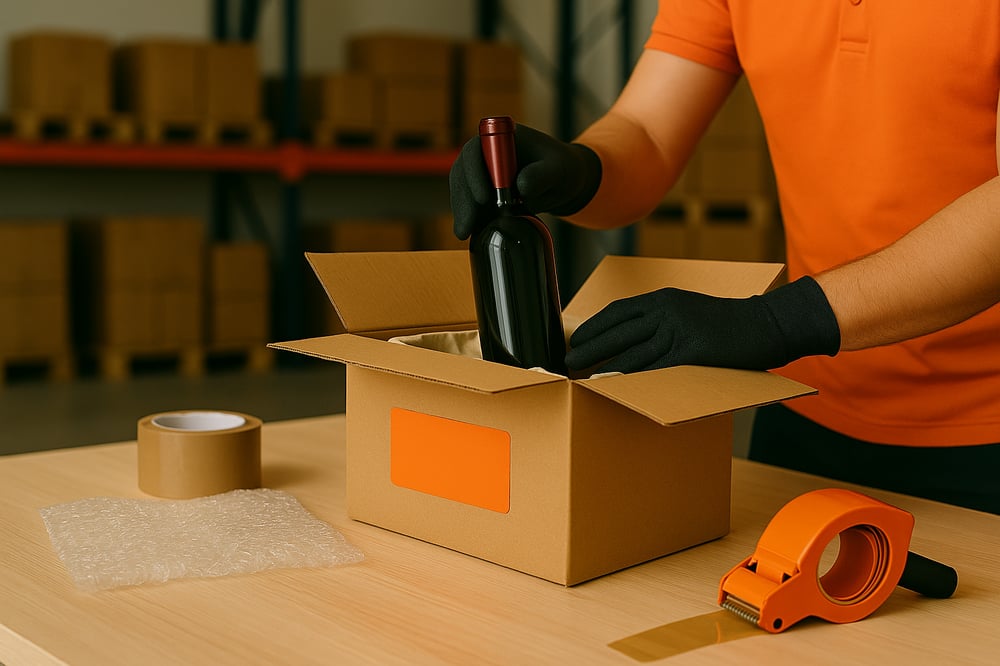
Step-by-Step Packaging Process
- Prepare individual bottles
- Place each bottle in a leak-proof plastic bag and seal securely
- Wrap bottles individually with bubble wrap or protective material
- Secure with tape, ensuring all parts are covered, especially the neck
- Position bottles in appropriate dividers
- Use molded inserts specifically designed for bottle shipping
- Ensure bottles cannot touch each other, even when shaken
- Position bottles away from the sides of the outer box
- Add cushioning and void fill
- Place cushioning material at the bottom of the box before adding bottles
- Fill all empty spaces with appropriate void fill material
- Ensure bottles cannot move when the package is shaken
- Seal and label the package
- Use strong packing tape to secure all seams of the box
- Apply the required labeling for alcohol shipments
- Include any temperature indicators if shipping temperature-sensitive products.
Pro Tip: The Three-Layer Protection Standard
Here’s an insider technique used by top alcohol distributors: Implement a three-layer protection system for maximum security.
First, wrap each bottle in a layer of thin foam wrap. Second, place it in a sealable, leak-proof bag with absorbent material at the bottom. Third, position it within a molded pulp insert that’s been pre-tested for drop resistance.
This triple-layer approach reduces breakage rates by up to 97% compared to standard packaging methods, according to industry testing—yet adds only pennies to packaging costs while dramatically reducing claims.
Temperature Considerations for Alcohol Shipping
Temperature fluctuations can significantly impact the quality of alcoholic beverages during transit.
Temperature Risks by Beverage Type
Wine:
- Ideal shipping temperature range: 55-65°F (13-18°C)
- Damage occurs above 80°F (27°C) or below freezing
- Extended exposure to heat can “cook” wine, creating stewed flavors
- Temperature fluctuations can push corks and cause leakage
Beer:
- Best shipped between 38-45°F (3-7°C)
- Heat accelerates aging and can create off-flavors
- Freezing can cause expansion and container rupture
Spirits:
- Generally, more temperature-stable than wine or beer
- Extreme heat can still affect flavor profiles
- Freezing is rarely an issue except for lower-proof products
Temperature Control Solutions
- Insulated shipping containers with an appropriate R-value
- Gel packs (refrigerated, not frozen) for short transits
- Dry ice for longer transits (requires special handling)
- Thermal blankets for protection against extreme heat or cold
- Temperature indicators to monitor conditions during transit
- Expedited shipping to minimize exposure time
- Scheduling shipments to avoid extreme weather conditions
Cost Factors in Alcohol Shipping
Shipping alcohol typically costs 15-30% more than shipping standard products due to several factors:
Cost Components
- Specialized packaging materials
- Compliance documentation and licensing fees
- Adult signature requirements and delivery restrictions
- Insurance premiums for high-value shipments
- Carrier surcharges for alcohol handling
- Temperature control requirements
- Returns processing for undeliverable shipments
Cost-Optimization Strategies
- Batch shipments to specific states to maximize permit utilization
- Optimize package dimensions and weight for carrier pricing tiers
- Establish shipping hubs in states with favorable alcohol shipping laws
- Partner with fulfillment providers specializing in alcohol logistics
- Implement zone-skipping strategies for large volume shipments
- Negotiate carrier contracts based on consistent volume
Documentation and Compliance Requirements

Proper documentation is essential for legal alcohol shipments and helps prevent delays and rejections.
Required Documentation
- Bill of lading with alcohol-specific information
- Adult signature confirmation forms
- Copies of appropriate licenses and permits
- Excise tax payment verification
- Product identification information
- Certificate of label approval (COLA)
- Interstate shipment authorization (when required)
Compliance Best Practices
- Maintain a database of state-by-state shipping requirements
- Update compliance documentation regularly as laws change
- Conduct regular audits of shipping procedures
- Train staff on proper handling of alcohol documentation
- Partner with compliance services that specialize in alcohol distribution
Future-Proofing Your Alcohol Shipping Operations
The landscape of alcohol shipping continues to evolve as regulations change and consumer expectations shift. Leveraging tools like Shopify 3PL integration can help streamline compliance, order management, and customer communication in this rapidly changing space.
Emerging Trends
- Relaxation of direct-to-consumer restrictions in many states
- Growth of subscription models for alcohol delivery
- Increased focus on sustainability in alcohol packaging
- Technology integration for compliance management
- Specialized last-mile delivery services for alcohol
Adaptability Strategies
- Stay informed through industry associations and regulatory updates
- Build flexible fulfillment systems that can adapt to changing requirements
- Develop relationships with multiple shipping partners
- Invest in technology for compliance monitoring and management
- Regularly review and update shipping policies and procedures
Unlock Lower Costs with “Wet Route” Carrier Contracts
In the alcohol shipping industry, there’s a logistics tactic known internally as “wet routes” — carrier lanes optimized specifically for licensed alcohol shipments. These routes are used by major distributors, but most DTC sellers and small brands don’t even know they exist.
Wet routes are pre-approved, high-volume lanes between licensed fulfillment centers and “wet” states (those that allow alcohol shipments). Carriers assign optimized capacity for these lanes, allowing:
- Streamlined compliance checks
- Bulk volume discounts
- Faster clearances at distribution terminals
Wet routes exist both regionally (e.g., CA to TX, NY to FL) and nationally (e.g., IL to AZ, OR to GA), and they’re ideal for recurring alcohol shipments like:
- Monthly subscription boxes
- Winery club fulfillment
- Holiday bundles or seasonal promotions
| Benefit | Impact |
| Pre-screened carrier networks | Reduced alcohol handling errors and rejections |
| Streamlined legal documentation | Faster handoffs between compliance and shipping teams |
| Volume-based contract pricing | 15–30% lower rates than ad hoc alcohol shipping |
| Route familiarity | Higher on-time delivery rates and lower breakage risk |
Example: A craft distillery shipping 150 monthly boxes from Oregon to Texas through a wet route partner saved 28% compared to their previous national carrier rate, simply by aligning with a dedicated alcohol lane.
How to Access Wet Routes
- Ask your fulfillment provider if they partner with wet-route-certified carriers
- Look for carriers that specialize in alcohol-specific freight (e.g., GLS, GSO, WineDirect)
- For brands doing >100 shipments/month, negotiate alcohol lane contracts directly with regional LTL carriers
- Choose warehouses located in wet-friendly states (e.g., CA, NY, WA, FL) to simplify zone coverage
Navigating the Alcohol Shipping Journey
Successfully shipping alcohol requires navigating complex regulations, implementing proper packaging, choosing appropriate carriers, and maintaining stringent documentation.
For businesses looking to enter or expand in this market, understanding these requirements isn’t just about compliance—it’s about delivering a quality product and experience.
Lastly, with reliable beverage fulfillment services, businesses can successfully tap into the growing market for shipped alcoholic beverages while maintaining compliance and product integrity.