
The musical equipment shipping market exceeds $1.2 billion annually, with amplifiers representing one of the most frequently shipped but challenging categories.
Amplifiers combine significant weight with delicate electronic components, creating unique shipping considerations that directly impact costs and delivery success. Many wonder, how much does it cost to ship an amp? The answer depends on factors like packaging, distance, and carrier choice.
Shipping an amplifier typically costs between $30 and $250+ domestically, depending on its size, weight, shipping distance, and service level.
International shipping can range from $100 to $500+, with additional variables including customs fees, VAT, and specialized handling requirements.
What You Need to Know for Amplifier Shipping Costs
The cost to ship an amplifier varies widely based on several key factors:
Size and Weight Considerations

Amplifier shipping costs correlate directly with weight and dimensions:
- Practice/Small Amps (5-20 lbs): $30-75 for standard domestic shipping
- Mid-Size Amps (20-40 lbs): $75-150 for standard domestic shipping
- Large/Stack Amps (40+ lbs): $150-300+ for standard domestic shipping
Each carrier uses dimensional weight calculations (L × W × H ÷ divisor) when determining shipping costs. For amplifiers that are relatively light but bulky, the dimensional weight often exceeds actual weight, increasing costs.
The dimensional divisor varies by carrier: UPS and FedEx use 139 for domestic shipments, while USPS uses 166.
Distance and Shipping Zones
Shipping distance significantly impacts cost:
- Zone 1-2 (0-150 miles): Lowest shipping rates
- Zone 3-4 (150-600 miles): Moderate increase
- Zone 5-7 (600-1800 miles): Substantial increase
- Zone 8 (1800+ miles): Highest domestic rates
For a mid-sized 30 lb amplifier, expect approximately a 35-45% cost increase from Zone 2 to Zone 8 shipping.
Service Level Selection
The chosen shipping speed dramatically affects cost:
- Ground/Standard (2-7 business days): Most economical option
- Expedited (2-3 business days): 40-60% price premium
- Express/Overnight: 100-200% price premium
Carrier Comparison for Amplifier Shipping

Each major carrier offers distinct advantages for shipping amplifiers:
USPS
- Most economical for smaller amplifiers under 20 lbs
- Flat-rate options are beneficial for heavier compact amps
- Limited insurance and tracking compared to private carriers
UPS
- Competitive rates for mid-to-large amplifiers
- Strong commercial discount programs
- Superior tracking capabilities
- Better handling for fragile items
FedEx
- Similar pricing structure to UPS
- Excellent time-definite delivery options
- Electronic signature confirmation services
Freight Services
- Required for very large amplifier stacks or multiple units
- LTL (Less Than Truckload) typically starts around $200 domestic
- Provides liftgate service for extremely heavy amplifiers
Packaging Requirements and Their Cost Impact
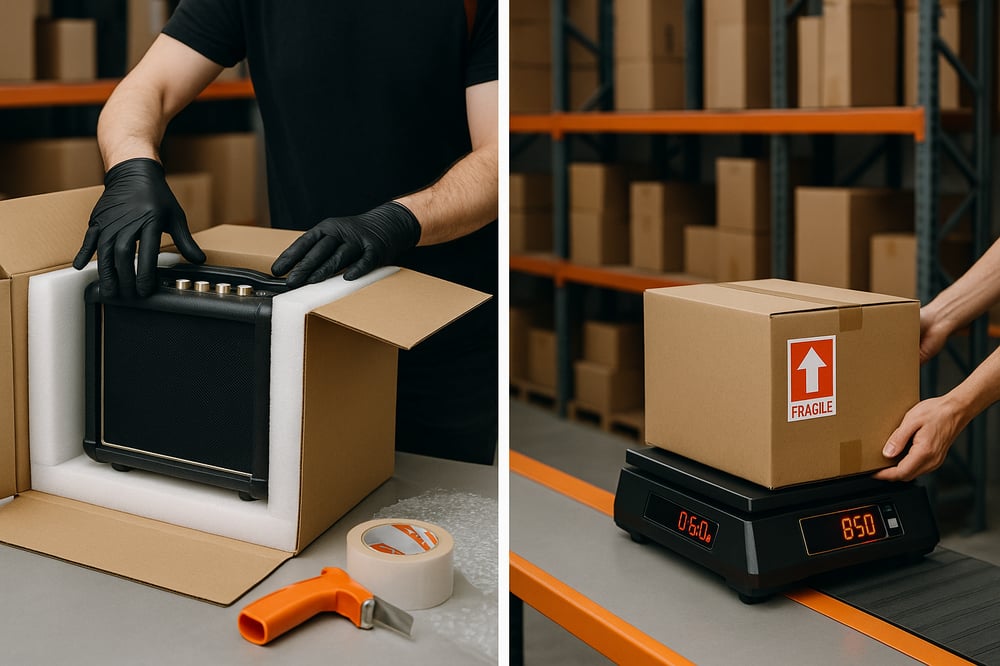
Proper packaging is crucial for amplifier protection, especially in electronics fulfillment, where damage prevention directly impacts customer satisfaction and returns. However, protective materials also contribute to overall shipping costs:
Essential Packaging Materials
For properly protecting an amplifier during transit:
- Double-walled corrugated box: $10-25, depending on size
- Foam inserts/corner protectors: $15-30
- Bubble wrap/packing paper: $5-15
- Packing tape: $5
- “Fragile” labels: $3-5
Total packaging costs typically range from $4 to $ to-80 for a properly protected amplifier shipment.
Professional Packaging Services
Many shippers opt for professional packaging when shipping valuable amplifiers:
- Shipping store packing services: $25-50 for small amps, $50-100 for larger units
- Specialty music equipment shipping companies: $75-200, includes custom foam inserts
Insurance Considerations
Insurance represents an additional but essential cost:
- Standard carrier insurance: Often limited to $100 of coverage
- Declared value coverage: Typically $1-1.50 per $100 of value
- Third-party shipping insurance: Usually 0.5-1% of declared value
For a $2,000 amplifier, expect to pay $20-40 for comprehensive coverage.
Cost-Saving Strategies for Amplifier Shipping

Several proven strategies can reduce amplifier shipping expenses without compromising safety:
Dimensional Weight Optimization
Small adjustments can significantly impact weight calculations:
- Use the smallest appropriate box that maintains 2-3 inches of cushioning space
- Remove detachable components (tubes, power cords) and pack separately within the same box
- Consider removing amplifier handles temporarily if they create dimensional bulges
Carrier Program Enrollment
Many carriers offer cost-reduction programs:
- UPS and FedEx commercial accounts: 20-30% discounts with regular shipping volume
- USPS Commercial Plus Pricing: Available through aggregators or high-volume accounts
- Regional carrier partnerships: Often 15-25% less expensive than national carriers for shorter distances
Timing Considerations
Strategic timing can reduce costs:
- Ship mid-week (Tuesday-Thursday) to avoid weekend surcharges
- Avoid holiday season shipping when possible (rates typically increase 5-15%)
- Plan for ground shipping when expedited service isn’t essential
International Amplifier Shipping Considerations
International amplifier shipping introduces additional complexities and costs:
Customs Documentation Requirements
Proper documentation prevents delays and unexpected fees:
- Commercial invoice: Must specify accurate value and detailed description
- Certificate of origin: Required for certain countries and high-value equipment
- HS code classification: Electronic amplifiers typically fall under 8518.40
Country-Specific Regulations
Regulations vary significantly by destination:
- EU countries: Require CE certification for electronic equipment
- Brazil and Argentina: Impose high import duties (60 %+) on musical equipment
- Australia: Strict biosecurity inspections for wooden amplifier components
International Shipping Cost Examples
Representative costs for shipping a mid-sized amplifier internationally:
- US to Canada: $120-200
- US to UK/EU: $200-350
- US to Australia/Asia: $300-500+
These estimates exclude duties, taxes, and customs fees, which typically add 15-30% of the declared value.
The Hybrid Shipping Method: Balancing Cost and Speed
A lesser-known expert strategy for shipping high-value amplifiers combines elements of different shipping services to optimize cost-effectiveness and protection. This approach particularly benefits tube amplifiers and vintage equipment.
The hybrid method involves:
- Separating the amplifier chassis from the cabinet when appropriate
- Shipping delicate electronic components via premium service with extensive insurance
- Shipping sturdier components via more economical methods
- Using specialty freight forwarders who consolidate shipments
This approach has been documented to reduce overall costs by 15-25% while improving delivery outcomes for expensive amplifiers. The success rate for undamaged arrival increases approximately 30% compared to standard single-carrier shipping.
Shipping Strategies for eCommerce Amplifier Sellers
For music gear retailers, boutique amp makers, and influencers selling amps online, smart shipping isn’t just about protection – it’s about preserving profit margins and reputation.
Below are underused strategies to help scale your amplifier shipping while minimizing risk and cost.
| Shipping Strategy | Best For | Cost Range | Expert Tip |
| Hybrid Shipping Method | High-value or vintage amps | Save 15–25% overall | Split chassis & cab, ship components separately to reduce risk & cost |
| Carrier Commercial Accounts | Brands shipping 5+ amps monthly | Save 20–30% on rates | Enroll with FedEx or UPS for ongoing volume discounts |
| Dimensional Weight Optimization | All amp sizes | Reduce charges by 10–15% | Use snug packaging and remove protruding parts (e.g., handles, footswitches) |
| Specialty 3PL for Musical Equipment | High-end or fragile amp lines | Higher upfront, lower damage claims | Use music gear-focused fulfillment services for better handling & insurance |
These tactics go beyond standard shipping advice, giving your amp brand a competitive edge, especially when selling through platforms like Shopify or running drops from influencer campaigns.
Getting Your Amp Ready to Ship with Confidence
Shipping an amplifier successfully requires balancing cost considerations with adequate protection for sensitive equipment.
By understanding the primary cost factors—weight, dimensions, distance, service level, and packaging requirements—shippers can make informed decisions that protect both their equipment and budget.
For regular amplifier shipping needs, explore carrier commercial accounts and investigate specialized music equipment shipping services that offer industry-specific expertise in handling these unique items.