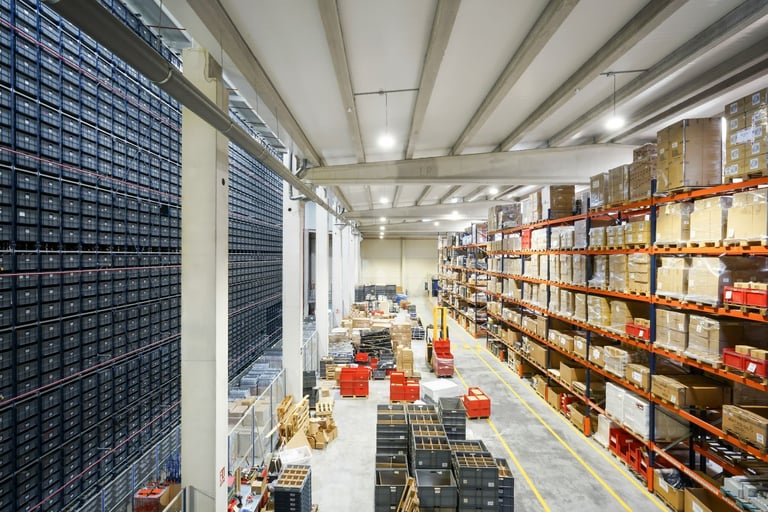

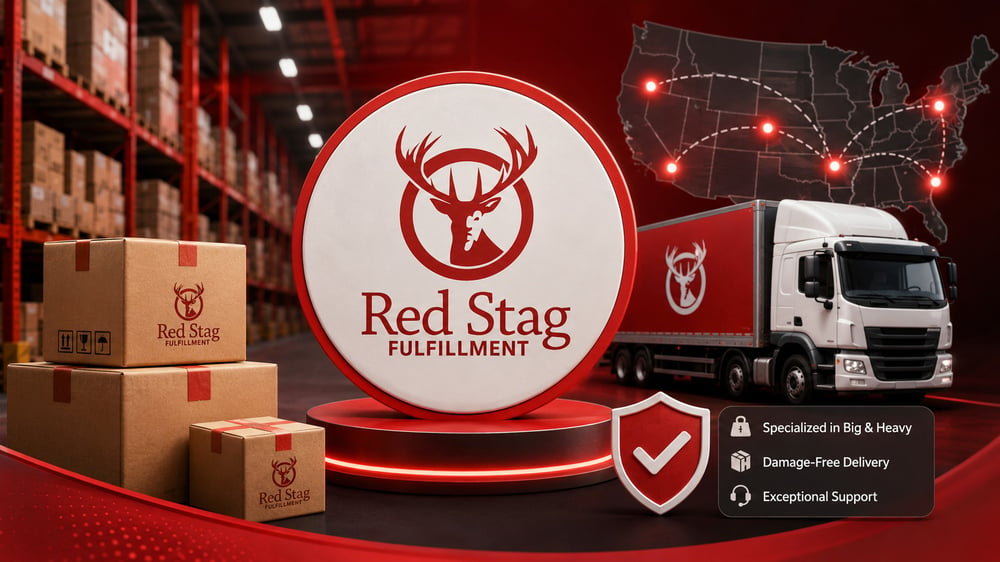
Most 3PLs will take on almost anything you ship. Red Stag built its business on the opposite bet: specialize in heavy, oversized, fragile, and high-value items.
That focus is exactly why Red Stag shows up so often in fulfillment reviews and comparisons, and also why it isn’t the right fit for every brand. This review looks at what Red Stag actually does well, where it’s limited, and how it holds up on technology, onboarding, returns, and cost.
Red Stag Fulfillment Company Overview
Red Stag was founded in 2013 by ecommerce operators who’d been burned by unreliable 3PLs during a previous holiday season, and that origin story still shapes the business: it’s built around accountability guarantees rather than being a general-purpose fulfillment provider.
- Two US fulfillment centers (East and West coast), including a large facility in Knoxville, TN
- A specialization in heavy, and high-value products
- Zero-shrinkage and accuracy guarantees, with financial compensation when errors occur
- Same-day fulfillment with a 5 p.m. cutoff and inbound receiving processed within about 48 hours
- Direct integrations with major ecommerce platforms, plus custom API integrations on request
Red Stag Reviews: Pros and Cons
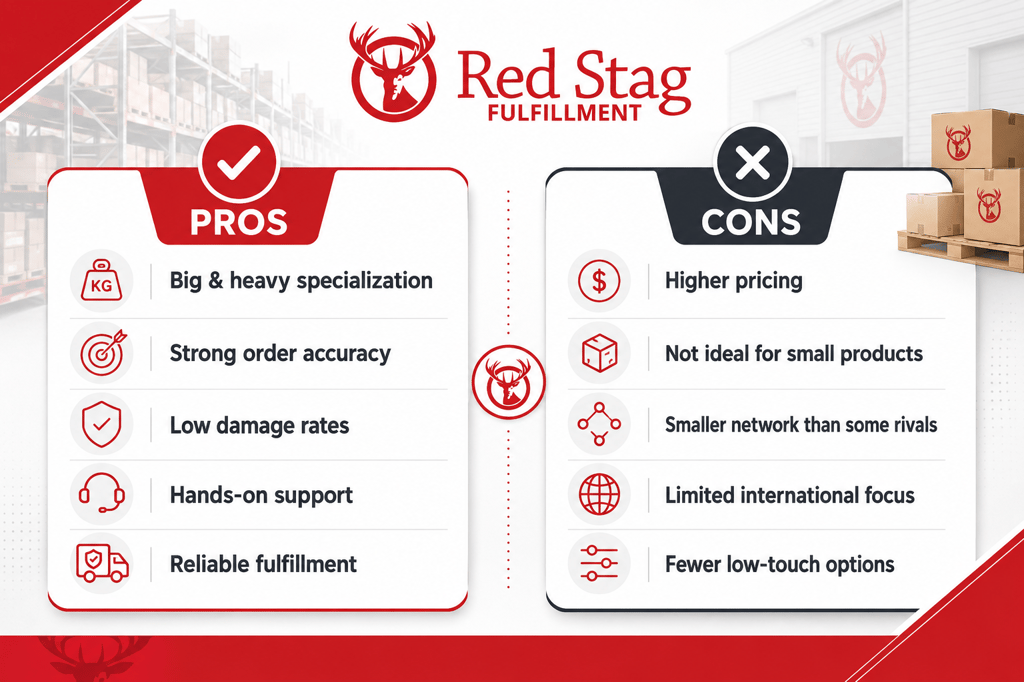
Red Stag’s reputation is more concentrated than most 3PLs — reviewers tend to agree on what it’s good at and what it isn’t, rather than splitting on the basics.
| Pros | Cons |
|---|---|
| Industry-leading accuracy guarantees | Premium pricing for small or lightweight items |
| Purpose-built for heavy/bulky/high-value products | Only two warehouse locations |
| Zero-shrinkage inventory policy | Narrow fit for brands with mixed, general-merchandise catalogs |
| Fast inbound receiving and same-day cutoff | Limited public review volume to verify at scale |
| Responsive, named-account support | Less flexible for highly custom fulfillment workflows |
Main Pros
- Accuracy Guarantees: Red Stag backs its pick, pack, and inventory accuracy with financial compensation when it falls short, which is rare among 3PLs.
- Built for Difficult Products: Oversized, heavy, and fragile items that other providers surcharge or reject are Red Stag’s core specialty, not an afterthought.
- Zero-Shrinkage Policy: Lost or damaged inventory is reimbursed, which matters more for high-value SKUs than for low-cost goods.
- Fast, Predictable Processing: Same-day cutoffs and quick inbound receiving keep timelines consistent within its specialization.
- Hands-On Support: Reviewers frequently cite responsive, named account contacts rather than a general support queue.
Biggest Cons
- Cost for Smaller or Lighter Items: The pricing model reflects the specialization, so brands with small, low-margin products often pay more than they would with a generalist 3PL.
- Limited Footprint: A two-warehouse network can mean longer transit times for customers far from either location, compared to 3PLs with broader coverage.
- Narrow Fit for Mixed Catalogs: Brands with a wide, general-merchandise product mix may find Red Stag’s model more restrictive than a broader fulfillment provider.
- Thin Public Review Trail: Red Stag isn’t listed on G2 or Capterra, and reviews on Trustpilot are a small sample, which makes it harder to independently verify service consistency at scale.
- Less Flexibility for Non-Standard Workflows: Its process-driven model is a strength for its niche, but leaves less room for highly customized fulfillment requests.
Red Stag Technology, Reporting & Analytics
Red Stag’s technology isn’t the headline feature the way it is for some competitors. Its differentiation is operational, not software-first, but the platform still needs to support the accuracy guarantees it’s built its reputation on.
| Feature | What It Does | Where It’s Limited |
|---|---|---|
| Inventory & order dashboard | Real-time visibility into stock levels and order status | Reporting is functional rather than deeply customizable |
| Accuracy & guarantee tracking | Surfaces error rates tied to Red Stag’s compensation guarantees | Less useful for brands wanting broad marketing/sales analytics |
| Inbound receiving tracking | Confirms inventory processed within the ~48-hour window | Fewer self-service tools than tech-first 3PLs |
Red Stag Onboarding & Platform Integrations
Onboarding follows a structured, process-driven path — reviewing your product mix and shipping profile, connecting your store, and transferring inventory into one of Red Stag’s two facilities.
On integrations, Red Stag connects directly with major ecommerce platforms.
| Category | Examples |
|---|---|
| Ecommerce platforms | Shopify, WooCommerce, BigCommerce, Magento |
| Marketplaces | Amazon Selling Partner |
| Carriers | FedEx, UPS, USPS, DHL, EasyPost |
| Custom connections | Available via API for non-standard needs |
Red Stag Returns & Reverse Logistics
Returns handling follows the same accuracy-first approach as the rest of Red Stag’s model. Returned items are received, inspected, and restocked when sellable, with the same inventory guarantees applied to returned goods as to outbound orders.
What this typically includes:
- Receiving and inspection of returned items at Red Stag’s facilities
- Restocking sellable inventory back into available stock
- Damage assessment and reporting tied to the same accuracy guarantees covering outbound fulfillment
- Support for return volume tied to large or fragile items, where mishandled returns carry higher costs than average
What Customers Say About Red Stag
Red Stag holds a 3.7-star average on Trustpilot across a limited number of reviews, and is mentioned across discussions on forums like Reddit.
⭐⭐⭐⭐⭐ What customers appreciate:
- Dependable follow-through on SLAs and committed timelines
- Responsive, hands-on customer support
- Careful handling that holds up for high-value or fragile products
⭐ What customers complain about:
- Occasional dock scheduling issues, where a booked appointment wasn’t matched with available unloading staff, leading to unexpected trucking costs
- Real-world shipping savings can be smaller than expected, since Knoxville isn’t especially close to major population centers despite the 2-day transit target
- Pricing that doesn’t pencil out well for very lightweight items, where ground shipping rarely makes sense once residential surcharges are factored in
Red Stag vs. Fulfyld: Side-by-Side Comparison
Legend: ✅ = Included/Strong offering · ⚠️ = Available but varies by use case or plan · ❌ = Not included/limited
| Capability | Red Stag Fulfillment | Fulfyld |
|---|---|---|
| Fulfillment network | ✅ Two specialized facilities | ✅ Strategically located warehouses |
| Order accuracy | ~99.9%+ with financial guarantee | 99.99% |
| Inventory accuracy | ✅ Zero-shrinkage guarantee | 99.7%–99.99% |
| Turnaround time | ⚠️ Varies by product size | ✅ Optimized workflows |
| Best-fit catalog | Heavy, bulky, fragile, high-value | Broad ecommerce catalogs |
| Mixed product catalog support | ❌ Limited by specialization | ✅ Built for varied SKUs |
| Pricing for small/light items | ❌ Premium, not cost-optimized | ✅ Flat, all-inclusive per-order rate |
| Dedicated account manager | ⚠️ Named contact, not always guaranteed | ✅ Included |
| Performance-based SLAs | ✅ Guarantees on Red Stag’s own errors | ✅ Clearly defined benchmarks |
| Flexible scaling as volumes grow | ❌ More rigid, two-facility model | ✅ Designed to scale |
If your products don’t require Red Stag’s specialized handling, Fulfyld offers a broader fit with a flat, predictable rate and hands-on support, including structured onboarding, platform integrations, and ongoing performance review against clear 3PL KPIs.
When Red Stag’s Specialty Isn’t Your Fit
Red Stag earns its reputation with brands that genuinely need what it specializes in: heavy, bulky, fragile, or high-value products where accuracy guarantees are worth paying a premium for.
Outside that niche, smaller items, broader catalogs, or brands that need a wider warehouse footprint, the same specialization becomes a limitation.
If your products don’t need that level of specialized handling, Fulfyld offers a flat, all-inclusive per-order rate, a dedicated account manager, and hands-on support built for growing ecommerce brands. Get a free quote today.
FAQs
What’s Red Stag’s Fulfillment reputation like?
Red Stag’s reputation is strong but narrow. It isn’t listed on G2 or Capterra, and it holds an average 3.7-star rating on Trustpilot across a limited number of reviews.
Community discussion (including long-running threads on Reddit) generally echoes the same pattern found elsewhere: strong SLA reliability and responsive customer support day-to-day, with occasional friction around inbound receiving.
What makes Red Stag Fulfillment better than other 3PL services for large items?
Its guarantees are built specifically around the risks large and fragile items create: zero-shrinkage inventory policies, accuracy guarantees backed by financial compensation, and handling processes designed to reduce damage in storage and transit.
Is Red Stag Fulfillment expensive compared to other 3PLs?
For the products it specializes in, Red Stag’s pricing is generally seen as fair given the guarantees attached to it. For small, lightweight, low-margin products, it tends to run more expensive than generalist 3PLs, since its pricing model isn’t optimized for that category.
Who is Red Stag best for, and who should look elsewhere?
Red Stag is best for brands shipping heavy, bulky, fragile, or high-value products where accuracy and damage prevention directly affect the bottom line. Brands with small, lightweight, high-volume catalogs, or those needing a broader multi-warehouse footprint, are generally better served by a generalist 3PL.
What are the best Red Stag Fulfillment alternatives for smaller items?
For brands with lighter, standard-sized products, generalist 3PLs with broader warehouse networks and flat, predictable pricing, like Fulfyld, are usually a better fit than a specialized provider built around large or high-value goods.
What’s the difference between using Red Stag and Shopify Fulfillment Network?
Shopify Fulfillment Network (now powered by Flexport) plugs directly into the Shopify admin, with fulfillment, inventory, and reporting managed inside the same ecosystem merchants already use to run their store.
Red Stag isn’t tied to any single ecommerce platform and instead specializes by product type: heavy, bulky, fragile, or high-value goods that Shopify Fulfillment Network and most general 3PLs either surcharge heavily or decline to handle well.