

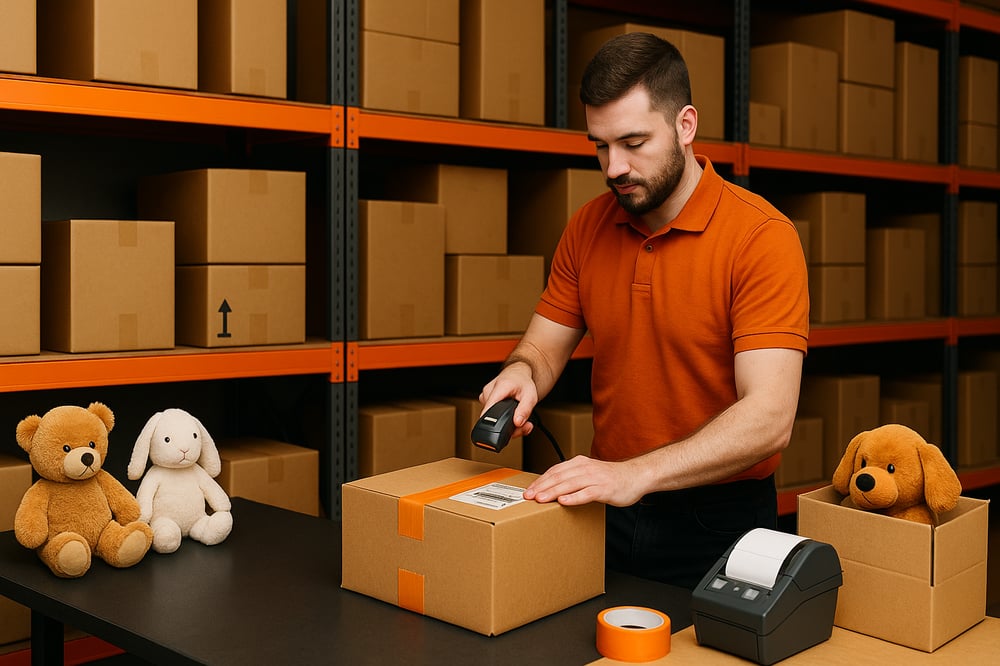
Americans spend over $1.3 billion annually on stuffed animals and plush toys, with more than 30% of these purchases now happening online.
For e-commerce retailers and specialty plush manufacturers, understanding the logistics and costs associated with shipping these seemingly simple items has become increasingly important to maintaining competitive pricing and customer satisfaction.
Shipping stuffed animal presents unique challenges that impact costs, from their irregular shapes and compressibility to their varying sizes and weights.
Whether you’re an established retailer expanding your plush toy line or a specialty store focused exclusively on collectible teddy bears, mastering how much does it cost to ship a stuffed animal can significantly impact your bottom line.
Detailed Guide for the Average Costs to Ship Stuffed Animals

The cost to ship a stuffed animal varies significantly based on several key factors. For domestic shipping within the United States, prices typically range from $4 to $25, while international shipping can range from $15 to $70 or more.
Here’s a breakdown of approximate costs by carrier and service level for a standard 12-inch stuffed animal weighing approximately 1 pound when properly packaged:
Domestic Shipping (Continental US):
- USPS First Class Package (1-3 business days): $4-$6
- USPS Priority Mail (1-3 business days): $8-$12
- UPS Ground (1-5 business days): $9-$15
- FedEx Home Delivery (1-5 business days): $9-$15
- DHL eCommerce (2-5 business days): $7-$12
International Shipping (to common destinations):
- USPS First Class Package International (7-21 business days): $15-$25
- USPS Priority Mail International (6-10 business days): $35-$55
- UPS Worldwide Expedited (2-5 business days): $45-$70
- FedEx International Economy (4-6 business days): $50-$75
- DHL Express Worldwide (1-3 business days): $50-$80
These rates represent baseline costs for standard-sized stuffed animals in 2025. For larger collectible bears or specialty plush items, shipping costs will increase proportionally with size and weight.
Key Factors That Influence Stuffed Animal Shipping Costs
The cost variation when shipping stuffed animals stems from multiple factors that logistics professionals must consider when calculating shipping expenses:
Size and Weight Considerations
Despite their lightweight nature, stuffed animals often have disproportionate dimensional weight due to their bulkiness. Carriers calculate shipping costs based on whichever is greater: actual weight or dimensional weight (length × width × height ÷ dimensional factor).
For example, a 20-inch teddy bear that weighs only 2 pounds might be charged as if it weighs 5-7 pounds due to the space it occupies in delivery vehicles.
This dimensional weight pricing model significantly impacts shipping costs for stuffed animals.
To reduce dimensional weight charges, consider:
- Vacuum-sealing larger plush items to reduce volume
- Using compression packaging when appropriate for non-collectible items
- Selecting appropriately sized boxes rather than oversized packaging
Shipping Distance and Zones
Domestic shipping costs are calculated based on shipping zones—the distance between the origin and destination zip codes. The greater the distance (higher zone number), the higher the shipping cost.
For stuffed animal retailers concentrated in one region but selling nationally, this zone-based pricing creates significant cost differences between nearby customers (Zones 1-2) versus those across the country (Zones 7-8).
The cost difference between shipping a standard teddy bear to Zone 1 versus Zone 8 can be as much as 40-60%.
Service Level and Delivery Speed
Expedited shipping services can increase base costs by 2-3 times compared to standard delivery options.
For stuffed animals that aren’t typically urgent purchases, offering economical standard shipping with tracking may be sufficient for most customers, while keeping premium expedited options available for last-minute gift purchases.
The sweet spot for most stuffed animal retailers is offering free standard shipping above a certain order threshold (commonly $35-$50) while charging appropriately for expedited options.
Packaging Requirements for Stuffed Animals

Proper packaging impacts not only protection during transit but also overall shipping costs. For stuffed animals, packaging considerations include:
Protection Requirements
Unlike fragile items, most stuffed animals don’t require extensive protective packaging. However, collectible or premium plush items need protection from compression damage, dirt, and moisture. Industry best practices include:
- Using clear poly bags as a first layer of protection
- Adding tissue paper for premium unboxing experiences
- Utilizing appropriate box sizes to prevent excessive movement
- Including minimal void fill for standard plush items
Pro Tip: For specialty collectible stuffed animals, use acid-free tissue paper rather than standard tissue to prevent discoloration over time—a subtle but important detail that high-end collectors recognize and appreciate.
Packaging Materials and Their Costs
The packaging materials themselves contribute to overall shipping expenses:
- Poly mailers: $0.15-$0.30 each
- Standard shipping boxes (8×6×4 to 12×10×6): $0.50-$1.20 each
- Tissue paper: $0.10-$0.25 per sheet
- Void fill: $0.20-$0.50 per package
- Packing tape: $0.10-$0.15 per package
- Custom-branded packaging: Adds $0.75-$2.00 per package
For standard stuffed animals, poly mailers offer the most cost-effective option, reducing both packaging costs and dimensional weight. Premium or collectible plush items typically require sturdier boxes to prevent crushing during transit.
Carrier Comparison for Shipping Stuffed Animals
Choosing the right 3PL fulfillment partner can significantly impact shipping costs, reliability, and customer satisfaction. Here’s a simplified breakdown of the major carriers to help you decide easily:
| Carrier | Best For | Cost Range | Key Advantages |
| USPS | Lightweight (under 2 lbs), single shipments | Under $6 (First Class Package) | Economical, free Priority Mail packaging |
| UPS | Heavier, larger items; multiple unit shipments | $8–$25 (Ground) | Excellent tracking, superior insurance options, negotiable rates with volume |
| FedEx | High-value collectible items, bulk shipments | $8–$25 (Ground) | Robust tracking, comprehensive insurance coverage, and negotiable dimensional pricing |
| DHL | International shipments (especially Europe & Asia) | Varies widely based on destination | Global network, competitive international pricing, growing domestic presence |
Quick Recommendations:
- USPS: Ideal if you’re shipping smaller, less valuable plush toys domestically.
- UPS/FedEx: Perfect when reliability, detailed tracking, and insurance for high-value items matter most.
- DHL: Your go-to choice if your customer base is primarily international.
Pro Tip: Regularly negotiate rates with UPS and FedEx if your shipping volume is substantial; you could significantly reduce costs and enhance profitability.
Cost-Saving Strategies for Shipping Stuffed Animals
Implementing these strategies can significantly reduce overall shipping expenses for businesses regularly shipping stuffed animals:
Negotiating Carrier Rates
Businesses shipping as few as 100 stuffed animals weekly can typically negotiate discounted rates with major carriers.
Volume discounts of 15–30% off published rates are common for established eCommerce retailers, especially those with streamlined e-commerce integration that enables consistent shipping volumes.
When negotiating, focus specifically on the dimensional weight factors, as this typically impacts stuffed animal shipping costs more than actual weight rates.
Optimizing Packaging
Rather than using standard box sizes, develop packaging specifically optimized for your most commonly sold stuffed animals. Custom packaging that reduces dimensional weight by just 10% can yield shipping savings of 15-20% annually.
For regularly shipped combinations (like “stuffed animal + book” gift sets), designing packaging that accommodates these specific pairings can further reduce dimensional weight charges.
Regional Carrier Options
Regional carriers like LaserShip, OnTrac, and OSM Worldwide often offer lower rates for short to medium-distance shipments of lightweight items like stuffed animals.
These carriers typically provide service to specific regions at 10-15% lower costs than national carriers, making them valuable alternatives for retailers with customer concentrations in their service areas.
International Shipping Considerations for Stuffed Animals

When shipping stuffed animals internationally, additional factors come into play:
Customs Documentation
Most countries classify stuffed animals as toys, which typically don’t incur high import duties. However, accurate documentation is essential, especially in toy and game fulfillment operations to prevent customs delays:
- Detailed commercial invoice with accurate product descriptions
- Harmonized System (HS) code: usually 9503.00 for stuffed toys
- Country of origin declaration
- Any required certifications (particularly for children’s toys)
Import Duties and Taxes
Customers purchasing stuffed animals from overseas may face import duties and taxes upon delivery. These charges vary by country but typically range from 5-20% of the declared value. To improve customer experience, consider:
- Using DDP (Delivered Duty Paid) shipping options that incorporate these fees upfront
- Communicating potential customs charges during checkout
- Providing accurate harmonized codes to ensure proper duty assessment
International Shipping Solution Providers
Third-party international fulfillment can often provide more competitive rates than going directly through major carriers.
Services like Asendia, Global Post, and International Bridge offer hybrid shipping solutions that combine the networks of multiple carriers to optimize costs for international stuffed animal shipments.
Special Considerations for Collectible Stuffed Animals
Collectible or limited-edition stuffed animals present unique shipping challenges that impact costs:
Insurance and Valuation
High-value collectible bears from brands like Steiff or limited-edition plush characters can require additional insurance, adding 1-5% of the declared value to shipping costs. When shipping collectibles valued over $200, always:
- Purchase additional shipping insurance
- Require signature confirmation ($3-$5 additional fee)
- Consider premium tracking options for real-time monitoring
Packaging for Preservation
Collectible stuffed animals require preservation-quality packaging to maintain their condition and value:
- Acid-free tissue paper
- Sturdy boxes with multiple inches of clearance on all sides
- Appropriate void fill that doesn’t compress the item
- Moisture protection (silica gel packets for international or humid destinations)
This specialized packaging increases material costs by $3-$5 per shipment but is essential for preserving item value.
Optimize Your Stuffed Animal Shipping Strategy
For businesses regularly shipping stuffed animals, developing a comprehensive shipping strategy can significantly reduce costs while improving customer satisfaction.
With thoughtful planning and attention to these details, the costs associated with shipping stuffed animals can be optimized, creating better customer experiences and healthier profit margins for your business.