
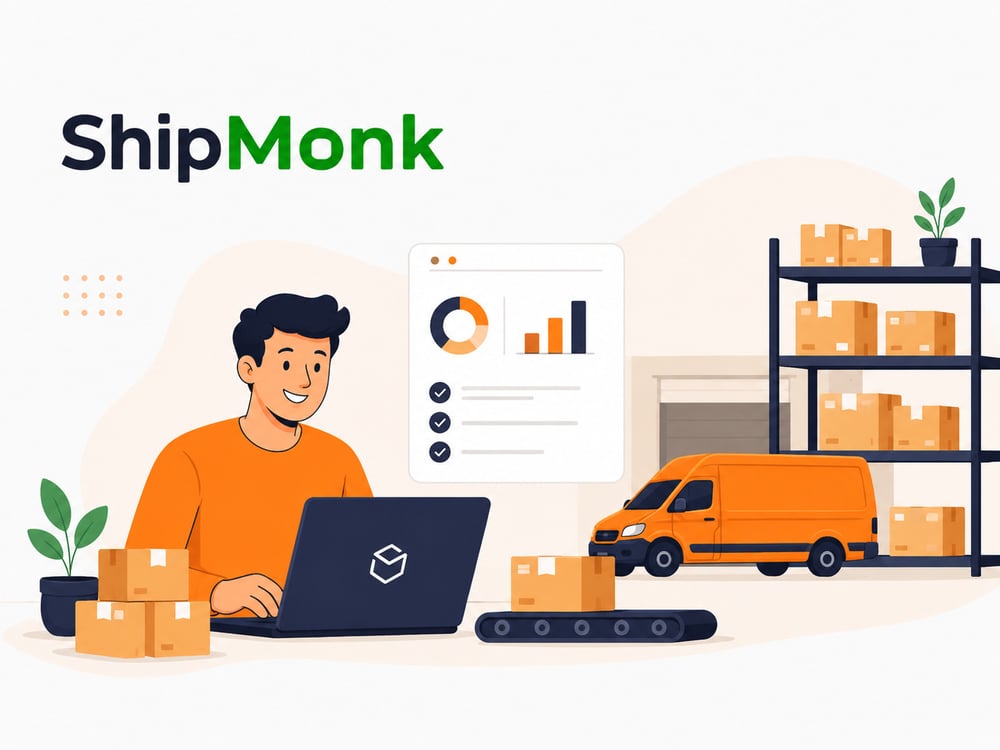
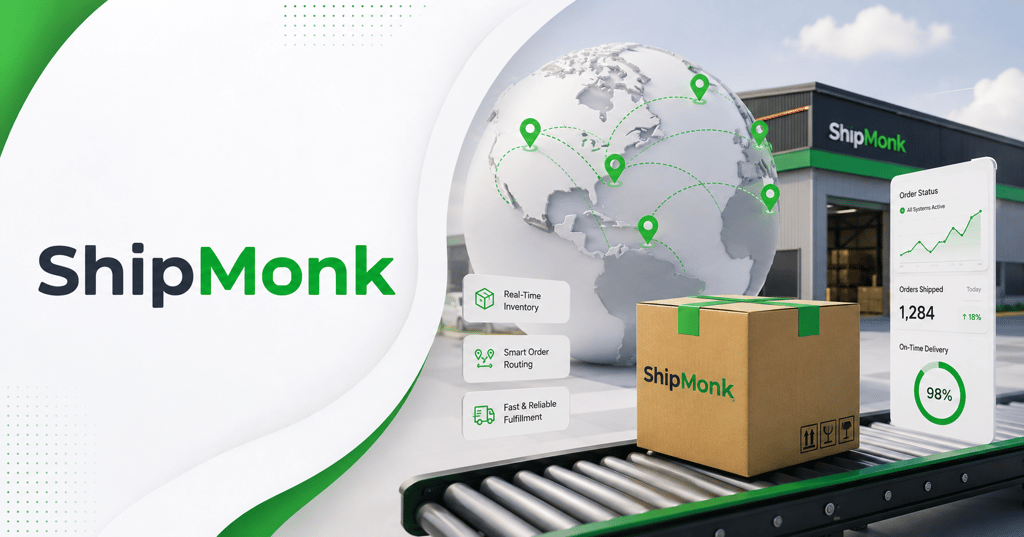
ShipMonk markets itself as much on its software as its warehouses, and it shapes almost everything else about how the company operates.
That makes it a different kind of evaluation than most 3PLs: the real question isn’t just whether orders ship on time, but whether the reporting, automation, and integrations actually hold up once you’re relying on them daily.
This ShipMonk review dives into what the technology gets right, where it adds friction, and how it stacks up on onboarding, returns, and support.
ShipMonk’s Fulfillment Model Explained

ShipMonk is a technology-driven 3PL, founded in 2014 and headquartered in Fort Lauderdale, FL, that pairs warehousing and shipping with a proprietary software platform. It positions itself as both a fulfillment provider and a software company, operating fulfillment centers across the US, Canada, Mexico, and Europe.
ShipMonk tends to come up most often for DTC brands, subscription boxes, and apparel or accessories sellers that want kitting and customization alongside standard pick-and-pack.
ShipMonk Pros and Cons for Ecommerce Fulfillment
Like any 3PL, ShipMonk’s strengths and limitations affect merchants differently depending on size, order volume, and how complex their fulfillment needs are. Here’s a breakdown based on common patterns in ShipMonk reviews and customer feedback.
| Pros | Cons |
|---|---|
| Technology-centered platform with real-time visibility | Pricing and billing complexity as volume grows |
| Strong ecommerce and marketplace integrations | Support quality can vary by issue and season |
| Kitting, customization & subscription box support | Complex or custom workflows need extra oversight |
| Scalable warehouse network | Learning curve on advanced reporting features |
| Automated order routing and workflow rules | Operational consistency can differ by fulfillment center |
Pros
- Technology-Centered Platform: A centralized dashboard gives visibility into orders, inventory, and fulfillment activity across every warehouse.
- Strong Ecommerce Integrations: Native connections with major platforms keep orders and inventory in sync with minimal manual work.
- Kitting & Customization: Branded packaging, kitting, and subscription box fulfillment are built into the core offering, not bolted on.
- Scalable Infrastructure: The multi-country warehouse network and software are designed to support order volume growth without a system change.
- Automation & Workflow Tools – Rule-based order routing helps standardize processing during high-volume periods.
Cons
- Pricing and Billing Complexity: Costs are itemized across storage, pick/pack, and shipping, and several merchants report the total climbing as volume and add-ons increase.
- Support Quality Can Vary: Some brands report fast, helpful support; others cite slower response times on more complex tickets or during peak season.
- Complex Setups Require Oversight: Custom workflows or non-standard fulfillment needs take more configuration and ongoing monitoring than a plug-and-play setup.
- Learning Curve on Advanced Features: The core dashboard is generally easy to use, but deeper reporting and automation tools take time to learn.
- Operational Variability by Location: Performance and turnaround can differ somewhat depending on which fulfillment center handles a given order.
ShipMonk Technology, Reporting & Analytics
Technology is ShipMonk’s core differentiator. It’s built and marketed as a software company as much as a fulfillment provider, and its reporting and analytics tools are usually the first thing brands cite in a ShipMonk review.
| Feature | What It Does | Where It’s Tested |
|---|---|---|
| Real-time inventory dashboard | Tracks stock levels and order status across every warehouse from one screen | Multi-warehouse sync during fast growth or promotions |
| Fulfillment analytics & reporting | Surfaces trends in order volume, shipping cost, and SKU performance | Depth of custom reporting for very specific KPIs |
| Automation & rules engine | Routes orders and flags exceptions automatically to reduce manual work | Configuration complexity for non-standard workflows |
| Virtual Carrier Network | Compares carrier rates to balance shipping cost against delivery speed | Rate transparency once volume and surcharges scale |
ShipMonk Onboarding, Integrations & Omnichannel Fulfillment
Onboarding with ShipMonk typically starts with an introduction call and a guided setup process covering inventory transfer, platform connections, and shipping configuration.
On the integrations side, ShipMonk connects natively with most major ecommerce platforms and marketplaces, and supports omnichannel fulfillment for brands selling direct-to-consumer, marketplace, and B2B/retail orders from one inventory pool.
| Category | Examples |
|---|---|
| Ecommerce & marketplaces | Shopify, BigCommerce, WooCommerce, Amazon, Walmart, eBay |
| Omnichannel & B2B/retail | Unified inventory across DTC, marketplace, and retail orders |
| Order & inventory management | Multi-channel order routing and reporting |
| Marketing, CRM & support tools | Fulfillment data synced into broader operations |
ShipMonk Returns, Reverse Logistics & Kitting Services
Two areas worth evaluating separately from core fulfillment are how ShipMonk handles returns and how it supports kitting.
Returns & reverse logistics: ShipMonk processes returns through its warehouse network, restocking sellable inventory and flagging damaged or unsellable items.
Kitting & fulfillment services: Kitting, bundling, and subscription box assembly are treated as core services rather than add-ons.
| Service | Pro | Con |
|---|---|---|
| Reverse logistics | Automated restocking for standard domestic returns | International returns and claims take longer to resolve |
| Kitting & bundling | Built into core service, good fit for apparel/accessories/subscription | Highly custom kitting rules add setup and QA overhead |
What ShipMonk Customers Are Saying
Across Trustpilot, G2, Capterra, and Google Reviews, ShipMonk generally lands in the high-3-star to low-4-star range, with an A+ Better Business Bureau rating.
⭐⭐⭐⭐⭐ What customers appreciate:
- Responsive account reps and a smooth introduction-to-onboarding experience
- An intuitive dashboard for day-to-day order and inventory management
- Reliable handling of standard fulfillment and reasonable shipping speed
- Strong support for kitting, bundles, and subscription box brands
⭐ What customers complain about:
- Rising or unclear total costs as storage and service fees add up
- Slower resolution on international shipments, claims, or complex tickets
- Occasional warehouse mishaps — mislabeled, delayed, or miscounted inventory
- Inconsistent experience depending on which fulfillment center handles an account
ShipMonk vs. Fulfyld: Side-by-Side Comparison
Legend: ✅ = Included/Strong offering · ⚠️ = Available but varies by use case or plan · ❌ = Not included/limited
| Capability | ShipMonk | Fulfyld |
|---|---|---|
| Technology & reporting dashboard | ✅ Core strength | ✅ KPI-led performance tracking |
| On-time delivery performance | ✅ Generally reliable, varies by location | ✅ Consistency-focused |
| Order accuracy | ~99.9% | 99.99% |
| Inventory accuracy | ~99.8% | 99.7%–99.99% |
| Ecommerce platform integrations | ✅ Broad integrations | ✅ Core ecommerce integrations |
| Kitting & custom packaging | ✅ Core service | ✅ Supported |
| Returns & reverse logistics | ✅ Included, slower internationally | ✅ Included |
| Pricing structure | ⚠️ Itemized, can grow complex | ✅ Flat, all-inclusive per-order rate |
| Dedicated account manager | ⚠️ Varies by account size | ✅ Included |
| 24/7 human support | ⚠️ Support hours vary | ✅ Direct, human support |
| Onboarding & transition support | ✅ Generally smooth | ✅ Guided onboarding |
As your business scales, fulfillment expectations evolve. If ShipMonk no longer aligns with your operational goals, Fulfyld offers a flat, predictable rate and hands-on support without disrupting day-to-day operations — including structured onboarding, system integration, and ongoing performance review against clear 3PL KPIs.
Switching From ShipMonk Doesn’t Have to Slow You Down
ShipMonk is a capable, technology-first 3PL with real strengths in reporting, integrations, and kitting — it holds up well for brands that want a software-forward fulfillment experience, especially subscription, apparel, and accessories sellers. Where it’s more likely to fall short is cost predictability at scale and support consistency once an issue gets complex.
If you’re evaluating ShipMonk against other options, Fulfyld offers a flat, all-inclusive per-order rate, a dedicated account manager, and hands-on support built for growing brands. Get a free quote today.
FAQs
Which criteria should I evaluate ShipMonk on before switching?
Focus on the areas that actually predict fit: technology and reporting depth, onboarding experience, how returns and reverse logistics are handled, platform and marketplace integrations, and total landed cost once storage and add-on fees are included.
What are ShipMonk’s biggest pros and cons?
The clearest pros are its technology platform, reporting tools, and built-in support for kitting and subscription boxes.
The most common cons are pricing that gets harder to predict as volume grows, support that varies by ticket complexity and season, and some operational inconsistency depending on which fulfillment center handles an order.
How does ShipMonk compare to Fulfyld on support and onboarding?
Both are generally well-reviewed on onboarding. Where they diverge is ongoing support structure: ShipMonk’s support experience varies by account size and issue type, without a guaranteed dedicated contact for every brand.
Fulfyld includes a dedicated account manager and direct human support as standard, which gives brands a consistent point of contact rather than a variable support queue.
What are the best ShipMonk alternatives?
It depends on what’s driving the switch. Brands that want a flat, predictable per-order rate and hands-on account management often look at Fulfyld.
Brands prioritizing a different network footprint, order minimums, or specialized handling may fit better with other 3PLs suited to those specific constraints.
Is ShipMonk good for high-volume subscription boxes?
Yes — kitting, bundling, and subscription assembly are core parts of ShipMonk’s service rather than add-ons, and its automation tools are built to handle recurring, high-volume orders.