Deliverr vs ShipBob: Comparison Guide to Picking the Right 3PL Provider
Selecting the right provider for third-party logistics is one of the most important decisions an ecommerce business can make. With research showing that many shoppers are willing to pay more for faster delivery, fulfillment speed, cost control, and reliability can directly affect revenue and customer experience.
The ideal logistics partner should streamline operations, offer cost-effective solutions, and provide dependable customer support.
In this guide, we compare Deliverr and ShipBob, with Fulfyld included as an alternative option, to help you determine which provider best fits your business needs.
The Core Differences of Deliverr and ShipBob at a Glance
Not every fulfillment provider is built the same way, and the differences matter more than most brands realize before they’ve already signed a contract. Here’s a quick breakdown of what Deliverr and ShipBob each bring to the table.
Deliverr is built around speed and marketplace performance, making it a strong fit for sellers who need fast, standardized fulfillment at scale.
- Seller badge eligibility on Amazon and Walmart
- Centralized seller dashboard
- Automated restock recommendations
- SKU-level performance tracking
- Returns processing and management
- Multi-channel order syncing
ShipBob runs on a broader foundation, a distributed warehouse network paired with a software layer that gives growing brands real operational visibility.
- Distributed inventory splitting across nodes
- Customizable packaging and branded inserts
- Kitting and assembly services
- EDI compliance for retail and wholesale orders
- ShipBob Merchant Plus for high-volume brands
- Open API for custom tech stack integrations
Breakdown of Services
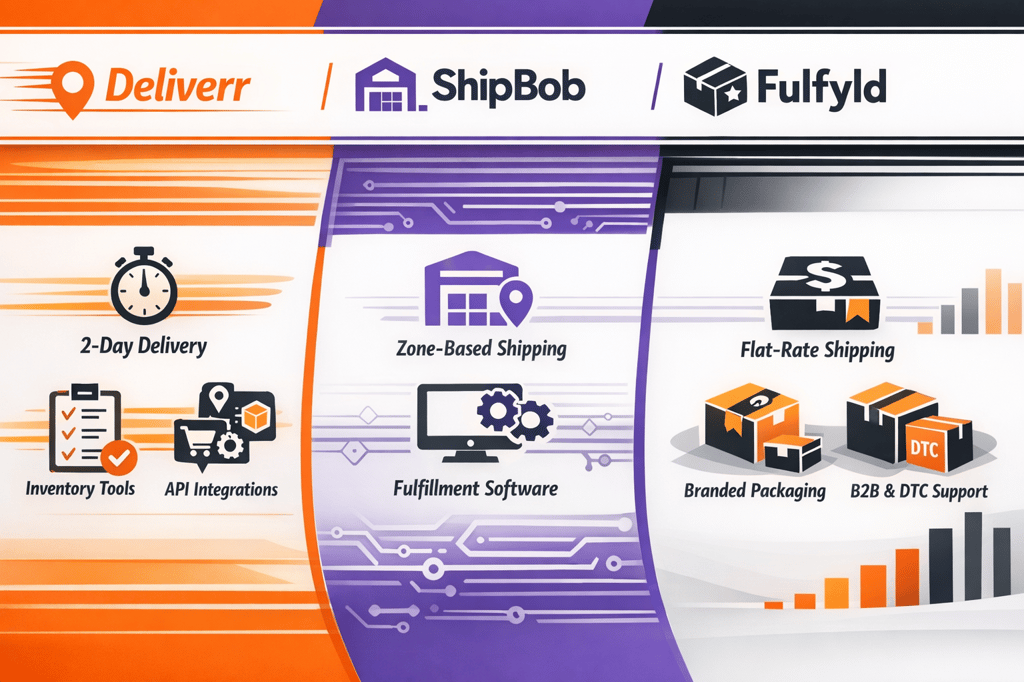
Understanding the scope of services each provider offers is essential when evaluating long-term fit. While all three handle core fulfillment functions, their strengths differ depending on business priorities.
Deliverr
Deliverr is best known for speed and simplicity.
- Two-day delivery options
- Inventory management tools
- API integrations with major marketplaces and ecommerce platforms
- Limited customization, with a strong focus on rapid fulfillment
ShipBob
ShipBob provides a more structured, technology-led fulfillment solution.
- Zone-based shipping with storage and receiving services
- Software-driven fulfillment management
- Batch fulfillment capabilities to support scaling brands
- Standard packaging with limited customization
Complete Pricing Comparison
Pricing is a critical factor when choosing your provider, as fulfillment costs directly affect margins and long-term profitability. While both Deliverr and ShipBob are transparent about their pricing models, the way costs are structured and scaled differs.
Deliverr Pricing
Deliverr uses a pay-as-you-go pricing model designed to be simple and accessible, particularly for brands focused on fast delivery.
- Pay-as-you-go pricing based on services used
- Costs typically include storage, handling, and fulfillment
- No long-term commitments required
- Total costs can vary as order volume and storage needs increase
This model works well for businesses seeking straightforward pricing for standard fulfillment requirements.
ShipBob Pricing
ShipBob follows a zone-based pricing structure with multiple cost components that support scaling operations.
- Zone-based shipping rates
- Separate fees for storage, receiving, and pick-and-pack
- Flexible pricing that adapts as volume grows
- Costs may become more complex as inventory and locations expand
Brands using ShipBob often need to track costs closely as operations scale.
Support System Quality: Customer Service and Experience
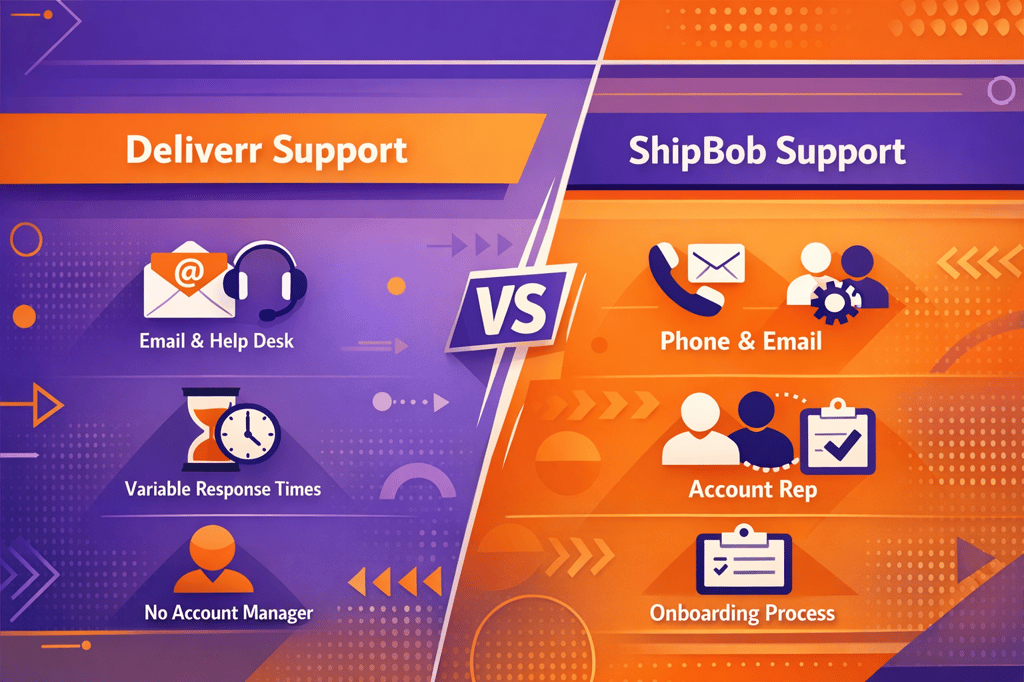
Customer support plays an important role in fulfillment reliability, especially during onboarding, peak seasons, or rapid growth periods. Access to timely and effective support can directly impact day-to-day operations.
Deliverr Support
Deliverr primarily provides customer support through digital channels.
- Email and help desk-based support
- Response times can vary during high-volume periods
- No dedicated account management
- Best suited for brands with straightforward fulfillment needs
ShipBob Support
ShipBob offers a more traditional support structure with multiple contact options.
- Phone and email support channels
- Access to account representatives, depending on service level
- Structured onboarding process
- Some users report delayed response times during busy periods
What Is the Difference Between ShipBob, Deliverr, and Fulfyld?
While Deliverr, ShipBob, and Fulfyld all provide ecommerce fulfillment services, their approaches differ in pricing structure, customization, scalability, and customer support. The table below summarises the key differences to help you compare them side by side.
| Category | Fulfyld | Deliverr | ShipBob |
| Overall Service Quality | ★★★★★ – Full-service solution, flat-rate pricing | ★★★★☆ – Rapid fulfillment, limited customization | ★★★★☆ – Good tech but limited customization |
| Technology & Integrations | ★★★★★ – Advanced analytics, multiple integrations | ★★★★☆ – API-focused, rapid fulfillment | ★★★☆☆ – Some platform restrictions |
| Customization & Branding | ★★★★★ – Excellent for personalized branding | ★★☆☆☆ – Limited options, no customization | ★★★☆☆ – Basic packaging, limited custom branding |
| Pricing Transparency | ★★★★★ – Clear, flat-rate pricing | ★★★★☆ – Variable but transparent | ★★★☆☆ – Potential hidden costs |
| Customer Support | ★★★★★ – Fast, dedicated 24/7 live human support | ★★★☆☆ – Basic support, no account manager | ★★★☆☆ – Delayed response times |
| Scalability | ★★★★★ – Scales for both B2B and D2C growth | ★★★★☆ – Optimized for marketplace sellers | ★★★★☆ – Good for batch fulfillment scaling |
| Value for Money | ★★★★★ – Excellent ROI, predictable costs | ★★★★☆ – Strong ROI for rapid shipping | ★★★★☆ – Good ROI for small to medium businesses |
Deliverr and ShipBob perform well within their lanes, but both reward brands that can handle operational complexity. Deliverr is built for marketplace speed, ShipBob for scale. Step outside those parameters and the cracks start to show.
Fulfyld keeps it simple. Flat rate, a real account manager, and one setup that handles both DTC and B2B without the extra overhead.
What makes Fulfyld worth a closer look:
- One flat rate, no fee surprises at month’s end
- Same-day pick and pack as standard, not an upsell
- Custom branding and packaging included
- A single account manager handling everything
- Built to run B2B and DTC orders side by side
Pros & Cons: Deliverr vs ShipBob vs Fulfyld
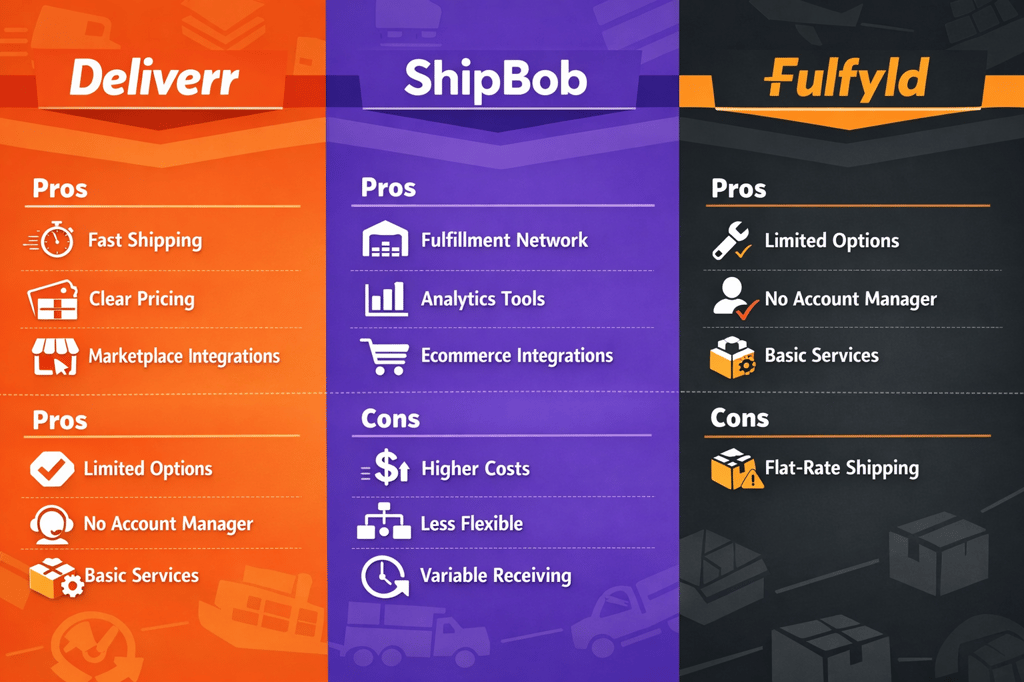
Every fulfillment provider has strengths and trade-offs. Reviewing these can help clarify which solution aligns best with your operational needs.
Deliverr
Deliverr works well for ecommerce brands prioritising fast delivery with minimal complexity.
Pros
- Fast, affordable shipping options
- Clear pricing structure
- Strong marketplace integrations
Cons
- Limited customization
- No dedicated account management
- Less suitable for specialised fulfillment needs
ShipBob
ShipBob supports growing ecommerce brands that require technology-driven fulfillment.
Pros
- Distributed fulfillment network
- Advanced analytics and reporting tools
- Strong ecommerce integrations
Cons
- Costs can increase with growth
- Limited flexibility for custom workflows
- Receiving times may vary
Fulfyld
Fulfyld is designed for brands that value transparency and hands-on support.
Pros
- Flat-rate pricing with no hidden fees
- Dedicated account management
- Strong customer support availability
- Supports both B2B and DTC fulfillment
Cons
- Flat-rate shipping may not suit all strategies
Your Best Choice for Comprehensive Fulfillment
Each provider discussed offers distinct advantages depending on business needs. Deliverr excels in fast delivery, ShipBob offers technology-driven scalability, and Fulfyld stands out for pricing transparency and customer support.
For brands looking for a fulfillment partner that reduces complexity while supporting long-term growth, choosing the right fit can make a meaningful difference in performance and customer satisfaction.