

The global 3PL market is set to hit USD 1.48 trillion by 2030, growing at a 5.18% CAGR. 60% of online retailers already outsource fulfillment, and outsourcing without a solid contract is a gamble.
Whether you call it a service agreement or a 3PL warehouse contract template, the document decides who’s on the hook when inventory goes missing or shipments run late. Below, we break down exactly what belongs in yours, plus real examples of contracts that fell short.
Most Important Components of Your 3PL Agreement
A 3PL contract isn’t paperwork you sign and forget. It’s the safety net that catches you when a warehouse fire drops your inventory count to zero, or a peak-season rush overwhelms your provider’s staff. Every clause below exists to close off a specific risk of outsourcing logistics that’s caught another brand off guard before.
Two starting points to work from: the third-party logistics services agreement for standard fulfillment relationships, or the confidential third-party logistics services agreement if your products or data need tighter protection. Both are editable starting points, so plan to run your final version past an attorney who knows your state and industry before you sign.
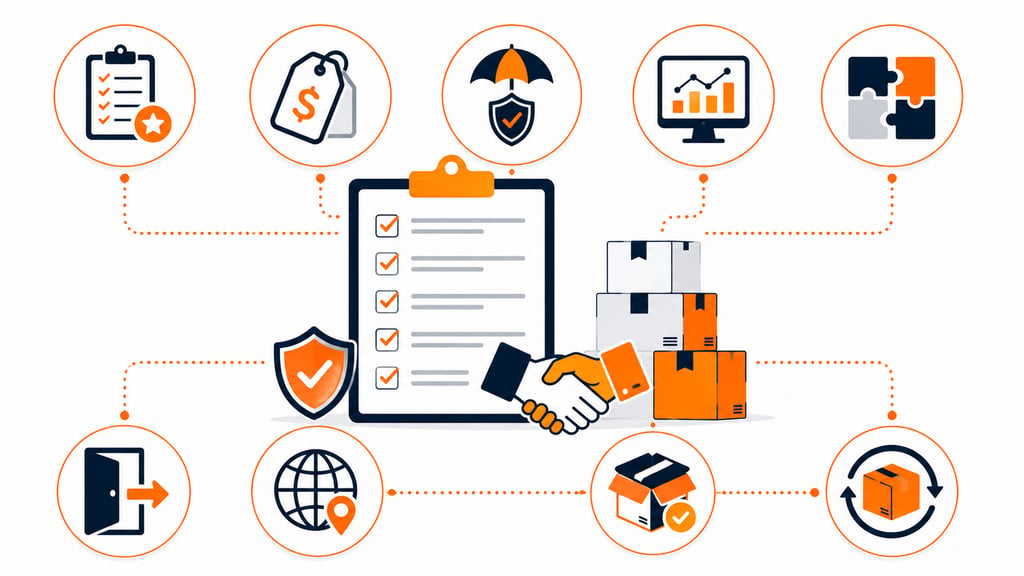
Service Level Agreements: Your Performance Safety Net
This is where “good service” stops being a feeling and becomes a number. Don’t accept a promise like “we’ll do our best.” Demand hard numbers, written into the contract, not mentioned on a sales call. Your SLA section should nail down:
- Order accuracy, target 99.5% or higher
- Shipping timeframes, same-day processing for orders placed before a set cutoff
- Inventory accuracy, 99.8%, is a reasonable floor
And spell out the consequence for missing those numbers. A credit system is simple and fair: miss the target, and the fee comes off your invoice.
Pricing Structure: No Surprises Policy
Hidden fees are profit killers. A solid contract lists every charge you could possibly see, not a vague reference to “current rates.” Watch for:
- Storage fees, billed per pallet, cubic foot, or bin
- Handling fees, covering receiving, picking, packing, and shipping
- Extras, rush fees, peak-season surcharges, account management costs
Ask for the full pricing sheet as a signed attachment. It turns cost comparison into a five-minute task instead of a guessing game, and it stops surprises from creeping into your bill mid-contract.
Liability and Insurance: Who Pays When Things Break
This clause decides who eats the cost when inventory gets lost or damaged. Most 3PLs cap liability at replacement cost only. Fine for a $12 phone case, but not fine when a lost shipment costs a wholesale account. Confirm your provider carries:
- General liability
- Warehouse legal liability
- Cargo insurance
- Cyber liability
Then push to be named as an additional insured on their policies. It’s a small ask that gives you direct standing if a claim ever goes sideways.
Data and Reporting: Staying in the Loop
You need eyes on your own operation. The contract should require, at minimum:
- Daily inventory reports
- Weekly performance summaries
- Monthly scorecards
Real-time dashboards are quickly becoming the norm rather than a premium add-on. Two things also worth locking down in writing:
- You own your data, full stop, meaning customer info, order history, and inventory records.
- The contract states exactly what happens to that data if the relationship ends.
Integration Requirements: Making the Systems Talk
Your provider has to plug in cleanly with your store and inventory systems, without weeks of manual patchwork. The agreement should specify:
- Which integrations come included
- Who owns the setup and ongoing maintenance
- API access, EDI capability, and how close to real time the sync actually runs
And if a sync breaks at 2 a.m. during a launch, the contract should say who fixes it and how fast.
Termination Clause: Your Exit Strategy
No partnership lasts forever, and yours shouldn’t be a trap. Look for:
- A reasonable notice period, 60 to 90 days, is standard
- Transition support written as an obligation, not a courtesy
- A guarantee that your data comes back to you in a usable format
A good 3PL helps you move out and hands over your full history without a fight. If that language is missing, negotiate it in before you sign anything.
Geographic Coverage and Capacity
Get specific about where your provider can actually ship and how much they can absorb during a surge. Nail down:
- Coverage, both domestic and international
- How they handle seasonal spikes and future growth
- Minimum and maximum volume commitments
Some providers offer sharper rates for guaranteed volume. That’s a fair trade, as long as you’re not locked into a number your business hasn’t hit yet.
Quality Control and Returns Processing
Your 3PL is handling your brand’s first physical touchpoint with a customer. The contract should spell out:
- Packaging standards
- Quality checks before an order ships
- The full returns workflow
- What actually counts as damaged inventory
- How fast returns get back into sellable stock
- Who covers return shipping costs
A returns process that runs smoothly can turn a frustrated customer into a repeat one.
Clauses Most Businesses Forget to Negotiate

Most negotiations stop at price and performance numbers. That’s a mistake; a handful of less obvious clauses end up mattering just as much once the partnership is actually running.
Statement of Work: The Foundation Everyone Skims Past
The statement of work, or SOW, is the document that spells out exactly what your 3PL is responsible for. Skip a careful read here, and you’ll find gaps later, usually at the worst possible time.
A solid SOW should define:
- The exact scope of services included receiving, storage, pick and pack, shipping, and returns
- The onboarding timeline, including who does what during the transition
- Which responsibilities sit with you versus the provider
Don’t accept a generic template for this section. Your SOW should reflect your actual operation, not a boilerplate paragraph copied from someone else’s contract.
Contract Duration and Auto-Renewal Traps
Most 3PL contracts run one to three years, and many renew automatically unless you cancel within a specific notice window. Miss that window, and you’re locked in for another full term.
Watch for:
- The initial contract length and whether it matches your growth plans
- Auto-renewal language, and exactly how far in advance you need to cancel
- Built-in review periods where pricing or terms can be revisited
Shorter initial terms with a defined review point give you more room to renegotiate once you have real performance data to work with.
Dispute Resolution: Settling Disagreements Before They Escalate
Even strong partnerships hit friction eventually. A dispute resolution clause decides whether a disagreement gets solved with a phone call or turns into a lawsuit.
Look for language that requires:
- Direct negotiation first, before either side brings in outside help
- Mediation as the next step if negotiation stalls
- Arbitration, rather than court, as the final option, since it’s typically faster and cheaper
Force Majeure: Who’s on the Hook When the Unexpected Happens
This clause covers events outside anyone’s control: severe weather, labor strikes, government action, or a facility outage. It matters because it decides whether your 3PL is excused from meeting its commitments when disaster strikes.
Push for specific, narrow language here rather than a broad catch-all. A vague force majeure clause can become an excuse for missed service levels that had nothing to do with an actual emergency.
For a deeper walkthrough of these terms alongside the ones covered above, Fulfyld’s 3PL contract negotiation checklist is a solid next read before you sit down at the negotiating table.
Which Template Fits Your Business?
There’s no single right answer here. Some brands need the basics.
Others handle sensitive formulas, regulated products, or customer data that demands tighter protection. Here’s how to figure out which one is yours.
Who Should Use the Standard Agreement?
This version keeps things straightforward: services, pricing, and performance standards, without heavier legal language layered on top. It’s built for brands focused on scaling and keeping costs predictable.
- Ship 500+ orders a month and growing
- Sell standard consumer products with nothing proprietary
- Run subscription box fulfillment on a recurring schedule
- Handle Amazon FBA prep with a consistent, repeatable workflow
- Deal with seasonal demand that needs pricing flexibility
- Are you working with a 3PL for the first time
- Care most about cost control and clear operational standards
- Sell products that don’t need special handling or storage
Who Should Use the Confidential Agreement?
If data privacy, product formulas, or compliance rules are part of your daily reality, this version adds the confidentiality muscle you actually need.
- Sell supplements or nutraceuticals built on proprietary formulas
- Run a beauty or cosmetics brand protecting unique ingredients
- Run pharmaceutical businesses with FDA compliance needs
- Ship high-value electronics that need tighter security
- Sell luxury goods where theft prevention is a real concern
- Manufacture medical devices under strict regulation
- Work in healthcare, CBD, or another regulated category
- Handle sensitive customer data that needs strong privacy terms
- Partner with exclusive suppliers who require confidentiality
- Compete in a market where industrial espionage is a genuine risk
Real Situations Where Contract Terms Made the Difference
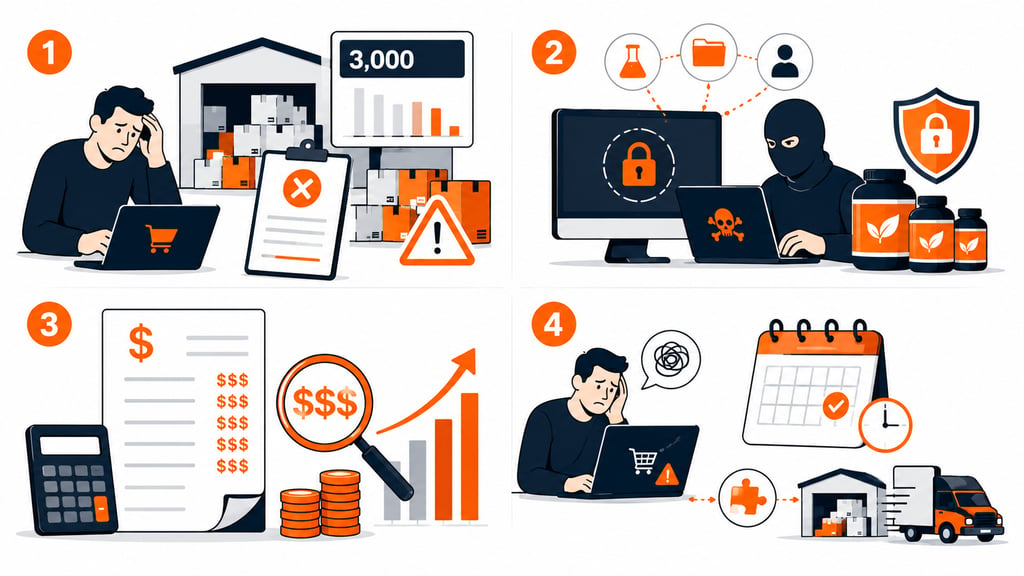
Some lessons land harder when they come from someone else’s mistake. Below are four contract examples pulled from real 3PL partnerships, showing exactly how weak language turned a small problem into a costly one.
Example 1: The Black Friday Inventory Nightmare
What happened: A fashion retailer shipped 10,000 units to their 3PL ahead of their biggest Black Friday yet. Sale morning, the system showed only 3,000 units on hand. The rest was “somewhere in the building,” unlocatable for fulfillment.
The contract problem: The agreement used soft language like “reasonable inventory management,” with no accuracy requirement and no penalty for lost stock.
The cost: $400,000 in missed Black Friday sales, plus a wave of customer complaints that hit their brand reputation hard.
Key takeaway: Lock in a specific inventory accuracy requirement (99.8% minimum) with daily cycle counts during peak season. Add escalation procedures for discrepancies and financial penalties for lost inventory during high-volume windows.
Example 2: The Supplement Company Data Breach
What happened: A supplement brand discovered its 3PL was storing proprietary formulation files on a shared drive accessible to staff working on competitor accounts. Worse, the provider’s sales team was using customer shipping data to pitch other clients.
The contract problem: A generic logistics agreement with basic confidentiality language, nothing covering formulas or customer data specifically.
The cost: $150,000 in legal fees, a forced reformulation, and the loss of several wholesale accounts spooked by the security gap.
Key takeaway: Proprietary products need the confidential template. Require data security standards, employee background checks, segregated storage for sensitive materials, and uncapped liability for breaches. Standard insurance won’t cover intellectual property theft.
Example 3: The Hidden Fee Horror Story
What happened: An electronics retailer signed on for “competitive storage rates.” Six months in, their bill had tripled from fees never disclosed upfront.
The contract problem: The pricing section pointed to a “current rate sheet” that the 3PL could change unilaterally, anytime.
The cost: Logistics costs climbed from $8,000 a month to $24,000, crushing margins and forcing a mid-season price hike.
Key takeaway: Require a complete pricing schedule as a signed attachment, with language blocking unilateral rate changes during the contract term. Ask for sample invoices from clients of a similar size before you sign anything.
Example 4: The System Integration Disaster
What happened: A growing Shopify brand signed with a 3PL promising “seamless integration.” Three weeks in, orders were still keyed in manually, and customers weren’t getting tracking numbers.
The contract problem: Integration was described as “best effort,” with no timeline and no performance guarantee attached.
The cost: Shipping delays, angry customers, chargebacks, and two months of paying temp staff just to handle the fallout.
Key takeaway: Set a firm integration deadline (2 to 3 weeks is typical for standard platforms), define exactly which data syncs in real time, name who’s responsible for fixes, and get references from other clients on the same platform.
Vague language costs real money. Every one of these situations traces back to soft wording that a specific number, deadline, or penalty clause would have prevented.
Download 3PL Service Agreement
Don’t Let a Weak Contract Sink Your Business
Now that you know what belongs in these agreements, you’re already ahead of most businesses that sign without reading past page one.
Use these templates to size up potential providers, push for better terms, and build a partnership that actually helps you grow instead of creating new fires to put out.
The strongest results come from pairing solid contract terms with a provider that’s actually invested in your success, which is the whole reason Fulfyld builds long-term partnerships instead of just processing boxes.
Curious what that looks like day to day? Get started with Fulfyld today.
Templates track the work. We do the work.
This file will carry you a long way. But past a few hundred orders a month, tracking fulfillment in a spreadsheet becomes the bottleneck. That is the point of a 3PL: Fulfyld picks, packs, and ships every order under a formal SLA with automatic credits, one flat all-inclusive per-order price, and a dedicated account manager who knows your catalog.
Get a real quote