

Most sales fall apart on the same problem: nobody wrote down exactly what was promised. A handshake deal feels fine until the delivery date slips, the price gets disputed, or the item shows up in worse shape than expected. At that point, whoever has it in writing wins the argument.
That’s the entire job of a solid purchase agreement. Grab the right template, fill in your specific terms, and you’ve got a document that holds up if either side tries to change the story later.
This guide walks through what belongs in it, when you actually need the full version instead of something simpler, and the filled-in mistakes that quietly turn a solid template into a worthless one.
What Is a Purchase Agreement?
A purchase agreement is a legal document that lays out the terms of a sale before money or goods change hands. This editable template gives you that structure ready to fill in, and it becomes the rulebook both sides agree to before the transaction closes.
You’ll see this document called a few different things depending on the deal. A sale and purchase agreement typically shows up in real estate and larger business transactions, often loaded with contingencies around financing or inspections.
An agreement of sale is the more general term, covering everyday goods and services transactions where the terms are simpler. Both do the same core job: putting the deal in writing so neither side can argue about what was promised.
Here’s how this document stacks up against other paperwork you might see in a sale:
| Document | Best Used For | Level of Detail |
|---|---|---|
| Purchase Agreement | Formal transactions with terms, conditions, and warranties | High; covers contingencies and remedies |
| Bill of Sale | Simple transfer of ownership (cars, equipment) | Low; proof of transfer only |
| Letter of Intent | Early-stage negotiations before a full contract | Medium; outlines intent, not binding terms |
Key Clauses Every Purchase Agreement Should Include
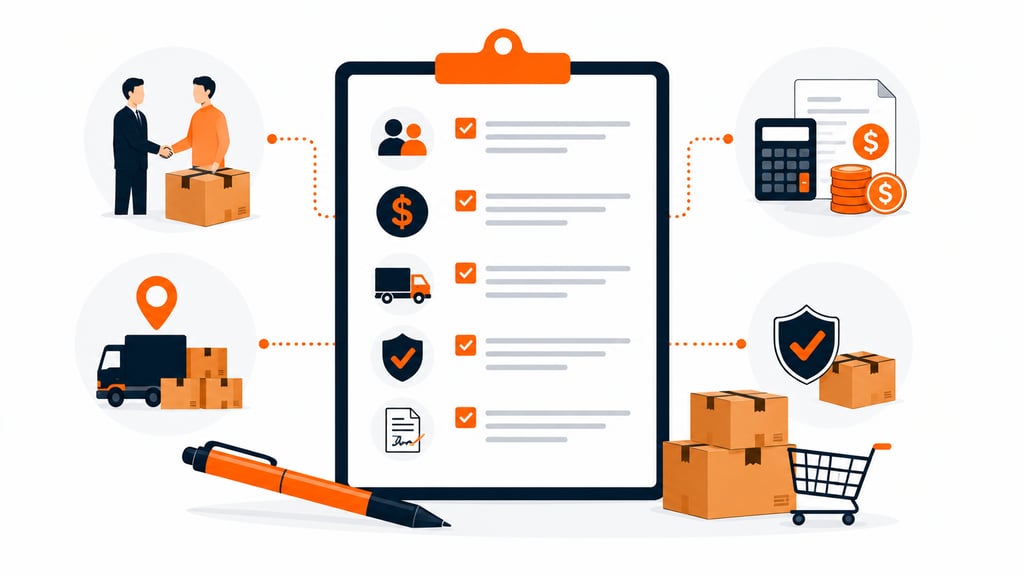
A template only works if it has the right bones. Here’s what actually needs to be in there before you send it off for signature.
- Parties and item description: Name the buyer and seller in full, plus a precise description of what’s being sold. For physical goods, include quantity, condition, and identifying details like serial numbers or SKUs. This is where most disputes start, so don’t leave it vague.
- Price and payment terms: State the total price, how it’s being paid, and by when. If there’s a deposit involved, spell out whether it’s refundable and under what conditions.
- Delivery and transfer of ownership: Note when and how the item changes hands, who covers shipping, and the exact moment ownership legally transfers. This matters more than people expect, especially for bulk inventory or equipment.
- Warranties and contingencies: List any guarantees on condition or quality, plus the conditions that could cancel the deal, like a failed inspection or financing falling through.
If you’re running an eCommerce brand, purchase agreements often come up when you’re buying inventory in bulk or acquiring equipment. Once the paperwork’s signed, optimizing order fulfillment is usually the next thing on the list, and pairing this template with Shopify fulfillment services keeps your inventory and order data in sync while you handle the contract side.
When You Actually Need One vs. a Simple Bill of Sale
Not every sale needs a full purchase agreement. A quick, low-value transfer, like selling a used forklift to another local business, is often fine with a basic bill of sale that just proves ownership changed hands.
A full agreement earns its place once the deal gets more complicated. Bulk inventory purchases, supplier contracts, equipment acquisitions, and anything involving warranties, delivery timelines, or payment installments all benefit from the extra structure. The more that could go wrong between signing and delivery, the more that structure is worth having.
This is also where custom fulfillment solutions tend to enter the picture for growing brands managing multiple supplier relationships at once. And if the purchase involves stocking up on inventory, it’s worth reading how to reduce inventory risks before you commit to a large order, since the agreement only protects the transaction, not what happens to that inventory afterward.
How to Customize the Template the Right Way
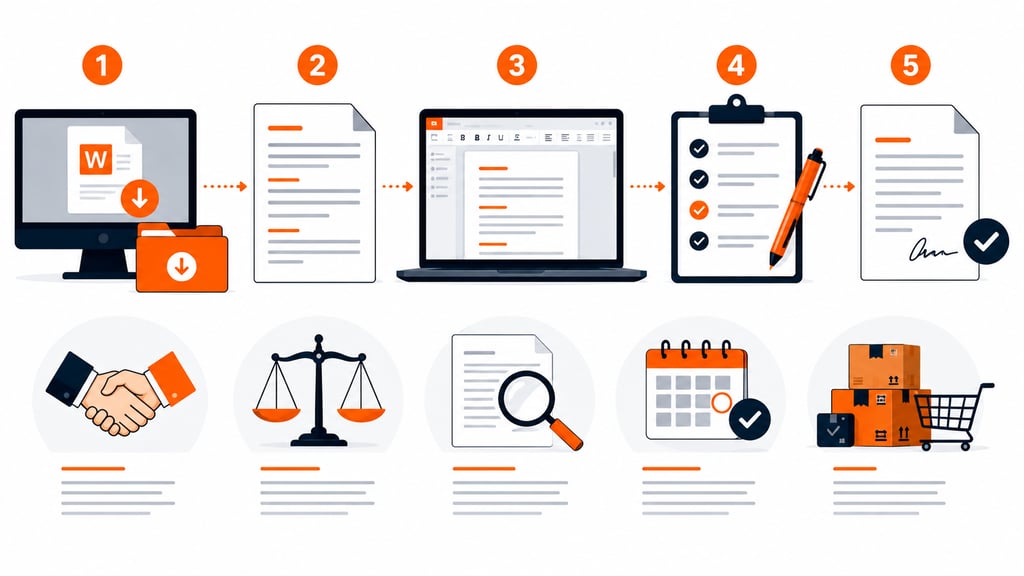
Using the template is straightforward: download the Word file, open it, and work through each section, swapping in your actual deal terms as you go. The customization is what turns a generic form into something that actually protects you.
A few things to keep in mind as you fill it out:
- Match every field to the real deal: Adjust the purchase price, payment terms, and delivery conditions to your specific transaction. Generic, leftover placeholder language is one of the fastest ways to end up with an agreement that doesn’t hold up.
- Bring in a lawyer for anything complex: High-value or unusual transactions deserve a second set of eyes. A legal professional catches missing protections around liability or warranty language that a template alone won’t anticipate.
- Write in plain language: Skip legal jargon that muddies the terms or gives either side room to argue over what a clause means. If a sentence needs a second read, rewrite it.
- Date and initial every revision: If terms change mid-negotiation, keep a paper trail. It’s a small habit that saves a lot of confusion if a dispute ever needs sorting out.
If your business handles frequent order volume on top of these transactions, our retail fulfillment services keep inventory and order processing running smoothly while you manage the contract side.
Common Mistakes That Make a Purchase Agreement Unenforceable
Even a solid template can fall apart if it’s filled out carelessly. A few mistakes show up again and again, and each one gives a court or the other party a reason to dispute the deal.
Vague or Incomplete Descriptions
Leaving out specifics on what’s being sold, condition, quantity, or identifying numbers creates room for disagreement about what was actually promised.
Missing Signatures or Dates
An unsigned or undated agreement can be treated as incomplete, which weakens your position if the other side backs out.
Skipped Contingencies
Not addressing what happens if financing falls through, an inspection fails, or a delivery deadline slips leaves both sides exposed when those situations come up.
Undocumented Verbal Changes
If terms get renegotiated over a call or email and never make it into the written agreement, that verbal understanding usually won’t hold up if things go sideways later.
Ignoring State-Specific Rules
Some transactions, particularly real estate, have local legal requirements for what a purchase agreement must include. Skipping that check can render an otherwise solid document invalid.
Download Purchase Agreement Word Template
Get Your Next Purchase Agreement Signed Without the Delay
This free, editable template turns a tedious purchase agreement drafting process into a repeatable one you can reuse for every deal. Fill in the right details, watch for the mistakes above, and you’ll have a document that actually holds up if it’s ever tested.
For businesses looking to tighten up the operational side of their transactions, Fulfyld offers fulfillment solutions built to keep pace with growing order volume. Download the template, fill in your details, and get your next agreement signed without the usual back-and-forth.
Templates track the work. We do the work.
This file will carry you a long way. But past a few hundred orders a month, tracking fulfillment in a spreadsheet becomes the bottleneck. That is the point of a 3PL: Fulfyld picks, packs, and ships every order under a formal SLA with automatic credits, one flat all-inclusive per-order price, and a dedicated account manager who knows your catalog.
Get a real quote