

A messy vendor relationship almost always starts with a messy contract. Unclear payment terms or delivery windows leave someone guessing, and guessing gets expensive fast.
This free, editable template gives you a solid starting point, built in Word and ready to customize in minutes, so you’re not drafting a new agreement from scratch every time a vendor comes on board.
What Your Vendor Agreement Should Include
A vendor agreement spells out what each side owes the other before money or product changes hands. At minimum, it needs to answer a few plain questions up front, instead of leaving them for a phone call after something’s already gone wrong:
- Who’s responsible for which tasks or deliverables
- When payment is due, and what happens if it’s late
- What counts as an acceptable delivery, and what doesn’t
A complete agreement puts those answers in writing before either side commits to anything. Here’s what a solid one covers, at a minimum:
| Section | What It Covers |
| Parties and scope | Who’s involved, and exactly which goods or services are covered |
| Pricing and payment terms | Rates, invoicing schedule, late fees |
| Delivery and lead times | Shipping windows, minimum order quantities |
| Quality and inspection | Acceptance criteria and vendor compliance standards, return or rework process |
| Independent contractor status | Confirms the vendor isn’t an employee, which protects you from misclassification issues |
| Confidentiality | Protection of pricing, designs, and internal data |
| Termination | Notice period and conditions for ending the relationship |
| Liability and insurance | Who’s responsible if something goes wrong |
| Dispute resolution | Mediation, arbitration, or governing law |
Skip any of these, and you’re leaving a gap a vendor could walk right through later.
Vendor Agreement vs. Vendor Contract vs. Supplier Agreement
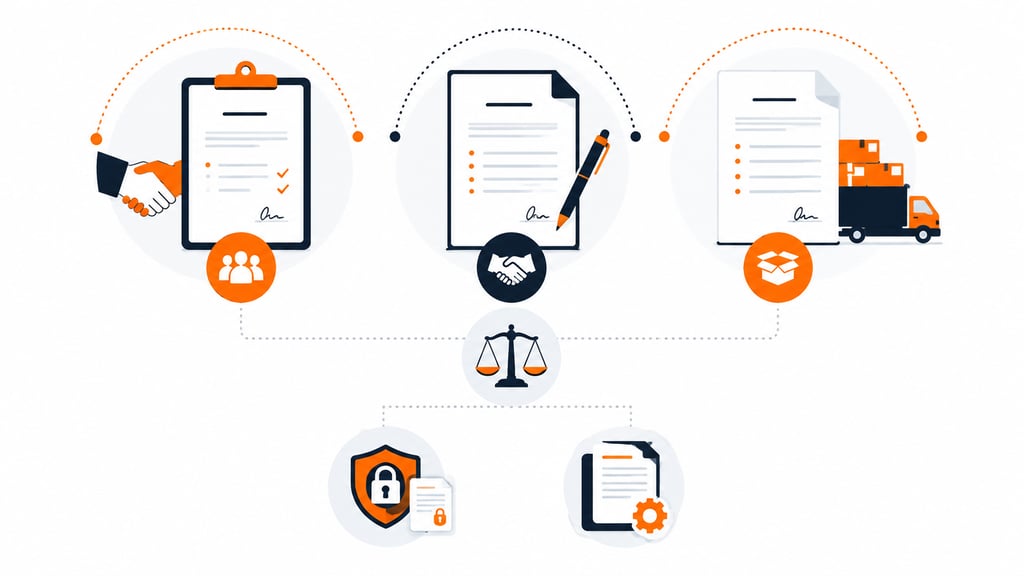
These three terms get used almost interchangeably, and in most day-to-day cases, that’s fine.
A vendor contract template and a vendor agreement generally cover the same ground: scope of work, pricing, delivery, and termination. Most businesses treat the two as plain synonyms and just use whichever term matches their own paperwork.
A supplier agreement template tends to get pulled out specifically when you’re sourcing physical goods, raw materials, or manufactured products rather than a service.
That distinction matters less for the legal terms and more for which clauses carry the most weight: quality specs and inspection rights instead of scope-of-work language.
Two related documents are worth knowing about:
- Non-disclosure agreement: protects pricing and product details before anything’s signed
- Master service agreement: sets the legal terms once for vendors you reorder from repeatedly, so future orders skip renegotiating the same boilerplate
When You Actually Need One
Not every purchase needs a full agreement. A one-time buy of standard supplies, under a set dollar threshold, is usually fine on a simple purchase order; it’s binding once the vendor accepts it, and nobody needs to negotiate anything.
If the relationship graduates into something bigger, Fulfyld’s purchase agreement template covers that next step.
A formal agreement earns its place once the relationship gets more complex, though. Watch for these signals:
- Recurring orders instead of a single purchase
- Custom specifications or exclusive terms
- Shared confidential or proprietary information
- Any deal large enough that a dispute would actually hurt
New vendor relationships are the clearest case for one. Even with a supplier you’ve used informally for years, it’s worth getting terms in writing before the next order goes out; verbal understandings don’t hold up when a shipment shows up late or wrong.
The same vetting logic applies here as choosing any service provider: put the agreement in place before the first payment or delivery, not after.
Getting the Scope and Payment Terms Right
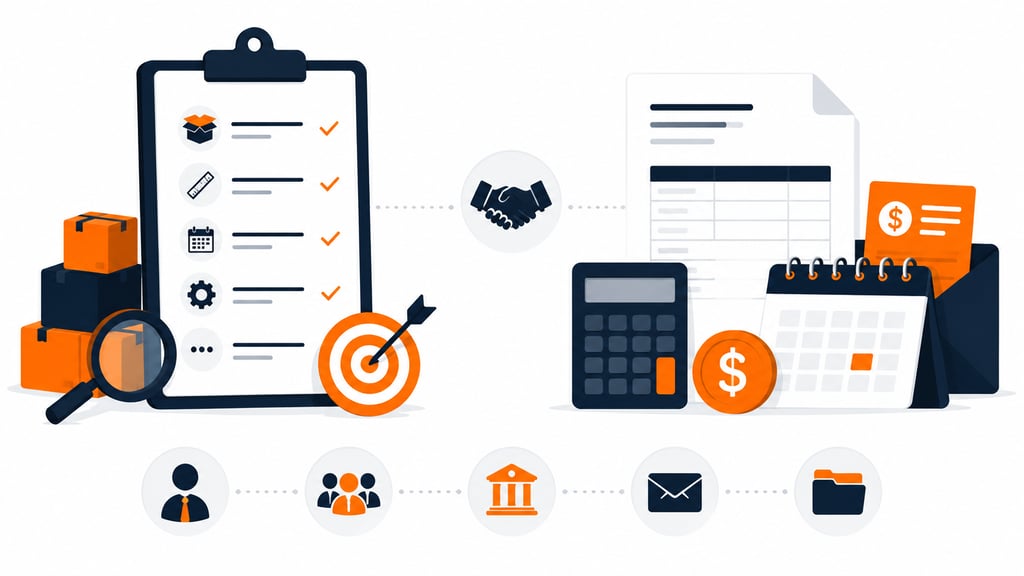
Two sections cause more disputes than everything else combined, so they’re worth extra attention. “Marketing services” or “custom parts” isn’t a scope; it’s a category. Break it into actual deliverables: quantities, specifications, timelines, and what happens with anything outside the list.
Payment terms need the same specificity. Standard net-30 invoicing on a monthly cycle works fine for ongoing service relationships. A one-off project fits better with milestone-based payments tied to specific deliverables instead.
Either way, name a role or department, like accounts payable, as the contact point rather than a specific person. People change jobs, and the agreement shouldn’t need a rewrite when they do.
Building the Template in Word
Microsoft Word still does the heavy lifting for most small and mid-sized teams building their own contracts. A few features separate a document that looks thrown together from one that reads like it was drafted with care.
Styles and Formatting
Consistency is what keeps the document professional. Use Word’s built-in heading styles so the hierarchy stays clean, and apply the same fonts and spacing throughout rather than adjusting each section by hand.
Placeholder Text and Form Fields
Swap real numbers and names for obvious placeholders like [Vendor Name] or [Effective Date]. Word’s form fields feature takes this further, letting you lock formatting in place while leaving specific fields open for editing.
Tables and Lists
Pricing, quantities, and deadlines are easier to scan in a table than buried inside a paragraph. Use tables and lists anywhere the agreement gets dense with numbers or dates.
Section Breaks and Headers
Section breaks let you update one part of the agreement, say, the pricing table, without reflowing the rest of the document. A header with your company’s name and logo also gives the finished agreement a more polished feel before it reaches a vendor’s inbox.
Rolling It Out and Keeping It Current
Adjust the language and tone to match how your company actually communicates before this goes anywhere near a vendor; that consistency carries across every contractual agreement you sign, not just this one.
Once the draft is in decent shape, get one pass from legal counsel to confirm it holds up under the regulations that apply to your state or industry.
From there, it’s mostly discipline. Give your team clear instructions on which fields need to be filled in and how; a wrong number in a payment field turns into a real dispute later.
Lock the finished template with Word’s password and permission settings so it can’t get edited by mistake. Revisit the language periodically too, since legal requirements and your own processes both shift over time.
Download Free Template For Vendor Agreement
Put Your Vendor Agreement to Work
Building a solid vendor agreement is a worthwhile step for any business that works with outside suppliers. Get the structure right in Word, know when to use it versus a simple purchase order, and put clear guidelines in place before it goes live.
That’s the same discipline a good, dedicated account manager brings to a fulfillment relationship. It’s what turns a one-off document into something you can reuse, confidently, for years of vendor relationships.
Templates track the work. We do the work.
This file will carry you a long way. But past a few hundred orders a month, tracking fulfillment in a spreadsheet becomes the bottleneck. That is the point of a 3PL: Fulfyld picks, packs, and ships every order under a formal SLA with automatic credits, one flat all-inclusive per-order price, and a dedicated account manager who knows your catalog.
Get a real quote