

The Amazon FBA Calculator is designed to give sellers instant clarity on how much they truly earn from every sale after Amazon’s fees, fulfillment costs, and storage charges. It’s more than just a pricing tool; it’s a profit insight system that helps you evaluate, compare, and optimise your product listings before making financial decisions.
By using this calculator, you can test different pricing scenarios, measure your profit margins, and understand how even small fee changes affect your overall ROI.
If you’re analysing your earnings in depth, tools like the FBA revenue calculator can further support data-driven financial planning.
Understanding the Key Elements of the FBA Profit Calculator
Each field in the calculator represents a vital component of your product’s cost and revenue structure. When entered correctly, they combine to give you an accurate estimate of your net profit and margin.
1. Product Sale Price
The sale price determines the amount you charge customers on Amazon and establishes the foundation for all profit calculations.
- Establishes your total potential revenue.
- Influences ROI and overall profit margin.
- Helps you test and adjust pricing strategies effectively.
In short, your sale price decides how competitive and profitable your product can be.
2. Product Cost
This represents what you spend to produce or purchase your product, forming the base of your expenses.
- Includes manufacturing, packaging, and shipping from suppliers.
- Directly affects your margin and profit potential.
- Lower costs without quality loss improve overall ROI.
Understanding this cost helps you balance affordability and profit.
3. Amazon Referral Fee (%)
Amazon charges a percentage of your sale price as a commission for each transaction.
- Usually ranges between 8% and 15% depending on product category.
- Deducted automatically when your product sells.
- Varies, so knowing your category’s rate is essential.
This fee ensures your calculations reflect real post-sale earnings.
4. FBA Fulfillment Fee
This fee covers the full service Amazon provides, storing, packing, and shipping your products.
- Based on product size, weight, and handling requirements.
- Includes delivery and customer service.
- One of the biggest cost factors for FBA sellers.
Accounting for this gives you a clearer view of per-unit profitability.
5. Monthly Storage Fee
Amazon charges a monthly fee for holding your products in its fulfillment centers.
- Depends on product volume and time in storage.
- Higher fees apply during peak months or for slow-moving stock.
- Encourages sellers to manage inventory efficiently.
Tracking this cost helps prevent long-term storage losses.
6. Shipping to Amazon (Optional)
This is the cost of sending your inventory to Amazon’s fulfillment warehouses before it’s available for sale.
- Varies by location, weight, and shipping provider.
- Optional but important for full expense visibility.
- Especially useful for bulk or international shipments.
Including this gives a complete picture of your total operational costs.
Key Benefits of Using the Amazon FBA Calculator
Running a profitable Amazon business isn’t just about selling more; it’s about knowing exactly how much you earn after every fee, cost, and deduction.
The calculator offers more than just quick computations; it provides actionable insights that guide smarter selling decisions.
Analysing every cost component and revenue factor allows sellers to understand their performance, plan strategically, and optimise profit with precision.
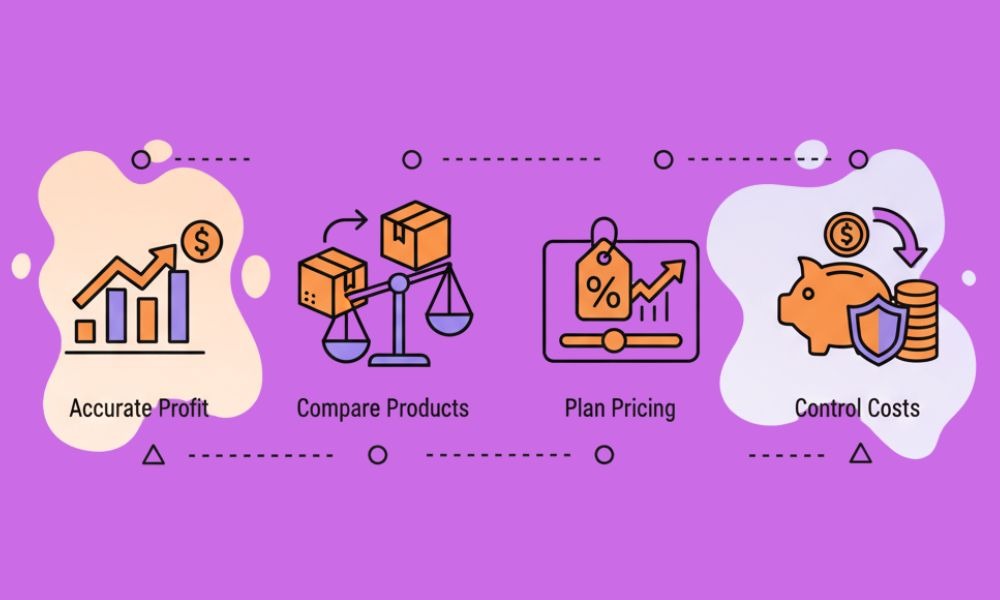
1. Accurate Profit Insights
Knowing your exact profit per sale helps you make informed decisions instead of relying on rough estimates.
- Calculates your net profit, profit margin, and ROI instantly.
- Factors in all essential FBA fees for accuracy.
- Prevents underpricing and unprofitable listings.
2. Compare Multiple Products
When managing multiple SKUs or testing new ideas, this calculator helps you see which products deliver the best returns.
- Compare pricing, cost, and margin across listings.
- Identify top-performing and underperforming items.
- Focus your marketing and inventory on the most profitable products.
3. Plan Pricing Strategies
Your pricing decisions determine your position in the market and your profitability.
- Test different sale prices and instantly see how margins change.
- Adjust costs or fees to maintain competitive pricing.
- Avoid losses caused by underpricing in competitive categories.
4. Control Costs
Understanding where your money goes helps you optimize expenses and improve efficiency.
- Identify high-cost areas like shipping or storage.
- Experiment with supplier costs or fulfillment options.
- Improve ROI by minimizing unnecessary fees.
By using the calculator, sellers gain a clear understanding of their financial performance and can make smarter business decisions that drive long-term success.
For even more detailed analysis, sellers often compare results with an Amazon FBA profitability calculator to refine decision-making and improve long-term strategies.
What Are The Fees That Affect Your Amazon FBA Profit
Amazon’s fee structure directly influences how much profit you make from each sale. While selling through Fulfillment by Amazon (FBA) simplifies operations, it also comes with layered costs that can quickly add up.
Understanding these fees allows you to price products strategically, maintain healthy profit margins, and make well-informed business decisions.
Whether you use an Amazon profitability calculator or an fba revenue calculator, factoring in these costs helps you project realistic margins and develop pricing strategies that truly reflect your business goals.
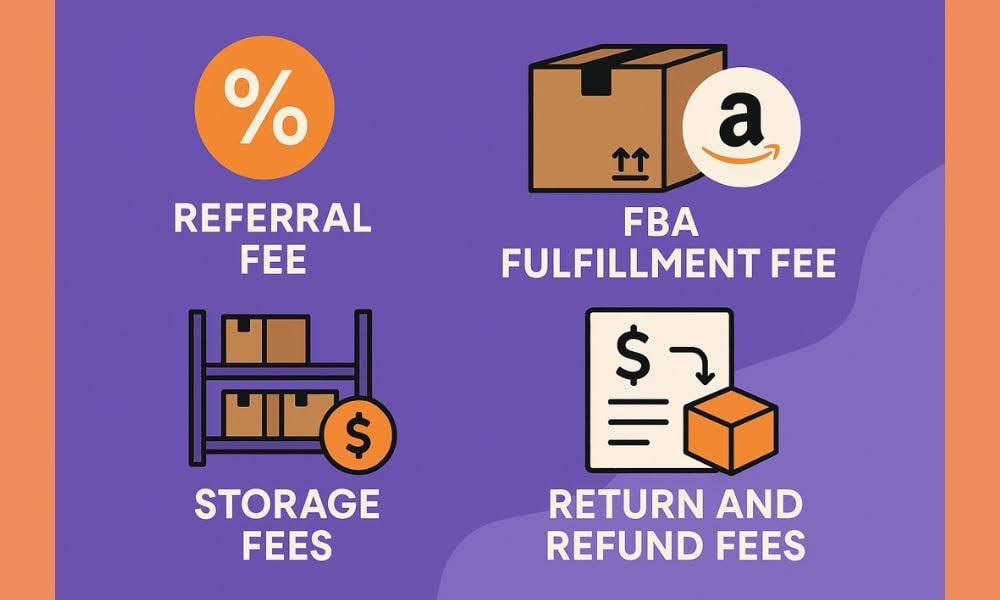
1. Referral Fee
This is the standard commission Amazon charges for every product sold on its marketplace. It’s a fixed percentage of your selling price and varies by product category.
- Usually ranges from 8% to 15%, depending on product category.
- Deducted automatically from your selling price.
- Covers Amazon’s platform and transaction services.
Even small percentage differences can significantly affect your overall profit.
2. FBA Fulfillment Fee
Amazon charges this fee for managing the logistics of your orders, packing, shipping, and customer support. It’s one of the most variable costs for sellers.
- Covers shipping, customer service, picking, and packing.
- Varies by item size, weight, and delivery destination.
- It can be reduced through optimized packaging or lightweight products.
Since this fee changes per unit, it’s vital to include it in every calculation.
3. Storage Fees
Storage fees apply when your inventory sits in Amazon’s fulfillment centers. These charges vary based on how much space your items occupy and how long they stay in storage.
- Calculated monthly based on cubic feet occupied.
- Higher during Q4 (October–December) due to seasonal demand.
- Long-term storage fees apply to items stored for over 365 days.
Regular inventory monitoring helps minimize unnecessary storage costs.
4. Return and Refund Fees
When customers send back a product, Amazon deducts fees to cover the processing and restocking costs. These charges can affect your profit, especially for high-return categories.
- Covers inspection, repackaging, and restocking.
- More common in categories with high return rates (e.g., clothing, electronics).
- Can impact your overall profitability if not tracked closely.
Analyzing return reasons helps reduce these costs over time.
How to Improve Your FBA Profit Margins with The Calculator
Once you’ve calculated your profit margins with the calculator, the next step is to enhance them. Improving your margins isn’t just about increasing prices; it’s about refining every element of your business.
Small, consistent adjustments can make a big difference in your bottom line.
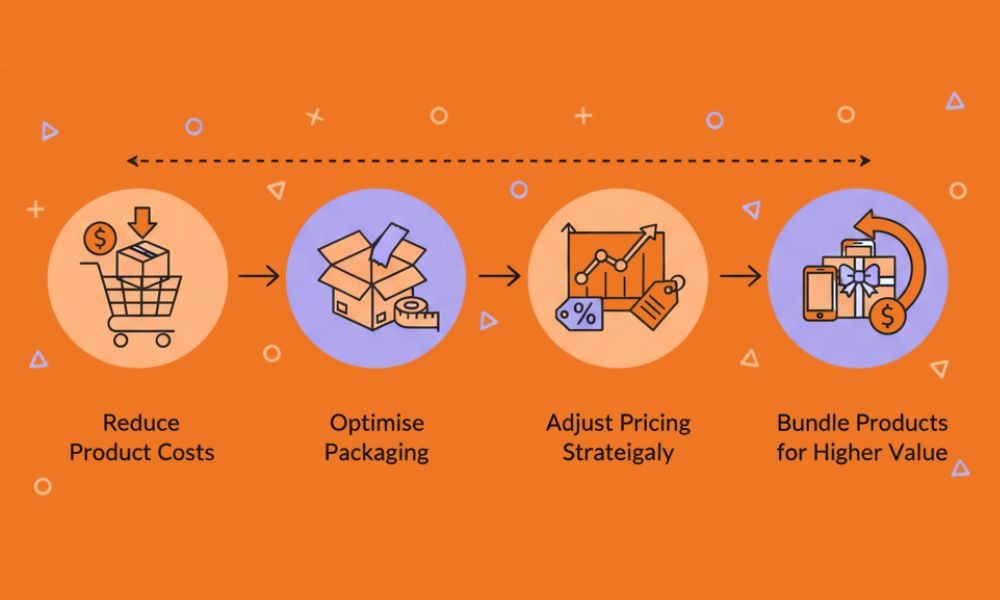
1. Reduce Product Costs
Lowering your product costs is one of the most direct ways to improve profit margins. By sourcing smarter and building better supplier relationships, you can keep expenses under control without sacrificing quality.
- Compare multiple suppliers to secure better rates.
- Order in bulk to benefit from wholesale discounts.
- Negotiate long-term deals for consistent pricing.
Even minor cost reductions can lead to substantial long-term gains.
2. Optimise Packaging
Packaging can influence both your brand perception and your FBA fees. Efficient packaging not only protects your product but also reduces the dimensions that affect fulfillment costs.
- Use lightweight, durable materials to minimise shipping weight.
- Design compact packaging that fits Amazon’s FBA guidelines.
- Avoid unnecessary inserts that add to package size and cost.
Smart packaging design helps you save on logistics while maintaining product appeal.
3. Adjust Pricing Strategically
Price optimisation is about finding the balance between competitiveness and profitability. With data from the calculator, you can test different scenarios to identify the most profitable price point.
- Experiment with incremental price changes and track performance.
- Analyse competitor pricing to stay within a competitive range.
- Use promotional discounts strategically without eroding margins.
Regular price reviews keep your business adaptable to market trends.
4. Bundle Products for Higher Value
Product bundling can increase perceived value and average order value, leading to stronger profit margins. It’s a proven strategy for sellers looking to stand out in crowded marketplaces.
- Combine complementary products to create attractive offers.
- Price bundles slightly below the combined total of individual items.
- Use the calculator to compare ROI between single and bundled listings.
Consistently monitoring your results through the calculator ensures that your business stays profitable even as fees, costs, and market conditions evolve.
With a clear understanding of where your profits come from, you can confidently make data-driven adjustments that lead to sustainable growth.
Make Every Product Decision Count Toward Growth
The FBA revenue calculator is an indispensable tool for sellers aiming to thrive on Amazon. By understanding the real costs behind each sale, you can make better financial decisions, optimise listings, and maintain healthy profit margins.
Ready to uncover your real profits? Use the calculator above to start optimising your FBA business today.