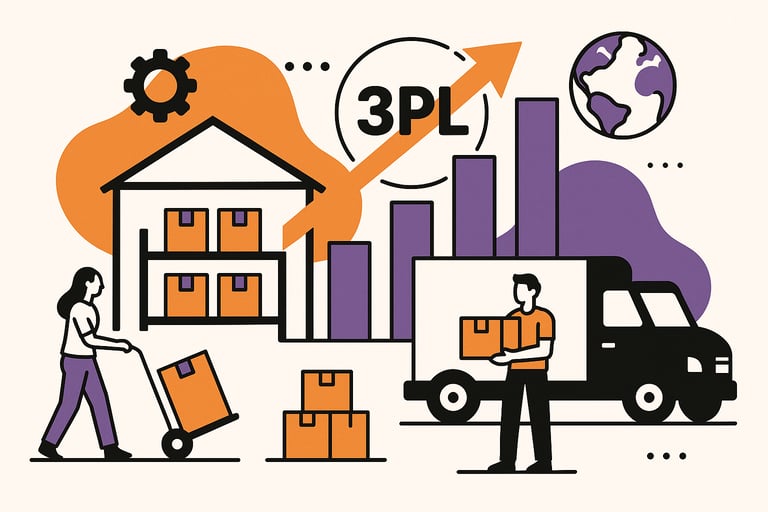


The global eCommerce fulfillment market is projected to exceed $200 billion by 2030, fueled by brands that expect faster delivery, transparent pricing, and scalable operations.
While AMS Fulfillment has built a strong reputation, it isn’t always the best fit for every business. Companies often seek alternatives that better align with their stage of growth, cost expectations, or unique product requirements.
This article explores the leading alternatives to AMS Fulfillment, provides a side-by-side comparison, and helps you identify which provider may be the best fit for your brand.
Top Alternatives and Competitors to AMS Fulfillment: A Detailed Comparison and Checklist
Seeing how providers line up across key features makes it easier to choose the right fit for your brand. Below is a checklist view of important fulfillment factors.
| Provider | Transparent Pricing | Global Reach | Branding & Custom Packaging | Specialized Handling | Strong Tech & Automation |
| Fulfyld | ✅ Yes | ✅ International fulfillment available | ✅ Yes | ❌ Not Specialized | ⚪ Moderate |
| ShipBob | ⚪ Partial | ✅ Yes | ❌ Limited | ❌ Not Specialized | ✅ Yes |
| Red Stag | ⚪ Partial | ❌ U.S.-only | ❌ Limited | ✅ Heavy/Oversized Goods | ⚪ Moderate |
| ShipMonk | ⚪ Partial | ✅ Yes | ⚪ Some Customization | ❌ Not Specialized | ✅ Yes |
| Rakuten (RSL) | ⚪ Partial | ❌ U.S.-only | ⚪ Some Support | ❌ Not Specialized | ⚪ Moderate |
Finding the right fulfillment partner means balancing cost control, operational efficiency, and customer experience. Below is a detailed discussion of some of the strongest competitors to AMS Fulfillment, each with its own strengths and trade-offs.
1. Fulfyld
Fulfyld is a U.S.-based logistics provider built specifically for direct-to-consumer (DTC) brands. Unlike large legacy operators, Fulfyld emphasizes agility, branding, and predictable costs, helping small and mid-sized eCommerce businesses scale with confidence.
Its flat-rate pricing model makes expenses easier to forecast, while branded packaging support creates a stronger customer connection.
Their services are highly aligned with the needs of growing online retailers. It focuses primarily on U.S. fulfillment, although international fulfillment is available.
| Pros | Cons |
| Flat-rate pricing | Fewer warehouse locations than some providers |
| Dedicated account manager | Primarily U.S.-based |
| Deep subscription box and kitting capabilities | Custom manufacturing add-ons increase cost |
| 2-day guaranteed fulfillment option | Not the best choice for brands that need extreme nationwide distribution |
2. ShipBob
ShipBob is one of the most widely recognized fulfillment providers in the eCommerce space.
The company has developed a robust technology platform and a wide global warehouse network, enabling brands to sell and ship across borders with ease.
Its software integrates with major eCommerce platforms, providing sellers with visibility into orders, inventory, and delivery performance.
| Pros | Cons |
| 60+ fulfillment centers across 5 countries | Custom-pricing only |
| Strong global analytics platform | Standardized processes limit custom packaging flexibility |
| Integrates with well-known eCommerce platforms | Receiving can take up to 5 business days |
| Covers DTC, B2B, retail distribution, and FBA prep | Unpredictable pricing for small businesses |
3. Red Stag Fulfillment
Red Stag has carved out a niche in serving brands with heavy, oversized, or high-value items. Rather than trying to be everything for everyone, it specializes in accuracy and product protection.
Red Stag offers same-day processing and guarantees against shrinkage, giving peace of mind to businesses dealing with fragile or expensive inventory.
| Pros | Cons |
| 99.99% order accuracy with financial guarantees | Only two U.S. primary warehouse locations |
| Zero-shrinkage promise | Not suited for lightweight operations |
| Purpose-built for heavy, bulky products | International fulfillment is limited |
| Reaches 96% of the U.S. in 2 days | Not the best for multi-channel fulfillment needs |
4. ShipMonk

ShipMonk positions itself as a tech-first fulfillment company, with automation and software at the core of its offering.
Its proprietary platform integrates across multiple sales channels, helping brands manage marketplace, eCommerce, and crowdfunding orders from one place.
This makes it especially attractive to businesses that operate in multiple channels simultaneously.
| Pros | Cons |
| 12 owned fulfillment centers globally | Loss of inventory reported by users |
| Ships to 200+ countries | Customer service quality varies by account |
| Pay-per-use | Less suited for brands wanting simple flat-rate pricing |
| eCommerce platform integrations with Wix, WooCommerce, Shopify Plus, and more | Manual handling, inventory adjustments, and special processing come with unexpected fees |
5. ShipNetwork

Rakuten Super Logistics, now operating under ShipNetwork, is one of the more established U.S. fulfillment providers.
With decades in the industry, it offers stability and a nationwide footprint that appeals to larger retailers with consistent sales volumes.
Its cost-saving shipping algorithms are designed to help businesses minimize delivery costs while maintaining speed.
| Pros | Cons |
| Strong two-day domestic U.S. delivery coverage | Limited global shipping capabilities |
| Multi-carrier flexibility keeps costs competitive | Primarily U.S-centric |
| Lot/expiry tracking for regulated product categories | Less flexible for subscription kitting at scale |
| Scalable for high domestic order volumes | Less flexible branding options |
Scaling Beyond AMS: Picking the Best Fit for Your Brand
Your fulfillment partner directly impacts your brand’s reputation, margins, and ability to scale. The wrong choice can mean hidden costs, slower shipping, or customer dissatisfaction. The right one becomes a long-term growth partner.
If you’re comparing AMS Fulfillment with its competitors, consider whether you value global reach, specialized handling, or a more brand-first approach.
- Best for DTC and Subscription Brands – Fulfyld
Designed for modern eCommerce, Fulfyld excels at branded packaging, subscription box management, and flat-rate transparent pricing.
- Best for Heavy or Fragile Products – Red Stag Fulfillment
With a 99.99% order accuracy guarantee and a zero-shrinkage promise, Red Stag is the go-to choice for bulky, high-value, or delicate SKUs.
- Best for Brands That Want a Real Point of Contact – Fulfyld
Every Fulfyld client gets a dedicated account manager, not a ticket queue.
- Best for International Expansion – ShipBob
With 60+ fulfillment centers across five countries, ShipBob is the strongest option for brands scaling globally.
- Best for Multichannel and Tech-Driven Sellers – ShipMonk
ShipMonk’s proprietary software and support for 200+ countries make it a natural fit for brands managing orders across multiple marketplaces.
- Best for U.S.-Focused Sellers – Fulfyld
If your market is primarily domestic, Fulfyld delivers reliable two-day coverage nationwide.
- Best for Brand-First Fulfillment – Fulfyld
With an in-house packaging designer, custom unboxing options, and a boutique approach to each account, Fulfyld is built for brands where the post-purchase experience is part of the product.
Overall Winner: Fulfyld
For DTC and subscription businesses looking for transparent pricing and customer-first fulfillment, Fulfyld is built to help you scale.
Find Your New eCommerce Fulfillment Partner Today
Finding the right AMS Fulfillment alternative comes down to what your brand actually needs, whether that’s global reach, specialized handling, or a partner that grows with you order by order.
But for DTC and subscription brands that want transparent pricing, branded packaging, and a dedicated point of contact from day one, Fulfyld is the clear standout choice.
While AMS Fulfillment serves a broad market, Fulfyld is built specifically for modern eCommerce, giving you the agility, cost clarity, and personal support that scaling brands need.
Frequently Asked Questions
Which 3PL is similar to AMS Fulfillment?
ShipBob and ShipMonk are the closest operational profiles to AMS Fulfillment; both serve mid-to-large brands across B2B and DTC channels. For brands that want AMS Fulfillment’s level of service quality but with flat-rate pricing and a more personal account management experience, Fulfyld is the strongest alternative.
How do AMS Fulfillment alternatives compare in pricing?
AMS Fulfillment uses fully custom pricing across setup, receiving, pick-and-pack, and B2B routing, but nothing is published publicly. Most competitors follow a similar model, including ShipBob, ShipMonk, Red Stag, and ShipNetwork, all of which require custom quotes.
Fulfyld is a notable exception. It offers flat-rate pricing that makes cost forecasting straightforward, and you don’t need a discovery call first.
What 3PL offers the fastest shipping times compared to AMS?
Fulfyld offers a 2-day guaranteed fulfillment option for DTC and subscription brands that prioritize speed. ShipNetwork also leads on U.S. domestic speed, delivering two-day coverage via FedEx, UPS, USPS, DHL, and regional carriers.
Which AMS Fulfillment competitor provides the best overall value for the cost?
Fulfyld is the most accessible for brands that need pricing predictability. Their flat-rate model removes the billing complexity that makes custom-quote providers harder to budget against.
ShipMonk’s pay-per-use structure can also be cost-effective for brands with variable monthly volumes, since you only pay for what you actually ship.
What are the best alternatives to AMS Fulfillment for handling B2B logistics?
Whether you are managing complex wholesale flows or standard DTC shipments, Fulfyld, ShipBob, and ShipMonk all provide the necessary infrastructure to handle both channels under one roof.