
The global subscription e-commerce market is projected to exceed $904 billion by 2026, yet most subscription brands lose subscribers not from poor products, but from operational failures: late shipments, kitting errors, billing missteps, and broken fulfillment processes.
So what is subscription box fulfillment, and why does it demand a completely different operational approach than standard e-commerce?
Unlike one-time orders, subscription fulfillment runs on fixed cycles with zero margin for missed deadlines, sloppy kitting, or inventory gaps. Recurring revenue only stays recurring when operations are consistent.
Subscription inventory planning is cohort-driven rather than demand-driven, so the math differs meaningfully from standard DTC. The fundamentals still apply, though — our broader guide to ecommerce inventory management covers the cycle-count rigor, safety stock thinking, and SKU prioritization frameworks subscription brands depend on.
This guide covers every stage of the process, how your subscription model shapes operational requirements, and exactly what separates brands that scale from those that stall.
What Is Subscription Commerce Fulfillment?
Subscription commerce fulfillment is the end-to-end operational process of storing, assembling, packaging, and shipping recurring orders to subscribers on a defined schedule: weekly, monthly, or quarterly.
The subscription box fulfillment definition goes well beyond picking and packing: it encompasses forecast-driven inventory staging, kitting, branded packaging, and cycle-based shipping coordination that must execute flawlessly every single time.
Core Components
Kitting and fulfillment services sit at the center of what makes subscription operations distinct from standard e-commerce. The full scope covers:
- Recurring inventory procurement tied to active subscriber counts
- Product kitting and custom assembly per subscription cycle
- Branded packaging that delivers a consistent unboxing experience
- Scheduled batch order processing on recurring dates
- Carrier coordination and on-time delivery management
- Returns and reverse logistics for subscription items
- Technology integration with subscription platforms like Recharge, Cratejoy, and Bold
What Sets It Apart from Standard E-Commerce
In standard e-commerce, an order comes in, and you ship it. In subscription fulfillment, every subscriber expects a consistent, high-quality experience on a predictable date; a failure doesn’t disappoint one customer, it disappoints thousands simultaneously.
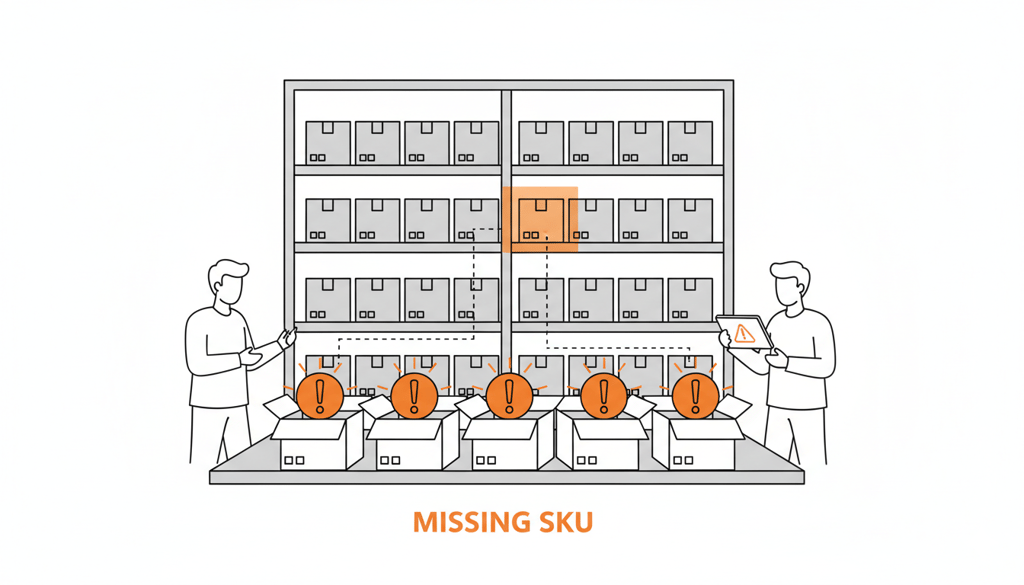
Online stores face an average 8% out-of-stock rate in traditional e-commerce, but a stockout during a subscription cycle is a mass churn event. Failed or delayed shipments directly cause cancellations, not just complaints.
The Business Impact
D2C fulfillment services built for subscription brands address each of these business levers: churn rate, lifetime value (LTV) per subscriber, cash flow predictability, brand perception, and unit economics.
Kitting and assembly costs significantly affect margin, and manual fulfillment breaks at volume thresholds most brands hit within 12-18 months of meaningful growth.
Understanding the 10 reasons to outsource subscription box fulfillment is a smart starting point for any brand approaching those thresholds.
Why Subscription Fulfillment Demands a Different Approach
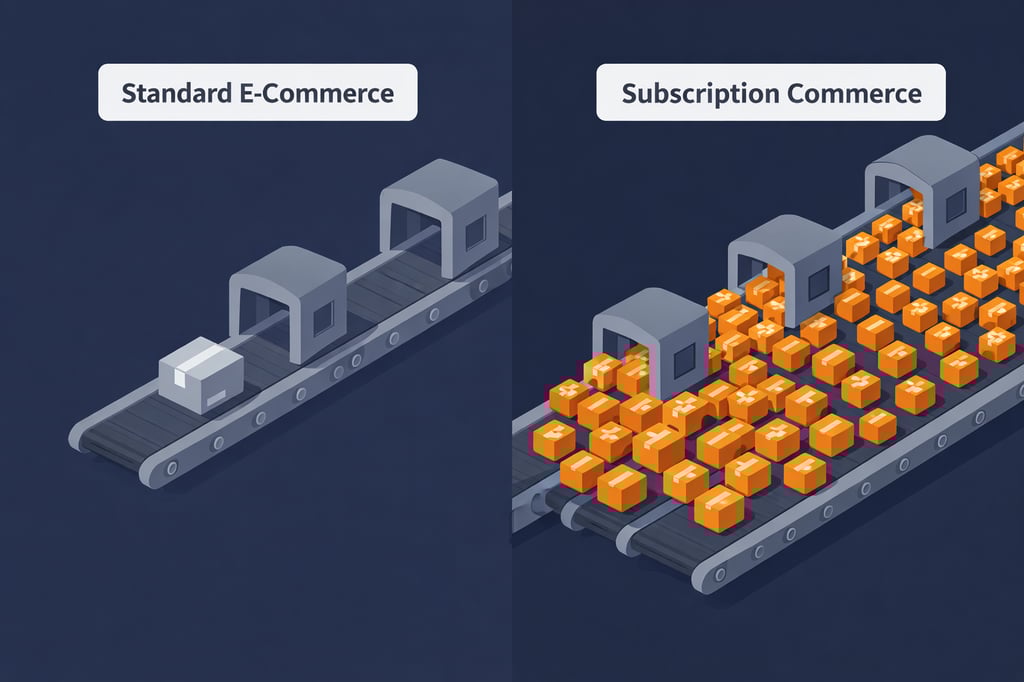
Standard e-commerce fulfillment is reactive: a customer orders, and you ship. Subscription fulfillment is proactive; you must have everything staged, assembled, and ready before a fixed deadline serving hundreds or thousands of subscribers simultaneously.
The Operational Differences That Matter
| Standard E-Commerce | Subscription Commerce |
| Orders arrive individually throughout the day | Orders are batch-processed on a set date |
| Pick-and-pack happens in real time | Kitting and assembly completed before ship date |
| Inventory replenished by sales velocity | Inventory staged 2-4 weeks ahead of cycle |
| Shipping windows are flexible | All boxes ship within a 48-72 hour window |
| Errors impact single customers | One error affects ALL subscribers simultaneously |
Why Subscriber Churn Is a Fulfillment Problem
Most brands treat churn as a marketing problem. In reality, fulfillment failures are a top-3 driver of subscription cancellations.
The most common culprits: late delivery, wrong items in the box, damaged packaging on arrival, no tracking updates during transit, and billing charges processed while shipments are delayed.
Retention math: Research by Frederick Reichheld of Bain & Company, cited in Harvard Business Review, shows that a 5% increase in customer retention can boost profits by 25-95%.
In subscription commerce, on-time delivery is one of the highest-leverage retention inputs: missed ship windows and tracking failures are among the top voluntary cancellation triggers.
The Volume Surge Challenge
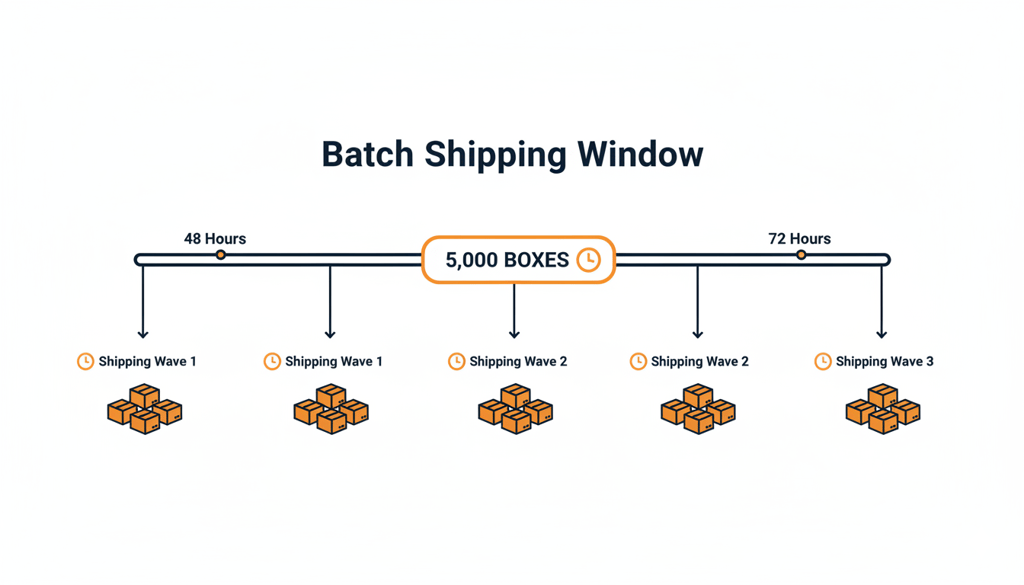
A brand with 5,000 subscribers needs to have 5,000 boxes fully kitted and assembled, ship all 5,000 within a 48-72 hour window, track every shipment proactively, and handle inevitable exceptions without slowing the entire batch.
Understanding how 3PL fulfillment improves supply chain efficiency is often the first step toward realizing that this kind of operation isn’t something most brands can build in-house alone.
The decision to keep fulfillment in-house or partner with a 3PL comes down to whether outsourcing fulfillment is more cost-effective at your current volume. For most brands beyond 300-500 boxes per month, it is.
Quick Reference: Subscription Fulfillment Metrics & KPIs
| Metric | Formula | Target Benchmark | Why It Matters for Subscriptions |
| Subscriber Churn Rate | (Cancellations ÷ Active Subscribers) × 100 | <3% monthly | Primary signal that fulfillment is, or isn’t, retaining paying subscribers |
| Kitting Cycle Time | Total Assembly Time ÷ Total Boxes | <2-3 min/box | Determines whether you can hit your ship window at volume |
| Inventory Fill Rate | (Units Available ÷ Units Required) × 100 | 99%+ pre-cycle | One SKU shortage = partial shipments = mass churn event |
| Cost Per Fulfilled Box | Total Fulfillment Cost ÷ Boxes Shipped | $5-$15 (varies) | Core unit economics metric; must stay below LTV threshold |
| Subscriber LTV | Avg Monthly Revenue × Avg Duration | Varies by category | Sets the upper limit of fulfillment investment justified |
| LTV: CAC Ratio | LTV ÷ Customer Acquisition Cost | 3:1+ | Fulfillment errors become even costlier when acquisition is expensive |
| Batch Processing Time | Total Hours ÷ Total Boxes Shipped | <72 hours | Determines whether your ship window is feasible at your subscriber count |
| Returns & Replacement Rate | (Returns ÷ Total Shipped) × 100 | <2% | Indicates kitting accuracy and packaging quality combined |
| Pre-Ship Inventory Readiness | (SKUs Stocked ÷ Total SKUs Needed) × 100 | 100% by day-14 | Identifies procurement gaps before they become fulfillment failures |
| Cycle On-Time Completion Rate | (Cycles Completed by Deadline ÷ Total) × 100 | 98%+ | Measures the entire batch, not individual orders |
| Net Promoter Score (NPS) | % Promoters − % Detractors | 50+ is excellent | Delivery experience and packaging quality are top NPS drivers |
| Kitting Error Rate | (Incorrect Boxes ÷ Total Kitted) × 100 | <0.5% | Wrong items trigger cancellations, not just return requests |
The 4 Subscription Commerce Models & Their Fulfillment Needs
Not all subscription boxes are created equal. The fulfillment requirements of a monthly beauty discovery box are radically different from a weekly meal kit or an annual membership; understanding your model is the foundation of operational design.
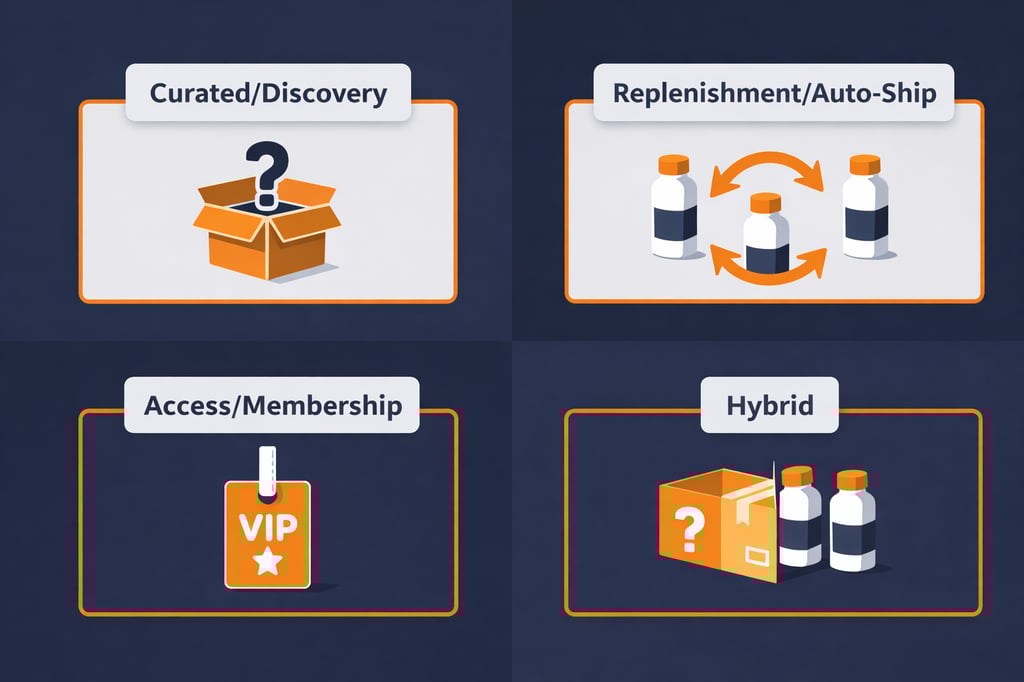
Model 1: Curated / Discovery Boxes
What it is: A themed collection of curated products assembled specifically for that cycle, and subscribers don’t know what they’re getting, which is part of the value.
Examples: Beauty boxes (IPSY, Birchbox), hobby kits, book clubs, pet treat boxes, snack boxes
Fulfillment Complexity: HIGH
New product sourcing happens every cycle, requiring constant supplier coordination. Multi-SKU kitting changes each month, meaning assembly instructions are never the same.
For brands running curated boxes, understanding the 3PL environment is essential before deciding how much of this process to keep in-house.
Presentation standards are high: tissue, inserts, branded stickers, and custom packaging are all non-negotiable. Inventory lead times must account for supplier delays, and kit-tracking systems are essential to prevent subscribers from receiving duplicate products.
Key consideration: Lead time for inventory is typically 4-8 weeks ahead of ship date. Assembly labor scales directly with subscriber count.
Model 2: Replenishment / Auto-Ship
What it is: The same products ship on a recurring schedule; subscribers sign up to automatically receive refills or restocks.
Examples: Razor cartridges, vitamins, pet food, coffee, cleaning products
Fulfillment Complexity: LOW-MEDIUM
High volume, low variability. Inventory forecasting is highly predictable based on active subscriber count. Speed and cost efficiency matter more than presentation. Billing systems must sync precisely with ship dates.
Supplement fulfillment services are a good example of how replenishment models operate at scale: predictable SKUs, automated billing, and high-volume throughput with minimal manual assembly.
This model is the most compatible with standard 3PL infrastructure, making it easier to scale.
However, inventory accuracy remains critical; one stockout causes mass partial shipments. B2B fulfillment capabilities become relevant when replenishment brands add wholesale or retail distribution channels alongside their DTC subscription.
Model 3: Access / Membership Subscriptions
What it is: Subscribers pay for ongoing access to a service, content, or exclusive perks; physical fulfillment may be minimal (welcome kits, merch drops, seasonal gifts).
Examples: Patreon rewards, wine clubs, professional membership boxes
Fulfillment Complexity: LOW (but high stakes per shipment)
Low-frequency shipments with extremely high presentation standards. Custom packaging and personalized inserts are often required.
Crowdfunding fulfillment services follow a nearly identical operational model: low volume, high expectations, and zero tolerance for errors. Inventory volumes are smaller, but each shipment must be 100% accurate because there are few opportunities to recover from a mistake.
Model 4: Hybrid Subscriptions
What it is: A mix of replenishment items and curated additions, often with subscriber choice or personalization elements.
Examples: Meal kits (base staples + weekly feature), personalized pet boxes, beauty boxes with add-on options
Fulfillment Complexity: HIGH
Custom fulfillment services are essentially built for this model: the operational requirements are complex enough that generic 3PL workflows rarely cut it.
Personalization logic must connect billing/CRM to fulfillment WMS, multiple pick paths exist per order, and QC requirements are high to ensure personalization accuracy across every single kit.
Subscription Model Comparison
| Model | Fulfillment Complexity | Kitting Needed | Inventory Predictability | Best 3PL Match |
| Curated/Discovery | High | Extensive | Low | Full-service kitting 3PL |
| Replenishment | Low-Medium | Minimal | High | High-volume, automated 3PL |
| Access/Membership | Low | Custom | Medium | Premium packaging 3PL |
| Hybrid | High | Complex | Medium | Tech-integrated, flexible 3PL |
Regardless of model, most subscription brands eventually sell across more than one channel. Omnichannel ecommerce fulfillment capabilities become important the moment your subscription operation shares inventory with a marketplace or wholesale account; without centralized visibility, overselling and fulfillment conflicts follow quickly.
The Subscription Fulfillment Process: 6 Core Stages
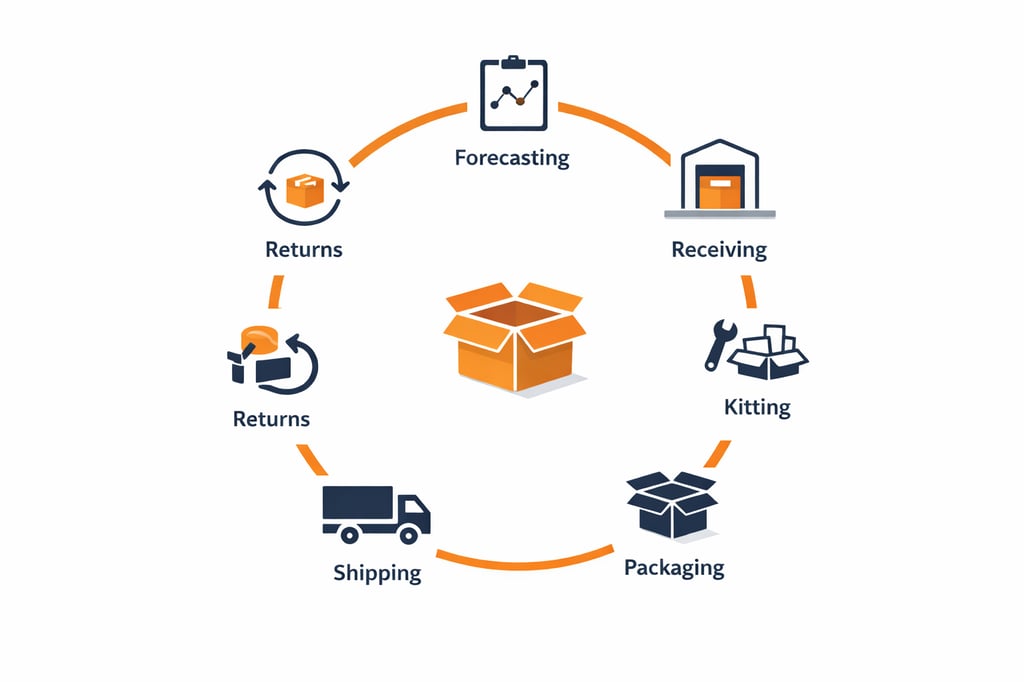
So what is subscription box fulfillment, at least in practice? Well, you need to see it as a six-stage cyclical process that repeats with every billing cycle. Each stage must be completed before the next begins; delays at any stage cascade into missed ship dates.
Stage 1: Demand Forecasting & Inventory Planning
Subscription fulfillment starts with knowing exactly how many subscribers you have, and procuring every product, insert, and packaging component in time. Unlike reactive e-commerce replenishment, subscription inventory planning must be completed before the cycle opens.
Subscriber-based forecasting framework:
- Active subscriber count = your minimum inventory floor
- Account for anticipated new sign-ups during the current cycle
- Buffer for late cancellations (average 3-5% of active base)
- Add 5-10% overage for damages, assembly errors, and replacements
Inventory lead time requirements:
- International suppliers: 60-90 days ahead of ship date
- Domestic suppliers: 3-4 weeks ahead of ship date
- Packaging and inserts: 4-6 weeks (custom printing lead times)
- Safety stock: 10-15% buffer above forecasted subscriber count
Forecast at the SKU level, track seasonal churn patterns (post-holiday spike in cancellations), and share forecasts with suppliers and your 3PL partner at least 8 weeks in advance.
Use the inventory turnover calculator to validate your planning assumptions before placing purchase orders. Target 90%+ forecast accuracy for established products.
Common forecasting mistakes:
- Relying on category-level data instead of SKU-level detail
- Ignoring seasonal churn spikes that reduce the active subscriber count
- Failing to account for promotional lift from referral campaigns mid-cycle
- Using the last cycle’s final count without adjusting for growth trajectory
Understanding how to calculate replenishment cycles is foundational for avoiding the last mistake above; replenishment timing and subscriber count are interdependent.
Once your forecast is set, the fulfillment cost calculator helps model different inventory scenarios before committing to purchase orders.
Key metrics: Inventory Fill Rate at 99%+ before ship date is non-negotiable. Pre-Ship Inventory Readiness should hit 100% for all required SKUs by day 14 before the planned ship date.
Stage 2: Product Sourcing & Inventory Receiving
After forecasting, procurement must move immediately. Understanding how the D2C supply chain works is useful context here because subscription sourcing is upstream of everything: get it wrong and every downstream stage suffers.
Every item, including products, inserts, tissue, branded stickers, and outer packaging, must arrive and be verified before kitting begins. Missing a single component holds the entire batch.
Procurement strategy:
- Send purchase orders to all suppliers at least 6-8 weeks before ship date
- Confirm the Advanced Shipment Notice (ASN) before delivery
- Identify backup suppliers for every critical product category
- Stagger deliveries to avoid overwhelming receiving capacity
Before finalizing order quantities, use the cost per unit calculator to evaluate whether bulk purchasing discounts offset the added carrying cost for that cycle.
Receiving best practices:
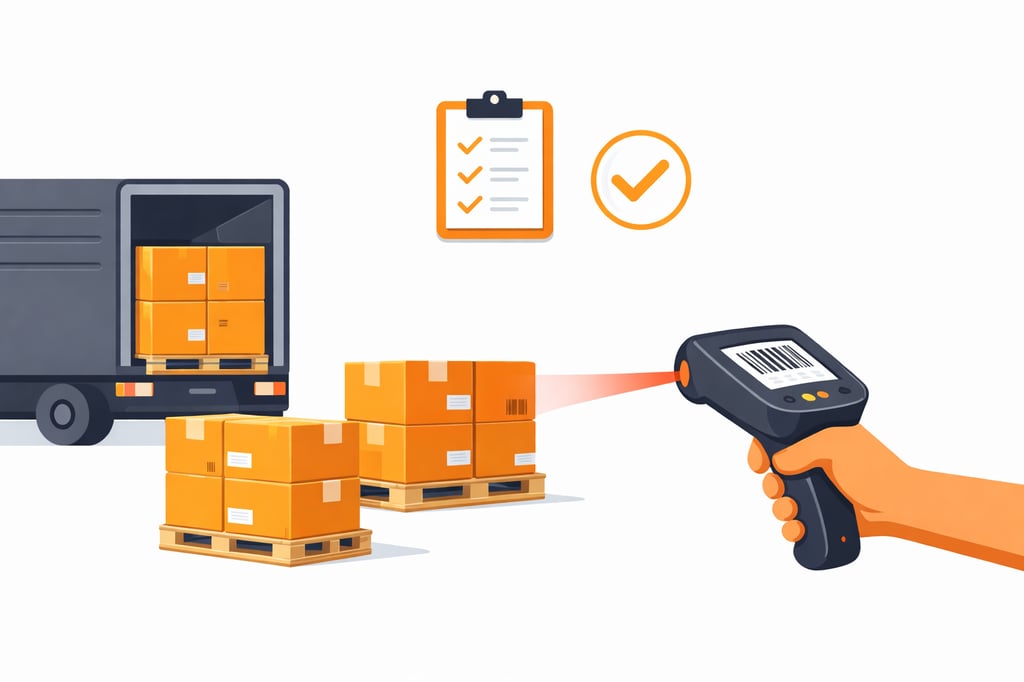
- Inspect all incoming inventory for quality before staging
- Count-check against PO quantities immediately
- Report discrepancies to suppliers within 24-48 hours
- Update your WMS immediately to confirm staging readiness
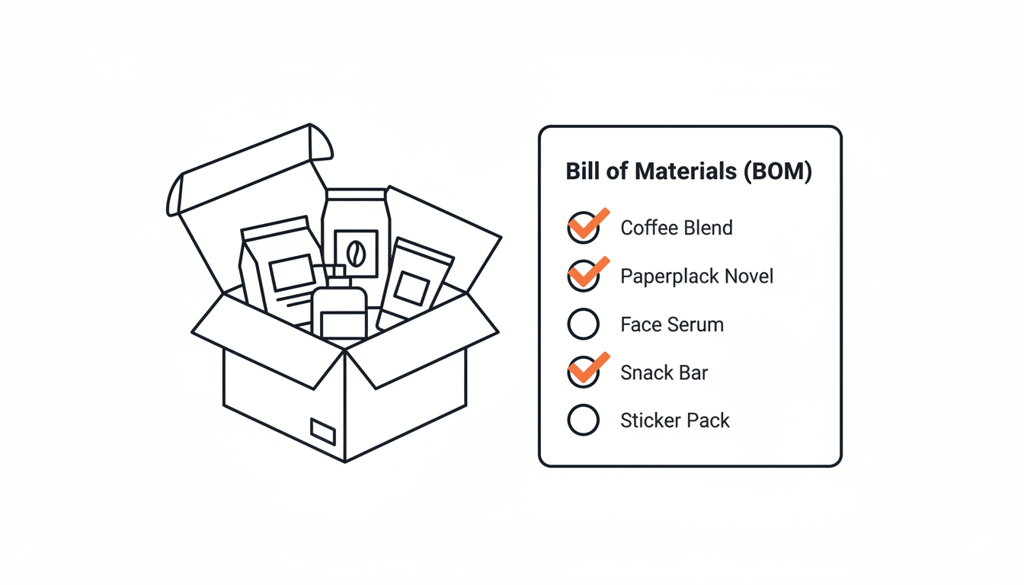
- Create a kit bill of materials (BOM) and verify against receiving records before authorizing kitting to begin
Target metrics: Receiving accuracy at 99%+, dock-to-stock time under 24-48 hours, discrepancy rate below 2%.
Stage 3: Kitting & Assembly
Kitting is where subscription fulfillment diverges most dramatically from standard e-commerce.
Assembling thousands of identical or personalized boxes within a tight time window requires documented workflows, trained teams, quality checkpoints, and scalable capacity, all simultaneously.
Step-by-step kitting workflow:
- Pull kit BOM from WMS and distribute to the assembly team
- Stage all components at assembly stations
- Pick and place items per assembly instructions
- Add branded inserts, marketing materials, and personalization elements
- Quality check each kit against the BOM (scan or visual verification)
- Seal and label outer packaging
- Move completed kits to the shipping staging area
Kitting complexity tiers:
- Tier 1 (Simple): 1-3 same items every cycle, minimal assembly (replenishment model)
- Tier 2 (Standard): 3-6 items, some variation by subscriber segment, printed inserts
- Tier 3 (Complex): 7+ items, personalization elements, multiple box sizes, intricate presentation
Quality control in kitting:
- Random sampling: Check 5-10% of kits at the midpoint of the assembly run
- Barcode scanning at the packing station to verify the correct SKUs
- Weight-check complete kits against the standard weight to catch missing items
- Photographic documentation of kit layout for QC reference
Key metrics: Kitting Cycle Time under 2-3 minutes per box (Tier 2), Kitting Accuracy Rate at 99%+, Kit Completion Deadline 48-72 hours before planned ship date.
Scaling kitting capacity: As subscriber counts grow, assembly efficiency becomes a critical bottleneck. At Tier 2 complexity with 5,000 subscribers and a 2-minute average kit time, you need approximately 167 person-hours of assembly work to complete the batch.
That translates to roughly 4-5 full days of work for a 5-person team. Pick and pack fulfillment services from a specialized 3PL solve this scaling problem directly: trained teams, dedicated assembly stations, and no hiring burden on your side.
In-house vs. 3PL kitting: The break-even threshold is typically 300-500+ boxes per month. Read why brands use 3PL kitting services to understand the full cost picture before making that decision, then evaluate specific providers using a solid 3PL comparison framework.
Stage 4: Packaging & Branding
For subscription commerce, the box is not just a container; it’s the product experience. Unboxing moments drive social sharing, word-of-mouth referrals, and subscriber retention.
Every packaging decision communicates brand identity from the moment a subscriber picks it up.
Standard packaging options:
- Branded mailer boxes (most common for subscription)
- Custom-printed interior tissue paper
- Branded inserts: product story cards, promo offers, personalized notes
- Eco-friendly and sustainable packaging (growing subscriber expectation)
Branding elements to include:
- Branded outer box (design can rotate monthly for collector appeal)
- Personalized inside-lid messaging
- Branded tissue, stickers, and ribbon
- Monthly theme cards or welcome inserts
Cost benchmarks:
- Custom mailer box: $1.50-$4.00/box at volume
- Tissue + inserts: $0.25-$0.75/box
- Total packaging: $2-$5/box, depending on brand tier
Order packaging materials in subscription-cycle batches and test packaging for transit damage before rolling out at scale.
For brands with sustainability commitments, eco-friendly fulfillment services offer compostable mailers, recycled tissue, and FSC-certified inserts without sacrificing presentation quality. Use dimensional weight optimization to control shipping costs regardless of packaging choice.
Premium fulfillment services specialize in high-presentation packaging execution for brands where the unboxing moment is a core part of the product experience.
Stage 5: Shipping & Carrier Management
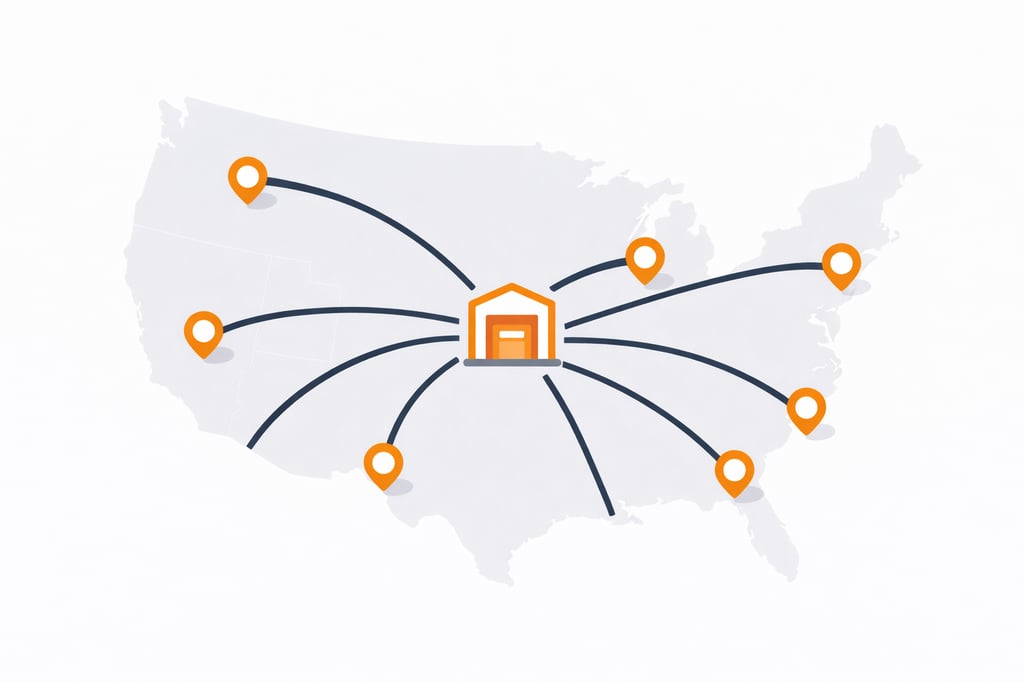
All subscription boxes must ship within a compressed window, often 24-72 hours, using a combination of ground and expedited carriers. Missing carrier pickups or underestimating zone distribution leads to late deliveries that directly cause cancellations.
Carrier selection framework:
- Primary carrier: Volume commitment for negotiated rates (UPS, FedEx, USPS)
- Backup carrier: Alternative for peak capacity or regional gaps
- Regional carriers: Cost-efficient for concentrated geographic zones
Shipping optimization tactics:
- Pre-sort by carrier and zone before the ship date
- Use multi-carrier rate shopping for each box
- Distribute inventory across multiple fulfillment centers to reduce shipping zones
- Negotiate peak-date priority pickups with the primary carrier
Reviewing strategies for improving shipping efficiency before your next cycle often reveals quick wins: smarter zone distribution, carrier mix adjustments, and packaging changes that reduce dimensional weight.
Subscription shipping cost benchmarks:
- Ground shipping (1-2 lbs): $6-$10/box
- Ground shipping (2-5 lbs): $9-$15/box
- 2-day fulfillment premium: +$8-$15/box (justified for high-LTV subscribers who factor delivery speed into their retention decision)
Tracking and communication: Trigger automated tracking emails immediately upon label creation, send proactive delay notifications if carrier scans show exceptions, and use delivery confirmation to trigger post-delivery engagement emails.
Stage 6: Returns Management & Reverse Logistics
Subscription returns are less frequent than standard e-commerce; subscribers rarely return an opened box. But when they occur, they signal a serious issue: wrong items, damaged goods, or billing errors. How you handle them determines whether that subscriber stays or cancels.
Common subscription return scenarios:
- Delivery damage (box crushed in transit)
- Wrong items in the box (kitting error)
- Billing processed, but the box not received
- The subscriber requested a pause/skip, but the shipment was processed anyway
Returns workflow:
- Customer contacts support or initiates RMA online
- Determine whether a return shipment is needed (often replacement only)
- Issue a replacement shipment with priority shipping
- Investigate root cause (kitting error? carrier damage?)
- Update subscriber record and add account credit or discount
- Document for next cycle improvement
Best practice: Offer a “no-return replacement” policy for damaged boxes. The cost of return logistics rarely justifies the friction; your subscriber’s LTV far exceeds the cost of a replacement.
Use return data to flag recurring kitting or carrier issues, track return rate by cycle to identify process degradation, and integrate returns tracking with subscriber satisfaction surveys.
Returns management service and reverse logistics services from a capable 3PL handle this stage at scale while capturing data that improves future cycles.
How Recurring Billing Affects Fulfillment Operations
Billing and fulfillment are deeply intertwined in subscription commerce. A payment failure delays a shipment. A processing error ships a box to a cancelled subscriber. Understanding this relationship prevents costly operational mistakes that compound cycle over cycle.
The Billing-to-Fulfillment Workflow
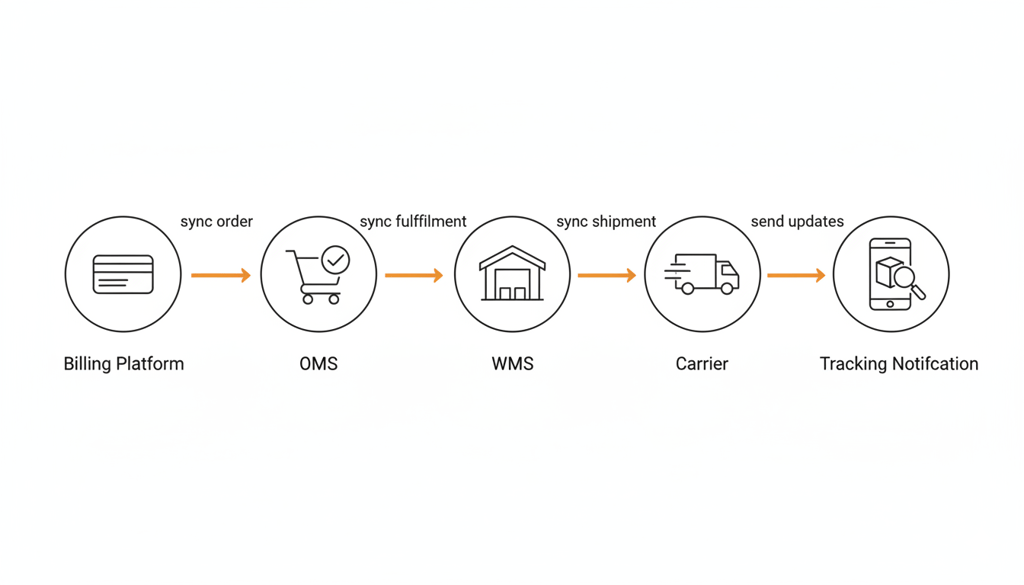
- Billing platform processes subscriber charges (e.g., 1st of the month)
- Successful payments generate confirmed orders in OMS
- Confirmed orders sync to fulfillment WMS for batch processing
- Failed payments generate “pending” or “skipped” status; no box ships
- Retry logic: Failed payments may retry 2-3 times before cancellation
- Final active subscriber count confirmed 5-7 days before ship date
Why this timeline matters: You cannot finalize kitting quantities until billing is resolved. A large wave of payment failures late in the cycle can leave you with excess assembled inventory. Conversely, a surge in late sign-ups can create inventory shortfalls.
Managing Subscriber List Fluctuations
Changes affecting fulfillment:
- New sign-ups (after cycle cutoff): Ship in next cycle, not current
- Cancellations (before cycle): Remove from kitting count
- Pauses/skips: Flag as “do not ship” in WMS for that cycle
- Address changes: Must sync before label generation
- Upgrades/downgrades: Trigger different kit BOM
Best practice: Lock the subscriber list for kitting purposes 5-7 days before the planned ship date. Any changes after that point are processed in the next cycle.
Billing Failure Impact on Inventory
Scenario: 5,000 active subscribers with a typical credit card failure rate of 5-9% means 250-450 boxes may not be needed. If kitting begins before billing resolves, hundreds of assembled kits have no recipient. Disassembling adds cost and time. Reassigning adds complexity.
Solution: Build a mandatory billing resolution window into your fulfillment timeline before kitting authorization. Shopify fulfillment services built on native API connections automate the order sync from billing confirmation to WMS, removing the manual handoff that causes these errors.
Most subscription brands run on Shopify with Recharge, Bold, or a comparable app layered on top, so the Shopify-specific integration choices matter twice as much for recurring shipments. Our complete Shopify fulfillment services guide covers the operational considerations particular to the platform.
Never authorize assembly until the subscriber list is locked and payments are confirmed.
For a full picture of what connects where, review Fulfyld’s integrations to see how billing platforms, ERPs, and carrier systems link together in a subscription fulfillment stack.
Technology Stack for Subscription Fulfillment
Subscription fulfillment runs on automation. Without the right technology connecting your billing platform, OMS, WMS, and carrier systems, you’re manually managing a process that compounds errors at scale.
Core Subscription Technology Layers
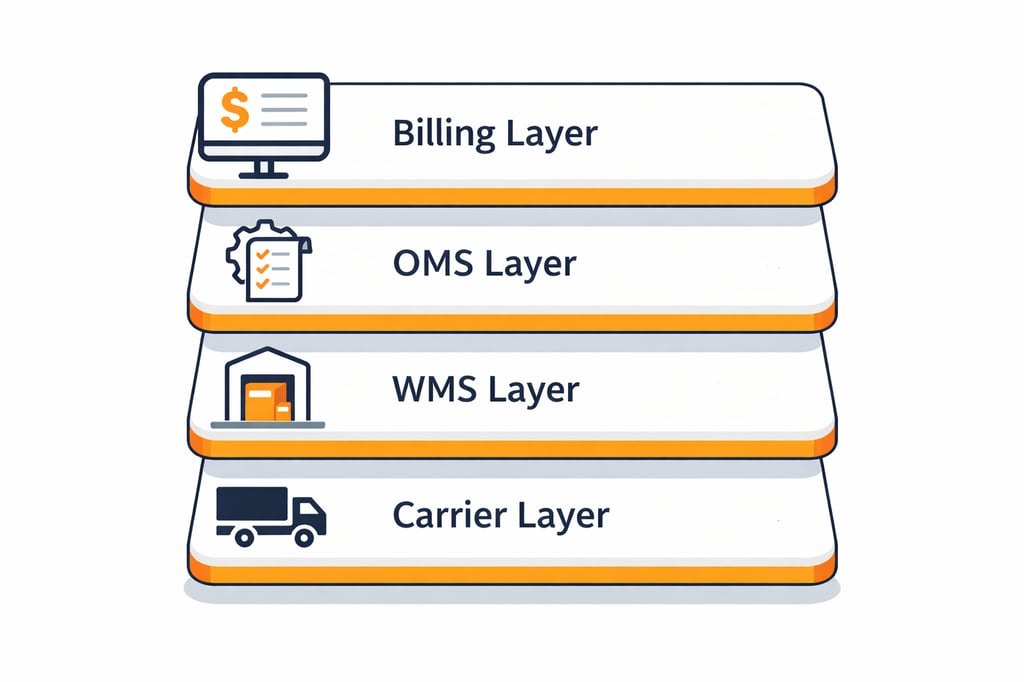
Four interconnected technology layers power every subscription fulfillment operation, each one feeds directly into the next.
Layer 1: Subscription Billing & Management Platform
Your billing platform is the engine that drives every fulfillment cycle. It manages recurring charges, tracks subscriber status, and determines exactly how many boxes ship each month. Choosing the right platform for your model is foundational.
| Platform | Best For | Key Features |
| Recharge | Shopify brands | Shopify-native, automated billing, customer portal |
| Bold Subscriptions | Shopify/BigCommerce | Flexible billing cycles, upsell tools |
| Cratejoy | Subscription box startups | Marketplace + fulfillment integration |
| Chargebee | SaaS + physical hybrid | Advanced billing logic, dunning management |
| Subbly | Box brands | All-in-one subscription platform |
Layer 2: Order Management System (OMS)
Your OMS aggregates orders from the subscription platform and other channels, routes orders to the correct fulfillment location (in-house vs. 3PL), manages order exceptions and failed billing statuses, and triggers customer communication at each milestone.
For brands at enterprise scale, enterprise fulfillment solutions often bundle OMS, WMS, and carrier management into a single integrated platform.
Layer 3: Warehouse Management System (WMS)
The WMS receives confirmed orders from OMS automatically, manages kitting instructions and assembly workflows, tracks component inventory in real time, and generates pick lists for assembly teams.
A subscription-capable WMS is a non-negotiable requirement for 3PL partners serving subscription brands. Understanding what a 3PL warehouse management system actually includes helps you ask the right questions when evaluating partners.
Layer 4: Carrier & Shipping Software
Multi-carrier rate shopping per box, bulk label printing for subscription batches, tracking upload back to OMS and subscriber platform, and carrier performance reporting by cycle.
3PL automation handles most of this layer without manual intervention once the integration is configured correctly.
Integration Architecture
- Subscription Platform (Recharge/Bold)
- E-Commerce Store (Shopify/WooCommerce)
- Order Management System (OMS)
- 3PL / Warehouse Management System (WMS)
- Carrier Integrations (UPS/FedEx/USPS)
- Tracking Back to Subscription Platform + Customer
Integration requirements:
- Real-time bidirectional sync between subscription platform and OMS
- OMS → WMS sync within <5 minutes of order confirmation
- Inventory updates from WMS back to OMS to prevent overselling
- Tracking sync from carrier back to subscription platform for customer notifications
Technology red flags, signs your stack is failing:
- Manual CSV uploads between any two systems
- Tracking is not automatically sent to subscribers
- The inventory count doesn’t match between systems
- Billing platform can’t distinguish “active” vs. “paused” subscribers
Technology Investment by Stage
Most brands underinvest in technology at the subscription platform and OMS layer, then overpay for manual labor to compensate.
A $300-$500/month investment in a capable OMS with native WMS integration typically saves 10-15 hours of manual reconciliation per cycle; ROI that pays for itself within the first two billing periods.
Before shopping for technology, document your current manual touchpoints and calculate the true cost of each one. That exercise alone often reveals exactly where technology investment delivers the fastest return.
Outsourcing Subscription Fulfillment: Benefits & 3PL Evaluation Guide
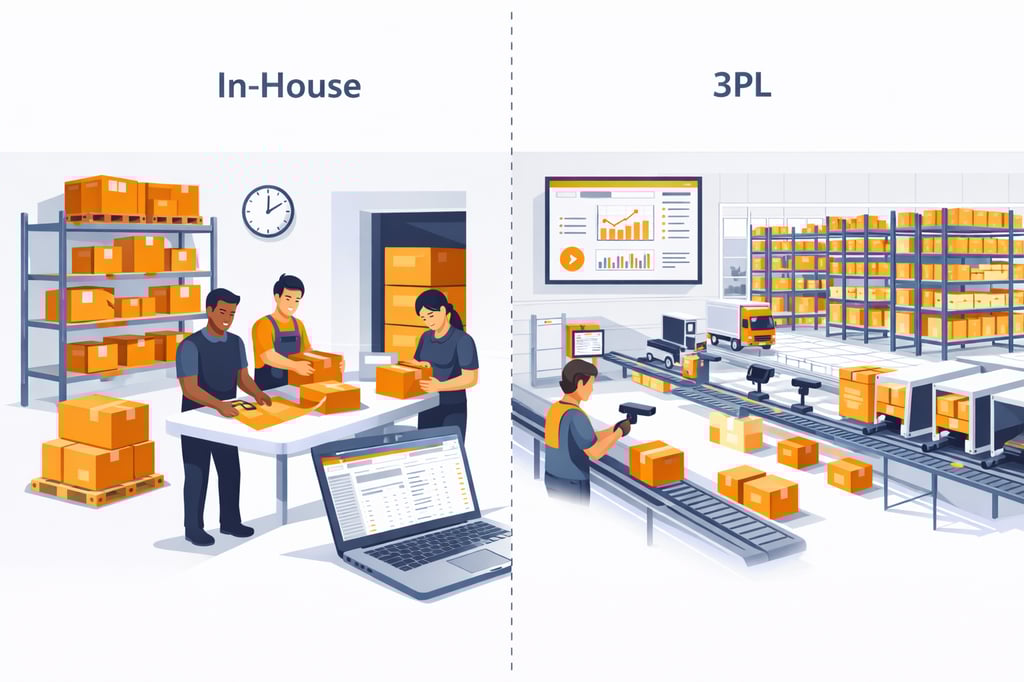
At some point, every growing subscription brand faces the in-house vs. outsource decision. The answer usually comes down to volume, complexity, and whether your current setup is limiting growth rather than enabling it.
When to Outsource Subscription Fulfillment
These warning signs tell you that in-house fulfillment is costing more than a 3PL ever would.
Signals you’ve outgrown in-house fulfillment:
- Shipping 300-500+ boxes per month, and batch days are chaos
- Missing ship dates or running out of space before the cycle ends
- Kitting errors are increasing as volume grows
- No capacity for seasonal subscriber spikes
- Spending 30%+ of team time on fulfillment instead of growth
- Carrier rates aren’t competitive because you lack volume negotiation leverage
Cost Comparison: In-House vs. 3PL
| In-House Fulfillment | 3PL Fulfillment |
| Warehouse lease: $3K-$15K/month | Variable per-order pricing: $5-$15/box |
| Staff: $35K-$55K/employee × 2-4 employees | No fixed labor costs |
| WMS software: $200-$1K/month | WMS included in service |
| Equipment: $10K-$30K upfront | No capital expenditure |
| Total fixed: $8K-$30K+/month | Scales directly with subscribers |
Benefits of 3PL for Subscription Brands
1. Scalable Kitting Capacity Trained assembly teams that scale with your subscriber count. No hiring, training, or scheduling burden. Peak capacity available for seasonal surges.
2. Advanced WMS Technology: Enterprise-grade systems with subscription-specific workflows. Real-time inventory visibility across all components. Kit BOM management and assembly tracking built in. Costs $50K+ to replicate independently.
3. Negotiated Carrier Rates Volume-based discounts from major carriers deliver 10-30% savings vs. self-shipped rates, with multi-carrier rate shopping per shipment.
4. Geographic Distribution Multiple fulfillment centers reduce average shipping zones, enabling faster delivery to subscribers nationwide at lower per-box cost.
5. Dedicated Account Management Expert team focused on your brand’s fulfillment success, proactive issue identification, and regular cycle performance reviews.
Evaluating a 3PL for Subscription Operations
Not every 3PL can handle subscription complexity. Use this checklist to separate capable partners from generic providers.
Subscription-specific capabilities:
- Kitting experience at high volume (request case studies)
- Ability to manage cycle-based batch processing
- Support for recurring and varying SKU kits each cycle
- Kit tracking to prevent duplicate sends
Technology & integration:
- Native integration with Recharge, Bold, Cratejoy, or Shopify
- Real-time inventory visibility via portal or API
- Automated order import from subscription platform
- Tracking sync back to the subscription platform
Operational standards:
- Kitting accuracy rate documented at 99%+
- On-time ship rate 98%+ on subscription cycle dates
- Dedicated account manager (not just a ticket system)
- Ship-date capacity guarantees for large batches
A dedicated account management model matters more for subscription brands than for one-off e-commerce clients: your cycle calendar is fixed, your subscriber expectations are set, and you need a partner who knows your operation well enough to act without being asked.
Red flags to avoid:
- No prior subscription brand experience
- Can’t integrate with your subscription platform
- Vague or undisclosed kitting error rates
- No dedicated contact for subscription cycle issues
The Partnership Model: What Good 3PL Collaboration Looks Like
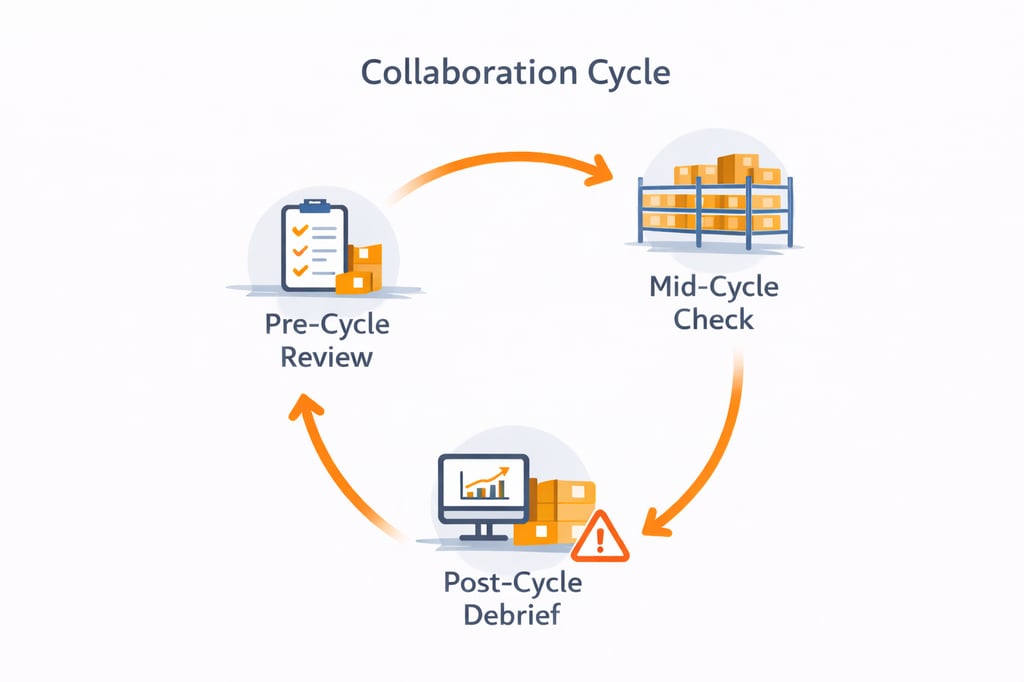
Outsourcing is not a set-it-and-forget-it decision. The best subscription fulfillment partnerships operate as collaborative working relationships with structured communication built into the cycle calendar.
Effective partnership cadence:
- Pre-cycle review (3 weeks out): Confirm subscriber count, inventory readiness, carrier capacity, and contingency protocols
- Mid-cycle check-in (1 week out): Verify kitting progress, address any component shortages, and confirm ship date feasibility
- Post-cycle debrief (within 5 days of ship completion): Review metrics, document errors, identify improvements for next cycle
Knowing how to calculate fulfillment cost per order gives you the baseline metrics to hold a 3PL accountable in those post-cycle reviews. It’s also worth reviewing DTC fulfillment returns best practices to ensure your reverse logistics process is as sharp as your outbound workflow.
For a full list of what to measure, the 3PL KPIs you should track framework covers both operational and financial performance in one place.
Common Subscription Fulfillment Mistakes & How to Avoid Them
Even well-intentioned brands make costly fulfillment errors that are entirely preventable. Knowing what they are and how to prevent them is the difference between a thriving subscriber base and a churn-rate disaster.
Mistake #1: Starting Inventory Procurement Too Late
Brands calculate their ship date but forget to count backward through supplier lead times. Products arrive days before or after the ship window, causing delayed cycles or partial shipments.
Prevention:
- Build a procurement calendar working backward from ship date
- International suppliers: Order 60-90 days in advance
- Domestic suppliers: Order 3-4 weeks in advance
- Add a 1-week buffer for customs delays or supplier issues
- Share the procurement calendar with your 3PL for receiving coordination
The warehouse storage cost calculator is useful here: if staging inventory early means carrying extra stock for 3-4 weeks, you need to know whether that cost is lower than the cost of a partial cycle shipment.
Mistake #2: Not Locking the Subscriber List Before Kitting
Kitting begins while billing is still processing, resulting in too many or too few assembled boxes, wasted materials, and shipping errors.
Prevention:
- Set a formal “subscriber list lock” date 5-7 days before the ship date
- No billing retries after the lock date count toward the current cycle
- Configure the billing platform to respect cycle cutoffs
- Document this policy clearly for your operations team
Mistake #3: Using Generic E-Commerce Fulfillment Processes
Standard pick-and-ship workflows don’t account for batch kitting, cycle-based shipping windows, or kit tracking to prevent duplicate sends. This creates errors that scale with every subscriber added.
Prevention:
- Require a WMS with subscription-specific workflows
- Implement kit tracking by subscriber ID
- Create separate fulfillment SOPs for subscription cycles vs. one-off orders
- Partner with a 3PL experienced in subscription operations
Mistake #4: Under-Communicating During the Shipping Window
Subscribers expect boxes by a specific date. When shipping runs 2-3 days later than expected, silence is interpreted as a problem, triggering cancellations that could have been prevented with a single proactive email.
The importance of customer service in subscription retention is often underestimated; proactive communication is frequently the difference between a pause and a cancellation. The fix is simple:
Prevention:
- Send “Your box is on its way!” email with tracking immediately on label creation
- Set accurate delivery window expectations at sign-up
- Communicate any cycle delays proactively, before subscribers notice
- Set up automated tracking update emails for in-transit stages
Mistake #5: Ignoring Kitting Quality Until Complaints Arrive
The problem: Without active QC checkpoints during assembly, errors accumulate silently. Subscribers receive wrong items, incomplete kits, or broken products. By the time complaint volume signals the issue, thousands of boxes have shipped.
Prevention:
- Implement QC checkpoints at 25%, 50%, and 75% of the assembly run
- Use barcode scanning at the packing station for every kit
- Weight-check 10-15% of assembled kits against the standard
- Track error rate per cycle and investigate any rate above 0.5%
Improving the order fulfillment process requires building QC into the workflow itself, not bolting it on after errors surface.
Mistake #6: Failing to Plan for Subscriber Growth
A successful marketing campaign drives 30% subscriber growth mid-cycle, but inventory, kitting capacity, and carrier pickups were planned for the original count. The result: missed ship dates and new subscribers who immediately cancel.
Prevention:
- Build a 10-15% growth buffer into every cycle’s inventory order
- Have carrier capacity pre-approved for 20%+ volume surge
- Discuss surge protocols with your 3PL partner at the start of each cycle
- Create a fast-reorder protocol with key suppliers for emergency restocking
Scaling Your Subscription Fulfillment Operation
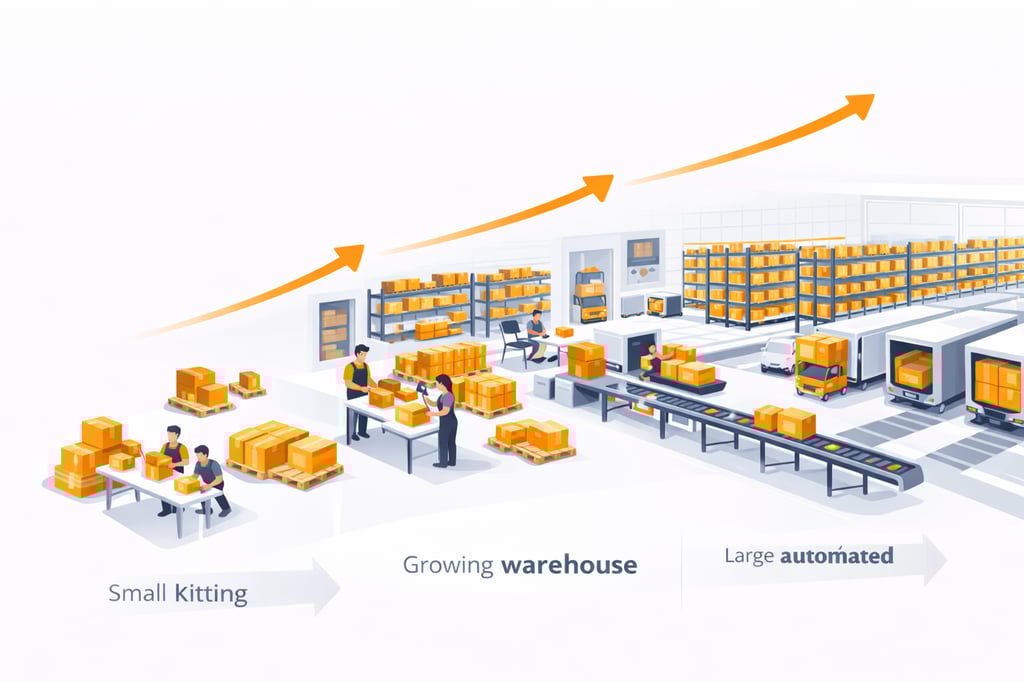
Mastering the fundamentals is only the first challenge. As your subscriber base grows, operational complexity multiplies; the systems, partners, and processes that worked at 500 boxes will break at 5,000.
When You’ve Outgrown Your Current Setup
These operational warning signs indicate your fulfillment setup needs an upgrade.
Scaling signals to watch for:
- Batch cycle time is increasing despite the same subscriber count
- Kitting error rate is creeping above 0.5% as volume rises
- Your 3PL is missing ship date windows on busy cycle days
- Carrier costs are rising faster than revenue
- Subscriber churn is ticking up without an obvious marketing cause
Any two of these signals in the same cycle period warrant an operational audit. Scaling problems compound quickly in subscription commerce; one bad cycle drives cancellations that take 3-6 months of retention marketing to recover.
Scaling Levers to Pull
These four strategic investments separate subscription brands that scale smoothly from those that stall.
- Multi-Fulfillment Center Strategy: Distributing inventory across 2-3 strategically located fulfillment centers reduces average shipping zones, cuts per-box shipping costs by 15-25%, and provides redundancy if one location has capacity issues.
- Automation Investment: At 2,000+ boxes per cycle, conveyor systems, automated label applicators, and barcode verification tools pay for themselves within 2-3 cycles through labor savings and reduced error rates.
- Dedicated Cycle Planning Cadence: High-volume brands benefit from structured pre-cycle reviews with their 3PL, confirming subscriber counts, inventory readiness, carrier capacity, and contingency plans, 3 weeks before every ship date.
- Subscription Platform Upgrades: As complexity grows, upgrading from basic subscription tools to enterprise platforms (Recharge Pro, Chargebee) unlocks advanced subscriber segmentation, dunning management, and deeper WMS integration. At this stage, subscription box fulfillment services built specifically for high-volume recurring operations become the operational foundation the business runs on, not just a vendor relationship.
Use the subscription cost calculator to model the economics of scaling through a 3PL vs. expanding in-house infrastructure before committing to either direction.
For brands at the top end of the growth curve, enterprise fulfillment solutions offer the operational depth, including dedicated teams, multi-location networks, and custom integrations, that high-volume subscription operations demand.
Build a Subscription Fulfillment Operation That Retains Subscribers
Subscription commerce fulfillment is not a back-office function; it IS your product delivery. Every box shipped is a brand promise kept, a subscriber retained, and a step toward the recurring revenue your business depends on.
Mastering the six-stage fulfillment process, understanding how your subscription model shapes operational requirements, and partnering with the right 3PL transform fulfillment from a cost center into a competitive advantage.
Brands with optimized subscription operations see measurable improvements in churn rate, LTV, and margins, driven by their fulfillment investment, not despite it.
Fulfyld combines subscription-specific kitting expertise, advanced WMS technology, dedicated account management, and transparent pricing to help subscription brands scale with confidence, without the operational growing pains.
Subscription contracts often look different from one-time-order pricing because kitting, recurring storage, and monthly cycle work need to be priced in. Our breakdown of 3PL pricing models shows how each structure plays out for a recurring-shipment business specifically.
Get a Free Quote | Contact Fulfyld | View Fulfyld Pricing
Frequently Asked Questions
What is subscription commerce fulfillment?
Subscription commerce fulfillment is the complete process of storing, kitting, assembling, packaging, and shipping recurring orders to subscribers on a defined schedule; unlike standard e-commerce, it runs in batch cycles; every subscriber receives their box within a fixed window.
How does subscription fulfillment work?
After billing charges subscribers successfully, orders sync to a WMS. The fulfillment team stages inventory, kits each box per the bill of materials, adds branded packaging, and ships within the cycle window.
How is subscription fulfillment different from standard e-commerce fulfillment?
Standard fulfillment is reactive: orders ship as they arrive. Subscription fulfillment is proactive; inventory must be staged, kitted, and shipped in a single batch on a fixed date. One missed step affects every subscriber simultaneously, not just individual customers.
What are the key components of subscription fulfillment?
The six key components are: demand forecasting and inventory planning, product sourcing and receiving, kitting and assembly, branded packaging, shipping and carrier management, and returns management.
Technology integration, connecting your billing platform to your 3PL’s WMS, is the backbone of the entire process.
How does recurring billing affect fulfillment?
Billing determines your final subscriber count for each cycle. Payment failures reduce the number of boxes to ship; late sign-ups may be deferred to the next cycle. Locking the subscriber list 5-7 days before the ship date prevents inventory waste and kitting errors.
What subscription models need special fulfillment considerations?
Curated/discovery boxes require complex kitting and cycle-specific assembly instructions. Hybrid models with personalization need subscriber-level pick path routing.
Replenishment models prioritize automation and speed. Access/membership boxes demand premium packaging precision for lower-frequency but high-expectation shipments.
What are the most common subscription fulfillment issues?
The most common issues are:
- Late inventory procurement is causing delayed cycle shipments
- Kitting errors from missing QC checkpoints
- Billing/fulfillment sync failures
- Shipping boxes to cancelled subscribers
- Poor subscriber communication during transit
- Lack of scalable capacity during subscriber growth surges