3PL Integration Guide: What It Is and How It Works
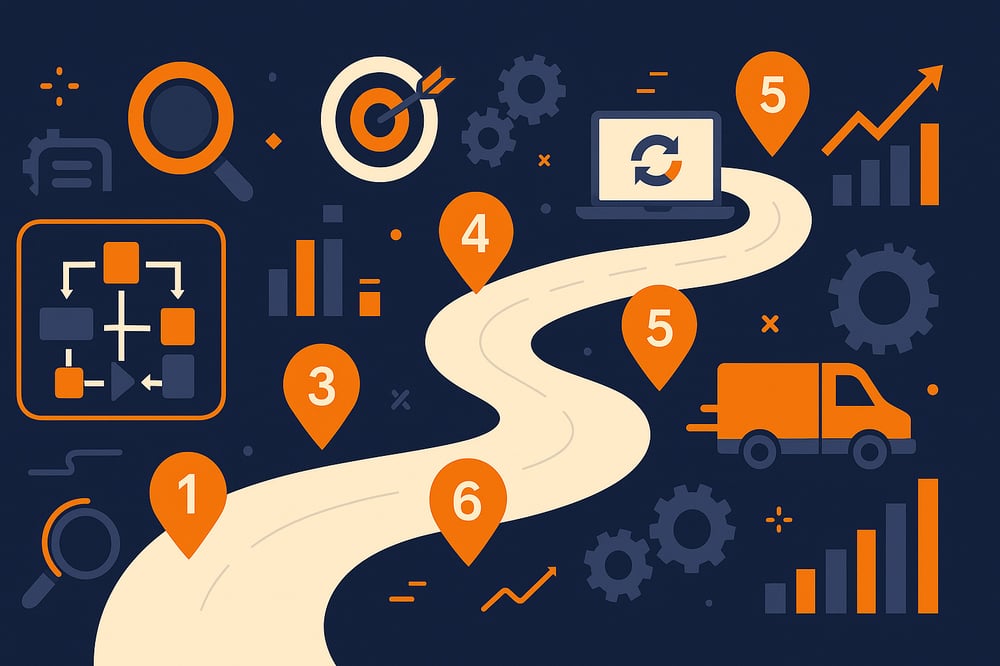
Efficient logistics can make or break an eCommerce business. As customer expectations rise, integrating 3PL solutions becomes essential to maintaining efficient, scalable operations.
For online brands and entrepreneurs, mastering 3PL integration means gaining control without managing warehouses or shipping complexities.
In this comprehensive guide, you’ll learn how to integrate 3PL into your eCommerce operations, from setup and automation to metrics, challenges, and future trends. Below is the full outline of what this article covers:
Your 3PL Integration Roadmap – From Setup to Fulfillment
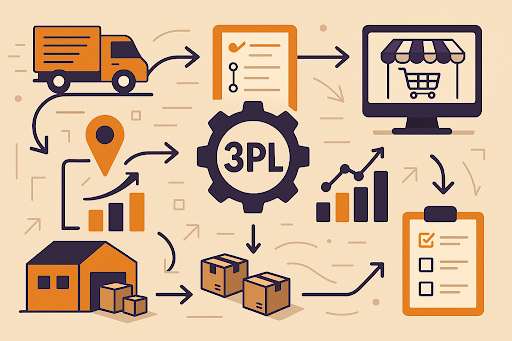
A smooth integration with your third-party logistics provider transforms how your business manages logistics, ensuring faster delivery and higher customer satisfaction.
Each step of the roadmap below is designed to guide you from setup to optimized fulfillment efficiently.
Step 1: Assess Your Current Fulfillment Process
Before integrating with a 3PL provider, review your existing workflow bottlenecks and performance gaps. Understanding what’s working and what’s not sets the foundation for improvement.
- Identify order delays and recurring issues.
- Review warehouse efficiency and stock management.
- Examine shipping accuracy and customer feedback.
- Evaluate technology compatibility with potential 3PL systems.
Map Out Your Existing Workflow
Start by visualizing how your orders move from purchase to delivery. This helps reveal hidden inefficiencies in steps like shipping or picking & packing.
Documenting each stage gives you a clear picture of where automation or integration could have the most impact.
Evaluate Costs, Time, and Accuracy
Look into how much time and money your current fulfillment consumes.
Analyzing average order processing time, shipping costs, and error rates helps you get your fulfillment process in shape and establish performance benchmarks.
Identify Pain Points and Improvement Areas
Pinpoint where your fulfillment process slows down or loses accuracy:
- Delayed orders due to manual data entry or inventory mismatches
- Inaccurate shipments are affecting customer satisfaction
- System limitations are preventing smooth communication between platforms
Addressing these areas early ensures your 3PL integration starts successfully from a position of clarity and control.
Step 2: Define Your Integration Goals and KPIs
Set clear, measurable objectives to track your integration’s success. These help ensure alignment with your company’s growth targets.
- Establish fulfillment speed targets (e.g., 2-day fulfillment).
- Set benchmarks for inventory accuracy and real-time updates.
- Track cost reduction through automation and optimization.
- Define customer satisfaction metrics via post-delivery feedback.
| KPI | Description | Target Example |
| Order Accuracy | Percentage of correct orders shipped | 99.8% |
| Fulfillment Speed | Average time from order to dispatch | < 24 hours |
| Inventory Sync | Frequency of data updates | Real-time |
| Customer Rating | Average delivery satisfaction score | 4.8/5 |
Set Clear Business Objectives
Define what your business aims to achieve through 3PL integration. Whether it’s improving order fulfillment time, reducing operational costs, or expanding delivery reach, your objectives should directly support overall growth.
Clarity at this stage ensures every decision aligns with measurable outcomes.
Establish Measurable KPIs
Develop metrics that show real progress, not just activity. Focus on indicators such as inventory accuracy, fulfillment turnaround time, and cost per order.
These KPIs create accountability and make it easier to evaluate whether your integration is meeting expectations.
If you want a complete breakdown of which numbers actually matter post-integration — not just the ones every dashboard ships with — our deep dive on the 3PL KPIs that separate elite providers from average ones walks through the twelve metrics we’d grade any partner against.
Align Goals Across Teams
For successful implementation, every department should share the same targets and success measures:
- Operations teams focused on efficiency and order accuracy
- IT teams ensure seamless system connectivity
- Customer service tracking post-delivery feedback to gauge satisfaction
When all teams operate under a unified set of goals, your integration runs more cohesively and delivers stronger results.
Step 3: Choose the Right Partner for Your Business Model
Your logistics provider should align with your operational scale, product type, and customer expectations. Compatibility ensures smoother integration and long-term value.
- Check for industry expertise in your niche.
- Assess their tech infrastructure and API support.
- Evaluate scalability to handle growth or seasonal demand.
- Review service reliability through client testimonials and SLAs.
Evaluate Service Capabilities
Begin by reviewing whether the 3PL services offered match your business needs. Look for experience in your industry, including handling similar product types and order volumes.
Their ability to manage special packaging, storage, or shipping requirements can make a significant difference in customer satisfaction.
Assess Technology Compatibility
A reliable logistics partner should integrate easily with your existing eCommerce platform or ERP system. Ensure they offer real-time visibility into orders, inventory, and tracking updates.
Strong tech alignment helps prevent errors and keeps your data synchronized across all channels.
Consider Scalability and Support
Before committing, assess how well the provider can adapt to your company’s growth:
- Capability to scale during peak seasons or market expansion
- Access to responsive technical and customer support
- Proven track record in maintaining service consistency under pressure
Step 4: Connect Your eCommerce Platform With Your 3PL System
Integration success depends on seamless system connectivity. A robust link between your storefront and logistics ensures real-time visibility and order synchronization.
- Use API integration or middleware for system alignment.
- Sync product SKUs and order details automatically.
- Map inventory locations to minimize misrouting.
- Ensure bidirectional data flow between both systems.
Use API or Middleware Integration
Choose an integration method that best fits your setup. APIs enable direct data exchange between your eCommerce and 3PL systems, while middleware acts as a bridge that simplifies communication between multiple platforms.
Sync Product and Order Data
Keep product details and order information synchronized to maintain accuracy and efficiency. Automatic syncing of SKUs, quantities, and order updates prevents overselling and data duplication.
Ensure Data Security and Accuracy
When connecting platforms, maintaining secure and reliable data exchange is crucial:
- Implement encryption protocols for sensitive order and customer data
- Set up validation rules to catch duplicate or mismatched entries
- Regularly audit data flow for consistency and compliance

Step 5: Automate Inventory, Orders, and Tracking
Automation eliminates manual errors and accelerates fulfillment. Focus on centralizing operations where your data and processes stay consistent.
- Automate stock replenishment based on thresholds.
- Set up order routing to the nearest fulfillment center.
- Enable shipment tracking notifications for customers.
- Maintain synchronized reports for sales and returns.
Enable Real-Time Tracking
Real-time tracking gives both your team and customers instant visibility into shipment progress. This transparency helps reduce inquiries and builds trust through proactive communication.
Integrating automated tracking updates ensures that each order’s journey is monitored from dispatch to delivery without manual input.
Automation can also be extended to related processes:
- Configure triggers for shipping notifications at each fulfillment stage
- Sync tracking IDs automatically with customer accounts and order summaries
- Use dashboards to review delivery performance metrics and spot delays early
Step 6: Test, Monitor, and Optimize the Workflow
Testing ensures your systems communicate correctly and efficiently. Continuous monitoring helps you detect and correct issues before they affect customers.
- Conduct end-to-end tests on live orders.
- Track system performance and order flow speed.
- Analyze error logs to improve reliability.
- Review user feedback to refine the process.
Conduct Integration Testing
Before fully deploying your 3PL connection, run end-to-end tests to confirm that every system component communicates as intended.
Test different order types, returns, and exceptions to uncover workflow inconsistencies early. This step ensures a smooth transition when your integration goes live.
Monitor Performance Metrics
Regularly tracking performance keeps your fulfillment process efficient and predictable. Keep an eye on order accuracy, processing times, and response delays between systems.
Use automated alerts to catch irregularities quickly, allowing you to maintain consistent service quality without disruption.
Optimize for Efficiency
Once your integration is running smoothly, look for ways to fine-tune performance:
- Identify trends in order volume spikes or repetitive issues
- Adjust system configurations for faster data syncing
- Incorporate user feedback to enhance workflow usability
Ongoing optimization helps your 3PL setup evolve with your business and maintain peak operational efficiency.
Step 7: Scale Up With Data Insights and Continuous Improvement
Once your integration is stable, leverage data analytics to expand operations strategically.
- Identify trends in demand forecasting to adjust inventory.
- Expand warehouse locations for faster delivery reach.
- Optimize shipping partners based on performance metrics.
- Implement AI-driven insights for predictive logistics.
Leverage Analytics for Forecasting
Use the data gathered from your fulfillment operations to make smarter business decisions. Analyzing order frequency, seasonal trends, and customer behavior helps you predict demand more accurately.
With these insights, you can adjust inventory levels and restocking cycles to prevent shortages or overstock.
Expand Capabilities and Channels
Growth often means tapping into new markets and sales channels. Consider adding regional warehouses or distribution hubs to shorten delivery times.
Integrating marketplace platforms and emerging sales channels ensures you stay accessible to a wider audience while maintaining fulfillment speed.
Commit to Continuous Improvement
Sustained success relies on regular process reviews and innovation:
- Gather insights from customer feedback and team reports
- Evaluate new technologies that enhance supply chain visibility
- Refine standard procedures based on data-driven performance trends
Different Types of 3PL Integration Options
Every eCommerce business has unique fulfillment needs, so choosing a partner who offers custom fulfillment services that tailor to your needs with proper integration capabilities is of the utmost importance.
But what to do if you aren’t yet sure which kind of integration services you need?
Nothing to worry about, we’re here to help. So, the right type of integration depends on your systems, scale, and growth goals. Below are the main integration options and how they shape operational efficiency.
1. Direct Integration with a 3PL System
A direct integration to 3PL connects your online store or ERP system straight to your logistics partner’s platform. This method offers real-time data sharing across inventory fulfillment, orders, and shipping, without relying on intermediaries.
It’s best suited for businesses with a single, long-term 3PL relationship and in-house technical support. Direct integrations often use APIs to enable instant communication between systems, resulting in faster updates and fewer data mismatches.
Best for: Established eCommerce brands seeking complete visibility and control.
Benefits: Real-time order syncing, faster processing, reduced manual input.
Considerations: Higher setup complexity and dependency on one 3PL’s tech stack.
2. eCommerce Platform Integration
This is the most common approach for online retailers, using eCommerce platforms. Here, the 3PL system integrates directly with your storefront, automatically syncing product SKUs, inventory levels, and order data. Some of the most popular integrations include:
- Shopify 3PL integration
- WooCommerce 3PL integration
- BigCommerce 3PL integration
- Amazon 3PL integration
- Magento 3PL integration
- Wayfair 3PL integration
- Ebay 3PL integration
- Bigcartel 3PL integration
- Wix 3PL integration
Such automation eliminates manual fulfillment tasks and ensures accurate stock visibility across multiple channels. It also enables customers to receive live shipping updates, improving trust and satisfaction.
Shopify carries the heaviest share of DTC traffic among these platforms, so the operational footprint runs deeper than a simple API hookup — our complete guide to Shopify fulfillment services breaks down the channel-specific picking, kitting, and returns workflow.
Best for: Growing brands managing multiple sales channels.
Benefits: Simplifies fulfillment, prevents overselling, enhances delivery transparency.
Considerations: Must ensure compatibility between platform plugins and 3PL software.
3. ERP or Back-Office Integration
For larger operations in need of enterprise fulfillment, connecting your Enterprise Resource Planning (ERP) or back-office system with a provider creates a unified logistics ecosystem.
This setup allows your finance, procurement, and operations teams to access live data on inventory, returns, and shipping performance.
It’s a scalable solution that provides advanced analytics and end-to-end visibility across the supply chain, ideal for companies expanding into multiple regions or fulfillment centers.
Best for: Mid- to large-sized enterprises with complex supply chains.
Benefits: Centralized data, improved forecasting, and cost tracking.
Considerations: Requires technical setup and consistent data mapping.
4. API vs. EDI Integration
The method of connecting your systems to the 3PL often depends on the technology your business uses. Two common methods are API (Application Programming Interface) and EDI (Electronic Data Interchange).
- API Integration allows real-time data exchange, making it ideal for modern eCommerce operations that demand instant updates on orders and shipments.
- EDI Integration is a traditional but reliable approach, often preferred by large-scale enterprises for its structured, standardized communication.
While EDI ensures consistency and compliance, APIs deliver flexibility and speed. Some businesses use both, combining EDI’s stability with API’s responsiveness.
Best for: Businesses aligning tech strategy with logistics automation.
Benefits: Reliable data flow, compliance assurance, and scalability.
Considerations: EDI can be slower to implement; APIs need maintenance and security management.
5. Middleware or Multi-Channel Integration
Middleware acts as a connector between your eCommerce platform, ERP, and logistics provider, bridging different systems that don’t natively communicate. It’s ideal for businesses selling across multiple channels or managing complex tech stacks.
By routing data through a central hub, middleware simplifies integration, reduces custom development, and maintains synchronization across sales, inventory, and fulfillment systems.
Best for: Brands using multiple systems or logistics partners.
Benefits: Faster setup, consistent data accuracy, and reduced IT workload.
Considerations: May involve additional subscription or setup costs.
Why eCommerce Brands Should Integrate 3PL
Integrating 3PL gives eCommerce brands a competitive edge by improving efficiency and reducing operational strain. It bridges logistics, technology, and customer experience into one streamlined process.
Reducing Costs and Human Error
A connected 3PL system helps eliminate repetitive manual tasks while controlling logistics expenses. This leads to smarter operations and fewer costly mistakes.
- Automate inventory updates to avoid overselling or stockouts.
- Reduce labor cost and dependency by streamlining warehouse tasks.
- Gain cost transparency with data-driven reporting.
- Minimize shipping errors through synced order data.
- Optimize return handling to recover value from unsold goods.
| Cost Factor | Without 3PL | With 3PL Integration |
| Labor Costs | High due to manual management | Significantly reduced |
| Order Accuracy | Prone to human mistakes | 99%+ automated accuracy |
| Inventory Updates | Delayed or inconsistent | Real-time synchronization |
| Return Management | Reactive and time-consuming | Proactive and systemized |
Delivering Faster and More Reliably to Customers
Speed and consistency define modern eCommerce success.
An eCommerce 3PL integration ensures real-time coordination between sales platforms and fulfillment centers.
- Improve order processing time with direct system updates.
- Enable multi-location shipping to reach customers faster.
- Track deliveries accurately using automated notifications.
- Maintain stock visibility across all sales channels.
- Enhance customer trust through reliable, on-time fulfillment.
Enabling Long-Term Scalability
Growth demands flexibility. A well-integrated 3PL setup lets brands expand without overhauling their logistics or hiring extensively.
- Adjust capacity quickly during seasonal peaks.
- Add new marketplaces without disrupting operations.
- Scale inventory storage across multiple fulfillment centers.
- Access performance insights to guide future planning.
- Build supply resilience with data-backed logistics decisions.
Common Challenges When Integrating 3PL
Integrating 3PL can transform logistics efficiency, but it comes with technical and operational hurdles. Understanding these challenges early ensures a smoother transition and stronger fulfillment performance.
Data Mismatch and System Compatibility Issues
Data inconsistency between platforms is one of the most common roadblocks. Mismatched inventory or order data can lead to incorrect fulfillment and delayed shipments.
- Align data formats before integration to prevent sync errors.
- Verify SKU mapping across platforms for consistency.
- Use middleware software to bridge system incompatibility.
- Schedule regular audits to identify missing or duplicated data.
- Ensure real-time updates to avoid outdated inventory values.
| Common Issue | Impact | Recommended Fix |
| SKU mismatch | Wrong item shipped | Standardize SKU naming across systems |
| API errors | Sync failure | Validate API endpoints before live launch |
| Data duplication | Inventory inaccuracies | Automate record deduplication |
| Outdated records | Delayed fulfillment | Enable live data synchronization |
Delayed Syncing Between Platforms
When data doesn’t update instantly, it disrupts inventory accuracy and delivery timelines. Speed and consistency are crucial for maintaining operational flow.
- Implement real-time syncing to prevent lagging data.
- Monitor API latency using performance dashboards.
- Schedule auto-refresh intervals for batch updates.
- Reduce manual input that causes data delays.
- Partner with companies offering cloud-based integrations.
Maintaining Customer Experience During Transition
While transitioning to a 3PL system, customer satisfaction can suffer if communication or delivery speed is affected. Ensuring service continuity must be a top priority.
- Inform customers early about potential minor delays.
- Maintain transparent tracking for all active orders.
- Ensure support teams are trained on the new system.
- Monitor order feedback to catch early experience issues.
- Use backup workflows to prevent disruptions during rollout.
The Power of Automation in 3PL Integrations
Automation is the backbone of efficient integrations, allowing eCommerce brands to streamline fulfillment with minimal human intervention. It enhances speed, accuracy, and operational scalability across every stage.
With a well-executed eCommerce integration with 3PL, businesses can synchronize orders, inventory, and customer data in real time, reducing manual work and improving delivery consistency. This alignment ensures every system, from storefront to warehouse, operates as a unified ecosystem.
Tools That Simplify Integrating 3PL Systems
The right automation tools ensure seamless data flow between your eCommerce and logistics platforms. They reduce integration time and keep operations consistently reliable.
- Use API connectors to sync data between systems instantly.
- Employ middleware platforms for multi-channel integration.
- Integrate ERP software to centralize business operations.
- Adopt order management tools for unified tracking.
- Enable data automation to maintain real-time consistency.
| Tool Type | Primary Function | Example Benefit |
| API Connector | Links eCommerce and 3PL systems | Instant data synchronization |
| Middleware | Manages multi-platform connections | Simplifies complex integrations |
| ERP System | Centralizes business data | Improves operational visibility |
| OMS (Order Management System) | Coordinates fulfillment tasks | Reduces order delays |
| Automation Bot | Handles repetitive updates | Saves labor and reduces error risk |
Real-Time Inventory Tracking and Order Updates
Automation ensures real-time visibility into stock levels and order progress. This eliminates manual tracking and allows quicker response to fulfillment changes.
- Sync inventory data instantly to avoid overselling.
- Automate order confirmations and shipping notifications.
- Track warehouse movements for precise stock counts.
- Monitor delivery updates to ensure on-time performance.
- Analyze inventory trends for smarter replenishment decisions.
Data Security and Compliance in 3PL Integration
As eCommerce operations become increasingly data-driven, information security and compliance are now fundamental to logistics success.
Each 3PL integration involves the exchange of sensitive data, from customer details to shipping records, making robust protection and adherence to global regulations essential.
Protecting Customer Data Through Secure Integrations
Every transaction between your eCommerce platform and logistics experts carries confidential data. A secure integration ensures that this information is encrypted, authenticated, and isolated from unauthorized access.
A reliable logistics partner will use multi-layered security systems, including encrypted servers and token-based authentication, to safeguard information across every touchpoint. These measures prevent data leaks and reinforce customer trust in your brand’s reliability.
Practical security steps include:
- Encrypting customer data during transfer and storage.
- Limiting system access through role-based user permissions.
- Using secure APIs and firewalls to block unauthorized traffic.
- Regularly update credentials to prevent data misuse.
Compliance with eCommerce and Logistics Regulations
Data protection laws differ globally, and non-compliance can result in severe penalties. Leading providers maintain full compliance with regional and international frameworks, ensuring every data exchange meets legal standards.
This includes strict alignment with GDPR for EU markets, CCPA for U.S. customers, and local eCommerce laws that dictate how data should be collected, stored, and shared. Compliance demonstrates accountability, which in turn strengthens brand credibility across borders.
Compliance essentials:
- Adhere to GDPR and CCPA privacy regulations.
- Maintain audit trails for all logistics and customer data.
- Store records in compliant data centers.
- Update privacy documentation as laws evolve.
Ensuring API Security and Encrypted Data Transfers
APIs form the backbone of integrations in the world of third-party logistics, connecting systems that exchange critical business data. To protect these channels, encryption and secure authentication are vital.
A professional 3PL ensures that every data request is verified and encrypted before transmission.
Using HTTPS protocols, SSL certificates, and regular penetration testing helps detect weaknesses early. These safeguards reduce the risk of interception or unauthorized access, ensuring that your logistics data remains confidential and uncompromised.
Best practices for API protection:
- Use token-based authentication for user validation.
- Employ SSL/TLS encryption for all data exchanges.
- Monitor API performance for unusual traffic patterns.
- Audit integration logs to track system activity.
Building Trust Through Transparent Data Practices
Trust is built through transparency. When customers understand how their information is stored and protected, they feel more confident engaging with your brand.
Partnering with a 3PL that practices clear data policies shows your commitment to ethical and responsible handling of personal information.
Leading providers often display compliance certifications such as ISO 27001 or SOC 2, offering reassurance that systems meet the highest security standards. Sharing privacy notices, allowing users to manage preferences, and providing tracking visibility all reinforce that sense of trust and integrity.
Transparency strategies include:
- Publish clear data protection policies on your site.
- Offering customers access to their stored information records.
- Using certified 3PLs with recognized compliance credentials.
Best Practices for Maintaining Security in Logistics Partnerships
Security and compliance should evolve alongside your business. Regular collaboration with your 3PL ensures systems remain resilient against new threats.
Conducting joint reviews, sharing incident response plans, and updating protocols are part of maintaining a proactive defense posture.
Brands should also define data ownership clearly within contracts, ensuring that all collected information remains under the company’s control. Regular employee training on privacy policies and cybersecurity awareness keeps internal teams aligned with the same security culture as the 3PL.
Key practices to uphold:
- Schedule annual security audits with your provider.
- Define data ownership clauses in contracts.
- Conduct periodic staff training on compliance policies.
- Review system vulnerabilities and patch them promptly.
Measuring the Success of Your Integration Setup
A successful 3PL setup is measured by data, not assumptions. Tracking performance through clear operational and financial metrics ensures your logistics partnership delivers measurable value.
Operational Metrics That Matter
Operational efficiency reflects how well your 3PL integration performs day-to-day. These metrics help identify where automation and process improvements make the biggest impact.
- Track order accuracy to minimize returns and complaints.
- Measure fulfillment speed to ensure timely deliveries.
- Monitor inventory turnover to avoid overstocking.
- Evaluate on-time delivery to maintain customer trust.
- Review return rates to detect product or process issues.
| Operational Metric | Description | Ideal Benchmark |
| Order Accuracy | Correct orders shipped on time | 99% or higher |
| Fulfillment Speed | Average time from order to dispatch | Under 24 hours |
| Inventory Turnover | Frequency of stock sold and replenished | 6–12 times per year |
| On-Time Delivery | Percentage of shipments arriving as scheduled | 95%+ |
| Return Rate | Percentage of products returned | < 3% |
Financial Metrics to Track
Financial indicators show whether your 3PL investment drives profitability. Continuous tracking of these metrics ensures sustainable and cost-efficient fulfillment.
- Calculate the cost per unit to assess logistics efficiency.
- Review storage costs against sales volume.
- Compare shipping expenses across fulfillment centers.
- Measure revenue impact from faster deliveries.
- Monitor ROI trends to confirm long-term value.
| Financial Metric | What It Measures | Why It Matters |
| Cost per Order | Average expense per shipment | Shows fulfillment efficiency |
| Storage Cost Ratio | Cost of warehousing vs. total sales | Highlights space optimization |
| Shipping Expense | Average delivery cost per order | Helps control transport costs |
| Revenue per Customer | Profit gained from efficient delivery | Reflects customer satisfaction |
| ROI on 3PL | Overall return on integration investment | Confirms partnership value |
Real-World Success: How Brands Thrive With 3PLs
Modern brands leverage premium fulfillment services from third-party companies to scale faster, reduce fulfillment burdens, and strengthen customer trust.
Real success lies in operational reliability and strategic growth made possible through seamless logistics integration.
Improving Customer Loyalty Through Reliable Delivery
Fast, accurate, and consistent deliveries build long-term customer loyalty. A well-integrated 3PL system ensures every order meets expectations with minimal delays.
- Maintain order accuracy to prevent negative feedback.
- Ensure on-time shipments for dependable delivery windows.
- Offer real-time tracking to enhance customer transparency.
- Automate status updates for proactive communication.
- Improve post-purchase experience with hassle-free returns.
| Loyalty Driver | 3PL Impact | Outcome |
| Delivery Speed | Streamlined logistics | Higher repeat purchases |
| Order Accuracy | Automated verification | Fewer returns |
| Transparency | Real-time tracking tools | Stronger brand trust |
| Customer Support | Simplified issue handling | Faster resolutions |
Expanding Product Lines Without Added Fulfillment Stress
3PL integration lets brands expand product offerings without worrying about logistics overload. With automated scalability, growth becomes manageable and cost-efficient.
- Add new SKUs without restructuring operations.
- Store diverse inventory across multiple facilities.
- Scale order volumes effortlessly during peak seasons.
- Integrate multi-channel sales without manual syncing.
- Optimize warehouse space through intelligent forecasting.
How Fulfyld Solves Your Integration Headaches
At Fulfyld, we don’t just manage logistics – we make them effortless.
Our team ensures you integrate smoothly from day one, so your brand can focus on growth instead of backend complexity.
Every client gets a dedicated account manager who keeps communication clear, issues resolved, and fulfillment running efficiently.
We support eCommerce brands with end-to-end fulfillment services that integrate directly with your online store.
Whether you’re scaling to new markets and need domestic or international fulfillment, or you’re streamlining your tech stack, Fulfyld’s integrated approach ensures every order ships faster, smarter, and with full visibility.
Build Smarter Operations by Integrating 3PL
Integrating 3PL is more than a logistics upgrade; it’s a strategic move toward smarter, data-driven operations. By automating fulfillment, syncing systems, and optimizing costs, brands gain the flexibility to scale without sacrificing accuracy or customer satisfaction.
A well-executed 3PL integration turns logistics into a competitive advantage, enabling teams to focus on growth, innovation, and brand experience.
With the right fulfillment partner and technology in place, your operations don’t just run smoothly; they evolve intelligently with every order fulfilled.