

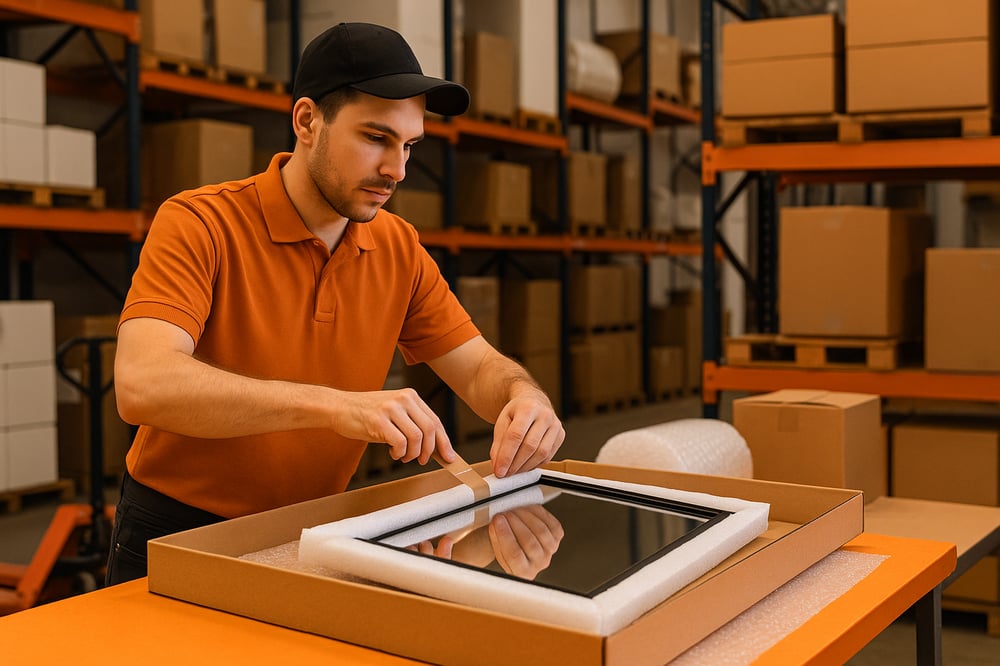
Glass mirrors account for over 2.3 million shipments annually in the United States, with approximately 8% experiencing some form of damage during transit. Shipping mirrors presents unique challenges due to their fragile nature and unwieldy dimensions.
From proper packaging techniques to carrier selection, optimizing mirror shipment processes is essential for businesses that regularly handle these delicate items.
This guide explores what is the best way to ship mirrors, highlighting proven methods for safely and efficiently transporting them while minimizing breakage risk.
Optimal Packaging Techniques for Mirror Shipments
The single most important factor in successful mirror shipping is proper packaging. Studies show that adequately packaged mirrors have a 96% chance of arriving intact, compared to only 73% for inadequately protected shipments.
Core Materials for Mirror Protection

To properly protect mirrors during shipping, several key materials are required:
- Corner protectors: Rigid plastic or cardboard protectors that shield vulnerable corners from impact damage
- Bubble wrap: Minimum 3/16-inch bubble diameter provides adequate cushioning
- Foam sheets: Ideally, 1/8-inch thick foam for surface protection
- Sturdy cardboard: Double-wall corrugated cardboard with at least 32 ECT (Edge Crush Test) rating
- Mirror boxes: Specialized telescope–style boxes designed specifically for mirror shipments
- Packing tape: Reinforced filament tape rated at 60+ pounds tensile strength
- “Fragile” labels: High-visibility warning labels for all sides of the package
Step-by-Step Mirror Packaging Process
- Clean and prepare the mirror: Remove any dust or residue with a non-ammonia glass cleaner. Allow to dry completely before packaging.
- Apply initial protection layer: Cover the mirror’s surface with a thin foam sheet or glassine paper (not newspaper, which can transfer ink). Secure with low-adhesive tape that won’t damage the reflective coating.
- Bubble wrap application: Wrap the entire mirror in large-bubble wrap (minimum two complete layers), ensuring all edges and corners are covered. Secure with packing tape.
- Corner protection: Install corner protectors over the bubble wrap. For mirrors larger than 24×36 inches, use reinforced corner protectors rated for at least 5 pounds of impact resistance.
- Create a cardboard sandwich: Place the wrapped mirror between two pieces of corrugated cardboard cut to exceed the mirror’s dimensions by at least 2 inches on all sides. Secure with packing tape.
- Box selection: Place the protected mirror in a specialized mirror box or a sturdy double-wall corrugated box with at least 2 inches of clearance on all sides.
- Void fill: Fill all empty spaces with appropriate void fill material such as packing peanuts, air pillows, or crumpled kraft paper. The mirror should not shift when the box is gently shaken.
- Seal and label: Seal all seams with 2-inch wide reinforced packing tape using the H-tape method. Apply “FRAGILE” and “HANDLE WITH CARE” labels on all sides of the package.
Carrier Selection and Service Options
The choice of shipping carrier significantly impacts both cost and successful delivery rates for mirrors. Different carriers offer varying levels of specialized handling and insurance options.
Carrier Comparison for Mirror Shipments
| Carrier | Specialized Fragile Handling | Average Damage Rate | Insurance Coverage | Cost Efficiency |
| FedEx | Yes (premium service) | 5.2% | Up to $1,000 | Medium |
| UPS | Yes (premium service) | 6.1% | Up to $50,000 | Medium |
| USPS | Limited | 9.8% | Limited ($100) | High |
| Freight | Yes | 3.7% | Varies | Low (high minimum) |
| Specialized Art Shippers | Comprehensive | 1.2% | Comprehensive | Very Low |
For mirrors valued under $200 and smaller than 24×36 inches, standard carriers with appropriate packaging often provide sufficient service.
For high-value or oversized mirrors, specialized freight or art shipping services demonstrate significantly lower damage rates despite higher costs.
Optimal Service Selection Guidelines
- For small mirrors (under 18×24 inches): USPS Priority Mail with additional insurance or FedEx Ground with declared value
- For medium mirrors (18×36 to 30×40 inches): FedEx or UPS ground service with fragile handling and appropriate insurance
- For large mirrors (over 30×40 inches): Blanket-wrap LTL freight service with inside delivery or specialized art shipping services
- For very high-value mirrors: White-glove delivery service with itemized insurance coverage
Insurance and Liability Considerations

Proper insurance is critical when shipping mirrors, as standard carrier coverage often proves insufficient for full replacement value.
Insurance Options by Value Range
- Under $100 value: Standard carrier liability coverage (typically $100) may be sufficient
- $100-$1,000 value: Purchase additional carrier insurance with declared value
- $1,000+ value: Consider specialized shipping insurance through third-party insurers like Parcel Insurance Plan (PIP) or U-PIC
Documentation Requirements
To facilitate successful claims, proper documentation is essential:
- Pre-shipment photos: Document the mirror’s condition before packaging
- Packing process photos: Document the packaging materials and process
- Box exterior photos: Document the sealed box with visible labels
- Tracking information: Maintain a detailed tracking history
Advanced Techniques for High-Volume Mirror Shipping
For businesses regularly shipping multiple mirrors, implementing systematic approaches can significantly reduce damage rates and operational costs.
Custom Packaging Solutions
For high-volume shippers, custom packaging offers substantial advantages:
- Foam-in-place systems: Create custom-fitted foam cushioning around mirrors
- Reusable shipping crates: Wooden or plastic crates with foam inserts designed for specific mirror dimensions
- Suspension packaging: Specialized systems that suspend the mirror in the center of the box using tensioned film
Pro Tip: The Double-Box Method with Foam-Corner Reinforcement
This advanced technique—rarely discussed outside professional art shipping circles—provides exceptional protection for valuable mirrors:
- Package the mirror as described earlier through the cardboard sandwich stage
- Insert the packaged mirror into the first box with 1.5 inches of foam corner reinforcement
- Place this first box into a second box with 2 inches of clearance on all sides
- Fill the void between boxes with expanding foam packaging (not spray foam) that creates a custom-molded shell
- This method creates a box-within-a-box system with targeted corner protection—the areas most vulnerable to impact damage
In testing, this method reduced damage rates to below 0.5% even for fragile antique mirrors, though it adds approximately 30% to packaging costs.
Cost Optimization Strategies

While proper mirror shipping requires significant materials and care, several strategies can optimize costs without compromising safety:
- Bulk material purchasing: Buy packaging materials in volume (savings of 30-40%)
- Right-sized packaging: Using precisely sized boxes reduces dimensional weight charges
- Carrier negotiation: For volumes exceeding 20 mirrors monthly, negotiate specialized rates with preferred carriers
- Insurance consolidation: Annual shipping insurance policies typically cost 40-60% less than per-shipment insurance
Branded Unboxing Kits for Fragile Mirrors: A Hidden Advantage for eCommerce Brands

While most mirror shipping focuses on protection and cost, very few brands optimize the customer’s unboxing experience, especially for fragile items.
A branded unboxing kit not only improves perceived value but also reduces damage through structured unpacking instructions and layered presentation.
When paired with a Shopify integration, these kits can trigger personalized post-purchase emails, how-to videos, or review requests, turning packaging into a seamless part of the customer journey.
Creating a Reliable Mirror Shipping Process
Shipping mirrors successfully requires a systematic approach that balances proper protection with cost considerations.
By implementing the packaging techniques described above, selecting appropriate carriers, and ensuring adequate insurance coverage, businesses can achieve damage rates below 1% while maintaining reasonable shipping costs.
For operations regularly shipping mirrors, consider developing a formalized mirror shipping protocol that includes staff training, quality control checkpoints, and performance tracking metrics. For businesses looking to optimize their logistics operations, consulting with a specialized 3PL provider experienced in handling fragile items can provide valuable insights tailored to specific business needs.