

Domestic ground shipping for a full set of golf clubs typically runs $25–$75, depending on carrier, distance zone, and how the package is sized.
Express options push that to $60–$150 or more. International shipments start at $100–$300+ before customs duties and import taxes.
This guide covers carrier rates side by side, domestic and international cost breakdowns, packaging requirements, and the strategies that cut per-shipment costs for brands shipping at volume.
Golf Club Shipping Costs by Carrier
Not all carriers price oversized sporting equipment the same way, and the gap between the cheapest and most expensive option for a single bag can exceed $60.
Here’s how the four main options break down.
| Carrier | Best For | Estimated Cost Range |
| UPS Ground | Reliable domestic ground; competitive with negotiated rates at volume | $35–$75 |
| FedEx Ground | Bulk inventory moves; FedEx Freight for multiple sets at once | $35–$70 |
| USPS | Single clubs or lightweight iron sets only; not suitable for full bags | $20–$40 |
| Ship Sticks | Best all-in option for single bags; built-in insurance removes extra cost | $39–$99 |
- UPS Ground: costs between $35 and $75 for most domestic shipping. But watch out. If your box exceeds 96 inches in length, they’ll slap you with an oversize surcharge of around $31.45 on top of your base rate.
- FedEx Ground: $35–$70, with oversize fees comparable to UPS. FedEx Freight becomes relevant if you’re moving bulk inventory or multiple sets at once.
- USPS: Generally not a practical choice here. The 70 lb weight cap and dimensional restrictions rule out most full bag shipments. USPS Parcel Select can work for a single club or a lightweight iron set, typically $20–$40, but it’s the exception rather than the rule.
- Ship Sticks: A specialty golf shipping service priced at $39–$99, depending on distance. It includes insurance coverage up to $1,500 per shipment, which matters if you’re sending a high-value set.
Domestic Vs. International Golf Club Shipping Costs
Explore the main differences between domestic and international shipping:
| FEATURES | DOMESTIC SHIPPING | INTERNATIONAL SHIPPING |
| Typical cost | $25–$75 (ground) $60–$150 express | $100–$300+ varies heavily by country |
| Transit time | 3–7 business days (ground) 1–2 days express | 7–21 business days longer during peak seasons |
| Customs & duties | None | 5–20% of declared value; commercial invoice required |
| Insurance | $100 default; up to $1,500 with Ship Sticks | $100 default; third-party coverage strongly recommended |
| Volume savings | 3PL negotiated rates cut costs 20–35% at 50+ shipments/mo | Volume deals available, but customs costs remain fixed |
For DTC golf brands selling globally, the choice between DDP (Delivered Duty Paid) and DDU (Delivered Duty Unpaid) directly affects customer experience.
DDU means the buyer gets an unexpected customs bill at delivery, and that kills repeat purchases faster than a bad product review.
International transit runs 7–21 business days by standard service, longer during peak seasons or customs backlogs.
Key Factors That Determine Golf Club Shipping Costs
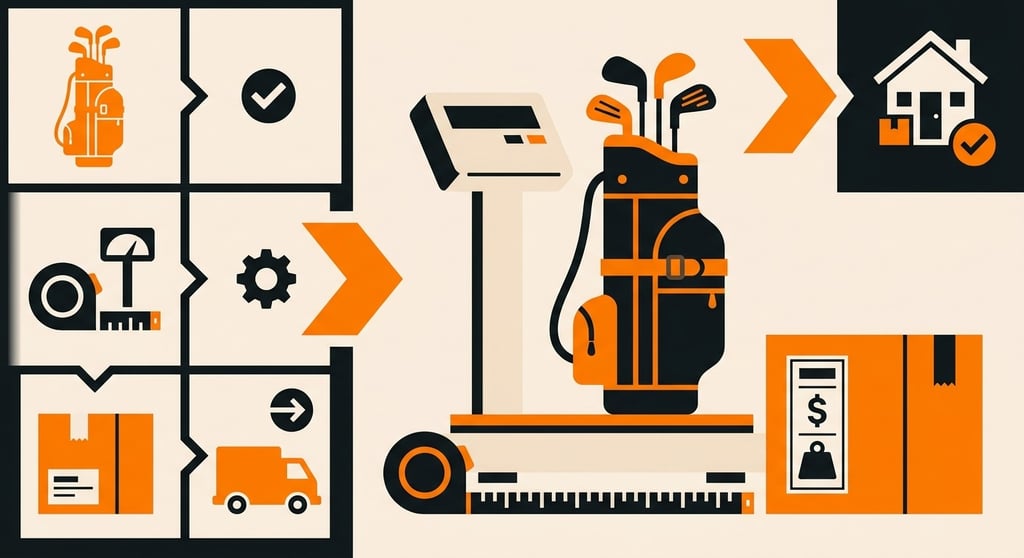
Every variable below directly affects what you’ll pay. If you miss one, your shipping quote will be wrong before the label prints.
- Dimensional weight vs. actual weight: Golf bags typically weigh 30–50 lbs and measure 48–50 inches long.
- Shipping distance and zones: Carriers divide the U.S. into zones (1–8). A coast-to-coast shipment can cost $40–$80 more than a regional one on the same package.
- Carrier surcharges: Oversized packages incur additional handling fees, often $31–$110 per package, depending on the carrier and service level.
- Packaging materials: A hard-shell golf travel case or reinforced cardboard box adds $15–$40 to your total cost if you’re supplying it yourself.
- Insurance and declared value: A set of clubs worth $1,500+ warrants declared value coverage, which adds roughly 1–2% of the declared amount per shipment.
- Residential vs. commercial delivery: Residential surcharges run $4–$6 per package with most major carriers.
- Speed of service: Ground shipping runs $50–$100 for most domestic routes. Two-day air can push that to $150–$250+.
How to Package Golf Clubs for Shipping

Packaging is where most damage happens, not in transit. A full set of clubs shifts inside a poorly packed box, and you’re looking at bent shafts, cracked heads, and a damage claim that eats your margin.
Proper packaging cuts those claims by up to 80%. Follow these steps every time:
- Remove headcovers and wrap each club head individually with bubble wrap, secured with tape.
- Bundle shafts together using packing paper or foam sleeves to prevent metal-on-metal contact.
- Place everything inside a hard-sided golf travel case or a double-walled cardboard box (minimum 50×14×11 inches).
- Fill every void with packing peanuts or air pillows. Zero movement means zero damage.
- Seal all box seams with reinforced packing tape, not standard household tape.
- Attach the shipping label on the flattest surface so scanners read it cleanly.
Packaging materials run $5–$20, depending on what you use. Bubble wrap and foam sleeves cost less than one damage claim. For brands handling big item delivery at volume, standardizing packaging specs across every shipment is what keeps damage rates predictable.
How to Reduce Golf Club Shipping Costs for Your Business
Most brands overpay on oversized shipments because they’re negotiating individually instead of operating at scale. Here’s where the real savings come from:
- Negotiate carrier rates based on volume. Carriers tier their discounts at 50, 100, and 250+ shipments per month. Know which threshold you’re approaching.
- Use a 3PL with pre-negotiated discounts rather than paying retail carrier rates.
- Minimize dimensional weight (DIM weight) by trimming box dimensions. A 2-inch reduction across a golf bag box can drop you into a lower billable weight bracket.
- Consolidate shipments going to the same region into single pickups when possible.
- If the delivery isn’t urgent, just choose ground. On a sample 40-pound shipment carrying a full set of clubs from San Diego to Miami, choosing ground vs. 2-day saved a whopping $47. Unless you’re in a serious time crunch, that’s a massive difference per package.
- Self-insure low-value shipments instead of paying carrier insurance premiums, which typically run 1–3% of declared value.
- Apply zone skipping on high-volume routes by injecting freight closer to the destination region before final-mile delivery.
- Set free shipping thresholds strategically, for example, free shipping on orders over $150, so the margin on higher-ticket purchases absorbs the freight cost.
Common Mistakes That Increase Golf Club Shipping Costs

These are some of the most common mistakes associated with golf shipping costs:
- Using oversized boxes inflates dimensional weight, which carriers bill at a higher rate than actual weight. Right-size your packaging to the bag or case dimensions.
- Defaulting to express shipping when standard ground delivers within your customer’s window adds $30–$60 per shipment unnecessarily. Audit your transit time requirements before selecting a service level.
- Skipping insurance on high-value sets is a gamble that rarely pays off. A $1,500 set of irons costs roughly $15–$20 to insure, far less than a damage claim.
- Paying retail carrier rates instead of negotiating volume discounts leaves money on the table. A 3PL or shipping platform can cut rates by 20–40%.
- Poor packaging leads to shaft damage, which means reshipping costs and lost customer trust. Double-wall boxes with foam inserts aren’t optional for clubs.
- Incomplete customs paperwork on international orders triggers storage fees and delays that dwarf the original shipping cost. File the correct HS codes and declared values upfront.
Stop Overpaying on Oversized Freight
Most brands get burned on golf club shipping because they didn’t account for dimensional weight, surcharges, and packaging costs before setting their rates.
Fulfyld handles items, including sporting goods, with warehouses positioned to reduce the average shipping zone on outbound orders. A dedicated account manager catches the gaps before they hit your margin.
FAQs
What is the cheapest way to ship golf clubs?
Ground shipping through a specialized golf freight service like Ship Sticks or Luggage Forward typically beats UPS and FedEx retail rates by 25 to 40 percent. Booking in advance and avoiding peak travel seasons keeps costs lower.
Can you ship golf clubs through FedEx?
Yes. FedEx Home Delivery and FedEx Ground both accept golf clubs at rates comparable to UPS, $55 to $85 for standard ground service.
How do you package golf clubs for shipping to prevent damage?
Use a hard-sided travel case rated for airline use. Wrap each club head individually in bubble wrap, bundle shafts with foam sleeves, and place everything in a hard-sided travel case or double-walled cardboard box.
How much does it cost to ship golf clubs domestically?
Domestic ground shipping typically runs $25–$75, depending on carrier, weight, and distance zone. Express options push that to $60–$150 or more for next-day delivery.
How much does it cost to ship golf clubs internationally?
International shipments cost $100–$300+, with the destination being the biggest variable. Customs duties and import taxes add another 5–20% of the declared value on top of freight costs.
Does shipping insurance cover golf clubs?
UPS and FedEx include only $100 of default coverage. For a set worth $1,500+, add carrier-declared value coverage (~$2.70 per $100) or use a third-party insurer like Shipsurance or ParcelGuard, which typically runs 40–60% cheaper than carrier rates at the same declared value.