
Domestic ground shipping for a 10–20 lb package runs $18–$42. For a 70 lb package, that same ground service runs $110–$250+ before surcharges.
Dimensional weight penalties, residential delivery fees, and heavyweight charges stack on top of that base rate on every heavy shipment that isn’t actively managed.
This guide covers cost by weight band, what drives the gap between base rate and final invoice, and how high-volume brands reduce per-order costs.
What You’ll Actually Pay Based on Cost by Weight Band
Here’s what ground-level numbers look like by weight band and service level.
| Weight Band | Ground | Expedited (2-Day) | Freight/LTL Crossover |
| 10–20 lb | $18–$42 | $55–$90 | Not applicable |
| 20–50 lb | $38–$85 | $90–$160 | Not applicable |
| 50–70 lb | $70–$130 | $150–$220 | $95–$175 (LTL viable) |
| 70+ lb | $110–$250+ | $200–$400+ | $120–$300 (LTL preferred) |
These ranges assume a standard rectangular package without dimensional weight penalties.
4 Tips for Shipping Large and Heavy Items
Here are the top 4 tips to consider when shipping heavy packages:
1. Use Heavy-duty Packaging
Single-wall boxes just won’t cut it. To protect your shipment, you absolutely need double-wall corrugated cartons, especially when they’re stacked three-high in the back of a truck.
Add rigid edge protectors, reinforce every seam with strapping tape rated for 90+ lbs, and use expanding foam packs so nothing shifts inside. It’s just not worth the risk.
2. Choose A Carrier Based on Your Actual Shipping Profile
You have to do the homework. Before committing to a carrier, run your zone mix package dimensions and residential delivery share.
A high residential percentage makes FedEx Home Delivery a serious contender against UPS Ground, especially if you’re frequently shipping coast-to-coast to Zone 8.
3. Get Insurance
Carrier liability caps at $100 for most ground shipments. For heavy or high-value items, declared value coverage or a third-party insurer closes that gap at a fraction of replacement cost.
4. Split up Your Shipments
Sometimes, two boxes are better than one. This simple switch can help you dodge those painful oversize fees and additional handling charges that carriers tack on, which can easily exceed $100 per box.
What to Consider When Shipping Heavy Items
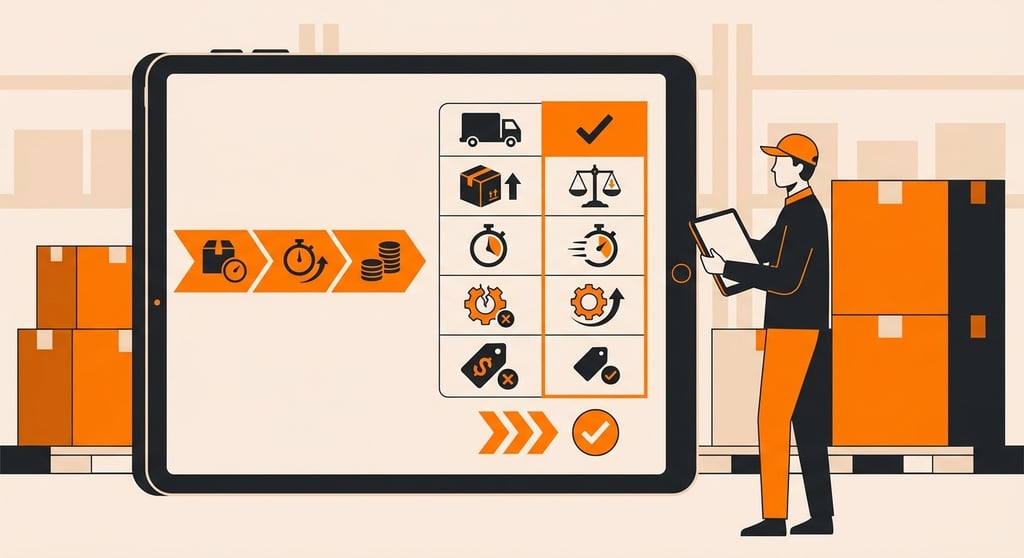
Forget what the scale says. For heavy-package shipping costs, the actual weight is just one piece of a much larger puzzle.
Carriers really price based on a combination of physical weight, package dimensions, shipping distance, and your chosen service type. If you don’t account for every single one of those factors, you’re going to underprice your shipments and watch your margins evaporate.
1. Dimensional Weight
Carriers charge whichever is higher: actual weight or dimensional (DIM) weight (length × width × height ÷ 139). A 15 lb box at 24×18×18 inches produces ~56 lbs DIM weight, so you pay for 56 lbs. Oversized packaging silently kills margins.
2. Fragile Items
Fragility raises your real cost. Double-boxing and foam inserts add weight and volume, pushing billable weight higher. Inadequate packaging can also void carrier liability, leaving your brand absorbing the loss.
3. Origin and Destination
Carriers divide the U.S. into zones 1–8, with rates climbing in each zone. Residential fees add $5.40–$6.90 per package (2026 UPS/FedEx rates), plus rural surcharges. One well-placed fulfillment center can cut average zone distance by two full zones.
4. Carrier Rules
Each carrier sets limits that trigger fees or refusals:
- Weight caps: UPS and FedEx cap parcel service at 150 lbs per package.
- Girth limits: Combined length plus girth exceeding carrier thresholds triggers oversized surcharges.
Calculate Costs of Shipping Large or Heavy Items
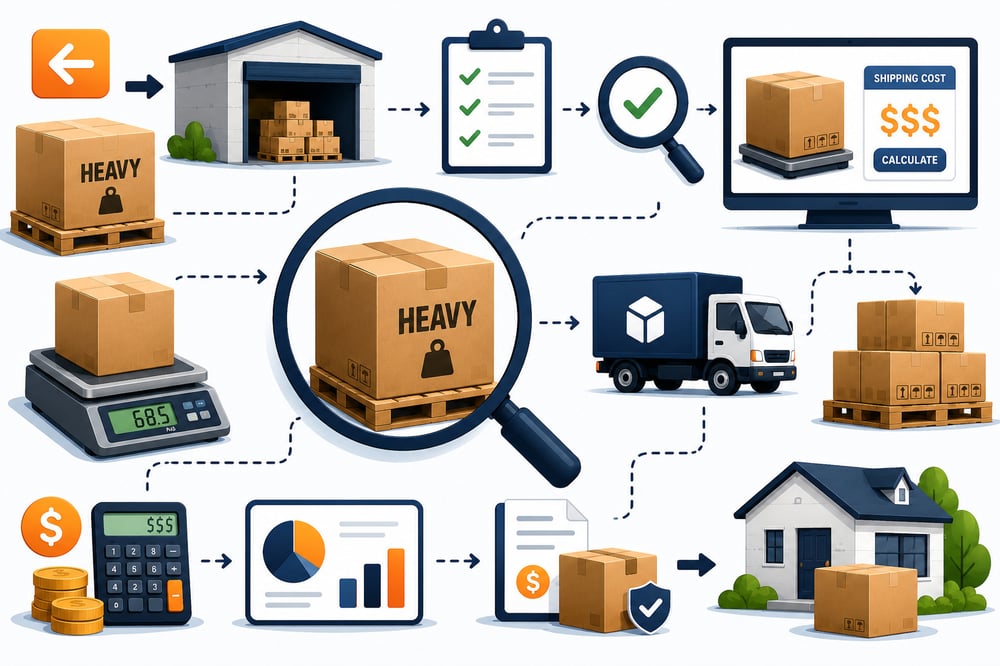
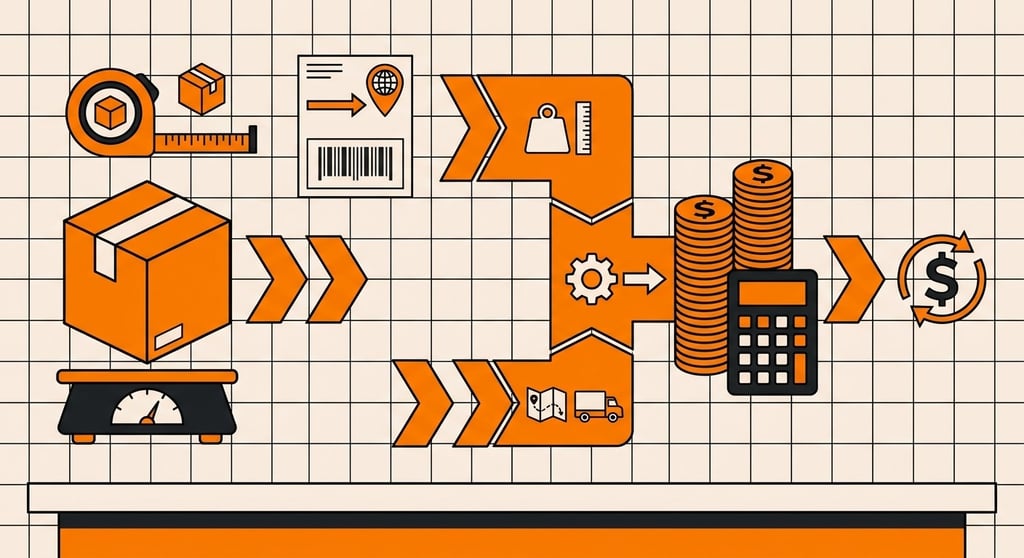
Every shipping quote runs through the same sequence.
- Actual weight: Weigh the packed box in pounds.
- DIM weight: Multiply length × width × height (inches), then divide by 139 (UPS/FedEx standard). Carriers bill whichever is higher.
- Zone: Count the distance between origin and destination ZIP codes, zones 2 through 8.
- Service level: Ground, 2-day, or overnight. Ground costs roughly 40–60% less than 2-day on packages over 50 lbs.
- Surcharges: Add large package, residential, or fuel surcharge line items.
- Packaging: Heavy-duty double-wall boxes run $3–$8 each.
- Insurance: Carriers cover $100 by default; declared value above that costs ~$0.90 per $100.
How Do Ecommerce Shops Ship Heavy Items?
Growing brands don’t just accept carrier rate cards and hope for the best. They build operating models that cut costs at every point between the warehouse and the customer’s door.
- Carton optimization: Matching box dimensions to product size reduces dimensional weight charges, which carriers calculate at roughly 139 cubic inches per pound on domestic ground shipments.
- Zone-based inventory placement: Storing products near your highest-order-density regions shortens average shipping zones and directly lowers per-shipment costs.
- Negotiated carrier rates: High-volume shippers routinely secure 30–50% discounts off published UPS and FedEx rates through direct contracts or 3PL partnerships.
- Packaging engineering: Switching to double-wall corrugate on heavy SKUs reduces damage claims without adding significant weight.
- 3PL support: A dedicated 3PL account manager handles carrier negotiations, zone mapping, and packaging as one coordinated function.
Let Fulfyld Handle Your Heavy Item Shipping Challenges
Brands shipping heavy products face a specific set of pressures, starting with carrier surcharges that erode margins, to customers who expect fast delivery.
Fulfyld‘s 3PL fulfillment model is built for exactly this situation. A dedicated account manager works directly with your team to audit carrier selection and flag where surcharge exposure is highest.
eCommerce fulfillment for heavy goods isn’t a niche problem. It’s a margin problem, and it’s solvable with the right fulfillment partner behind it.
FAQs
How much does it cost to ship a heavy package?
Domestic heavy package shipping runs $18–$250+, depending on weight, dimensions, zone, and carrier. A 10–20 lb package ships for $18–$42 via ground, while packages over 70 lbs jump to $110–$250+ before surcharges.
What is the cheapest way to ship heavy packages?
There’s no single cheapest carrier; it depends on your package profile. For dense items under 20 lbs, USPS Priority Mail Cubic often beats UPS and FedEx on price. For heavier packages above 50 lbs, UPS Ground and FedEx Ground become more competitive, especially with negotiated rates through a 3PL.
How does dimensional weight affect heavy package shipping costs?
Dimensional weight is where most brands get caught off guard. Carriers charge whichever is higher, actual weight or DIM weight, calculated as L × W × H ÷ 139.
What surcharges should you expect when shipping heavy items?
Four surcharges consistently inflate heavy package invoices: residential delivery fees, fuel surcharges, heavyweight surcharges for packages between 70–150 lbs, and oversized/additional handling fees when dimensions exceed carrier thresholds.
When should you switch from Parcel to LTL freight for heavy packages?
The crossover point is typically around 150 lbs. Above that, UPS and FedEx won’t accept standard parcels at all. But LTL becomes worth evaluating from around 70 lbs, where heavyweight surcharges start stacking on parcel rates.