The global 3PL market is expected to grow at a CAGR of 5.18% to reach USD 1.48 trillion by 2030.
But what is driving this massive growth? 60% of online retailers outsource fulfillment services at least partially. If you’re among the growing number of eCommerce businesses ready to outsource your logistics, you need more than just promises and handshake deals.
You need a bulletproof contract.
Without the right 3PL agreement in place, you’re risking everything from inventory shrinkage to service disruptions that could tank your customer satisfaction ratings.
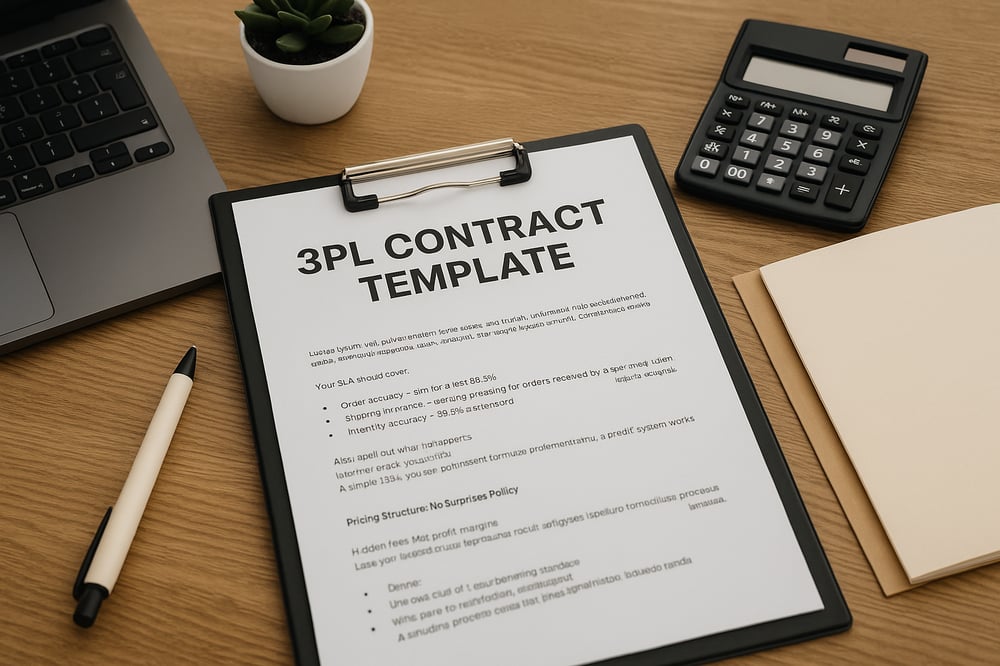
That’s why we created a 3PL contract template for you, complete with customizable terms and practical guidance to safeguard your business partnerships
Get Your 3PL Agreement Template Now
Before diving into the details, download our templates below (remember, these serve as inspiration only – always consult with legal counsel for your specific situation).
DOWNLOAD HERE YOUR THIRD-PARTY LOGISTICS (3PL) SERVICES AGREEMENT
DOWNLOAD HERE YOUR CONFIDENTIAL THIRD-PARTY LOGISTICS (3PL) SERVICES AGREEMENT
These templates are game-changers for your business. Instead of spending weeks (and thousands of dollars) having lawyers draft contracts from scratch, you get professionally structured agreements that cover every critical aspect of 3PL relationships.
We’ve included fill-in-the-blank sections for easy customization, detailed explanations of complex terms, and insider tips on negotiation points that most businesses overlook.
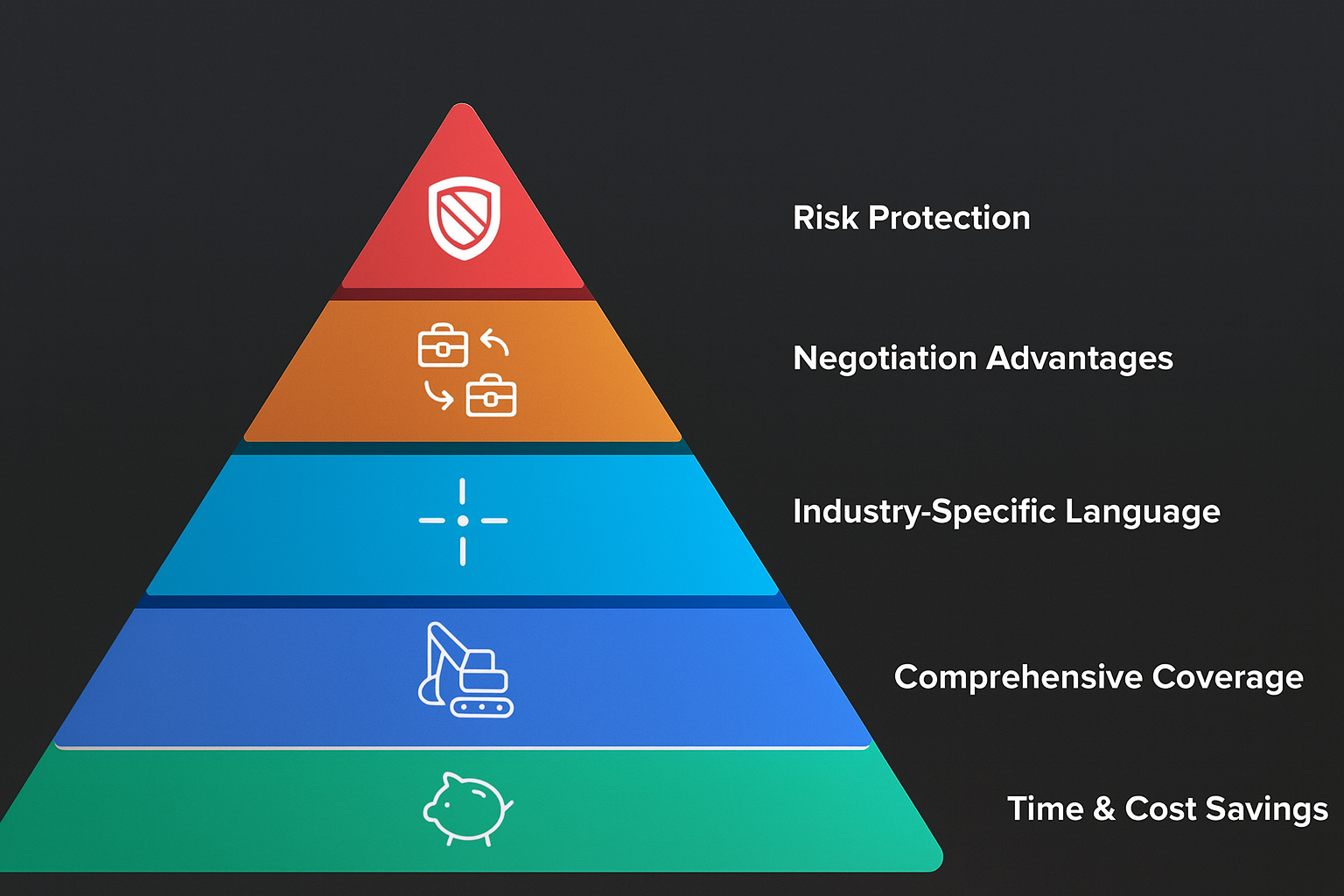
What makes these templates valuable:
- Save time and money – Skip the expensive legal drafting process and start with proven frameworks
- Comprehensive coverage – Every section addresses real-world 3PL challenges we see daily
- Industry-specific language – Built specifically for eCommerce fulfillment, not generic logistics
- Negotiation advantages – Know exactly what terms to push for and what to avoid
- Risk protection – Proper liability, insurance, and service level clauses that actually protect your business
Most Important Components of a 3PL Service Agreement Template
A 3PL contract isn’t just paperwork – it’s your safety net. The details can get complicated, but a few sections really matter. Get these right, and you’ll sleep better knowing your business is protected.
Service Level Agreements (SLAs) – Your Performance Safety Net
This is where you define what “good service” means. Don’t settle for vague promises like “we’ll do our best.” You need hard numbers.
Your SLAs should cover:
- Order accuracy – aim for at least 99.5%
- Shipping timeframes – same-day processing for orders received by a set time
- Inventory accuracy – 99.8% is a fair standard
Also, spell out what happens if they miss these targets. A simple credit system works: if they miss, you get money back on your bill.
Pricing Structure – No Surprises Policy
Hidden fees kill profit margins. Your contract should list every possible charge upfront.
Look for:
- Storage fees – per pallet, cubic foot, or bin
- Handling fees – receiving, picking, packing, shipping
- Extras – rush orders, peak season surcharges, account management fees
Ask for a full pricing schedule as an attachment. It makes cost comparison easy and prevents nasty surprises later.
Liability and Insurance – When Things Go Wrong
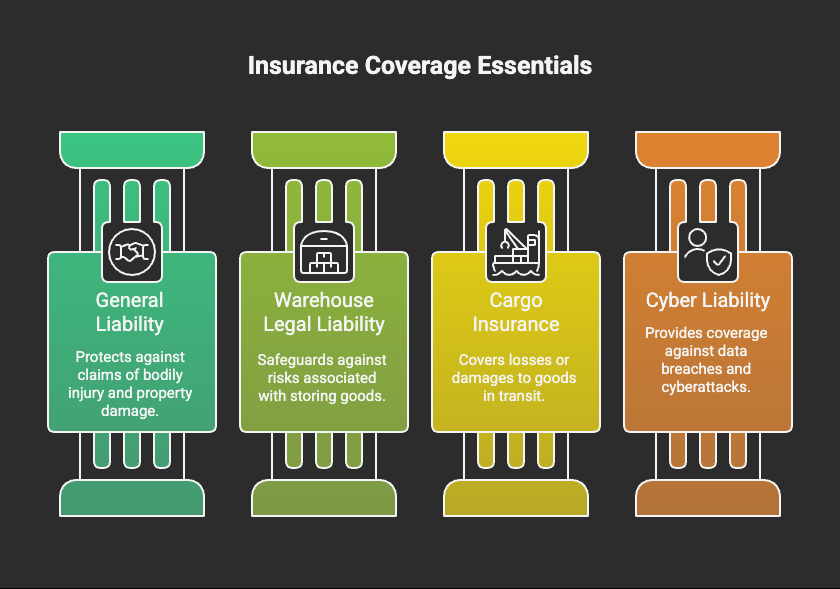
This section decides who pays if inventory is lost or damaged. Most 3PLs limit liability to replacement cost only. That may work for basic goods, but what about lost sales or angry customers?
Make sure your 3PL has proper insurance, such as:
- General liability
- Warehouse legal liability
- Cargo insurance
- Cyber liability
Also, ask to be listed as an additional insured on their policies.
Data and Reporting – Stay in Control
You need full visibility into your operations. The contract should require:
- Daily inventory reports
- Weekly performance summaries
- Monthly scorecards
Real-time dashboards are becoming standard.
Also, make sure it’s clear that:
- You own all your data – customer info, order history, inventory records
- The contract specifies what happens to your data if the partnership ends
Integration Requirements – Making Systems Talk
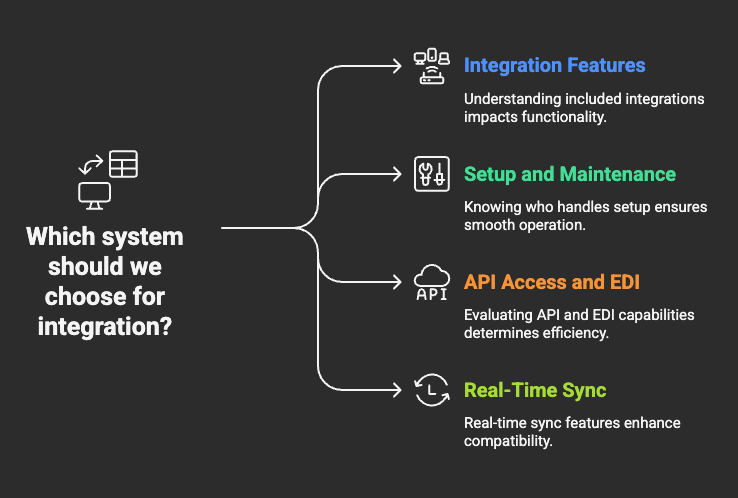
Your 3PL must connect with your e-commerce platform and inventory systems. The contract should spell out:
- Which integrations are included
- Who handles setup and maintenance
- API access, EDI capabilities, real-time sync
If something breaks, it should state who fixes it and how quickly.
Termination Clause – Your Exit Strategy
Not every partnership lasts. Your contract should include a clear exit plan.
Look for:
- Reasonable notice (60–90 days is common)
- Transition support requirements
- Data return obligations
The 3PL should help transfer inventory and provide all historical data in a usable format.
Geographic Coverage and Capacity
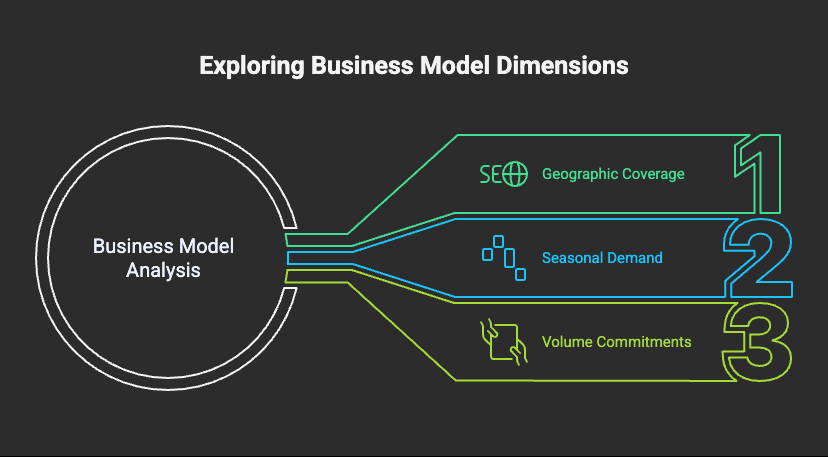
Be specific about where your 3PL can ship and how much volume they can handle.
Include:
- Geographic coverage (domestic and international)
- Seasonal spikes and expansion plans
- Minimum and maximum volume commitments
Some 3PLs give better rates for guaranteed volumes, but avoid being locked into unrealistic numbers.
Quality Control and Returns Processing
Your 3PL represents your brand. The contract should outline:
- Packaging standards
- Quality control checks
- Returns process
Define:
- What counts as damaged inventory
- How quickly returns are processed back into stock
- Who pays for return shipping
A smooth returns process can turn a negative experience into a positive one for customers.
Who Can Benefit from a 3PL Contract Template?
The right 3PL agreement isn’t one-size-fits-all. Some businesses just need a clear contract for everyday fulfillment. Others deal with sensitive products or data and need stricter protection. Here’s how to know which template fits you best:
Who Is the Standard 3PL Contract Template For?
This version keeps things simple. It covers the basics, services, pricing, and performance, without extra legal layers. Perfect if your focus is scaling operations and keeping costs predictable.
- Run growing eCommerce stores shipping 500+ orders a month
- Sell standard consumer products without proprietary elements
- Manage subscription boxes that need fulfillment
- Handle Amazon FBA prep with consistent shipping workflows
- Operate seasonal shops needing flexible pricing and terms
- Are small to mid-sized brands working with a 3PL for the first time
- Care most about cost control and clear operational standards
- Sell straightforward products that don’t need special handling
Who Is the Confidential 3PL Contract Template For?
If you’re in an industry where data, product formulas, or compliance rules matter, this version gives you the extra security. It adds strict confidentiality terms to keep sensitive information safe.
- Sell supplements or nutraceuticals with proprietary formulas
- Operate beauty or cosmetics brands that protect unique ingredients
- Run pharmaceutical businesses with FDA compliance needs
- Ship high-value electronics that require tight security
- Sell luxury goods where theft prevention is critical
- Manufacture medical devices under strict regulations
- Work in healthcare, CBD, or other regulated industries
- Handle sensitive customer data requiring strong privacy protection
- Partner with exclusive suppliers needing confidential terms
- Compete in markets where industrial espionage is a concern
Real-World Examples: When 3PL Contracts Save (or Sink) Your Business
Sometimes the best lessons come from other people’s mistakes. Here are real situations where having the right contract terms made all the difference between a minor hiccup and a business disaster.
Example 1: The Black Friday Inventory Nightmare
What Happened: A fashion retailer prepared for their biggest Black Friday ever. They sent 10,000 units to their 3PL in November, expecting smooth sailing. On Black Friday morning, their 3PL’s system showed they only had 3,000 units in stock.
The missing inventory was “somewhere in the warehouse” but couldn’t be located for order fulfillment.
The Contract Problem: Their agreement had vague language about “reasonable inventory management” with no specific accuracy requirements or penalties for lost inventory.
The Cost: They missed $400,000 in Black Friday sales because they couldn’t fulfill orders. Customer complaints flooded in, and their brand reputation took a massive hit.
Key Takeaway: Your contract needs specific inventory accuracy requirements (99.8% minimum) with daily cycle counts during peak seasons. Include immediate escalation procedures for inventory discrepancies and financial penalties for lost stock during high-traffic periods.
Example 2: The Supplement Company Data Breach
What Happened: A supplement company discovered their 3PL was storing proprietary formulation documents in an unsecured shared drive accessible to employees handling competitor products.
Worse, customer shipping data was being used by the 3PL’s sales team to pitch other supplement brands.
The Contract Problem: They used a standard logistics agreement with basic confidentiality clauses that didn’t cover proprietary formulations or customer data protection.
The Cost: They spent $150,000 on legal fees, had to reformulate products, and lost several major wholesale accounts who were concerned about trade secret security.
Key Takeaway: If you have proprietary products, use the confidential template. Include specific data security requirements, employee background checks, segregated storage for sensitive materials, and unlimited liability for data breaches.
Your standard business insurance won’t cover intellectual property theft.
Example 3: The Hidden Fee Horror Story
What Happened: An electronics retailer signed with a 3PL offering “competitive storage rates.” Six months later, their monthly bill had tripled due to fees they never knew existed.
The Contract Problem: The pricing section was vague, referring to a “current rate sheet” that could be updated unilaterally by the 3PL.
The Cost: What started as $8,000/month in logistics costs ballooned to $24,000/month, destroying their profit margins and forcing them to raise prices mid-season.
Key Takeaway: Demand a complete pricing schedule as a contract attachment. Include language that prevents unilateral rate changes during the contract term. Specify exactly what’s included in base rates and what triggers additional charges.
Always ask for examples of monthly bills from similar-sized clients.
Example 4: The System Integration Disaster
What Happened: A growing Shopify store contracted with a 3PL that promised “seamless integration.” Three weeks into the partnership, orders were still being processed manually, inventory levels weren’t syncing, and customers weren’t receiving tracking numbers automatically.
The Contract Problem: The integration requirements were listed as “best effort” with no specific timeline or performance guarantees.
The Cost: Manual order processing led to shipping delays, unhappy customers, and chargebacks. They had to hire temporary staff to handle customer service complaints while the integration issues dragged on for two months.
Key Takeaway: Include specific integration requirements with firm deadlines (typically 2-3 weeks for standard platforms). Define exactly which data points need to sync in real-time, who’s responsible for troubleshooting, and what happens if integrations fail. Get integration examples from their other clients on your platform.
What These Examples Teach Us
Every single one of these problems could have been prevented with proper contract terms. The businesses that recovered quickly were those that learned from these mistakes and implemented stronger agreements with their next 3PL partners.
The common thread? Vague language costs money. Specific terms, measurable standards, and clear consequences protect your business when things go wrong.
Don’t Let Contract Gaps Sink Your Business
Now that you understand what to look for in 3PL agreements, you’re ahead of 80% of businesses that sign contracts without reading the fine print.
Use these templates to evaluate potential providers, negotiate better terms, and build partnerships that actually accelerate your growth instead of creating new headaches.
The businesses that thrive are those that combine smart contract terms with providers who share their vision – which is why Fulfyld focuses on building long-term partnerships, not just processing orders. Want to see what that looks like in practice? Get Started with Fulfyld Today!