
Shipping a large painting in 2028 is expected to cost between $300 and $600 for domestic shipments within the United States. This estimate accounts for inflation and the anticipated growth in the fine art logistics market.
The global fine art logistics market is projected to grow from $3.61 billion in 2025 to $4.65 billion by 2030, reflecting a compound annual growth rate (CAGR) of 5.2%.
Transporting valuable artwork requires specialized handling that goes far beyond standard package delivery.
Whether shipping a cherished heirloom or a new masterpiece, knowing how much does it cost to ship a large painting helps ensure safe delivery and budget control.
The Real Cost of Shipping Large Paintings: Cost Factors Unpacked
Shipping a large painting typically costs between $150 and $2,000, depending on several critical factors.
For standard domestic shipping of a 30″x40″ canvas painting with basic insurance, expect to pay $200-$350. International shipments of the same size can range from $500 to $2,500.
Premium services with full insurance, climate control, and white-glove handling can push costs to $3,000+ for valuable artwork.
Size and Weight Considerations

Size remains the primary cost driver in art shipping:
- Small paintings (under 18″ on longest side): $75-$200
- Medium paintings (18″-36″ on longest side): $150-$400
- Large paintings (36″-60″ on longest side): $300-$800
- Oversized paintings (over 60″ on longest side): $500-$2,000+
Every inch matters in dimensional weight calculations. A 48″x48″ painting might cost 30-40% more to ship than a 36″x36″ piece, even with similar framing materials.
Packaging Materials and Methods
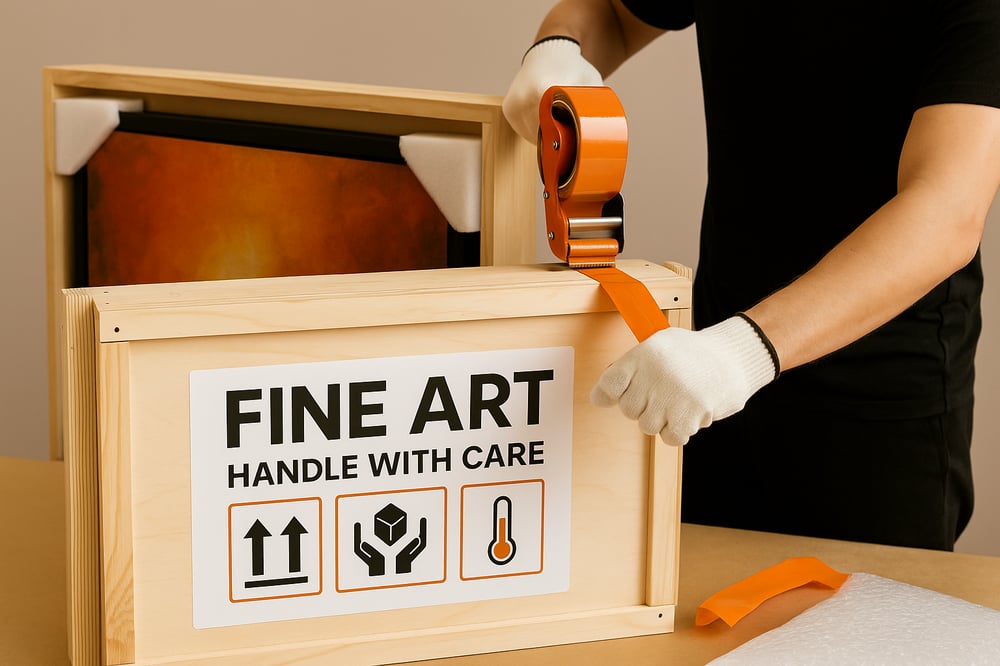
Professional art packaging typically adds $50-$200 to shipping costs, depending on painting dimensions and fragility:
- Museum-quality acid-free tissue paper: $15-$25
- Custom-cut foam corner protectors: $10-$30
- Glassine paper (for painted surfaces): $10-$20
- Custom wooden crating: $200-$500
- Specialized art shipping boxes: $50-$150
- Bubble wrap and foam padding: $15-$40
The protective packaging equation becomes especially important for paintings with ornate frames, texture-heavy surfaces, or delicate mediums like pastels. Oil paintings with extended drying times (under 6 months) require additional surface protection to prevent imprinting.
Carrier Options and Their Price Points
Different carriers offer varying levels of service and corresponding price points:
Standard Carriers
- FedEx: $100-$600 for domestic large painting shipments
- UPS: $120-$700 for similar dimensions
- USPS: Limited large artwork options, but offers flat-rate options for smaller pieces
Specialized Art Shippers
- Fine art shipping companies: Starting at $300 for domestic shipments
- White glove services: $500-$2,000+, depending on distance and value
Freight Services
- LTL (Less Than Truckload): $200-$600 for crated artwork
- Consolidated art shipments: $150-$400 for gallery or multi-piece shipping
Insurance and Valuation
Insurance represents a significant but essential cost component:
- Standard carrier insurance: 0.5%-1% of declared value
- Specialized art insurance: 1%-3% of appraised value
- Deductible options: Higher deductibles reduce premium costs
Usually, standard shipping insurance covers up to $1,000 by default, but artwork valued above this threshold requires additional coverage. A $10,000 painting typically requires $100-$300 in additional insurance costs.
International Shipping Complexities and Expenses
International art shipping introduces several additional cost factors:
Customs and Import Duties
Import duties vary significantly by country:
- EU countries: 5-7% of artwork value plus VAT (typically 20-27%)
- UK: 5% import duty plus 20% VAT
- Canada: 5% import duty plus provincial sales tax
- Australia: 10% GST on imports valued over AUD 1,000
Documentation fees typically add $75-$200 for international art shipments, including:
- Commercial invoices
- Certificates of origin
- Cultural property declarations
Currency Exchange Considerations
Currency fluctuations can impact final costs by 3-8%, depending on market conditions. Most international art shippers quote in USD or EUR, but final charges may reflect exchange rates at the time of delivery rather than booking.
Cost-Saving Strategies Without Compromising Safety

Reducing shipping costs without sacrificing artwork protection requires strategic planning:
Timing Flexibility
Avoiding rush shipping can reduce costs by 15-30%:
- Standard delivery (7-10 days): Base rate
- Expedited service (3-5 days): 25-40% premium
- Next-day service: 60-100% premium
Art galleries often consolidate shipments on monthly schedules, reducing per-piece shipping costs by 30-50% through volume discounts.
Packaging Alternatives
While professional crating offers maximum protection, alternative methods can reduce costs:
- Mirror boxes with additional corner protection: Saves 40-60% vs. custom crates
- Double-boxing with foam inserts: Reduces packaging costs by 30-50%
- Cardboard corner protectors instead of custom-cut foam: Saves $15-$30
Carrier Selection Strategy
Different carriers excel in different shipping scenarios:
- USPS Priority Mail for paintings under 30″ with values below $1,000
- FedEx for mid-size domestic shipments with 2-5 day delivery windows
- Specialized art shippers for international or high-value pieces
Specialized Scenarios and Their Cost Implications
Certain shipping situations require unique handling, which can significantly influence overall fulfillment pricing.
Gallery-to-Gallery Transfers
Gallery transfers typically cost 20-30% less than consumer shipping due to:
- Established shipping accounts with volume discounts
- Regular shipping routes and consolidated transportation
- In-house packaging expertise reduces material costs
A painting that would cost an individual $500 to ship might cost a gallery $350-$400 for the same distance and service level.
Auction House Shipping
Auction houses typically charge 15-25% above standard shipping rates for:
- Specialized handling and condition reporting
- Additional insurance and security measures
- Administrative processing
A $300 standard shipping job might cost $345-$375 through auction house shipping services.
Art Fair and Exhibition Transport
Multi-piece shipments to art fairs typically cost $800-$3,000, depending on:
- Total volume and weight
- Distance to venue
- Installation support requirements
- Transit insurance levels
Pro Tip: The Climate Acclimation Strategy
This insider technique rarely appears in shipping guides: Schedule a 24-48 hour acclimation period before unpacking artwork shipped to locations with significantly different humidity levels.
Temperature-sensitive materials like oil paints, aged canvas, and wooden frames can experience microfractures when exposed to sudden environmental changes.
Professional art handlers often specify a gradual unpacking process: remove outer packaging but leave inner wrapping intact for 24 hours, allowing materials to adjust to new conditions incrementally.
While climate-controlled fulfillment helps maintain stable conditions during transit, professional art handlers often specify a gradual unpacking process: remove outer packaging but leave inner wrapping intact for 24 hours, allowing materials to adjust to new conditions incrementally.
This reduces the risk of cracking, warping, and surface damage by up to 60% compared to immediate complete unpacking—a technique that has saved countless valuable paintings from environmental stress damage.
Shock Monitoring for High-Value Art Shipments
Most art shipping guides focus on packaging and insurance, but very few talk about real-time shipment condition monitoring — a crucial step when shipping paintings worth thousands of dollars.
Even with proper packaging, large paintings are vulnerable to:
- Sudden drops or tilts during handling
- Excessive vibration in truck beds or cargo holds
- Crush pressure from improper stacking
The damage isn’t always visible immediately — microfractures in stretched canvas, separation in layered oil paint, or hairline frame splits can occur invisibly during transit and surface weeks later.
These low-cost, single-use indicators can track mishandling events in real time.
| Indicator Type | Avg. Cost per Unit | What It Detects | Why It’s Valuable |
| ShockWatch Label | $4–$7 | G-force from impacts (e.g. drops) | Provides visual proof of mishandling |
| TiltWatch Plus | $5–$8 | Rotation >80° (improper uprighting) | Protects against improper stacking |
| Data-logging sensors | $25–$60 | Tracks shock/vibration over time | Ideal for museum-grade artwork |
Once activated, these labels irreversibly change color if a threshold is exceeded — a powerful tool for:
- Insurance claims (visual evidence)
- Accountability with carriers
- Internal quality control for galleries and shippers
To use shock indicators correctly, you need to:
- Apply 1–2 shock labels on opposite sides of the crate or shipping box.
- Use a “This Side Up” orientation label in combination with tilt indicators.
- Photograph the labeled crate before shipment.
- Notify the recipient to photograph the package upon arrival before opening, especially if damage is suspected.
Bonus Tip: QR-linked Condition Report Form
Attach a QR code next to the indicator that links to a condition report form (e.g., via Google Forms). This lets recipients instantly log any damage, shock trigger, or unpacking notes — streamlining communication, documentation, and any necessary insurance claims.
Secure the Journey, Protect the Masterpiece
Shipping heavy packages requires balancing cost considerations with adequate protection. Art shipping specialists recommend obtaining quotes from at least three providers for any painting valued above $1,000 or measuring over 36″ on its longest side.
For gallery-quality artwork, the investment in proper shipping typically represents 3-8% of the painting’s total value—a reasonable cost to protect the physical and financial investment.
For added reliability, many art retailers partner with a 3PL fulfillment provider experienced in handling fragile and high-value shipments.
Remember that successful art shipping isn’t measured solely by cost efficiency but by the condition of the artwork upon arrival. The most economical shipping method always remains the one that delivers the painting in perfect condition.