

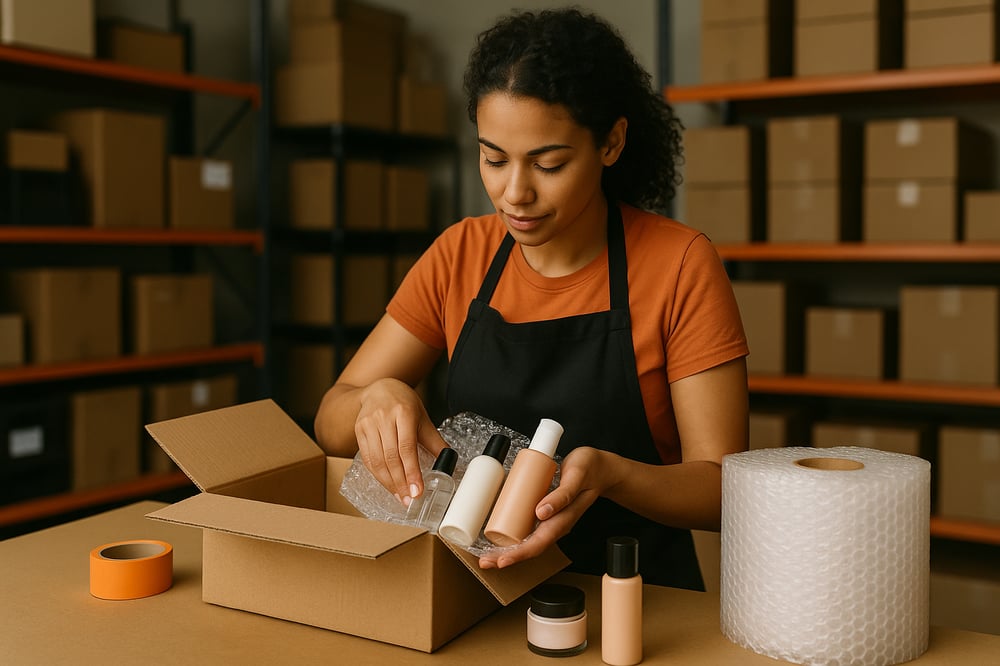
The global cosmetics market is projected to reach $463.5 billion by 2027, with eCommerce sales accounting for nearly 30% of this massive industry.
As this digital transformation accelerates, properly shipping these delicate, often regulated products has become increasingly critical for businesses. Cosmetic shipping presents unique challenges that extend far beyond standard fulfillment practices.
Knowing how to properly ship cosmetics helps prevent damage, leakage, and compliance issues, ensuring products reach customers safely and professionally.
Key Factors for Consideration to Ship Cosmetics Properly
Cosmetics are not like other products. They often contain liquids, creams, powders, and other formulations that require specialized handling. The primary challenges when shipping cosmetics include:
Fragility and Damage Prevention
Cosmetic products frequently come in glass bottles, contain liquids prone to leakage, or feature pressed powders that can shatter during transit. Damage not only results in financial loss but can also severely impact brand reputation.
According to industry data, cosmetic returns due to damage can reach up to 15% of shipments when proper packaging protocols aren’t followed.
Temperature Sensitivity
Many cosmetic formulations are highly temperature-sensitive. Extreme heat can cause separation in emulsions, melting of solid products, and degradation of active ingredients.
Cold temperatures may cause certain products to freeze and change texture permanently. Shipping across different climate zones requires specialized consideration of these factors.
Regulatory Compliance
Cosmetics fall under specific shipping regulations in most countries. In the United States, the FDA regulates cosmetics under the Federal Food, Drug, and Cosmetic Act, while the Department of Transportation imposes restrictions on certain ingredients classified as hazardous materials.
International shipments face additional hurdles with each country’s unique import regulations and documentation requirements.
Essential Packaging Strategies for Cosmetic Products

Proper packaging is the foundation of successful cosmetic shipping. Every decision made at this stage directly impacts product integrity upon arrival.
Primary Packaging Considerations
Primary packaging refers to the container that directly holds the product:
- Leak-proof seals: All liquid products should feature tamper-evident, leak-proof seals that can withstand pressure changes during air transport.
- Airless pumps: Consider airless pump dispensers for liquid products as they minimize oxidation and leakage risk.
- Material selection: Glass provides premium appeal but increases weight and breakage risk; high-quality plastics offer durability with less weight.
Secondary Packaging Solutions
Secondary packaging provides the critical protection layer between primary packaging and external shipping containers:
- Dividers and inserts: Custom-designed dividers prevent products from contacting each other during transit.
- Bubble wrap alternatives: Paper-based honeycomb wrapping provides superior protection while meeting sustainability goals.
- Void fill selection: Biodegradable peanuts or air pillows protect products while addressing growing consumer concerns about sustainable packaging.
Outer Packaging Requirements
The shipping container itself needs specific characteristics for cosmetic shipment:
- Box strength rating: Select boxes with appropriate Edge Crush Test (ECT) ratings based on product weight and fragility.
- Right-sizing: Choose appropriately sized boxes to minimize movement while avoiding excessive dimensional weight charges.
- Tamper-evident features: Specialized tape or seals that show evidence of opening help protect against theft and ensure product integrity.
Temperature Control Techniques for Sensitive Products
Temperature management represents one of the most overlooked aspects of cosmetic shipping, yet it plays a crucial role in product integrity.
Insulated Packaging Options
Different insulation types offer varying levels of temperature protection:
- Foam insulation: Traditional EPS foam provides excellent temperature buffering but presents environmental concerns.
- Sustainable alternatives: New plant-based insulation materials derived from corn starch or mushroom mycelium offer comparable protection with significantly reduced environmental impact.
- Reflective barriers: Metalized film liners reflect radiant heat and help maintain stable temperatures in extreme conditions.
Cold Chain Management
Cold chain for highly temperature-sensitive products:
- Phase change materials (PCMs): These specialized inserts maintain specific temperature ranges far more effectively than traditional ice packs.
- Temperature indicators: Small, inexpensive temperature monitoring strips can alert recipients if products have been exposed to damaging conditions.
- Seasonal shipping adjustments: Modify packaging and shipping methods based on season and destination climate to ensure consistent protection.
Regulatory Compliance and Documentation

Navigating the complex regulatory landscape requires thorough understanding and meticulous documentation.
Domestic Shipping Regulations
Within the United States:
- Hazardous materials classification: Products containing alcohol, aerosols, or certain preservatives may require hazmat shipping procedures.
- Labeling requirements: Clear identification of contents, warnings, and handling instructions must appear on outer packaging when required by regulations.
- Documentation: Maintain proper documentation of product ingredients and classifications to quickly address any shipping concerns.
International Shipping Considerations
For cross-border shipments:
- Country-specific regulations: Research destination country requirements before shipping, as many nations have unique restrictions on cosmetic ingredients.
- Customs documentation: Prepare detailed commercial invoices with accurate HS codes, product descriptions, and values to prevent customs delays.
- Restricted ingredients: Maintain an updated database of internationally restricted cosmetic ingredients to prevent shipping products that will be rejected at customs.
Specialized Handling for Different Cosmetic Types
Different cosmetic categories require tailored shipping approaches to ensure they arrive intact.
Powdered Products
Most pressed powder products are highly fragile, making it essential to work with a makeup fulfillment services provider that understands the specific handling and packaging these items require.
- Reinforced corners: Additional protection at box corners prevents the shock transfer that can crack pressed powders.
- Double-boxing: For premium powder products, double-boxing provides an extra layer of protection against impacts.
- Vibration dampening: Specialized foam inserts reduce the micro-vibrations during transit that can cause powder crumbling.
Liquid and Cream Products
Foundations, serums, and moisturizers need:
- Pressure equalization: For air shipments, packaging that accommodates pressure changes prevents leakage.
- Secondary containment: Sealed bags around liquid products contain potential leaks and protect other items in the shipment.
- Orientation markings: Clear “This Side Up” instructions help prevent unnecessary inversion of liquid products.
Aerosol Products
Hairsprays, dry shampoos, and other aerosols require:
- Special carrier approval: Many shipping carriers have restrictions on aerosol quantities.
- Protective caps: Specialized caps prevent accidental discharge during transit.
- Hazmat documentation: Proper documentation and labeling according to Department of Transportation requirements.
The 3-2-1 Packaging Method

Here’s an insider technique used by elite cosmetic fulfillment specialists: The 3-2-1 Packaging Method significantly reduces damage rates for high-value cosmetics. This approach involves:
- 3 layers of product-specific protection: Each product receives three customized protection layers based on its specific vulnerabilities (e.g., shock absorption for powders, leak containment for liquids).
- 2 temperature buffer zones: Create two distinct insulation barriers with a small air gap between them, which dramatically improves temperature stability without increasing packaging weight.
- 1 unified packaging aesthetic: Design all protective elements to maintain brand aesthetics even while maximizing protection, ensuring the unboxing experience isn’t compromised by protective measures.
A 3PL fulfillment center using this method has reported damage rate reductions of up to 78% compared to standard cosmetic packaging protocols, while maintaining comparable shipping weights and costs.
Shipping Service Selection for Cosmetics
Choosing the right shipping service dramatically impacts delivery success rates and customer satisfaction.
Domestic Carrier Comparison
When shipping within national borders:
- Ground shipping: Often the best option for non-temperature-sensitive cosmetics, providing a balance of cost and reasonable transit times.
- Express services: For temperature-sensitive products, faster shipping reduces exposure to variable conditions.
- Regional carriers: In some areas, specialized regional carriers offer superior handling for delicate shipments compared to national services.
International Shipping Solutions
For global cosmetic shipping:
- Consolidated shipping: For multiple international orders, consolidated freight followed by local distribution often provides better protection than individual direct shipments.
- Customs brokers: Specialized brokers familiar with cosmetic regulations can prevent costly delays at international borders.
- Tracking technology: Invest in comprehensive tracking systems that provide real-time location and condition monitoring for high-value international shipments.
Advanced Cosmetic Fulfillment Tactics for High-Retention Brands
For growing beauty brands, shipping is more than logistics—it’s part of the customer experience. Yet many eye shadow 3PLs workflows overlook temperature protection, regulatory prep, or product-type-specific packaging.
Below are expert strategies that reduce damage, protect brand presentation, and improve delivery success, especially for DTC and subscription box models.
| Cosmetic Type | Shipping Risk | Advanced Solution | Bonus Tip |
| Liquid Foundations | Leakage from pressure/heat | Use airless pumps + sealed inner polybags | Add pressure-release valve mailers for air travel |
| Powder Compacts | Cracking or crumbling | Foam inserts + corner-reinforced mailers | Avoid oversized boxes to reduce vibration inside |
| Aerosols | Hazmat restrictions + accidental spray | Hazmat-labeled kits + trigger-protection caps | Use specialty-approved carriers for air shipments |
| Luxury Serums | Temperature degradation, leakage | Dual insulation zones + phase-change material inserts (PCMs) | Add thermal indicators for customer confidence |
| Glass Bottles | Breakage during transit | Molded pulp trays or molded foam with outer box buffer | Use suspension inserts for glass in high-value kits |
Optimizing Your Cosmetic Shipping Strategy
Creating an effective cosmetic shipping strategy requires continuous refinement based on data, customer feedback, and changing regulations.
Regular packaging audits should analyze damage patterns to identify improvement opportunities. Seasonal adjustments to packaging must accommodate changing temperature conditions throughout the year.
Testing different packaging configurations with sample shipments before implementing large-scale changes prevents costly mistakes.
With proper planning and attention to these specialized shipping requirements, cosmetic businesses can ensure their products arrive in perfect condition, enhancing customer satisfaction and reducing costly returns.