
The essential oil market has grown by 18% over the past five years, with over 45% of consumers now citing product integrity and packaging quality as key purchasing factors.
As these aromatic compounds continue gaining popularity in wellness, cosmetics, and household applications, the importance of proper packaging cannot be overstated. It is important to know what is the best packaging for essential oils.
Essential oils require specialized packaging that protects their potency, prevents degradation, and ensures safe handling throughout the supply chain.
Primary Packaging Options for Essential Oils

When selecting the ideal container for essential oils, several critical factors come into play. Light exposure, air permeability, and material reactivity all significantly impact oil integrity. Here are the top packaging options, each with distinctive benefits and limitations:
Amber Glass Bottles
Amber glass bottles remain the gold standard for essential oil packaging for several compelling reasons:
- UV Protection: The dark amber color blocks harmful ultraviolet rays that degrade essential oil compounds.
- Chemical Inertness: Glass doesn’t react with essential oils, preventing contamination or degradation.
- Durability: Higher-quality glass bottles withstand the rigors of shipping and handling.
- Sustainability: Glass is infinitely recyclable without quality degradation.
The most common configurations include 5ml, 10ml, and 15ml bottles with orifice reducers and dropper caps, allowing precise dispensing while minimizing waste and spillage.
Cobalt Blue Glass
While less common than amber glass, cobalt blue bottles offer comparable UV protection with a distinctive aesthetic appeal:
- Superior Light Blocking: The deep blue coloration offers excellent protection against the visible light spectrum.
- Premium Appearance: The striking blue color creates shelf appeal and brand differentiation.
- Psychological Association: Many consumers associate blue with purity and cleanliness.
These bottles typically command a premium price point, making them ideal for high-end essential oil products where branding justifies the additional packaging cost.
Aluminum Containers
Metal containers represent an increasingly popular alternative to glass:
- Lightweight: Aluminum containers weigh significantly less than glass, reducing shipping costs.
- Unbreakable: They eliminate breakage concerns during transportation.
- Complete Light Protection: Opaque metal completely blocks all light.
- Temperature Stability: Aluminum helps maintain stable temperatures better than glass.
The primary drawback lies in potential reactivity with certain highly acidic essential oils, making proper interior linings essential for product stability.
Specialized Plastic Options
While generally not recommended for long-term storage, certain specialized plastic containers serve specific purposes in the essential oil supply chain:
- PET Plastic: Polyethylene terephthalate offers reasonable short-term stability for sample sizes or travel containers.
- HDPE Plastic: High-density polyethylene provides better chemical resistance than standard plastics.
- Plastic Orifice Reducers: These components control the dispensing rate when paired with glass containers.
These options should be limited to short-term applications or as components within more comprehensive packaging systems.
Closure Systems and Dispensing Methods

The best bottle means little without appropriate closure systems that prevent leakage while enabling controlled dispensing:
Dropper Caps
Droppers remain the preferred dispensing method for therapeutic and cosmetic applications:
- Glass Pipettes: Offer precise control and avoid plastic contamination.
- Rubber Bulbs: Must be made from oil-resistant materials to prevent degradation.
- Drop Regulators: Enable consistent drop sizing for recipe applications.
Quality dropper assemblies should form tight seals and resist corrosion from concentrated essential oils.
Orifice Reducers
These plastic or silicone inserts control flow without requiring separate droppers:
- Controlled Dispensing: Allows single-drop precision without additional tools.
- Reduced Oxidation: Minimizes the bottle opening, limiting air exposure.
- Leak Prevention: Creates a secondary seal beneath the cap.
Euro-style orifice reducers with tamper-evident caps have become industry standard due to their reliability and user-friendly design.
Child-Resistant Closures
Safety considerations make child-resistant packaging increasingly important:
- Push-Down-and-Turn Caps: Require a deliberate two-step opening process.
- Locking Droppers: Combine dispensing functionality with safety features.
- Regulatory Compliance: Many markets now require child-resistant packaging for essential oils.
These features protect children while maintaining accessibility for the intended adult users.
Secondary Packaging Considerations
Beyond the primary container, secondary packaging plays a crucial role in protection, branding, and information delivery:
Protective Cartons
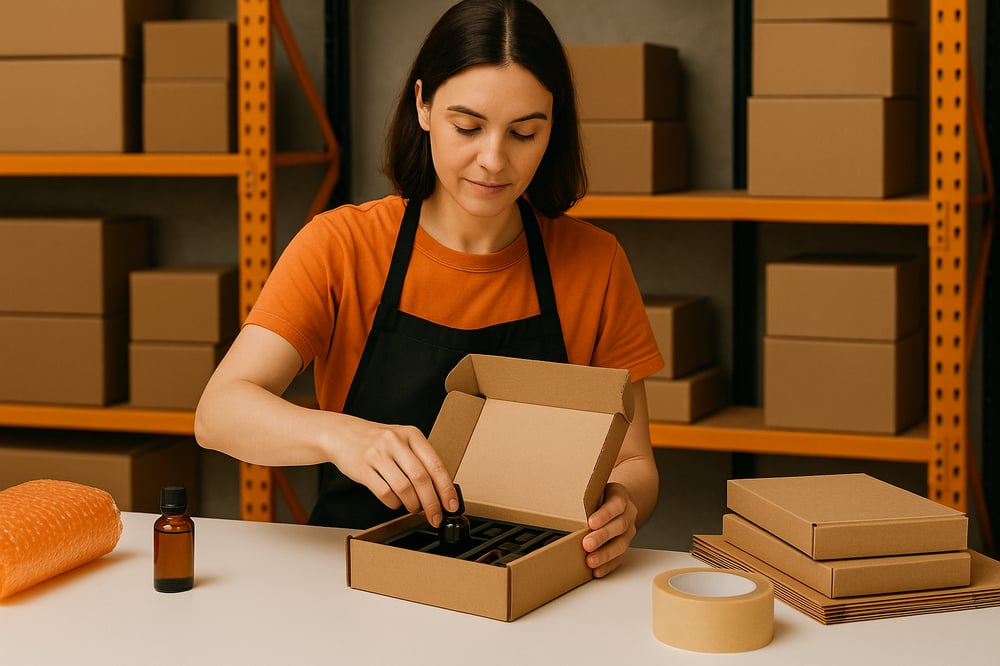
Individual cartons provide:
- Additional Light Protection: Blocks light even when bottles are clear.
- Impact Absorption: Reduces breakage during shipping and handling.
- Information Space: Provides surface area for regulatory information and branding.
- Perceived Value: Enhances product presentation and unboxing experience.
Rigid paperboard with custom inserts offers optimal protection while creating premium brand impressions.
Set Packaging
For multi-oil collections or starter sets:
- Protective Dividers: Prevent bottle-to-bottle contact and breakage.
- Organizational Features: Help customers manage multiple products.
- Gift-Ready Presentation: Increases perceived value for gifting occasions.
Custom-fitted foam inserts outperform generic dividers by securing bottles precisely and absorbing impact energy more effectively.
Shipping and Fulfillment Packaging Requirements
The journey through the supply chain introduces additional packaging requirements:
Protective Materials
- Bubble Wrap: Provides shock absorption for individual bottles.
- Custom Foam Inserts: Offers superior protection for premium products.
- Corrugated Dividers: Creates separate compartments, preventing contact between bottles.
Multiple essential oil companies report breakage rates below 0.5% when implementing these specialized protective materials for packaging.
Leak Containment
Even perfectly sealed bottles benefit from leak containment strategies:
- Sealed Pouches: Contain potential leaks within limited areas.
- Absorbent Materials: Capture escaped liquids before damaging other inventory.
- Secondary Sealing Methods: Heat-sealed bags provide additional security.
Pro Tip: Apply a thin layer of specialized food-grade silicone around bottle threads during processing. This creates a vapor-tight seal that prevents micro-leakage during pressure changes in air transport—a technique used by only the most sophisticated essential oil businesses.
This simple step reduces claims for leakage damage by up to 95% without affecting the consumer experience or requiring special opening instructions.
Temperature Considerations
Essential oils require temperature stability during transit:
- Insulated Shipping Containers: Maintain stable temperatures in extreme conditions.
- Phase-Change Materials: Regulate temperature more effectively than traditional insulation.
- Temperature Indicators: Alert recipients to potential exposure to damaging temperatures.
These precautions become particularly important during summer months when warehouse and delivery vehicle temperatures can exceed 120°F in some regions.
Sustainability Considerations in Essential Oil Packaging

Environmental impact increasingly influences packaging decisions:
Recyclable Materials
- Glass Recycling: Educate customers about proper recycling methods.
- Paperboard Selection: Choose easily recyclable materials without plastic coatings.
- Minimalist Design: Reduce unnecessary packaging components.
Brands reporting their sustainability metrics experience 22% higher customer loyalty in the essential oil segment.
Refill Programs
Innovative companies now offer:
- Bulk Refill Options: Allow customers to replenish products without new primary packaging.
- Return Programs: Accept empty bottles for professional cleaning and reuse.
- Concentrated Formulations: Reduce packaging volume through product concentration.
These programs simultaneously reduce environmental impact and create recurring customer relationships.
Compliance and Regulatory Factors
Different markets impose varied requirements for essential oil packaging:
Labeling Requirements
Packaging must accommodate:
- Ingredient Disclosure: Complete and accurate listings of all contents.
- Warning Statements: Required cautions about proper use and potential hazards.
- Batch Information: Production identification for quality control.
- Usage Instructions: Clear guidance on appropriate applications.
These requirements influence minimum container sizes and secondary packaging decisions.
Transportation Regulations
Shipping essential oils across borders requires:
- Proper Classification: Identification as a potential hazardous material.
- Documentation: Accurate shipping papers and declarations.
- Package Testing: Certification for impact and pressure resistance.
Non-compliance can result in shipment rejections, delays, and significant penalties.
Making the Right Packaging Choice
Selecting the optimal packaging solution requires balancing multiple factors:
- Product Characteristics: Consider the specific essential oils being packaged and their individual properties.
- Target Market: Align packaging with customer expectations and usage patterns.
- Distribution Channels: Account for the rigors of the specific supply chain.
- Regulatory Environment: Ensure compliance with all applicable requirements.
- Brand Positioning: Reflect brand values through packaging choices.
The most successful essential oil companies treat packaging as an integral part of product development rather than an afterthought.
Influencer-Optimized Packaging vs. Standard Fulfillment: What’s the ROI?
If you’re shipping essential oils and working with influencers or building a brand online, packaging isn’t just protection—it’s a marketing tool.
While most brands still use basic fulfillment packaging, a small shift toward influencer-optimized kits can significantly increase brand visibility, shareability, and repeat purchases.
Here’s a quick side-by-side breakdown:
| Feature | Standard Fulfillment | Influencer-Optimized Kit |
| Box Type | Basic carton | Rigid magnetic gift box |
| Insert | None or a thank-you card | Branded insert + QR tutorial |
| Protection | Bubble wrap or kraft paper | Custom foam or molded pulp |
| Packaging Cost | ~$1.00 | ~$2.50 |
| Unboxing Share Rate | ~3% | 15%+ |
Incorporate scratch-and-sniff scent triggers inside the lid or on inserts for a multi-sensory surprise. It’s a unique touch that boosts social shares and brand recall.
Next Steps for Optimizing Essential Oil Packaging
Proper packaging selection represents just one component of successful essential oil fulfillment. Companies should conduct regular reviews of packaging performance, gathering data on customer satisfaction, damage rates, and sustainability metrics.
Staying current with emerging packaging technologies ensures continued protection and competitiveness in this rapidly evolving market.
For products as sensitive and valuable as essential oils, investing in proper packaging pays dividends through reduced damage, enhanced customer experience, and strengthened brand reputation. By applying these packaging principles throughout the fulfillment process, companies can deliver products that maintain their therapeutic properties from production to final use.