Quick answer: IMS (Inventory Management System) is software that tracks every unit of stock across one or multiple warehouse locations in real time, recording where it is, how much you have, and triggering replenishment when quantities hit a defined threshold.
What is IMS Inventory?
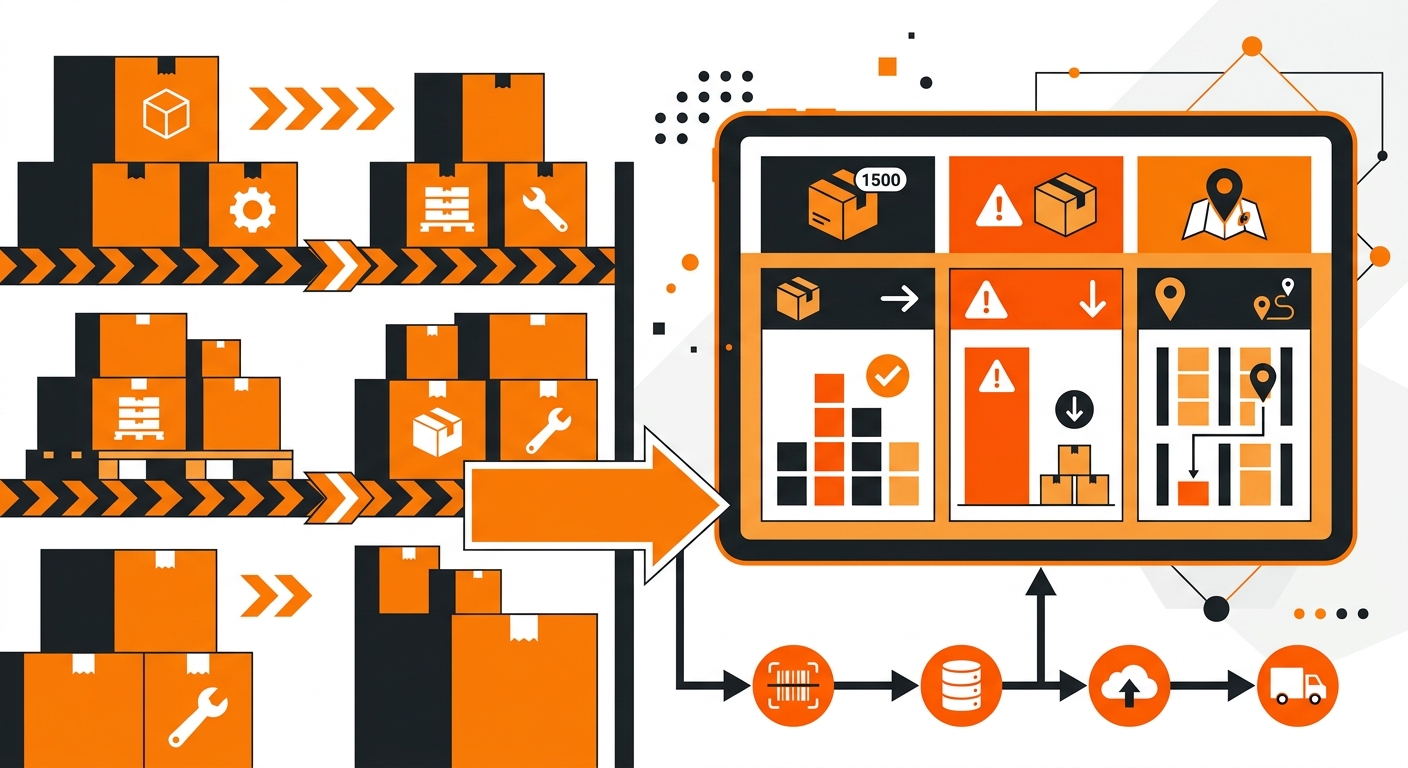
IMS is software that tracks every unit of stock you own (where it is, how much you have, and when it needs replenishing) across one or multiple warehouse locations in real time.
When people ask what IMS stands for, the answer is straightforward: Inventory Management System.
IMS’s meaning in shipping goes one step further: the system syncs on-hand stock levels with your sales channels and fulfillment data. So, your available inventory count updates the moment a unit is committed to an order.
What IMS Inventory Tracking Covers
An IMS manages four core functions throughout the fulfillment cycle:
-
Data ingestion at receiving: When a shipment arrives, the system records each SKU, quantity, and lot number against the expected purchase order. Discrepancies are flagged immediately, not discovered weeks later during a cycle count.
-
Real-time location assignment: Each unit is assigned to a specific bin, shelf, or zone. High-velocity SKUs are slotted closest to packing stations to reduce pick time.
-
Order management sync: When a customer places an order, the IMS reserves those units and routes the pick task to a warehouse associate, preventing oversells across multiple sales channels simultaneously.
-
Reorder triggering: Each pick decrements the on-hand count. Once a SKU hits a defined threshold, the system generates a replenishment alert automatically.
Why IMS Inventory Accuracy Directly Affects Your Bottom Line?
A warehouse running without a reliable inventory management system loses an average of 3.5% of annual revenue to shrinkage, mispicks, and ghost stock, units that appear available in your system but aren’t physically present.
-
Brands with real-time inventory visibility reduce pick errors by up to 30% compared to those relying on manual cycle counts.
-
Dead capital tied up in overstock typically represents 20-25% of a growing DTC brand’s working capital.
Key Components of an IMS

Strip an inventory management system down to its core, and four components do the actual work.
Stock Location Tracking
Stock location tracking maps every SKU to a specific bin, shelf, or zone in real time. Without it, pick accuracy collapses, warehouses relying on memory-based slotting see error rates above 3%, compared to under 0.5% with location-aware systems.
Reorder Triggers
Reorder triggers fire a purchase order or supplier alert when on-hand quantity hits a defined threshold. Seasonal SKUs need manually adjusted thresholds, or the system reorders at the wrong time.

Receiving and Put-away Records
Receiving records capture supplier shipments at the dock and assign them to locations before any units enter the sellable pool, inbound accuracy feeds every downstream count.
Sales Channel Sync
Sales channel sync pushes quantity updates to every connected storefront the moment a unit is committed. A 200-unit stock pool shared across three channels without sync produces oversells within hours.
IMS vs. WMS: What’s the Difference?
These terms are often used interchangeably, but they’re not the same thing.
An IMS focuses on stock levels, reorder points, and inventory accuracy across locations. A warehouse management system (WMS) covers the broader operational layer: labor management, receiving workflows, slotting logic, and shipping coordination.
How IMS Connects to Your 3PL Partner
The most common failure point in IMS adoption is the gap between what the system reports and what’s physically in the warehouse. If your inventory management and your fulfillment partner aren’t synced to the same data, stockouts and oversells become inevitable, regardless of which platform you’re using.
Fulfyld, for example, integrates directly with your sales channels so inventory counts update as orders come in, keeping your available stock accurate across every storefront without manual reconciliation.