

Did you know that businesses using Fulfyld as their 3PL provider can save up to 25% more over four years, all while maintaining high service quality?
Picking a fulfillment partner isn’t something you want to get wrong. A bad match costs you money, time, and trust, sometimes all three at once. That’s why a structured evaluation process beats a gut-feel decision every time.
Below, we’ll walk through exactly how to build one, using the same framework our operations team uses when we talk to prospective partners.
What Goes Into a 3PL RFP, and Who Is It For?
A 3PL RFP is a structured document you send to third-party logistics providers before a single proposal comes back. It tells vendors exactly what to include: business requirements, shipment volumes, service levels, technology needs, pricing requests, and compliance questions, all in one standardized ask.
It typically does three things at once:
- Standardizes the questions every vendor has to answer, so nothing gets skipped
- Forces an apples-to-apples comparison instead of five differently formatted PDFs
- Creates a paper trail you can point back to when negotiating final terms
You’ll see this document called a few different things depending on who’s writing it. Some teams call it a warehouse RFP template, since warehousing is usually the biggest line item in the contract. Others just call it a logistics RFP. Whatever the name, it goes out before vendors respond.
Worth being precise here: a 3PL RFP is not the same thing as a 3PL evaluation template. The RFP is what you send to vendors.
The evaluation template is what your team uses internally afterward to score and compare what comes back. One is a procurement document; the other is a decision-making tool. We’ll get to that scoring piece further down.
If you’re evaluating 3PL fulfillment services for the first time, a well-built RFP is arguably more valuable than any single vendor call, because it’s the one document that stays consistent no matter how many providers you’re comparing.
3PL RFP vs. RFI vs. RFQ: Which One Do You Actually Need?
Before you send anything out, it helps to know which document fits your stage in the process. These three get mixed up constantly, and using the wrong one wastes everyone’s time.
| Document | When to Use It | What You Get Back |
| RFI (Request for Information) | Early research, casting a wide net | General capabilities, no firm pricing |
| RFP (Request for Proposal) | You know your requirements and want detailed bids | Full proposals with pricing, process, and technology details |
| RFQ (Request for Quote) | You’ve already narrowed vendors and just need numbers | Straight pricing comparison |
For most businesses switching 3PLs, the RFP is the right move. It’s detailed enough to surface real differences between providers, without requiring the kind of exhaustive back-and-forth an RFI demands.
The 3PL Selection Process, Step by Step
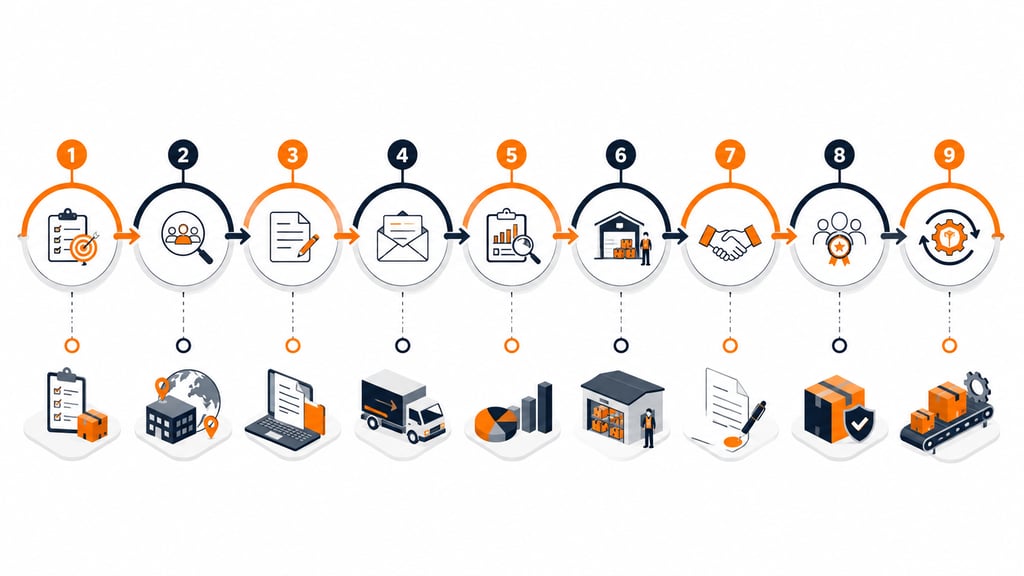
To help you visualize the full journey, here’s how the selection process typically unfolds from start to finish. Each stage builds on the one before it.
- Define requirements: Outline your logistics needs and business objectives before you talk to a single vendor.
- Research potential 3PLs: Investigate providers that actually align with what you need, not just who has the biggest ad budget.
- Create the RFP: Develop a detailed request to solicit bids from providers.
- Send it to the shortlisted 3PLs: Distribute it to your most promising candidates only; don’t mass-blast twenty companies.
- Evaluate responses: Analyze and compare what comes back, side by side.
- Conduct site visits: Walk the floor. Photos and virtual tours don’t tell you everything.
- Negotiate the contract: Discuss and finalize terms with your top pick, or picks.
- Select your partner: Make the call based on everything you’ve gathered, not just gut feel.
- Implement and onboard: Begin integrating your new partner into daily operations.
Skip a step, like site visits, and you’re rolling the dice on facility conditions and staff competence you’ll only discover after signing.
What to Include in Your RFP for 3PL Providers
A strong RFP covers four core areas. Miss one, and you’ll end up chasing vendors for follow-up answers instead of comparing finished proposals.
Company background and objectives
Open with a quick snapshot, then state your priorities plainly. Include:
- Your industry, products, and target markets
- Your top priority: cost reduction, faster delivery windows, or expansion into new channels
- Any timeline you’re working against
Vendors respond with sharper, more relevant proposals once they understand what’s actually driving the search.
Scope of work
Spell out exactly which services you need, including:
- B2B distribution, transportation, and reverse logistics
- Kitting or value-added services, if applicable
- Required certifications, such as dangerous goods handling or category-specific compliance standards
Vague scope produces vague bids, so be as specific as possible here.
Pricing and contract terms
| Section | What to Specify |
| Pricing model | Fixed pricing vs. performance-based, so vendors quote accurately |
| Contract terms | Performance metrics, penalties, payment terms, and renewal conditions |
If you’re unsure which pricing structure fits your volume, our breakdown of 3PL pricing models covers how fixed and performance-based rates typically compare. And if you want a plain-language primer before you start negotiating, what actually goes into a 3PL contract is worth a quick read first.
If you want to sanity-check numbers before you even open an RFP, running your volume through a 3PL cost calculator gives you a realistic benchmark to hold vendor quotes against.
Evaluation criteria
This is where you define, in writing, exactly how you’ll score each proposal. We break this down in detail below.
Key Evaluation Criteria: What Separates a Strong Provider From a Weak One
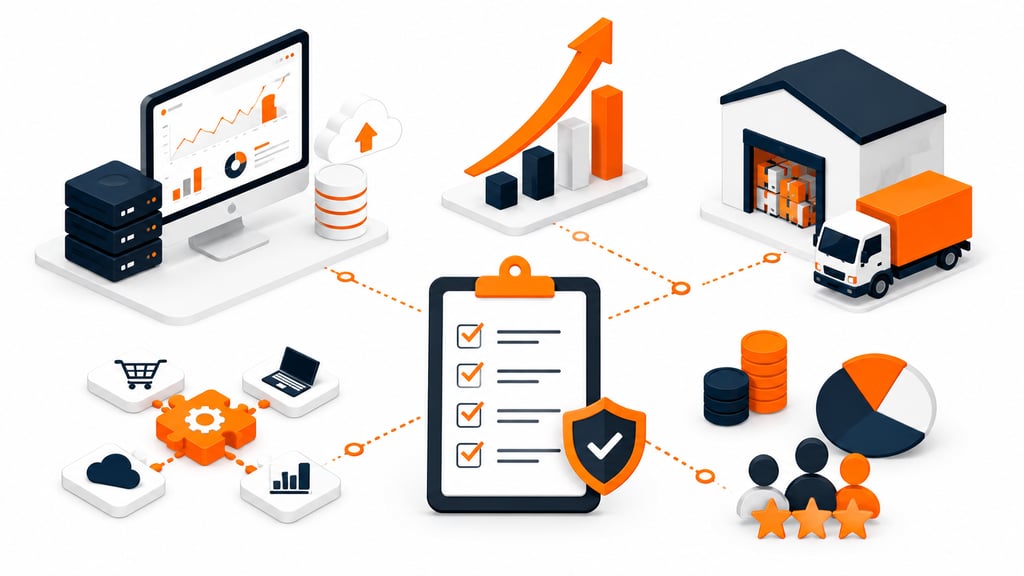
Once proposals land, this is where your 3PL evaluation template earns its keep. Three areas consistently separate a dependable partner from one that’ll cause headaches later. Here’s what to check first.
Technology Capabilities
A provider’s tech stack matters more than most people expect going in. Weak systems mean poor visibility, and poor visibility means you find out about problems after your customers already have.
John Langley, Professor of Supply Chain Management at Penn State University, has argued that strong technology in 3PL operations isn’t optional anymore; it’s table stakes for staying competitive.
The 2023 Third-Party Logistics Study by Capgemini backs this up with hard numbers:
- 93% of shippers and 99% of 3PL providers agree that IT capabilities are a necessary part of 3PL expertise.
- 3PLs using advanced analytics reported a 15% jump in overall operational efficiency.
- 78% of shippers said a provider’s strong tech capabilities had a measurable, positive impact on supply chain performance.
Before you sign, ask for a rundown of what the provider actually runs:
- Warehouse management systems (WMS)
- Order management systems (OMS)
- Integrations with your e-commerce platform or ERP
Solid technology gives you real-time tracking and keeps communication fast, instead of stuck in an email thread from three days ago. As Evan Armstrong, President of Armstrong & Associates, puts it: the strongest 3PLs offer integrated technology that surfaces insights you can actually act on.
Scalability
Ask providers directly how they’ve handled seasonal spikes or rapid growth for other clients. If they can’t give a concrete example, that’s telling. A provider who can’t scale with your business becomes the bottleneck holding your growth back, usually right when you can least afford it.
3PL Audit Checklist
Before you sign, confirm:
- Compliance with industry standards and regulations
- Financial stability, to confirm the provider will still be around in three years
- Operational capacity for your specific logistics needs
- Customer references that verify service quality from real, current clients
Legal and Risk Terms to Nail Down Before You Sign
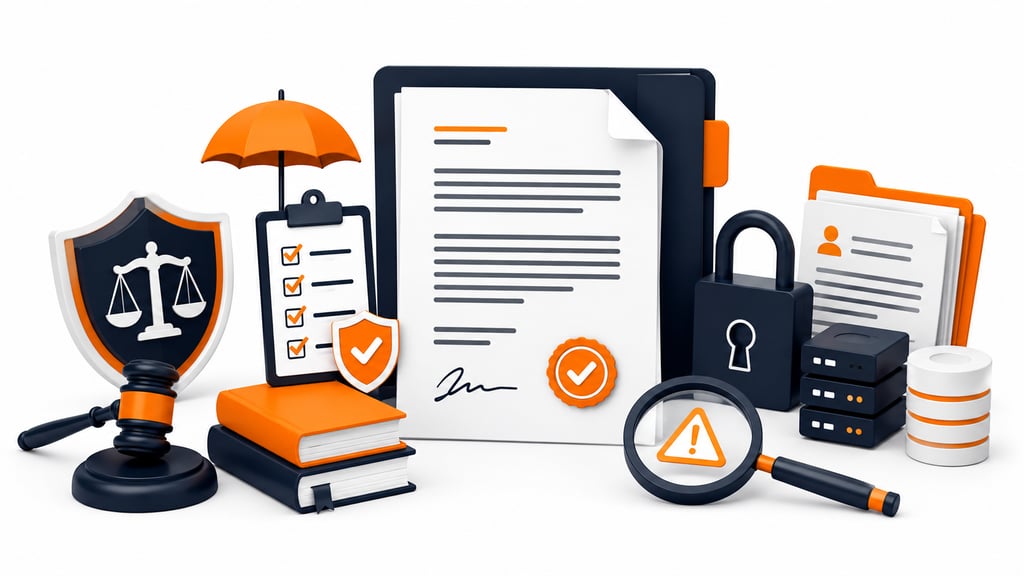
A strong technology score or a great site visit doesn’t protect you if the contract language is weak. This is the part of the process most businesses rush, and it’s usually the part they regret rushing.
- Liability and insurance. Get clear on who covers loss, damage, or mis-picks, and confirm the provider’s policy limits in writing, not just a verbal assurance.
- Termination clauses. Ask about notice periods and exit costs, especially if your volume swings seasonally. A provider unwilling to negotiate this is worth a second look.
- Data security obligations. Your customer and order data flows through their systems constantly, so confirm how it’s protected and which compliance standards they actually meet.
None of this needs to slow down the process. It just needs to happen before a signature, not after a problem shows up.
Common Challenges During Implementation
Onboarding a new provider is where partnerships wobble, even good ones. A solid checklist heads off three recurring problems:
- Misaligned expectations. Without clear communication upfront, both sides assume different things about timelines and deliverables. Writing objectives down before implementation prevents costly misunderstandings later.
- Technology integration issues. Connecting a provider’s systems to yours is often a bigger lift than expected. A checklist maps the steps for smooth system alignment, cutting down on data errors and delays.
- Operational disruptions. Inventory management, shipping, and customer service can all take a hit mid-transition. Defined protocols keep daily operations stable while the switch happens.
Download Free Request For Proposal Template
Choose Your 3PL Partner With Confidence, Not Guesswork
Once you’ve scored the responses, shortlist your top vendors and move into deeper due diligence: site visits, reference calls, and contract negotiation. Don’t skip these steps just because a proposal looked strong on paper.
A well-built RFP, backed by a consistent evaluation process, puts you in a position to find a 3PL partner who actually helps you scale instead of holding you back. That’s the entire point of standardizing this process in the first place.
If a service agreement is next on your list, our 3PL service agreement template picks up right where this one leaves off.
Templates track the work. We do the work.
This file will carry you a long way. But past a few hundred orders a month, tracking fulfillment in a spreadsheet becomes the bottleneck. That is the point of a 3PL: Fulfyld picks, packs, and ships every order under a formal SLA with automatic credits, one flat all-inclusive per-order price, and a dedicated account manager who knows your catalog.
Get a real quote