

Accurately estimating your shipping expenses is crucial for keeping your business profitable and efficient. With the calculator, you can quickly determine how much you’ll spend based on package weight, delivery zone, and preferred carrier, all in just a few clicks.
This easy-to-use tool simplifies the entire process, helping you plan smarter, stay on budget, and make informed fulfillment decisions.
Step-by-Step Guide to Using the Shipping Cost Calculator
The calculator is designed for ease, accuracy, and instant insights. It allows you to enter just a few details and receive an estimated cost per shipment and total monthly expense within seconds.
Each field you fill in directly influences your shipping estimate, ensuring the results are both precise and practical for real-world business use.
Step 1: Enter Your Average Package Weight
The average package weight determines the baseline cost of shipping your items. Since shipping fees increase with weight, entering an accurate value ensures realistic cost projections.
- Input the typical weight of your package in pounds or kilograms.
- Remember that heavier parcels generally lead to higher rates.
- Use your product database or shipping history for a consistent average weight.
Accurate weight entry is essential because it’s the first factor used in the shipping cost formula that determines your total rate.
Step 2: Select Your Destination Zone
Your destination zone is one of the main cost drivers in shipping calculations. The farther the package travels, the more you pay in handling and transit charges.
- Select between domestic (USA) or international destinations.
- Longer shipping distances increase total carrier costs.
- For recurring destinations, note which zones are most cost-effective for planning.
Step 3: Choose the Delivery Speed
Delivery speed determines how quickly your customer receives their order, and how much you’ll pay for it. Faster options offer convenience but come at a premium.
- Choose from Standard (5–7 days), Express, or Priority speeds.
- Faster delivery ensures quicker fulfillment but raises the cost.
- Match your speed option to customer expectations and budget flexibility.
Step 4: Input Your Monthly Order Volume
This field helps you project your monthly shipping expenses and plan for scalability as your business grows.
- Enter your estimated number of monthly shipments.
- The calculator multiplies this figure by your average cost per shipment.
- Use this to forecast monthly logistics budgets and optimize operations.
Step 5: Select Your Preferred Carrier
Different carriers have varying pricing structures and delivery networks. Choosing the right one can lead to significant cost savings.
- Select from USPS, FedEx, UPS, or your preferred courier.
- Each carrier offers unique service levels and rate tiers.
- Experiment with multiple carriers to identify the most cost-efficient partner.
Step 6: Add Insurance and Tracking (Optional)
Adding insurance and tracking provides extra peace of mind for both you and your customers. Although it slightly increases costs, it enhances reliability and trust.
- Tick the box to include insurance and tracking for a small fee (e.g., +$1.00 per package).
- Protects against loss, damage, or delays during transit.
- Recommended for valuable or fragile shipments.
Once you click “Calculate Shipping Costs,” the tool automatically computes your cost per shipment and total monthly cost, giving you a clear picture of your overall fulfillment expenses. With this real-time insight, you can make data-driven decisions to improve efficiency and maintain profitability.
The Advantages of Accurate Shipping Cost Estimation
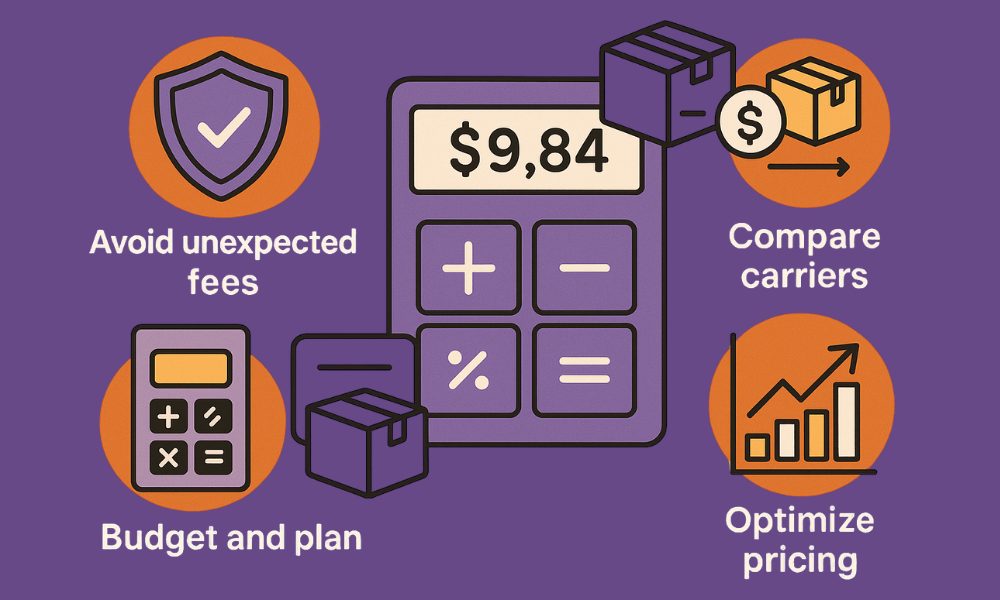
A shipping calculator is more than just a pricing tool; it’s a smart solution for businesses that want to gain clarity and control over their shipping expenses.
Whether you’re running an online store or managing regular bulk orders, this calculator simplifies complex carrier pricing structures into quick, transparent estimates that save both time and money.
Avoid Unexpected Fees and Overcharges
Shipping costs often include hidden carrier fees that can eat into your profits. Using a calculator ensures every cost is accounted for before checkout or invoicing.
- Detect hidden surcharges like fuel or handling fees.
- Prevent billing surprises from underestimated rates.
- Maintain full cost transparency for you and your customers.
Compare Carriers for the Best Value
Every carrier has a unique rate structure based on weight, zone, and delivery time. The calculator allows you to easily compare multiple carriers side by side and pick the one that best fits your shipping strategy.
- Instantly view cost differences between USPS, FedEx, UPS, and others.
- Choose a carrier that balances speed and affordability.
- Gain flexibility to adjust carriers based on your order volume or delivery needs.
Budget and Plan Shipments Efficiently
Accurate budgeting is essential for sustainable growth. With this tool, you can forecast your monthly shipping expenses and plan for seasonal fluctuations or increased order volumes.
- Estimate your monthly logistics costs in advance.
- Plan for holiday surges or bulk orders.
- Allocate your budget efficiently for packaging, storage, and transport.
Optimize Pricing and Profit Margins
Knowing your true shipping cost helps you set competitive product prices without sacrificing profit. The calculator gives you reliable data to refine your pricing strategy.
- Use accurate rates to adjust your retail prices strategically.
- Prevent undercharging by factoring in shipping overheads.
- Build trust and transparency with customers through fair pricing.
Simplify Calculating Shipping Costs
Instead of manually researching rates or applying complex formulas, the calculator performs all computations in seconds. This level of automation and accuracy helps streamline your fulfillment process and eliminate guesswork.
- Automates the process of shipping cost calculation accurately.
- Saves valuable time compared to manual rate checking.
- Ensures consistent pricing decisions across all orders.
By simplifying the way you manage logistics, the shipping calculator enables your business to stay profitable, transparent, and customer-focused. It’s an essential tool for modern eCommerce operations aiming to cut costs and improve efficiency.
How to Calculate Shipping Costs Manually
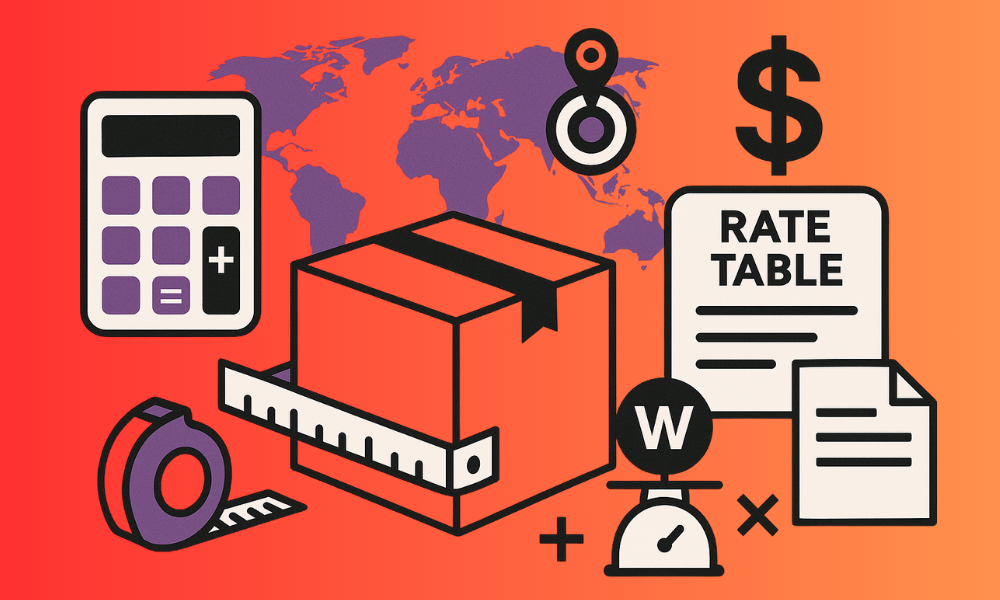
While the calculator provides instant results, it’s still helpful to understand how shipping fees are determined manually. Knowing the underlying process gives you greater insight into the factors that influence total expenses and helps you verify the accuracy of automated results.
1. Determine Package Weight and Dimensions
Your package’s size and weight form the foundation of all shipping cost estimates. Carriers base their rates on both the physical weight and the dimensional weight (volume-based pricing).
- Use a digital scale to measure actual weight.
- Measure the length, width, and height of your package in inches or centimeters.
- Remember that large but lightweight boxes may incur dimensional weight pricing, often higher than actual weight.
2. Identify the Shipping Zone or Destination
Shipping zones are divided by distance from the point of origin, and each zone corresponds to a specific rate bracket. The farther your shipment travels, the higher the cost.
- Refer to your carrier’s zone chart for domestic or international destinations.
- Understand that longer routes involve more handling and transit fees.
- For regular shipments, track which zones cost the most to optimize logistics.
3. Review Carrier Pricing Tables
Each carrier provides a rate table showing prices based on weight, zone, and delivery speed. Reviewing these tables helps you find the most cost-efficient option for each order.
- Access pricing charts from carriers like FedEx, UPS, or USPS.
- Compare rates for Standard, Express, and Priority services.
- Note any seasonal surcharges or rate changes that might apply.
4. Add Extra Charges and Services
Beyond base rates, additional services can affect the total. Including these in your manual calculations ensures accurate pricing transparency.
- Add optional insurance or tracking fees per package.
- Include fuel surcharges or rural delivery fees, if applicable.
- Consider customs or duties for international shipments.
5. Multiply by Monthly Shipment Volume
After determining your per-shipment cost, multiply it by the number of orders you ship per month. This helps you forecast your total monthly logistics expense.
- Calculate the cost per shipment first.
- Multiply by your average monthly volume to estimate recurring costs.
- Use this data to plan your budget and profit margins effectively.
While manual calculation offers transparency, it can be time-consuming and prone to error, especially when shipping volumes are high. This calculator simplifies this entire process, delivering faster, accurate results in just seconds so you can focus on running your business efficiently.
Factors That Influence How Shipping Cost Is Calculated
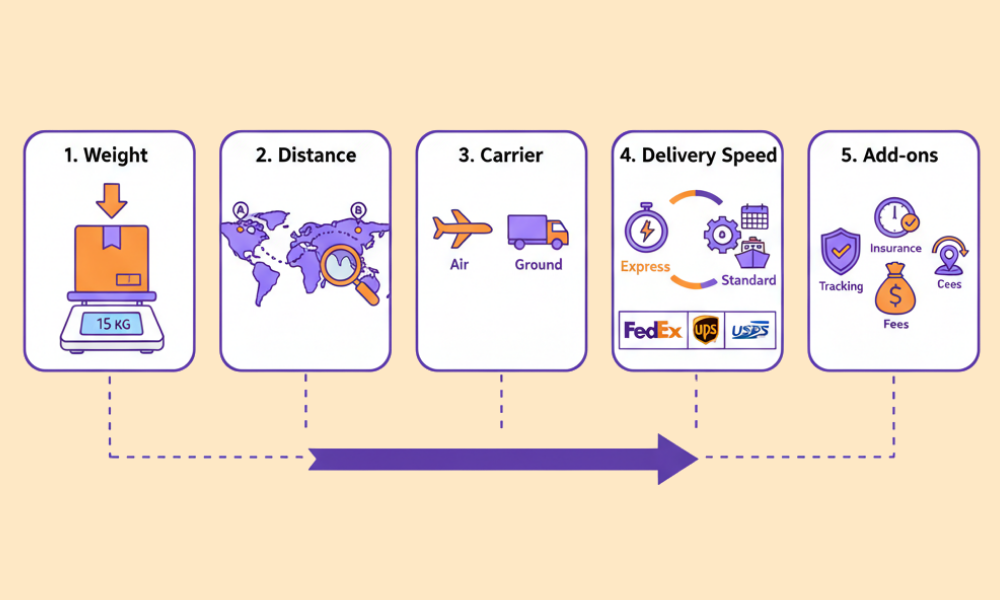
Understanding the calculation allows businesses to manage logistics with greater accuracy and efficiency. Each shipment’s total price depends on several variables that carriers use to determine rates. Knowing these factors helps you plan smarter, set fair pricing, and minimize unnecessary costs.
Weight
The weight of your package is one of the biggest cost determinants. Carriers charge higher rates for heavier parcels because they require more fuel and handling effort during transport.
- Use accurate scales to measure your package before shipping.
- Expect incremental cost increases as weight moves into higher pricing tiers.
- Consider lightweight packaging materials to reduce overall shipping fees.
Distance
The farther your package travels, the more it costs. Carriers divide regions into zones or delivery regions, and the distance between the origin and destination defines your rate bracket.
- Longer delivery routes lead to higher transportation costs.
- Review zone maps to estimate distance-based charges accurately.
- For frequent shipments, focus on regional delivery to save money.
Carrier
Each shipping carrier has its own pricing model, delivery network, and service standards. The carrier you choose plays a key role in determining both cost and reliability.
- Compare USPS, UPS, FedEx, and other couriers to find the best match.
- Some carriers offer discounts or business accounts for frequent shippers.
- Evaluate delivery reliability alongside pricing to ensure customer satisfaction.
Delivery Speed
Faster shipping options like Express or Priority services naturally come at a higher price. Choosing the right speed means balancing urgency with budget.
- Standard shipping is cost-effective but slower.
- Express and same-day delivery provide convenience at a premium rate.
- Align shipping speed with customer expectations and product type.
Insurance & Add-On Services
Optional add-ons such as insurance, tracking, or signature confirmation can slightly raise your total cost, but they enhance customer trust and shipment safety.
- Add insurance for high-value or fragile items.
- Enable tracking features to provide delivery visibility.
- Include signature confirmation for extra security on important shipments.
Each of these factors contributes to your total shipping rate. By using this calculator, you can instantly see how changes in weight, distance, or delivery speed affect your overall cost, allowing you to make informed, cost-effective decisions every time you ship.
Find Out Your Exact Shipping Costs Today
This calculator offers a simple yet powerful way to estimate your logistics expenses. Whether you’re a small business owner or a large-scale eCommerce brand, it gives you the clarity to make cost-effective shipping decisions, no spreadsheets, no guesswork, just accurate estimates in seconds.