
Domestic supplement shipping runs $4.50–$15.00 per order for standard ground service.
A single bottle of protein powder shipping in a poly mailer lands at $4.50–$7.00. While a multi-product bundle in a corrugated box can push $10.00–$15.00 before carrier surcharges apply.
This guide covers everything you need to know, from what drives supplement shipping costs to where supplement brands shipping at volume find meaningful savings.
What You’ll Actually Pay: Rates by Product Type

A clean warehouse packing station with sealed supplement bottles, shipping boxes, a digital scale, and printed labels, illust
Supplement shipping costs vary more by packaging format and weight than almost any other consumable category.
This is what you’re expected to pay depending on the product type and brand:
| Product Type | Packed Weight | USPS Est. | UPS Est. | FedEx Est. |
| Single capsule bottle | 4–8 oz | $4.50–$6.00 | $5.50–$7.50 | $6.00–$8.00 |
| Single protein powder tub | 2–5 lbs | $7.00–$10.00 | $8.50–$12.00 | $9.00–$13.00 |
| Multi-product bundle | 3–8 lbs | $9.00–$13.00 | $10.50–$15.00 | $11.00–$16.00 |
| Subscription box (4–6 items) | 4–10 lbs | $10.00–$15.00 | $12.00–$18.00 | $13.00–$19.00 |
Brands shipping 500+ supplement orders per month have access to negotiated rates that reduce these figures by 20–40%. However, this is a threshold most individual brands can’t reach without a supplement fulfillment partner aggregating volume on their behalf.
Top Factors That Impact the Cost of Shipping Supplements
Supplement shipping costs break down to a short formula: billable weight × zone multiplier + surcharges = final cost. The variables inside that formula are where the margin gets made or lost.
Packed weight is the starting point. A poly mailer keeps a lightweight capsule bottle at its actual weight. A corrugated box introduces dimensional weight and the carrier’s bill, whichever is higher.
Carrier zone distance determines how much of your per-shipment cost is geography. Zones run from 1 (local) to 8 (cross-country), and a Zone 8 shipment can cost $4–$8 more than the same package moving to a neighboring state.
Surcharges that quietly inflate your invoice:
- Residential delivery: UPS and FedEx add $5.15–$6.90 per package for home delivery in 2026
- Fuel surcharges: Carrier-adjusted weekly, typically 10–20% of the base rate
- Oversized fees: Large protein powder containers or multi-product bundles can trigger additional handling fees of $15–$31 per package when dimensional thresholds are exceeded
- Hazmat fees: Supplements containing certain ingredients (including some pre-workouts with stimulants) may require hazmat classification, adding $30–$50 per shipment
How Temperature and Compliance Requirements Change the Cost
Standard supplement shipping assumes ambient temperature and no special regulatory requirements. Both assumptions can be wrong, and when they are, costs change significantly.
Temperature-sensitive supplements: Probiotics, certain liquid formulations, and some collagen products require insulated packaging and cold packs or refrigerated carrier services to maintain efficacy.
For brands managing temperature-sensitive inventory, temperature-controlled fulfillment at the warehouse level prevents product degradation before the shipment even books.
Regulatory compliance adds a different layer of cost. Supplements containing controlled or restricted ingredients require accurate labeling, specific customs documentation on international shipments, and, in some cases, hazmat classification at the carrier level.
The Impact of International Supplement Shipping
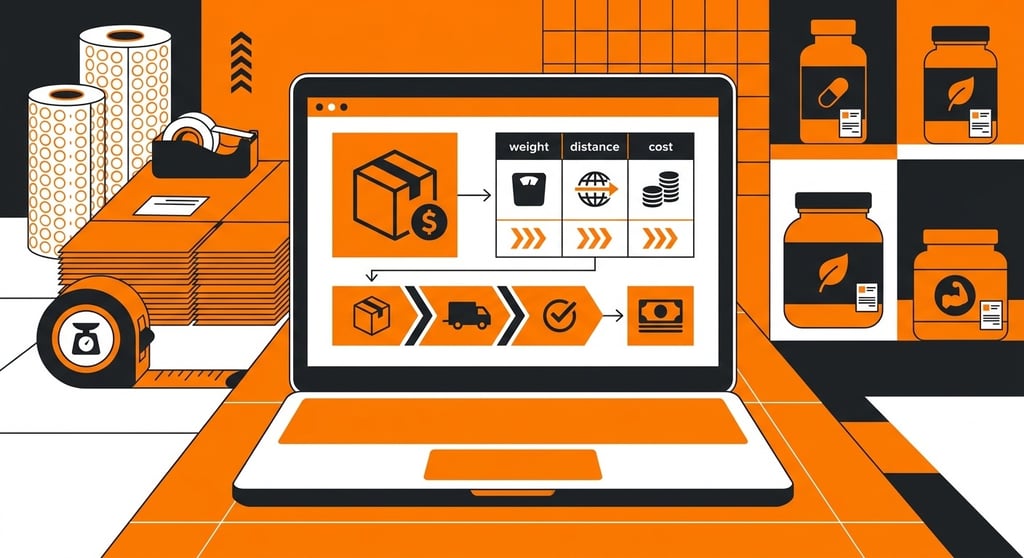
A close-up of a desktop workspace showing a laptop with shipping cost calculations, a tape measure, packaging materials, and
Cross-border supplement shipments carry costs that don’t appear on your carrier rate card. Every international order requires a commercial invoice declaring the product’s value, country of origin, and HS tariff code.
Supplement classification varies significantly by destination country, for example:
- Canada: Most supplements clear without issues, with duties of 0–8% depending on ingredient classification
- EU: Strict labeling requirements and ingredient restrictions mean some formulations can’t be sold at all; customs duties run 0–12% plus VAT of 20–25%
- Australia: TGA (Therapeutic Goods Administration) regulates many supplement categories — non-compliant products get held or destroyed at customs
For DTC brands selling supplements internationally, DDP (Delivered Duty Paid) shipping eliminates customer-facing customs surprises but transfers that cost directly to your P&L.
How to Cut Supplement Shipping Costs at Scale
Here’s where the real savings come from.
- Right-size your packaging. The single fastest way to cut supplement shipping costs is switching from corrugated boxes to poly mailers wherever the product format allows. Box-to-mailer switches routinely save $1.50–$3.00 per shipment.
- Mix carriers by zone. USPS Ground Advantage wins on single-unit orders under 1 lb shipping Zones 1–4. UPS and FedEx Ground become competitive at Zones 5–8 and for heavier bundles. Defaulting to one carrier regardless of zone leaves $1.50–$4.00 per shipment on the table.
- Distribute inventory strategically. Splitting supplement inventory between an East Coast and West Coast fulfillment node reduces average shipping zones, which directly reduces what you pay per label.
- Partnering with a fulfillment company. Brands shipping 500+ supplement orders per month save 20–40% on carrier rates by working with a company at a fulfillment operation that aggregates volume across clients.
Stop Letting Shipping Costs Eat Your Supplement Margins
Supplement brands operate on tight margins already. Shipping costs that aren’t actively managed compound fast.
Fulfyld handles supplement fulfillment for DTC brands and wholesale sellers with pre-negotiated carrier rates, zone-optimized warehouse placement, and temperature-controlled storage for formulations that require it.
FAQs
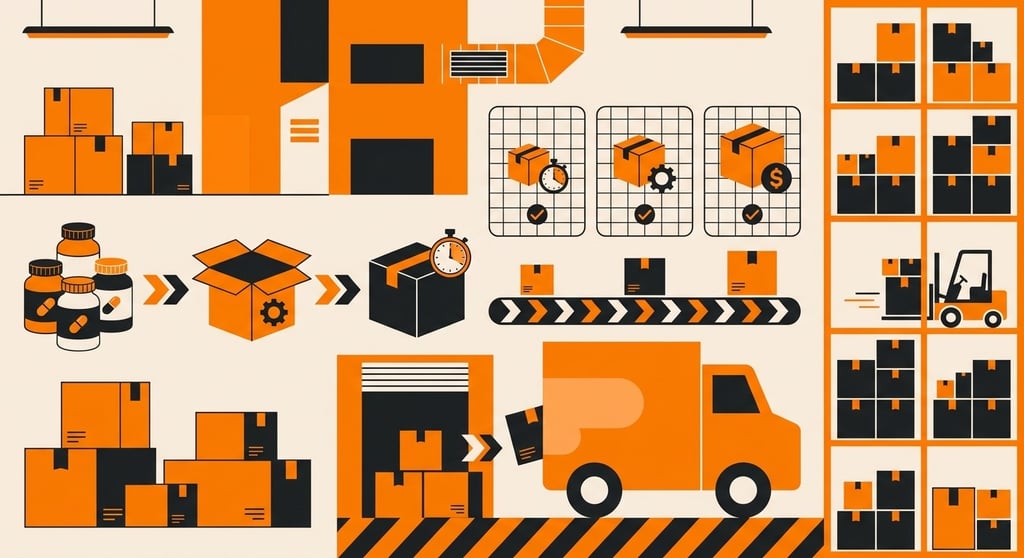
A professional ecommerce fulfillment scene featuring stacked parcel boxes, branded supplement jars, and a courier pickup area
How much does it cost to ship a single supplement bottle?
A single capsule or tablet bottle weighing 4–8 oz typically costs $4.50–$6.00 via USPS Ground Advantage and $5.50–$8.00 via UPS or FedEx Ground. Using a poly mailer instead of a box keeps the package at actual weight and avoids dimensional weight pricing entirely.
What is the cheapest way to ship supplements?
USPS Ground Advantage is the cheapest option for single-unit orders under 1 lb shipping in Zones 1–4. For brands shipping 500+ orders per month, a fulfillment partner with negotiated carrier contracts reduces costs by 20–40% compared to retail counter pricing, regardless of carrier.
Do supplements require special shipping conditions?
Most supplements ship at ambient temperature without special requirements. Probiotics, liquid formulations, and certain collagen products require temperature-controlled packaging.
How much does it cost to ship supplements internationally?
International supplement shipping typically runs $15–$55+ per order, depending on destination and service level.
Can you ship supplements in a poly mailer?
Yes, for most bottled or pouched supplements, a poly mailer is the best choice – it keeps the package at actual weight, avoids dimensional weight pricing, and reduces per-shipment cost by $1.50–$3.00 compared to a corrugated box.
How does subscription box fulfillment affect supplement shipping costs?
Subscription boxes containing 4–6 supplement products typically weigh 4–10 lbs packed, pushing domestic ground shipping to $10.00–$19.00 per box, depending on carrier and zone.