

According to insurance industry data, nearly 17% of all shipping claims involve damage to fragile items, with fine china and ceramics ranking among the most frequently damaged products during transit.
Shipping delicate items requires precision, patience, and proper techniques to ensure they arrive intact. If you’re wondering how to safely pack and ship fine china, it’s essential to use the right materials and methods, as this fragile dishware often carries both sentimental and monetary value.
Step-by-Step Packing and Shipping Process for Fine China

Proper technique is just as important as quality materials. Following a systematic approach significantly reduces damage risk.
Individual Piece Preparation
- Start clean: Ensure all pieces are clean and completely dry before packing
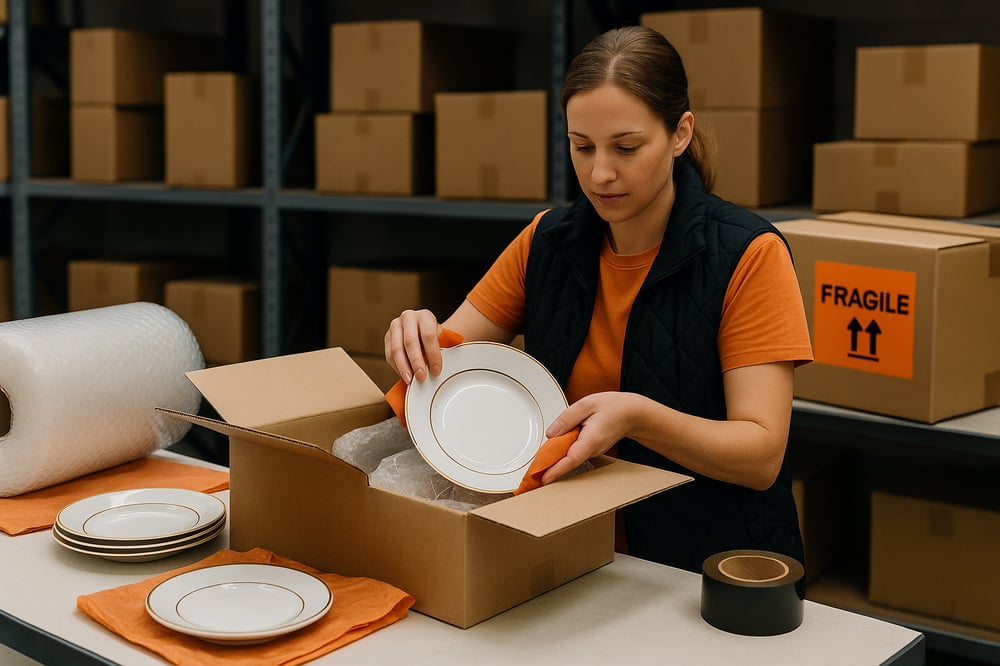
- Primary wrapping: Wrap each piece individually in acid-free tissue paper
- Secondary protection: Apply bubble wrap around the tissue-wrapped item
- Secure the wrapping: Use small pieces of tape to secure wrapping (never apply tape directly to china surfaces)
Specific Techniques by Item Type
Each piece of fine china has unique packing needs. Here are specific techniques by item type to ensure safe, damage-free delivery.
Plates and Flat Items
- Wrap individually in tissue, then bubble wrap
- Stack plates vertically (like records in a crate), never flat
- Use cardboard dividers between each plate
- Insert foam corner protectors before final wrapping
Cups and Stemware
- Stuff cups and hollow items with crumpled acid-free tissue
- Wrap handles and stems with extra layers of protection
- Place stemware upside down in the box (stems pointing up)
- Never stack heavy items on top of stemware
Serving Pieces and Odd-Shaped Items
- Identify vulnerable points (handles, spouts, ornate details)
- Apply additional protection to these areas
- Create custom-fitted cushioning for unusual shapes
Box Packing Sequence
- Create a 3-inch cushioning layer at the bottom of the box
- Position the heaviest items at the bottom
- Fill all voids completely with packing material
- Ensure no items touch each other or the box walls
- Add a final 3-inch cushioning layer on top
- Perform the “shake test” before sealing (no movement should be detected)
Essential Materials for Packing Fine China

The foundation of any successful china shipment lies in using the right packing materials. Professional packers never skimp on quality supplies, as inadequate protection is the primary cause of in-transit damage.
Primary Packaging Materials
- Acid-free tissue paper: Prevents surface scratching and provides the initial protective layer
- Bubble wrap (small bubble size): Offers cushioning while conforming to the item’s shape
- Foam corner protectors: Essential for plates, platters, and other flat items
- Packing paper: Creates void fill and separation between items
- Sturdy corrugated boxes: Provides structural integrity
- Double-wall boxes: Recommended for particularly valuable sets
- Dish pack boxes: Specially designed with extra-thick walls for fragile items
Supplementary Materials
- Packing peanuts or foam: Creates additional cushioning
- Packing tape (2+ inches wide): Secures all seams and reinforces stress points
- “Fragile” labels: Alerts handlers to exercise extra care
Pro tip: Box-in-box technique is considered the gold standard when shipping extremely valuable pieces. This method involves packing the wrapped china in a box with cushioning material, then placing that entire box inside a larger container with additional cushioning between the boxes. This creates what logistics professionals call a “floating package” that absorbs impact from multiple directions.
Advanced Considerations for Commercial Shipping
Professional logistics operations consider factors beyond basic packing when shipping valuable china.
Climate Control Factors
Temperature fluctuations can affect adhesives and create condensation inside packages. Extreme cold can make china more brittle, while excessive heat may affect certain glazes or decorative elements. Consider:
- Timing shipments: Avoid extreme weather seasons for valuable shipments
- Insulated packaging: For temperature-sensitive antique pieces
- Moisture protection: Using silica gel packets for humidity control
Insurance and Documentation
When shipping valuable china sets:
- Document the condition with detailed photographs before packing
- Obtain professional appraisals for valuable or antique sets
- Purchase appropriate shipping insurance (declared value coverage)
- Consider specialized fine art shipping services for museum-quality pieces
Carrier Selection
Not all shipping carriers handle fragile items with equal care. Points to consider:
- Dedicated fragile-item handling services
- Delivery signature requirements
- Tracking capabilities
- Claims process simplicity
Common Mistakes When Shipping Fine China

Understanding what not to do is often as valuable as knowing the correct procedures.
Insufficient Void Fill
Empty space inside a package allows contents to shift during transit. Even properly wrapped items can sustain damage if they collide with each other or the box walls. Every empty space must be filled with cushioning material.
Underestimating Package Weight
Fine china is deceptively heavy, particularly when packed with adequate protection materials. Using boxes with insufficient strength ratings leads to crushing or collapse during stacking or transit.
Improper Tape Application
The “H-taping method” (covering all seams with continuous strips of tape) is essential for structural integrity. Simply closing the box flaps with minimal tape creates failure points under pressure.
Neglecting External Protection Indicators
Clear labeling with “Fragile,” “This Side Up,” and “Handle with Care” markings significantly improves handling outcomes. Without these indicators, packages receive standard (often rough) handling.
Expert Tips for Flawless Fine China Delivery
These advanced strategies separate amateur packing from professional-grade protection:
Dimensional Weight Optimization
Most carriers now charge based on dimensional weight (size) rather than actual weight. Packing efficiently while maintaining protection saves substantial shipping costs. Professional packers calculate optimal box dimensions before starting.
Vibration Damage Prevention
While impact damage is obvious, many china pieces suffer from micro-fractures caused by continuous vibration during transit. To counter this:
- Use foam with varying densities to absorb different vibration frequencies
- Consider suspension packaging for extremely valuable pieces
- Utilize anti-vibration mats at the bottom of boxes
Hidden Damage Assessment
When receiving shipped china, inspect for subtle signs of damage beyond obvious breakage:
- Hairline cracks (hold pieces up to light)
- Glaze damage (tiny spiderweb patterns)
- Resonance changes (tap gently to listen for altered sounds compared to undamaged pieces)
Next Steps: Ensuring Safe Delivery Every Time
Creating a reliable system for shipping fine china requires attention to detail and continuous improvement. Consider developing a standardized packing protocol with itemized checklists for consistent results.
For high-value shipments, partnering with specialized logistics providers who focus on fragile goods often proves more economical than absorbing replacement costs and customer dissatisfaction from damaged deliveries.
Their expertise in handling delicate items from pickup through final delivery offers peace of mind that standard shipping services cannot match.
The most successful approach combines quality materials, proven techniques, and strategic shipping decisions to ensure that cherished china pieces reach their destination exactly as intended, perfect and pristine.