A 3PL storage fee is the recurring charge a third-party logistics provider bills you for the physical space your inventory occupies in their warehouse, and the way it’s calculated will quietly double your fulfillment costs if you’re not watching it closely.
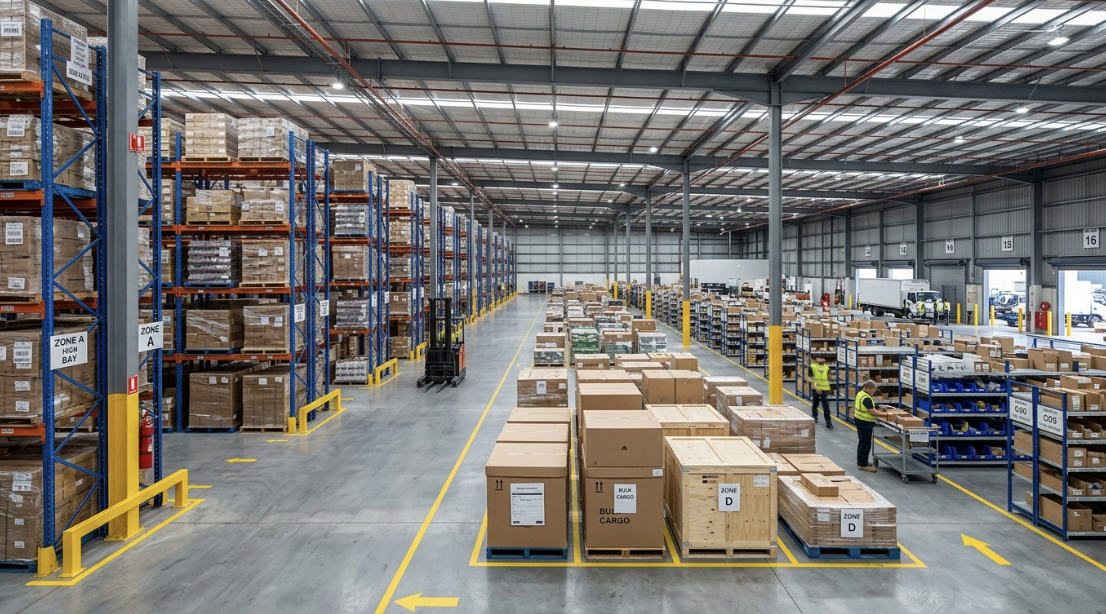
How 3PL Storage Fees Work
A 3PL storage fee is the charge a third-party logistics provider bills you for the physical space your inventory occupies in their warehouse, calculated over a set period. If you’re asking what storage fee 3PL is, the short answer is: it’s rent for your products, measured by the cubic foot, pallet, or bin.
eCommerce brands, subscription box companies, and DTC sellers encounter these fees the moment they hand off inventory to a fulfillment partner.
The fee structure matters because it directly affects your cost per unit, and unlike shipping rates, storage fees compound silently when slow-moving SKUs sit untouched for weeks.
One exception worth knowing: some 3PLs bundle short-term storage into their pick-and-pack rates, so the line item disappears but the cost doesn’t.
How Storage Fees Are Typically Structured
Most 3PLs charge storage fees using one of the three pricing models:
Per Pallet Pricing
This is the most common storage model for businesses shipping larger quantities of inventory. You are charged based on the number of pallet positions your products occupy in the warehouse.
-
Typical cost: $15–$40 per pallet per month
-
Pricing varies based on warehouse location, demand, and storage conditions
-
Best suited for bulk inventory and high-volume operations
Per Cubic Foot Pricing
Some 3PLs calculate storage costs based on the total space your inventory occupies rather than the number of pallets.
-
Typical cost: $0.45–$0.75 per cubic foot per month
-
A standard 5×5×8 storage area provides 200 cubic feet of space.
-
At those rates, monthly storage costs would range from $90–$150 for that amount of space.
This model is often beneficial for businesses with lightweight or irregularly shaped products that do not utilize pallet space efficiently.
Per Bin or Shelf Location Pricing
For smaller products, parts, or SKUs, warehouses may charge based on the number of bin locations or shelf slots used.
-
Typical cost: $2–$8 per bin or shelf location per month
-
Common in eCommerce fulfillment centers handling small items.
-
Helps businesses pay only for the storage locations they actually use.
Where the Real Cost Hides
Long-term storage surcharges and minimum monthly charges apply on top of the published rate, making slow-moving inventory significantly more expensive than the base fee suggests.
Why Storage Fees Matter More Than You Think
Storage fees aren’t just a line item to accept. For a growing DTC brand carrying 90 days of safety stock, they can quietly consume 8–12% of total 3PL fulfillment costs before a single unit ships.
The real damage shows up in two scenarios. During Black Friday peak, brands that over-ordered to avoid stockouts often pay long-term storage surcharges on slow-moving SKUs that didn’t sell.
During a subscription-box renewal cycle, inventory sitting idle between monthly drops accumulates weekly cubic-foot charges that compound fast.
-
Dead capital locked in unsold inventory can reach 15–20% of a product-based brand’s working capital during off-peak months
-
Inaccurate inventory placement drives up dock-to-stock time, which delays available-to-ship status and increases WISMO contacts
-
Brands without a dedicated account manager often miss tier thresholds that would reduce their per-cubic-foot rate
How 3PL Storage Fees Get Calculated
-
Inventory arrives and gets measured at receiving. When your products reach the warehouse, staff log dimensions, weight, and unit count into the warehouse management system (WMS). That data becomes the baseline for every storage charge you’ll see on your invoice.
-
The WMS assigns a storage unit type. Depending on your product’s size, the system classifies inventory as pallet, bin, or shelf storage. Most 3PLs default to pallet-based tracking for larger SKUs and bin-based for small parcel goods; the classification directly determines your per-unit rate.
-
Usage gets audited on a set billing cycle. The 3PL snapshots your occupied space at a fixed interval, typically monthly or weekly. Some providers charge by cubic footage held on a specific date; others average daily counts across the period. Ask which method applies before you sign.
-
Charges calculate and post to your account. The billing engine multiplies your occupied units by the contracted rate. Long-term storage surcharges (common after 180 days) get applied separately, so slow-moving SKUs can push your total well above the base rate.
Work With a 3PL That Shows You the Math
Storage fees don’t have to be a guessing game. The brands that control warehousing costs are the ones whose 3PL gives them enough visibility to act before charges compound.
Fulfyld gives growing eCommerce brands a dedicated account management team. When storage costs spike, you get a real conversation about why, not a PDF invoice you have to decode yourself.
Ready to stop overpaying for warehouse storage? Talk to a Fulfyld fulfillment specialist about your storage fee structure and get a clear picture of what you’re actually paying for.