Quick answer: CIF stands for Cost, Insurance, and Freight. Under CIF, the seller pays for ocean freight, marine insurance, and all export costs to the buyer’s named destination port. Risk transfers to the buyer the moment goods are loaded onto the vessel at the origin port, before the ship has even left the dock.
CIF in Shipping
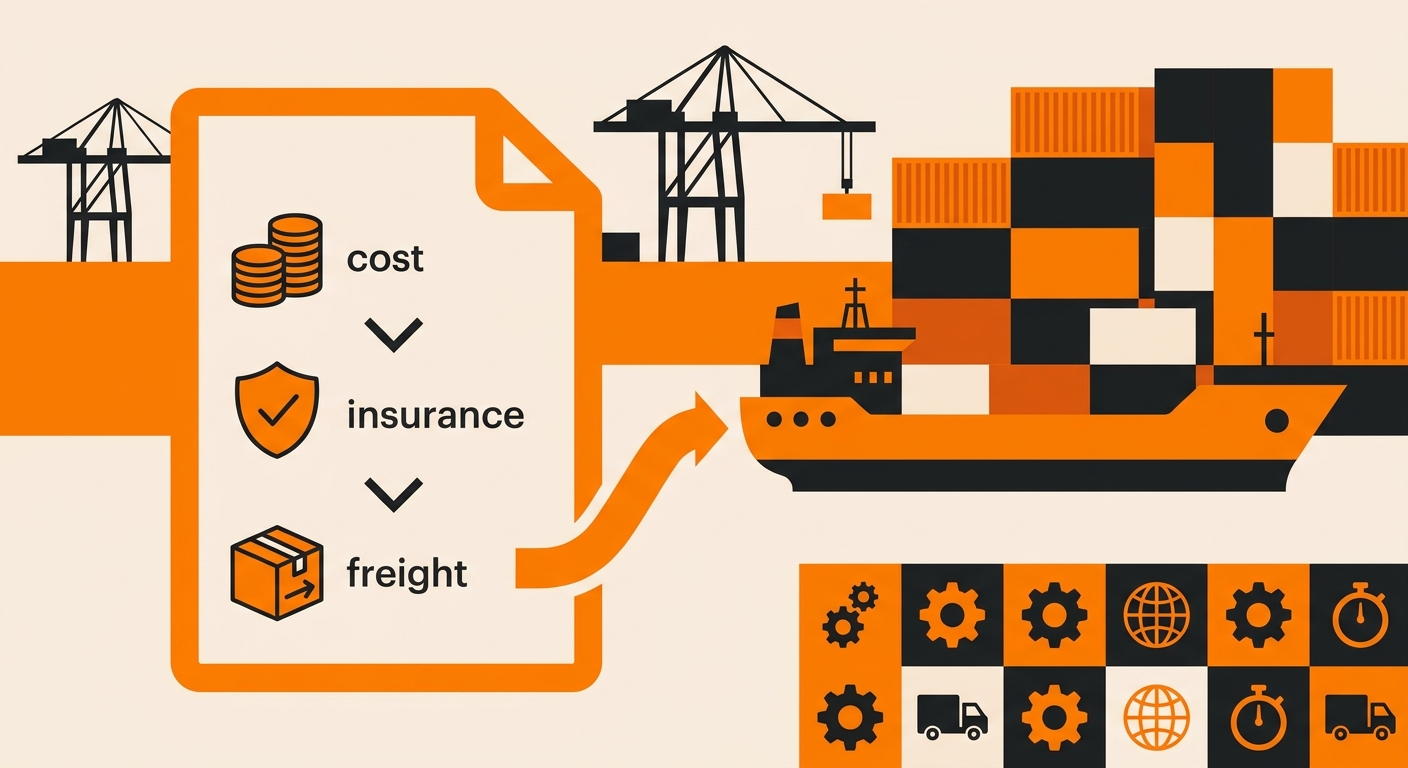
CIF (Cost, Insurance, and Freight) is an international trade term that defines which party pays for freight, marine insurance, and shipping costs to move goods from the seller’s origin port to the buyer’s named destination port. Under CIF, the seller covers all three, but risk transfers to the buyer the moment goods are loaded onto the vessel.
That distinction matters: the seller pays, but you absorb the loss if something goes wrong mid-ocean.
What CIF Covers (and What It Doesn’t)
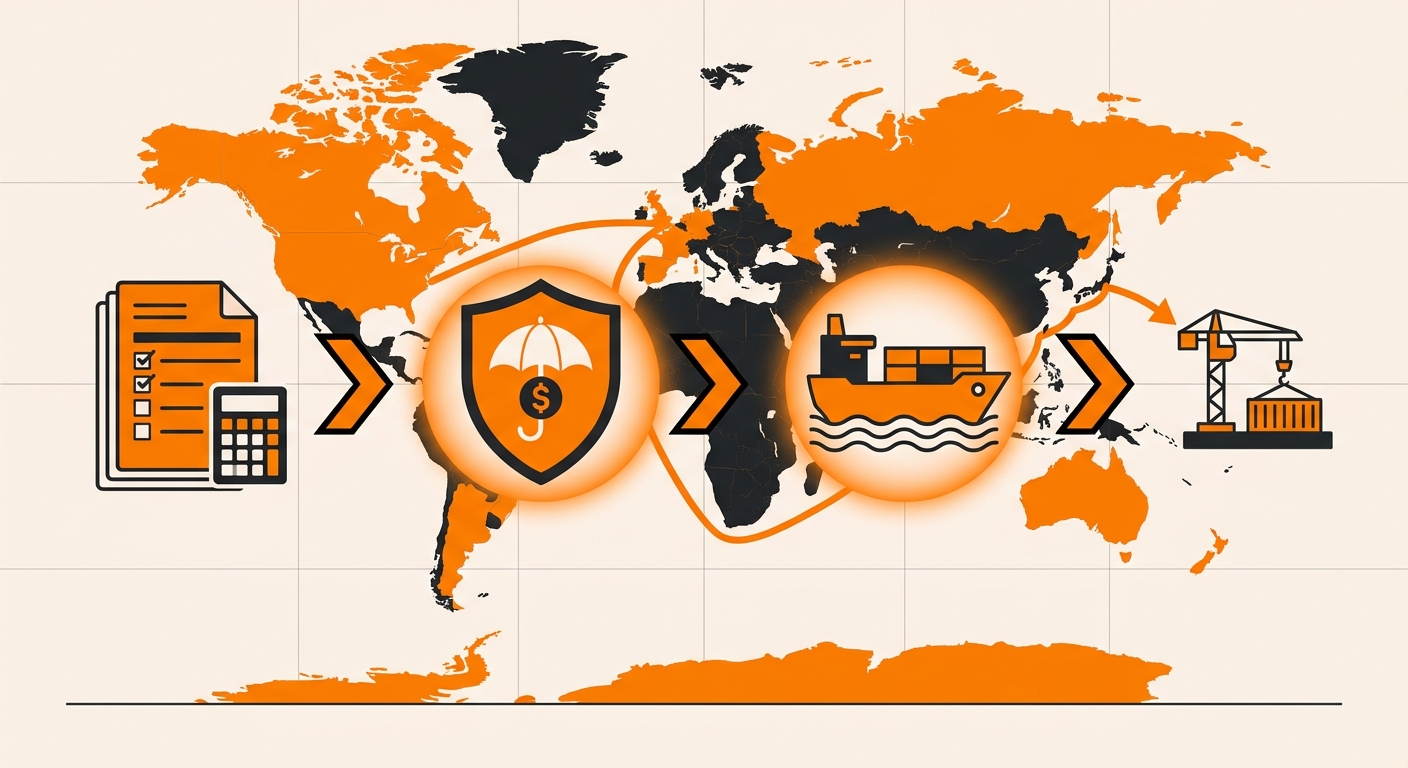
The seller’s obligations under CIF are specific:
-
Export packaging, loading, and origin-port handling fees
-
Ocean freight to the named destination port
-
Marine insurance at a minimum 110% of the cargo value under Institute Cargo Clauses (C)
Everything after the destination port is the buyer’s responsibility: import duties, unloading fees, customs clearance, and inland delivery. CIF also only applies to ocean and inland waterway transport.
For air, rail, or multimodal shipments, the equivalent term is CIP.
Key Components of a CIF Shipment
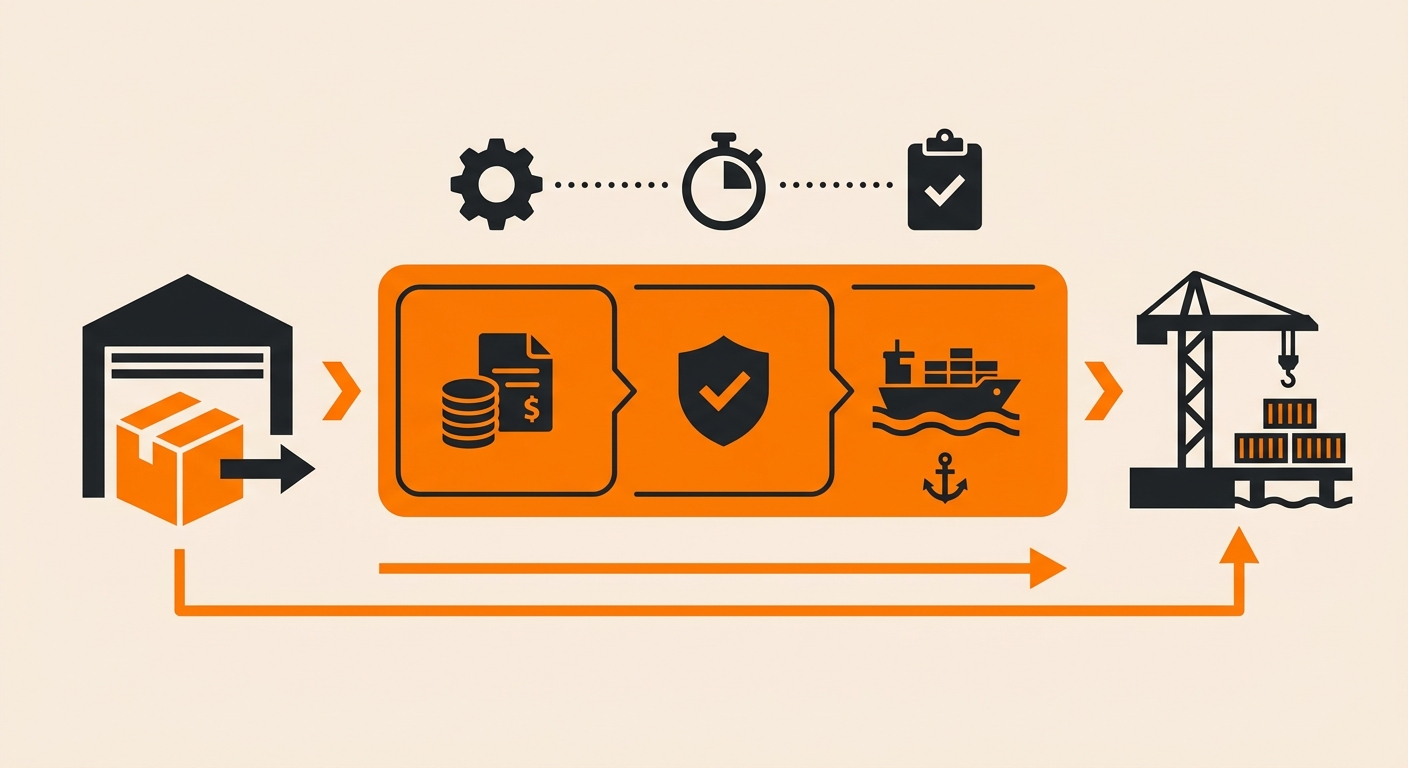
CIF bundles three distinct responsibilities into one term. Remove any one of them, and the arrangement becomes a different Incoterm entirely.
Cost covers all charges required to get goods to the named destination port: export duties, loading fees, and origin freight. This is the baseline that sets the buyer’s price.
Insurance must be arranged and paid by the seller, covering the buyer’s interest during the ocean leg. The minimum required under CIF is Institute Cargo Clauses (C), which covers only named perils, not all-risk protection.
Freight is the seller’s contracted carriage from the origin port to the named destination port. The seller books and pays the carrier, but risk transfers to the buyer the moment the goods cross the ship’s rail at origin.
How Risk and Cost Are Split Under CIF
The seller controls the freight contract and insurance policy, you have no say in carrier selection, routing, or coverage limits. That loss of control has a direct cost impact on your eCommerce fulfillment operations.
Risk transfers at the ship’s rail at the origin port. From that point, if cargo is damaged mid-ocean, you file the claim, even though the seller arranged the freight. This gap between who controls the contract and who bears the risk is where most CIF disputes happen.
For shipments requiring specialized handling, such as temperature-controlled fulfillment, the seller’s baseline insurance policy may not cover your actual exposure. Any gap becomes your problem at the dock.
Making CIF Work for Your Business
Understanding CIF terms is the first step to accurately calculating your landed cost. If you’re importing regularly and want better visibility into inbound freight before it hits your dock-to-stock timeline, a fulfillment partner with dedicated account management can flag delays before they affect your operations.