Quick answer: Intermodal shipping is a freight transportation method that uses two or more modes of transport, typically truck, rail, and ocean, to move goods in a single, standardized container without reloading the cargo between transfers. The container stays sealed throughout the journey, only the carrier changes.
How Intermodal Shipping Works
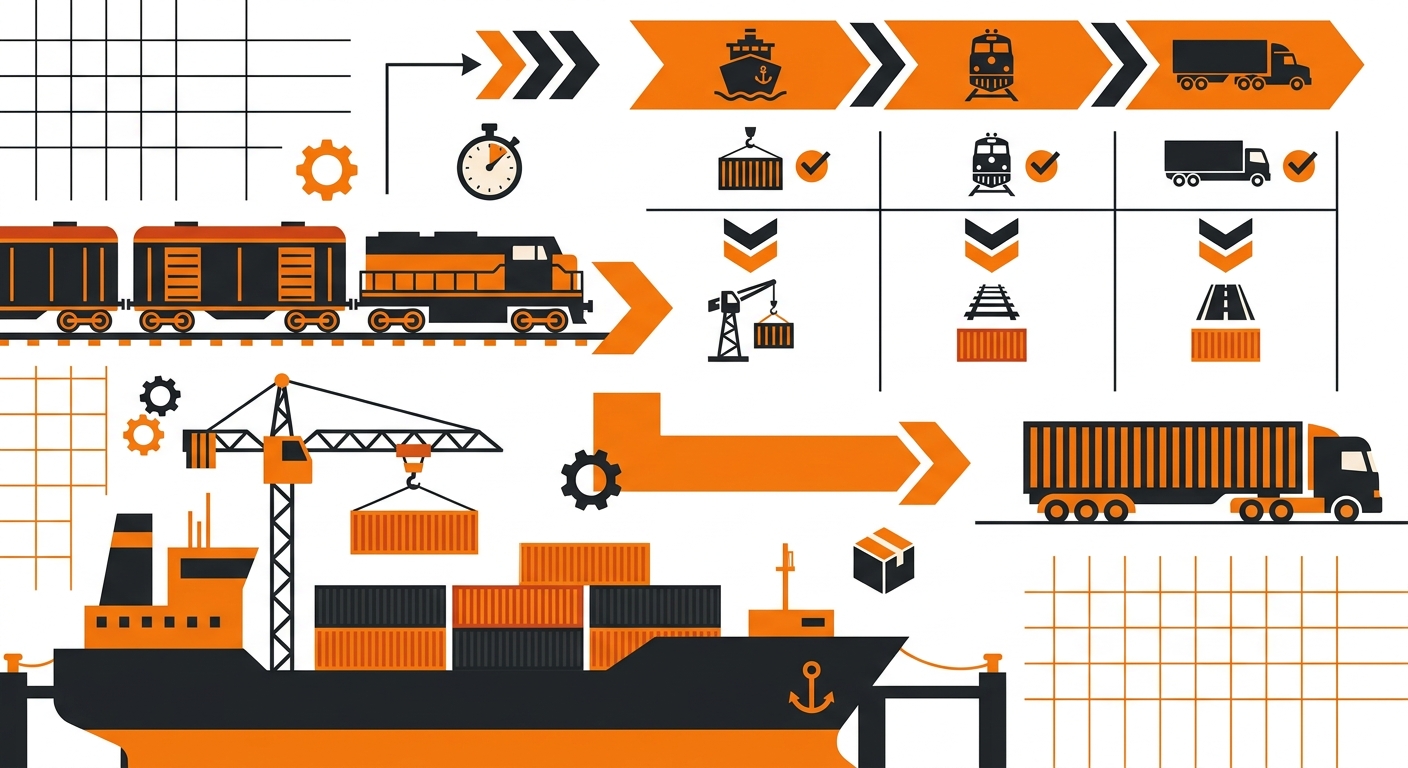
Intermodal freight moves in a standardized ISO container, typically 20ft, 40ft, or the 53ft domestic variant common on rail-to-truck moves, that transfers between modes without the cargo ever being reloaded. That single fact is what separates intermodal from traditional freight.
The sequence is straightforward: a drayage carrier handles the short truck leg from origin to the rail ramp or port, the railroad hauls the container over the long-distance corridor (often double-stacked, which is why rail moves a ton of freight roughly 480 miles per gallon), and a second drayage carrier completes the final-mile delivery to the warehouse or distribution center.
Booking data transfers electronically between carriers, a process that falls under carrier management, and the intermodal marketing company (IMC) or railroad at each handoff. This often works in tandem with consolidation in 3PL, where multiple smaller shipments are combined into a single container before the intermodal move begins.
How Intermodal Shipping Differs from Multimodal Shipping
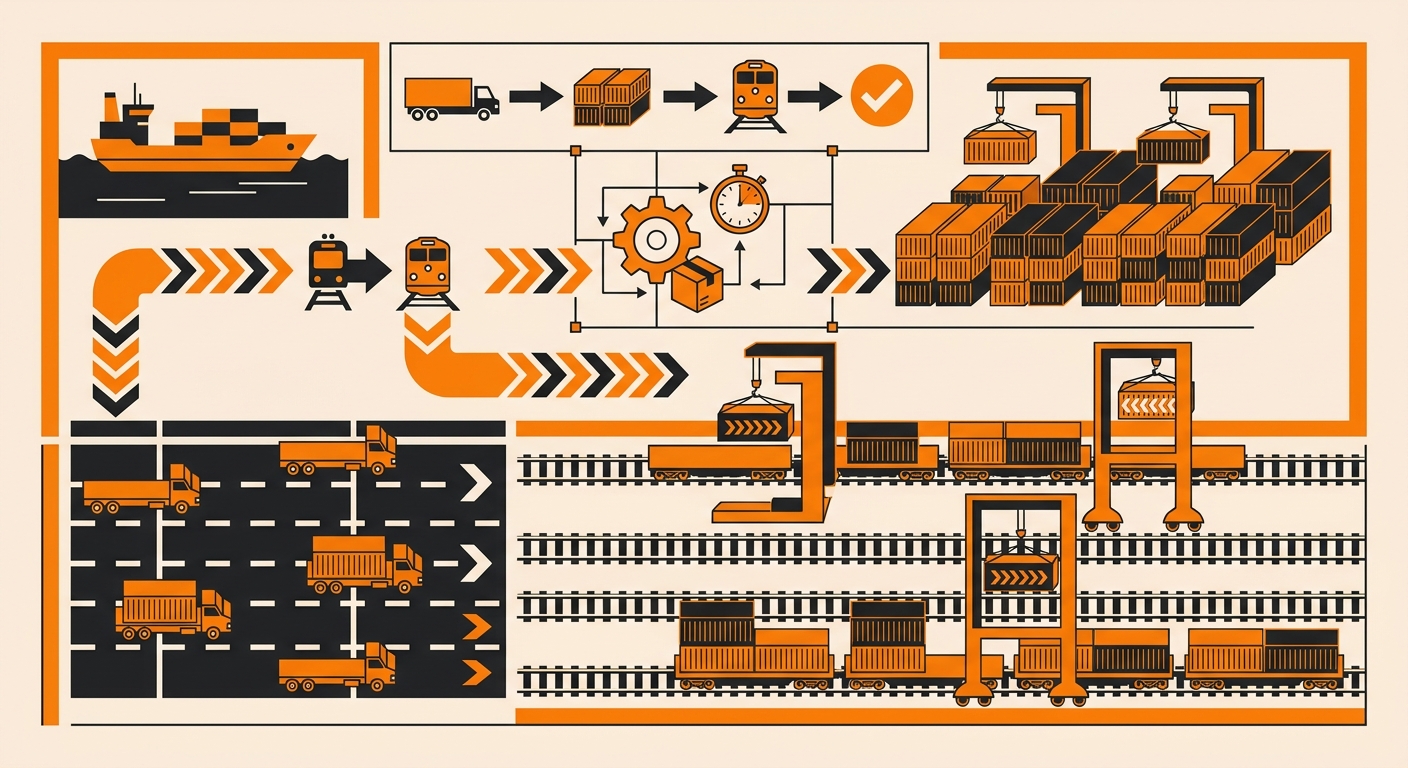
The terms are often used interchangeably, but there’s a meaningful distinction. In intermodal shipping, each carrier operates under its own contract and liability terms, the shipper or their freight broker coordinates the handoffs.
In multimodal shipping, a single carrier takes end-to-end responsibility under one contract, even if multiple transport modes are involved. Intermodal gives shippers more flexibility and often lower costs; multimodal offers simpler accountability.
Intermodal vs. Full Truckload (FTL): What’s the Difference?
For domestic freight, the more practical comparison is intermodal versus full truckload (FTL). A full truckload moves entirely by road: one truck, one driver, door to door. It’s faster and simpler, but significantly more expensive on long hauls.
Intermodal typically costs 10–20% less than FTL on corridors over 500 miles, because the rail leg replaces the most expensive part of the truck move. The tradeoff is transit time. Intermodal adds one to two days compared to a direct truck run, and terminal handoffs introduce more points where delays can occur.
For businesses moving non-perishable, non-urgent inventory in bulk, that cost difference compounds quickly across a full year of freight spend.
When Should a Business Consider Intermodal Shipping?
Intermodal makes the most sense when shipments are high-volume, non-urgent, and traveling long distances, typically over 500 miles domestically. It’s also the default for international freight where ocean transit is unavoidable.
Terminal location matters too, a 3PL or warehouse sitting 80 miles from the nearest intermodal ramp adds drayage cost and a day of transit that can quietly erode the savings.
It’s less suited for time-sensitive deliveries or smaller LTL (less-than-truckload) loads where the overhead of terminal handoffs outweighs the cost savings. Businesses with consistent, predictable freight lanes tend to benefit most.