Quick answer: Dunnage refers to any cushioning, padding, or void-fill material placed inside a shipping package to protect its contents from damage during transit. It prevents products from shifting, absorbing impact, and arriving at their destination in the condition they were packed.
It’s a small detail in the fulfillment process, but the wrong call here shows up directly in your damage rate and return volume.
Key Types of Dunnage Materials
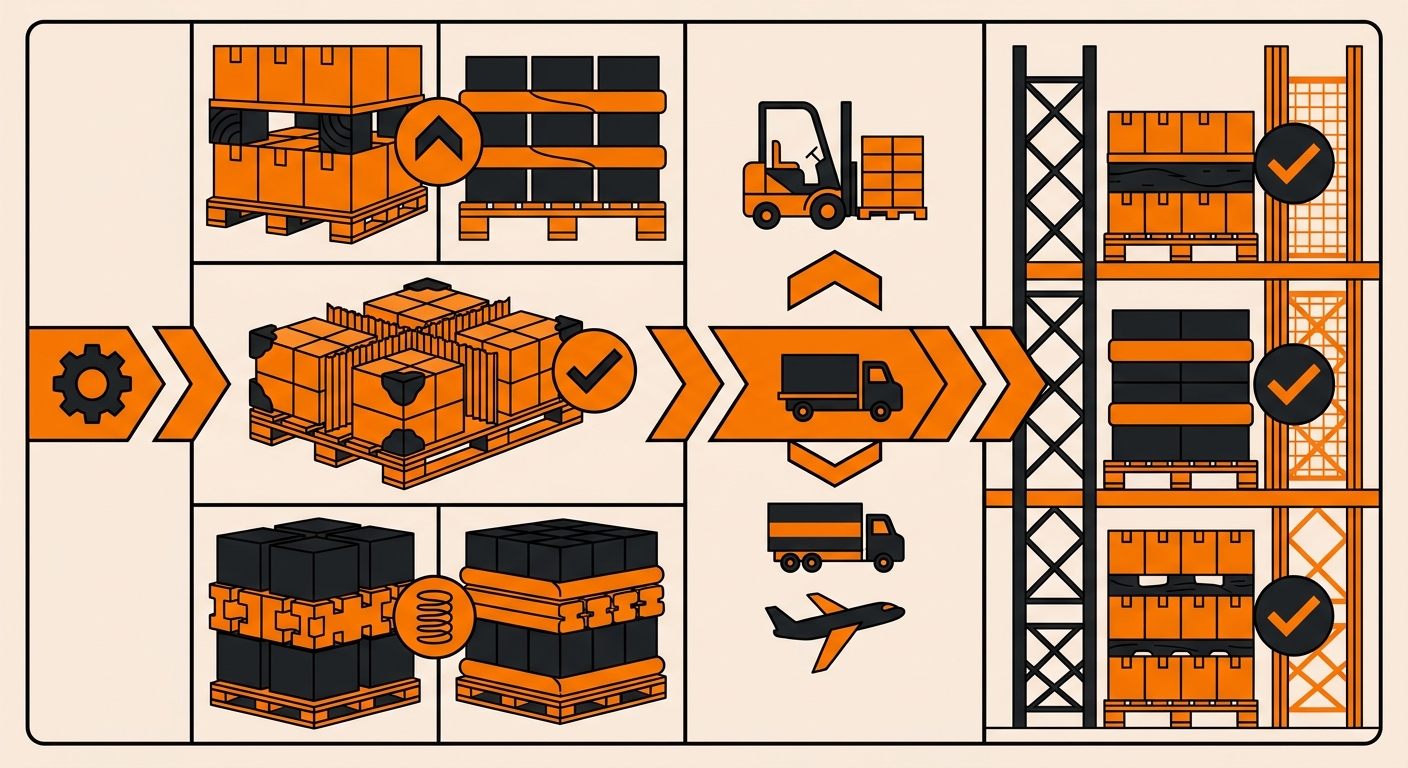
Not all dunnage serves the same purpose. The right material depends on the product’s fragility, weight, and the amount of void space needs to be filled.
Common types include:
-
Bubble wrap: ideal for fragile or surface-sensitive items, provides both cushioning and surface protection
-
Air pillows: lightweight void fill, best for filling empty space around non-fragile products
-
Foam packaging: cut-to-fit or molded foam used for high-value, irregularly shaped, or delicate items
-
Packing peanuts: loose fill that conforms around products, effective but less sustainable
-
Kraft paper: crumpled paper used as a flexible, eco-friendly void fill or wrapping layer
-
Corrugated inserts: structural dividers that separate and stabilize multiple items in one box
Each material has a different cost-per-unit, weight impact, and recyclability profile. All factors are worth weighing when selecting at scale.
How Dunnage Prevents Damage in Transit
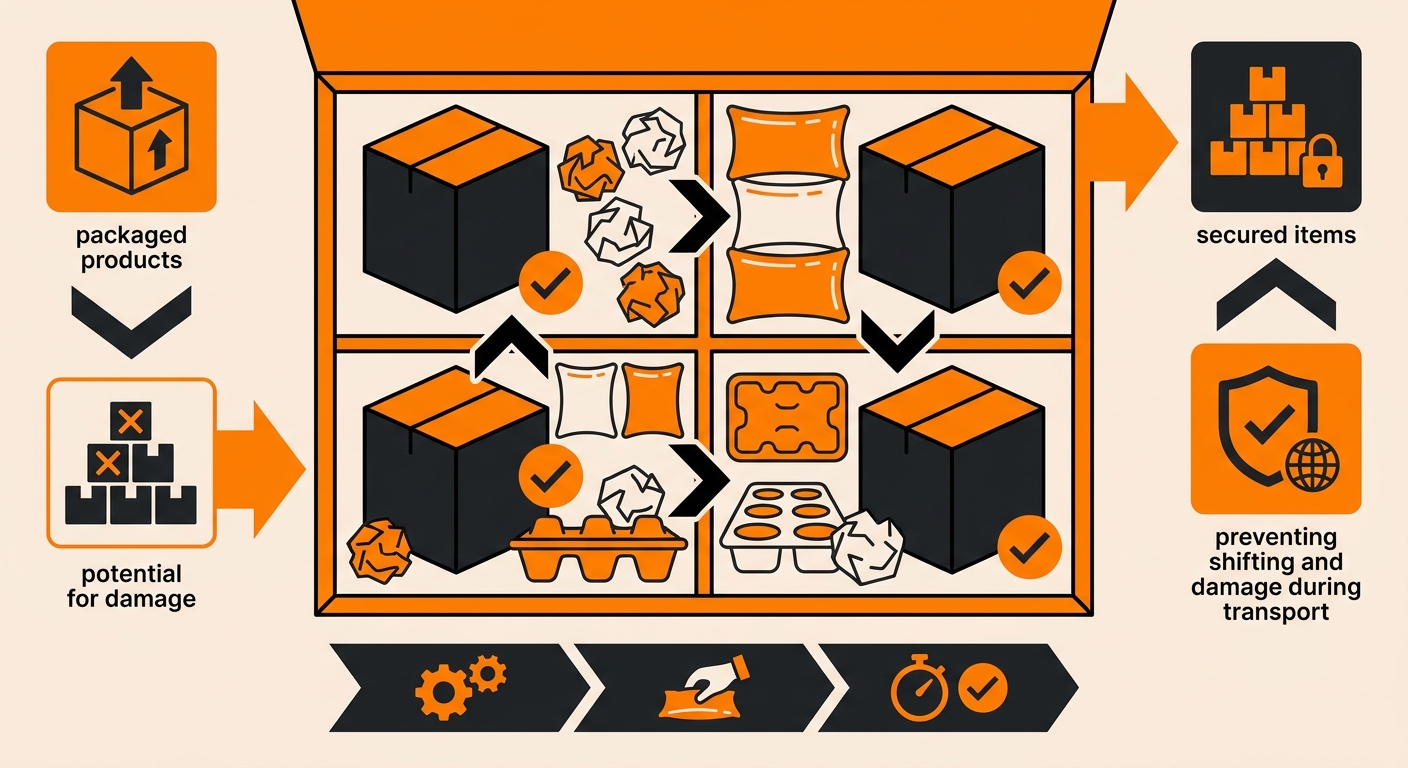
Packages face real stress during shipping: drops, compression, vibration, and stacking pressure. Dunnage addresses this by doing two things: absorbing impact energy and eliminating movement inside the box.
A product that can shift even a few centimeters inside its packaging is at risk. Proper dunnage closes that gap. It fills the void so the item stays positioned exactly as packed, regardless of what happens during pick and pack fulfillment or carrier handling.
For fragile goods, especially, the type and density of the dunnage needs to match the drop and compression risk of the shipping route.
When Should a Business Prioritize Dunnage?

Dunnage matters most when product value or fragility is high, but that’s not the only situation where it should be a deliberate choice.
It becomes critical when:
-
Products are fragile (glassware, electronics, cosmetics, supplements)
-
Multiple SKUs are packed together and could damage each other
-
Box dimensions don’t match product dimensions, leaving significant void space
-
Long-distance or international shipments are involved, where handling is less controlled
Businesses shipping via ecommerce fulfillment at volume also need to consider the cost-to-damage-rate tradeoff. Underpacking saves on materials but drives up returns, replacements, and negative reviews, all of which cost more than the dunnage itself.
Dunnage and Packaging Efficiency
Getting dunnage right is part of a broader packaging strategy. The goal isn’t to use as much protective material as possible; it’s to use the right amount. Overpacking increases dimensional weight, raises shipping costs, and creates unnecessary waste.
A well-optimized fulfillment operation matches box size to product size first, then selects dunnage that fills the remaining void without adding bulk. This keeps shipping costs predictable and reduces the environmental footprint of each shipment, something increasingly relevant for brands paying attention to sustainability.