Returns disposition is the process of evaluating each returned item and assigning it a specific outcome, such as reselling, refurbishing, liquidating, donating, or destroying the product. It’s a separate operational decision with its own cost structure, labor requirements, and direct line to gross margin.
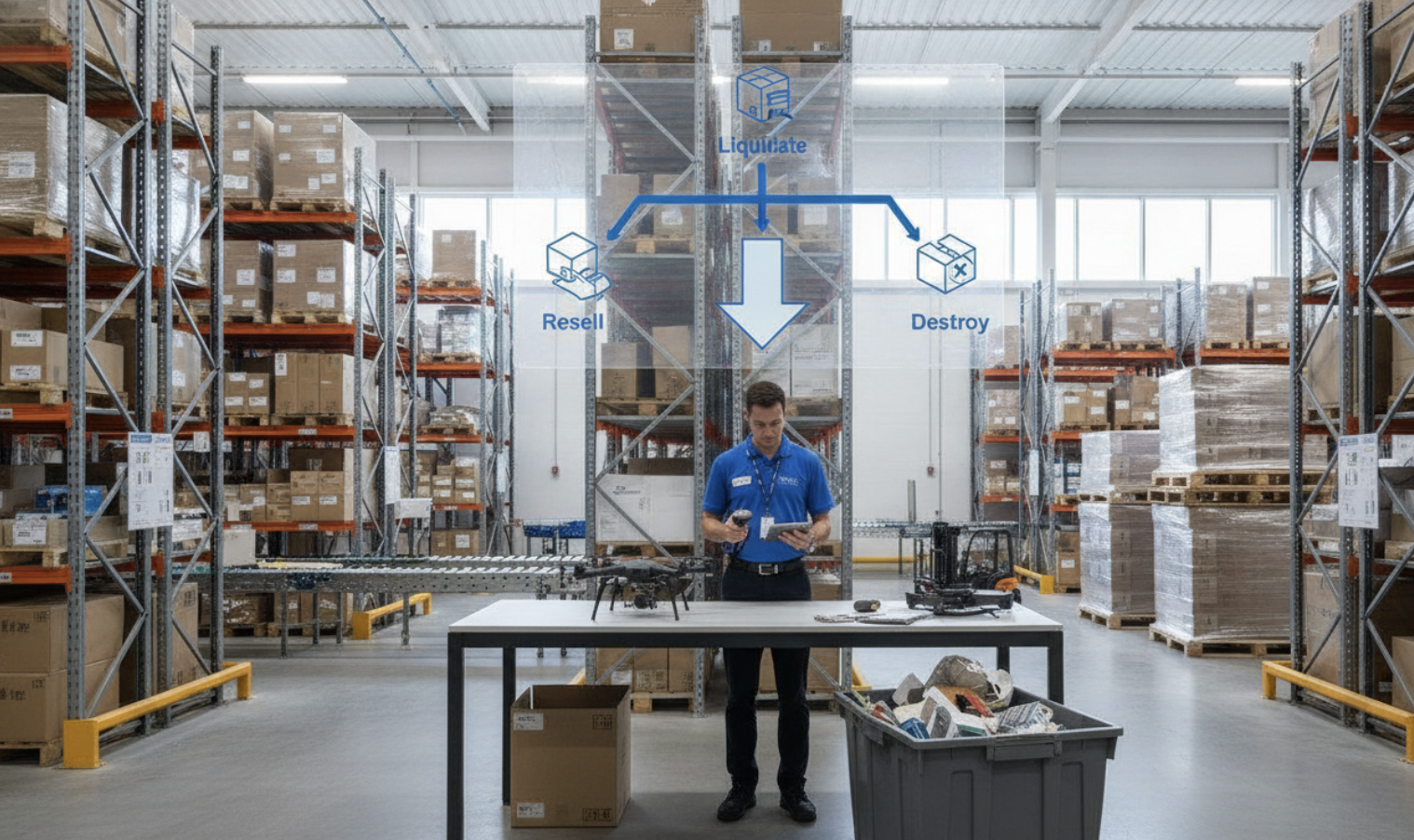
How Returns Disposition Works
Returns disposition is the process of deciding what happens to a product after a customer sends it back, whether it gets restocked, refurbished, liquidated, donated, or discarded. It’s a decision-making framework, not just a physical sorting task.
Warehouse managers and 3PL operators use it every time a return hits the receiving dock. For eCommerce brands, those decisions happen at scale: a brand processing 200 returns a week can’t afford to evaluate each item from scratch without a defined policy.
The term covers the full range of outcomes a returned item can take. Each path carries a different cost, recovery value, and timeline, and choosing the wrong one consistently will erode your margins faster than a high return rate alone ever would.
Resell vs Liquidate vs Destroy: Choosing the Right Disposition Path
Not every returned product should go back into inventory. The goal of returns disposition is to recover the highest possible value while minimizing handling costs.
Resell
Reselling is the most profitable outcome. Products that are unopened, undamaged, and meet quality standards can be returned to active inventory and sold at full price.
Common examples include:
-
Apparel returned in original packaging
-
Unused household goods
-
Electronics with unopened seals
The faster these items are inspected and restocked, the higher the recovery rate.
Liquidate
Liquidation is used when a product still has value but can no longer be sold as new.
Examples include:
-
Open-box items
-
Products with damaged packaging
-
Seasonal inventory returned after peak demand
These products are often sold through secondary marketplaces, liquidation partners, or bulk buyers. Recovery rates typically range from 5% to 40% of the original product value depending on category and condition.
Destroy
Destruction is the final option when a product cannot be safely or legally resold.
Common examples include:
-
Expired products
-
Opened supplements
-
Contaminated items
-
Severely damaged inventory
Although destruction generates no revenue, it can reduce legal, regulatory, and customer-service risks associated with reselling unsuitable products.
The disposition path you choose directly affects how much value you recover from returned inventory and how quickly products move back through the supply chain.
How Returns Disposition Affects Profit Recovery and Inventory Efficiency
Most eCommerce brands treat returned inventory as a cost center and stop there. That’s the wrong way to look at it. Dead capital recovery is the real story: brands that run a structured disposition process recover an average of 20-30% more resalable inventory than those handling returns ad hoc.
Consider what happens during post-holiday returns season. A brand receiving 500 units in January without a clear disposition workflow will typically hold that stock in limbo for 3-6 weeks.
Every week those units sit unprocessed is a week they can’t be relisted, kitted into a new bundle, or liquidated for partial recovery.
-
Unprocessed returns inflate your on-hand count without adding sellable inventory
-
Delayed dock-to-stock cycles extend customer refund timelines, driving support volume
-
No disposition logic means your 3PL fulfillment team makes judgment calls without brand guardrails
-
Structured returns management services help enforce consistent disposition rules, reducing errors and improving inventory recovery rates
A dedicated account manager who knows your product catalog can cut that limbo window significantly, often from weeks to days.
How Returns Disposition Works
Returns disposition works in the following order:
Physical receipt and logging
When a return arrives at the warehouse, a receiving team member scans the return merchandise authorization (RMA) barcode and logs the item into the warehouse management system (WMS). This creates a timestamped record that ties the returned unit back to the original order in the order management system (OMS).
Condition inspection and grading
A trained inspector examines the item against a predefined grading rubric, typically categorized as new/unopened, like-new, damaged, or unsellable. The grade assigned at this stage directly controls which disposition path the WMS routes the item to next.
Disposition routing
Based on the grade, the WMS applies your pre-configured rules: restock to active inventory, transfer to a liquidation bin, flag for refurbishment, or queue for destruction. Most 3PLs process this routing decision within 24-48 hours of receipt.
Inventory update and customer credit
Once routed, the WMS syncs updated stock counts back to your eCommerce platform and triggers any refund or exchange workflow in the OMS. This hand-off is where delays most commonly occur if the WMS and OMS aren’t configured to communicate in real time.
Need Help Managing Returns?
Understanding returns disposition is one thing; executing it requires physical infrastructure, trained staff, and real-time inventory visibility that most in-house operations don’t have at scale.
Fulfyld handles the full returns cycle: receiving, inspection, grading, restocking, and disposal routing. Your team doesn’t manage the warehouse floor or write disposition rules from scratch.
Talk to a Fulfyld fulfillment specialist about what a managed returns program would look like for your product type and volume.