ETD stands for Estimated Time of Departure. It’s the projected date and time a shipment is scheduled to leave its origin point, whether that’s a port, warehouse, or freight terminal. It’s not a confirmed departure; it’s a carrier’s best forecast based on current conditions.
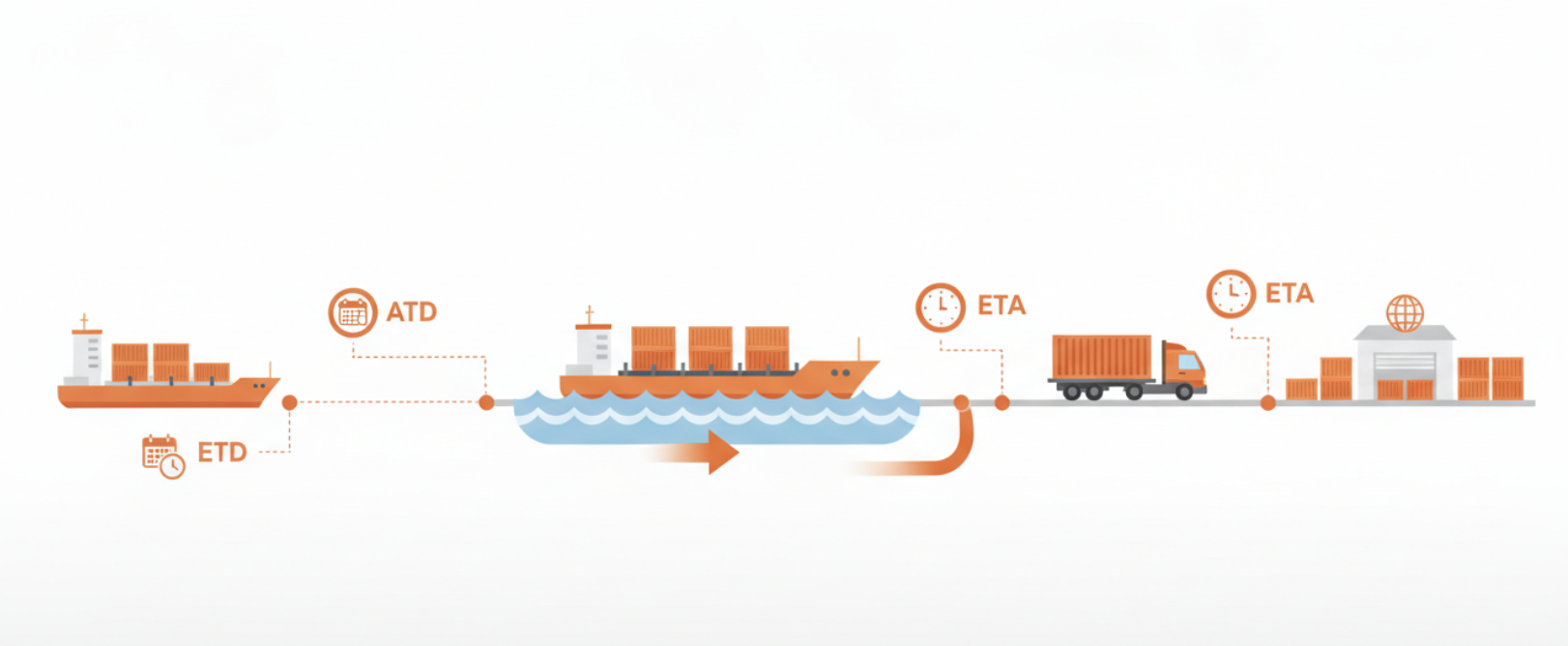
What ETD Means in 3PL and eCommerce
In 3PL and eCommerce, ETD refers to the scheduled departure time of a shipment from its origin point.
Freight forwarders, 3PL operators, and eCommerce brands rely on ETD to coordinate inbound inventory, warehouse receiving windows, and downstream fulfillment schedules.
A shipment leaving Shanghai with an ETD of June 15 tells your warehouse team when to expect goods, so they can staff receiving, pre-allocate bin locations, and avoid backorders.
ETD works alongside ETA (Estimated Time of Arrival). Neither figure is fixed. Port congestion, customs holds, and carrier schedule changes can shift either date by days or weeks.
Why ETD Matters for Fulfillment Operations
An inaccurate Estimated Time of Departure (ETD) doesn’t just disrupt transportation planning; it creates ripple effects across inventory management, warehouse scheduling, and customer fulfillment operations.
When your 3PL fulfillment team doesn’t know when inbound freight is arriving, dock-to-stock timelines slip, pick-and-pack schedules fall apart, and kitting jobs get delayed waiting on components that were supposed to land two days ago.
The downstream cost is measurable. Better shipment visibility and more accurate ETD updates can help reduce customer service inquiries by setting realistic expectations around inventory availability and order fulfillment.
During peak seasons, even a 24-hour ETD delay on a high-demand SKU can leave orders unfulfilled while inventory remains in transit.
How ETD Works in 3PL Operations
Here is how ETD works:
-
Shipment booking is confirmed. Once a shipper secures space with a carrier, the carrier assigns a scheduled vessel, flight, rail service, or truck departure.
-
The carrier publishes an ETD. This Estimated Time of Departure becomes the planned date and time the shipment is expected to leave the origin location.
-
Operational factors are monitored. Port congestion, weather disruptions, customs inspections, equipment shortages, labor strikes, or missed cutoffs can delay departure.
-
ETD updates are communicated. If schedules change, carriers, freight forwarders, and transportation management systems update the ETD and notify relevant stakeholders.
-
Actual departure generates an ATD. Once the shipment physically leaves the origin, the ETD is replaced by an Actual Time of Departure (ATD), which becomes the reference point for calculating arrival expectations.
Key Components of ETD
An estimated time of departure isn’t a single data point; it’s the output of four interdependent inputs. If any one of them is missing or unreliable, the ETD your carrier quotes you is essentially a guess.
Carrier Schedule
The carrier’s published departure schedule sets the baseline window. Ocean freight carriers, for example, operate on fixed weekly rotations; if you miss the Friday cutoff, your ETD shifts by seven days automatically.
Port Cutoff Time
The cargo cutoff is the deadline by which your shipment must be physically at the terminal. Carriers typically set this 24-48 hours before the scheduled vessel departure.
Documentation Readiness
Customs and export paperwork must clear before departure. A single missing certificate of origin can push your ETD by days, regardless of where the freight physically sits.
Booking Confirmation
Without a confirmed space allocation from the carrier, an ETD is provisional. Overbooking is common on high-demand lanes, and unconfirmed cargo gets rolled to the next available departure.
Need Better Shipment Visibility and Fulfillment Coordination?
Understanding ETD helps businesses plan inventory, coordinate warehouse receiving schedules, and manage customer expectations more effectively.
The more visibility you have into shipment departures and transit milestones, the easier it becomes to avoid stockouts, reduce operational disruptions, and keep orders moving on schedule.
If you’re looking for a fulfillment partner that provides real-time shipment visibility, inventory management, and end-to-end logistics support, Fulfyld can help streamline your supply chain and keep your operations running efficiently from inbound receiving to final delivery.