A free shipping threshold is the minimum order value a customer must reach to qualify for free shipping. Instead of offering free shipping on every purchase, retailers require shoppers to spend a specific amount before the shipping fee is waived.
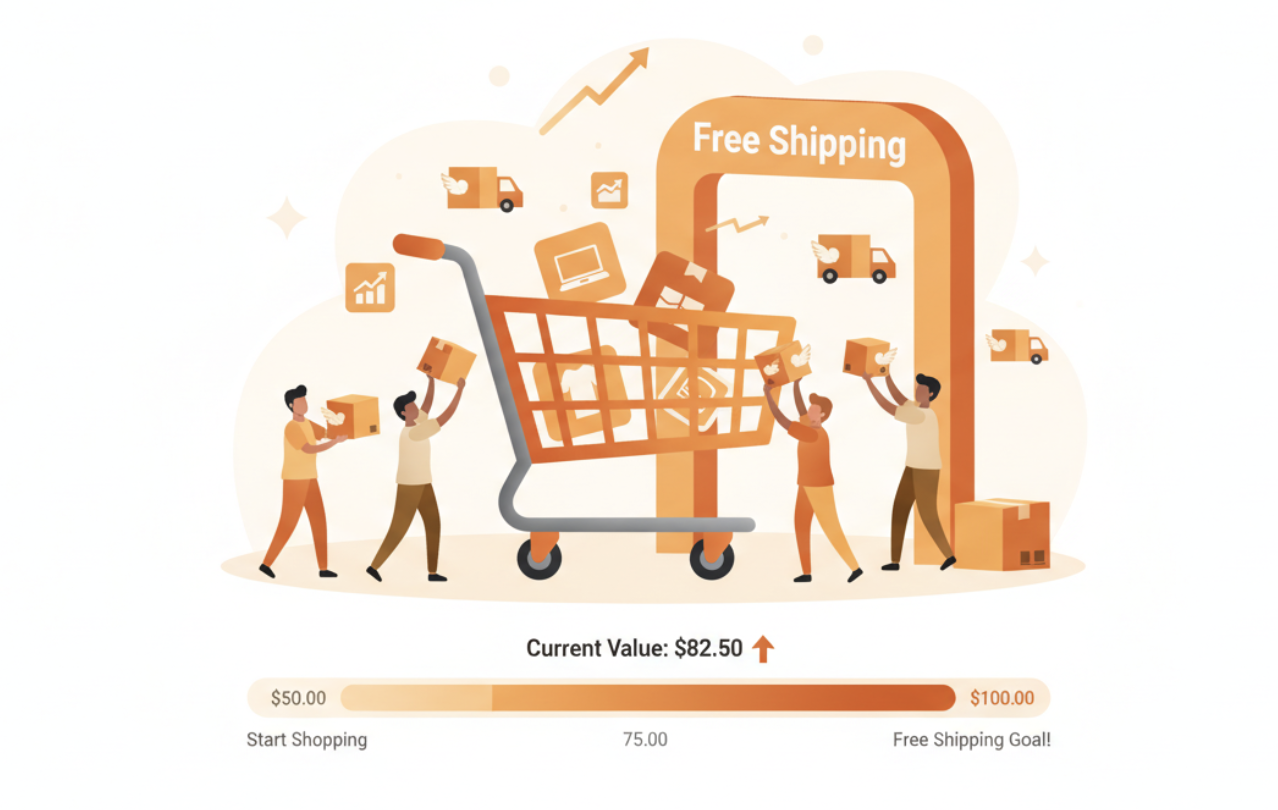
Businesses use free shipping thresholds to encourage larger orders, increase average order value (AOV), and help offset fulfillment and carrier costs.
What Is a Free Shipping Threshold?
A free shipping threshold is the minimum order value a customer must reach before a retailer covers the shipping cost. A common example is, “Spend $50 and get free shipping.”
eCommerce brands, DTC operators, and subscription box companies use free shipping thresholds to increase average order value (AOV) while keeping fulfillment costs under control. Instead of offering free shipping on every order, they encourage customers to add more items to their cart before qualifying.
The threshold is more than a promotional offer. It is a profitability tool that influences purchasing behavior, helps recover shipping expenses, and improves revenue per order.
The AOV Math Behind Free Shipping Thresholds
A free shipping threshold only works when it increases revenue enough to offset the shipping cost you’re absorbing.
For example, assume your current average order value is $50, and your average shipping cost is $8 per order. If you set a free shipping threshold at $65, customers who want free shipping must add another $15 worth of products to their cart.
In this scenario, the additional revenue generated from larger orders can help cover the shipping expense while improving overall profitability. The shipping cost remains the same, but it becomes a smaller percentage of total revenue.
This is why many eCommerce brands set their threshold approximately 20-30% above their current AOV. The target feels achievable for shoppers while still increasing basket size enough to justify the offer.
How a Free Shipping Threshold Works
A free shipping threshold works in the following way:
Cart value calculation triggers the check
When a customer adds items to their cart, the store’s order management system (OMS) continuously tracks the running subtotal. The threshold logic fires when that subtotal crosses the minimum you’ve set, typically pre-discount, pre-tax, though your configuration determines which value counts.
Shipping rate rules evaluate eligibility
Your eCommerce platform’s shipping rate engine (Shopify’s “Shipping Rates,” WooCommerce’s “Shipping Zones,” or a third-party rate manager) holds the conditional rule: if cart subtotal meets or exceeds the threshold, the free shipping rate replaces standard carrier rates in the checkout options presented to the customer.
The fulfillment side sees no difference
Once an order passes checkout, your 3PL or warehouse management system (WMS) receives a standard pick-and-pack instruction. The free shipping designation only affects which carrier service level gets selected; your WMS still routes the order through normal processing.
Carrier cost gets absorbed at billing
Your 3PL bills you the actual postage cost regardless of what the customer paid. At roughly $8–$12 average domestic ground cost per shipment, that absorption hits your margin directly, so threshold math isn’t optional.
Free Shipping Threshold Margin Trade-offs
Every free shipping threshold involves a balance between conversion rate and profitability.
A lower threshold makes it easier for customers to qualify for free shipping.
This can reduce cart abandonment and improve conversion rates, but it also increases the number of orders where the merchant absorbs shipping costs. If the threshold is too low, profit margins can shrink quickly.
A higher threshold protects margin because customers must spend more before qualifying.
It often increases average order value and helps offset fulfillment expenses. However, setting the threshold too high may discourage purchases if customers feel the target is unrealistic.
The most effective threshold sits between these extremes. It should be high enough to encourage larger carts while remaining attainable for a meaningful percentage of shoppers.
Set a Free Shipping Threshold That Protects Margins
Setting the right threshold only works if your fulfillment operation can support it. A well-priced threshold paired with inefficient fulfillment doesn’t protect profit; it delays the problem.
Fulfyld works with eCommerce brands, DTC operators, and subscription box companies to close that gap. Fulfillment cost per order is the first number Fulfyld helps clients nail down, because you can’t set a defensible threshold without knowing it precisely.
Talk to a specialist about free shipping thresholds and what your actual per-order costs should look like before you set one.