Quick answer: MFN, or Merchant Fulfilled Network, is Amazon’s designation for sellers who manage their own order fulfillment, storing inventory, packing orders, and shipping directly to customers, rather than routing stock through Amazon’s warehouses. It’s also commonly referred to as FBM (Fulfilled by Merchant), and the two terms are interchangeable in Amazon’s ecosystem.
How MFN Works in Practice
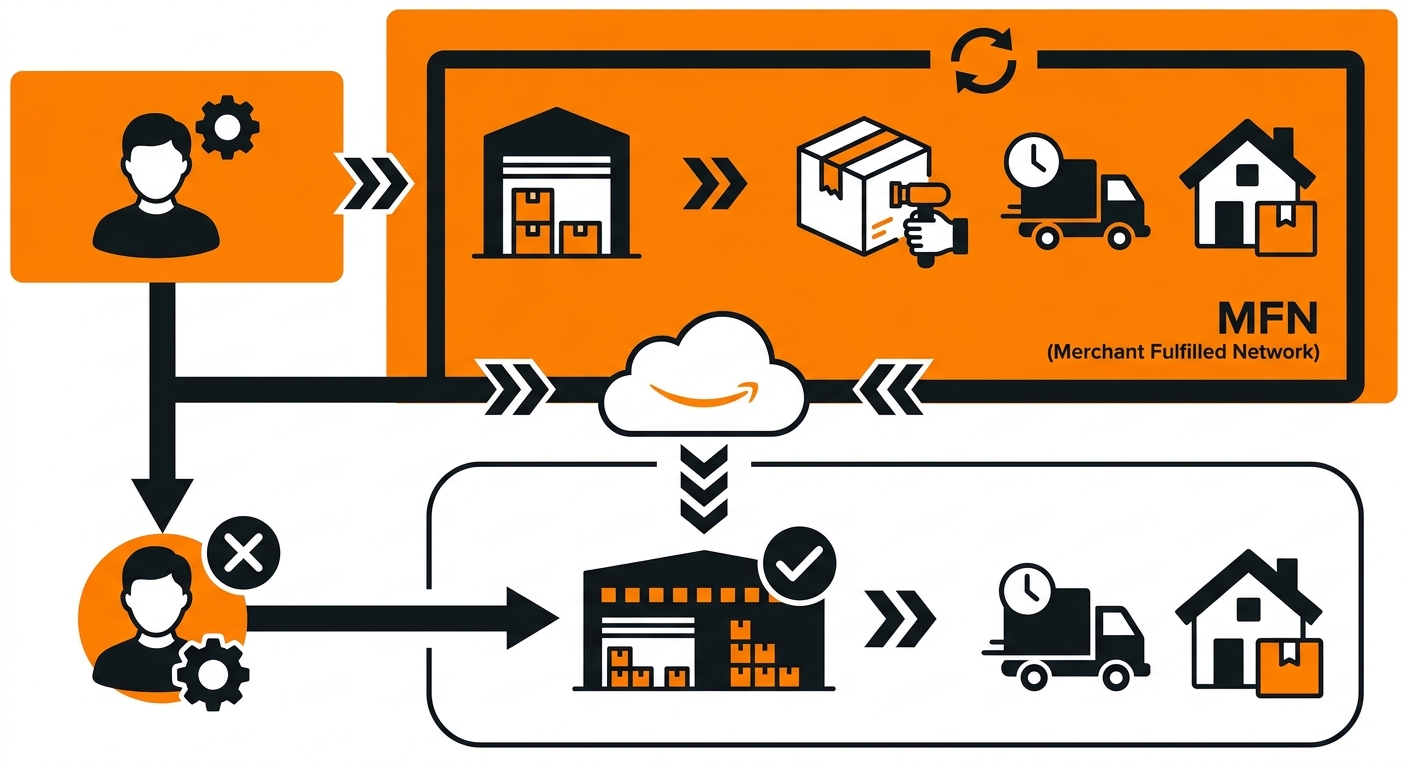
When a seller operates within the Merchant Fulfilled Network, they retain full control over the fulfillment process. Once an order is placed on Amazon, the seller is responsible for picking, packing, and dispatching the item within the promised handling window.
This applies to every stage after the customer clicks “buy”:
-
Inventory is stored at the seller’s own facility or through a third-party logistics provider
-
The seller generates a shipping label and coordinates with a carrier directly
-
Tracking information is uploaded to Amazon and passed along to the customer
MFN meaning in shipping is straightforward: the merchant owns the last mile not Amazon.
MFN vs. FBA: Key Differences

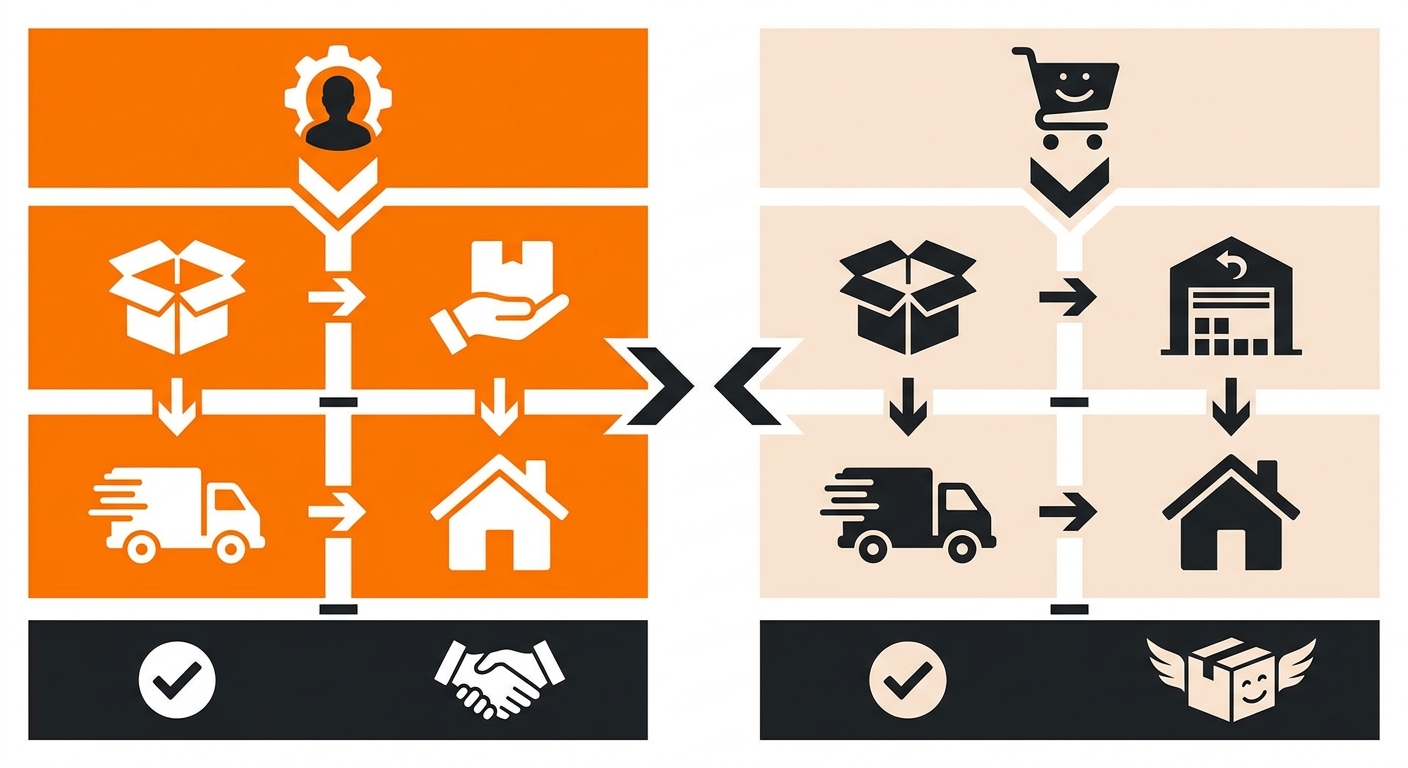
The main alternative to MFN on Amazon is FBA (Fulfilled by Amazon), where sellers send bulk inventory to Amazon fulfillment centers and Amazon handles picking, packing, and shipping on their behalf.
Here’s how the two models differ:
-
Inventory control: MFN sellers keep stock in their own warehouse or with a 3PL provider. FBA sellers ship inventory to Amazon upfront.
-
Fulfillment costs: MFN avoids FBA storage and fulfillment fees but requires the seller to absorb their own warehousing and shipping costs.
-
Prime eligibility: FBA listings are automatically Prime-eligible. MFN sellers need to qualify for Seller Fulfilled Prime separately.
-
Speed and control: MFN gives sellers more flexibility over packaging, inserts and shipping timelines.
Neither model is universally better, the right choice depends on product type, order volume, and fulfillment infrastructure.
When Does MFN Make Sense?
MFN is typically a better fit when sellers have products that are oversized, slow-moving, or require custom handling that Amazon’s standard fulfillment process doesn’t accommodate well. It also makes sense for sellers who already have a reliable eCommerce fulfillment operation in place and want to maintain brand control over the unboxing experience.
Sellers scaling across multiple channels, not just Amazon, often find MFN more practical than splitting inventory between their own warehouse and Amazon’s fulfillment centers. It simplifies inventory management and keeps fulfillment centralized.
That said, MFN requires operational discipline. Late shipment rates and order defect rates are tracked by Amazon, and poor performance can affect seller metrics and Buy Box eligibility.
MFN and 3PL Fulfillment
Many sellers operating under the MFN model choose to outsource fulfillment to a 3PL rather than managing it in-house. This allows them to keep the flexibility of merchant-fulfilled listings while offloading the operational complexity of warehousing and shipping.
When a 3PL handles MFN orders, they act as the seller’s fulfillment infrastructure: receiving inventory, processing Amazon orders, and shipping within the required handling window. The seller retains the MFN designation on Amazon, while the physical fulfillment work happens at the 3PL’s facility. For growing brands that want to stay off FBA without building their own warehouse operation, this is a practical middle ground.