Quick answer: FCA (Free Carrier) is an Incoterm that defines where a seller’s delivery responsibility ends and where risk transfers to the buyer.
What FCA Means in Shipping
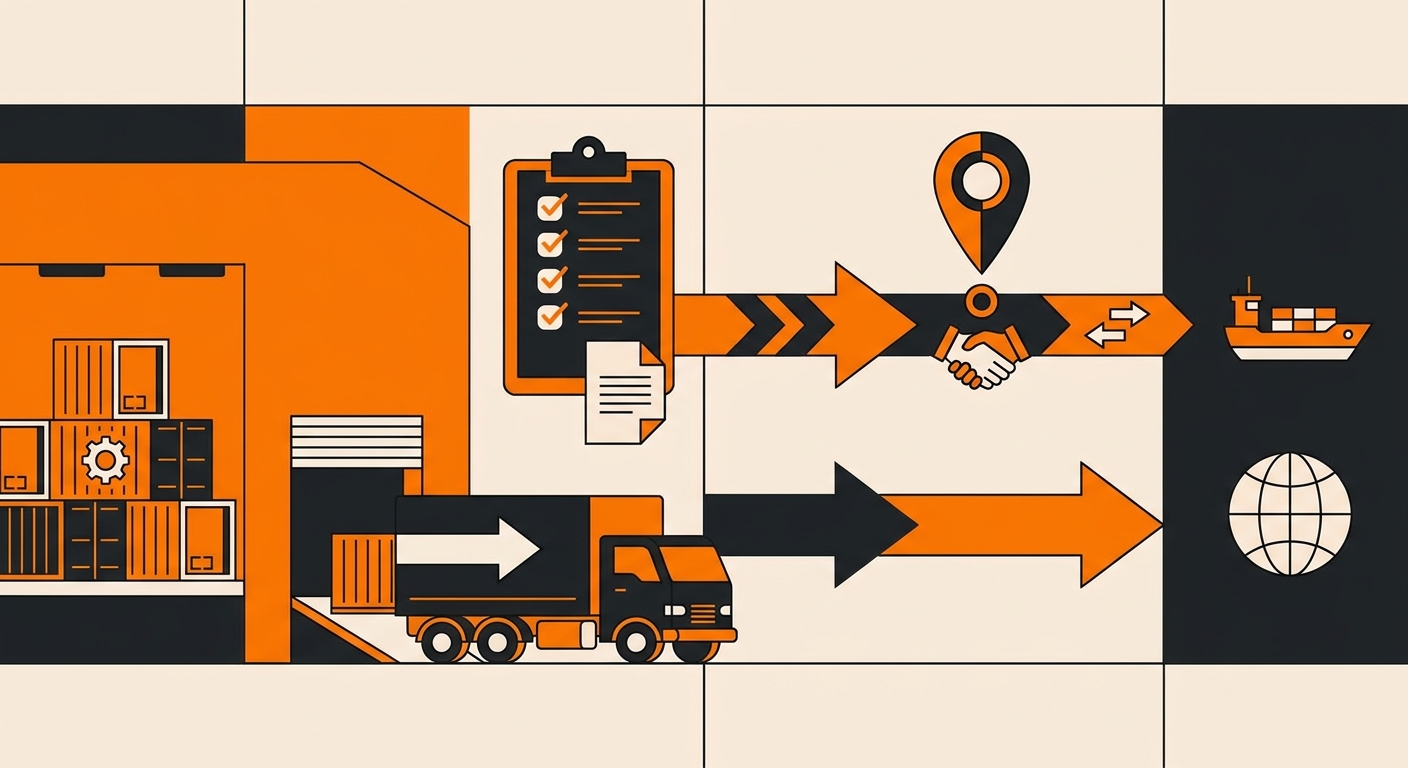
FCA (Free Carrier) is an Incoterm that requires the seller to deliver goods to a carrier or another party nominated by the buyer at a named location.
The seller is responsible for preparing the shipment, handling export clearance, and delivering the goods to the agreed handoff point. Once the carrier takes possession of the shipment, the risk transfers from the seller to the buyer.
The buyer then assumes responsibility for the main transportation, insurance (if desired), import procedures, and delivery to the final destination.
Because FCA can be used with air, ocean, rail, and road freight, it is one of the most flexible Incoterms for modern supply chains.
Named Place in FCA: Why It Matters
FCA always requires a clearly defined “named place” in the contract.
This location determines where the seller’s responsibility ends. It can be:
-
The seller’s warehouse
-
A freight terminal
-
An airport cargo facility
-
A shipping port
-
A rail yard
If the named place is unclear, disputes can arise about where delivery and risk transfer actually occur. For eCommerce brands, this is why FCA terms should always be matched with precise logistics instructions.
When FCA Risk Transfer Actually Happens
Risk under FCA transfers at the exact moment the seller hands the goods over to the buyer’s nominated carrier at the agreed location.
This point is critical because it is not always the same as physical loading or final departure. For example, if goods are delivered to a terminal, risk transfers once the carrier receives and accepts the shipment, not when the vessel sails.
From that moment onward, any loss, damage, or delay becomes the buyer’s responsibility.
FCA Example in eCommerce
A U.S. eCommerce brand purchases inventory from a supplier in China under FCA Shanghai terms.
The supplier prepares the goods, completes export clearance, and delivers the shipment to the buyer’s nominated carrier at the agreed location in Shanghai.
Once the carrier accepts the shipment, risk transfers to the buyer. The buyer’s freight forwarder then manages the remaining transportation and delivery to the 3PL warehouse.
Why FCA Works Well for 3PL Fulfillment Models
FCA aligns well with modern 3PL-driven supply chains because it cleanly separates sourcing from fulfillment.
Once goods are handed to the carrier, the shipment enters the buyer’s logistics network. From there, the freight forwarder and 3PL coordinate receiving, storage, and fulfillment operations.
This makes FCA a practical choice for brands that:
-
Import inventory in bulk
-
Store goods in a 3PL warehouse
-
Rely on freight forwarders for international movement
-
Want visibility and control over inbound logistics
FCA and Your 3PL: What to Align on Before Your Freight Ships
If you’re using a 3PL like Fulfyld as the destination for FCA freight, a few things are worth confirming before your first shipment:
Your freight forwarder needs the warehouse’s receiving address and any specific delivery appointment or dock requirements. Fulfyld receives freight at 511 6th St, Madison, AL 35756.
Confirm with your account manager whether your freight forwarder needs to schedule a delivery appointment for LTL or FTL shipments.
Your replenishment should be submitted before the freight departs the origin, not when it arrives at the warehouse. The replenishment ID and labeling requirements are needed before your supplier or freight forwarder ships the goods so that cartons and pallets can be labeled correctly at origin.
Your freight forwarder should have your expected delivery date so it can be entered into your replenishment accurately. If the arrival date changes in transit, update the replenishment so the warehouse can plan receiving accordingly.
Need Help Receiving FCA Shipments?
FCA is often preferred by eCommerce brands because it provides more control over freight while ensuring the supplier handles export clearance and delivery to the buyer’s nominated carrier.
For questions about receiving international freight at Fulfyld or coordinating inbound inventory shipments, reach out to the Fulfyld team today.