Quick answer: Cost Per Order (CPO) is the total cost a business incurs to fulfill a single customer order, including warehousing, picking and packing, shipping, and any associated handling fees. It is one of the most direct indicators of fulfillment efficiency.
How Cost Per Order Is Calculated
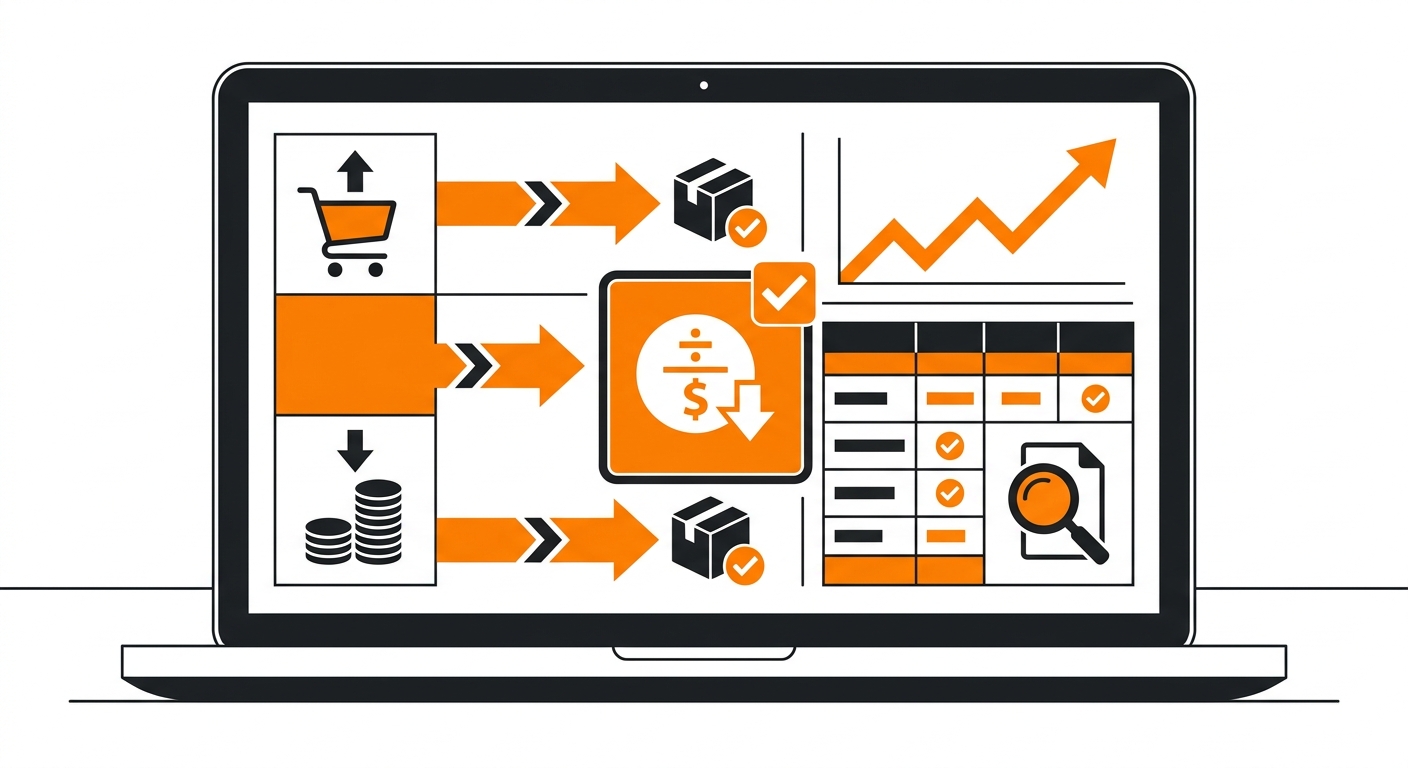
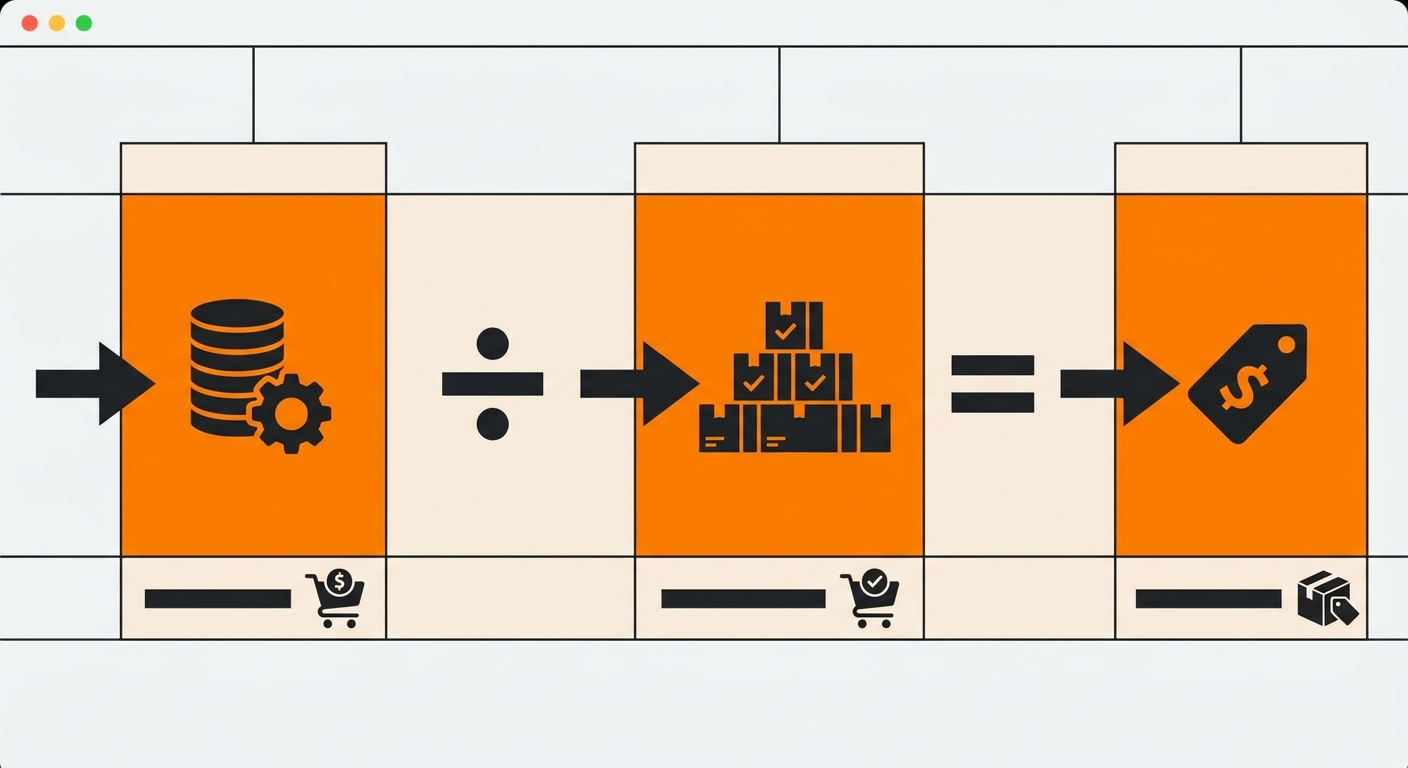
The formula is straightforward:
CPO = Total Fulfillment Costs ÷ Total Number of Orders
Total fulfillment costs typically include:
-
Warehousing and storage fees
-
Pick and pack labor
-
Packaging materials
-
Outbound shipping costs
-
Returns processing (if factored in)
For example, if a brand spends $50,000 in a month on fulfillment and ships 5,000 orders, the cost per order is $10.
What gets included in the calculation depends on how the business defines “fulfillment costs.” Some brands include only direct operational costs. Others fold in overhead, technology fees, or customer service related to orders.
Consistency matters more than which method you choose, as long as you apply the same definition every period, the metric remains useful for tracking trends.
What Affects Cost Per Order
CPO doesn’t exist in a vacuum. Several factors can push it up or pull it down, and understanding them is key to improving the number.
Order volume

Order volume is the most significant lever. Higher volume spreads fixed costs, like warehousing and software, across more orders, lowering the average. This is why fastgrowing brands often see their CPO improve naturally as they scale, even without changing operations.
Product characteristics
Lightweight, uniformly sized products are cheaper to store, pick, and ship than heavy, fragile, or oversized items. Brands with complex SKU catalogs or kitting requirements typically see a higher CPO than those selling simple, standardized products.
Shipping zones and carrier rates
They directly affect the shipping portion of CPO. Brands fulfilling from a single location on one side of the country pay more to reach customers on the other. Distributed fulfillment,splitting inventory across multiple fulfillment centers, can reduce average shipping distances and lower CPO meaningfully.
Returns volume
If a brand processes a high volume of returns through its reverse logistics operation, those costs eventually factor into the overall fulfillment picture.
Cost Per Order Benchmarks
There’s no universal “good” CPO because it varies significantly by industry, product type, average order value (AOV), and fulfillment model. That said, general benchmarks offer a useful starting point.
For eCommerce brands using a 3PL, a CPO in the $5–$15 range is common for standard, lightweight consumer goods. Brands with heavier products, complex packaging, or low order volume often see CPOs of $20–$40 or higher.
The more meaningful benchmark is internal: track your CPO month-over-month and measure it against your AOV. A CPO that represents more than 15–20% of AOV is typically a signal that fulfillment costs are compressing margins more than they should.
Using Cost Per Order to Make Smarter Fulfillment Decisions
CPO is most useful as a diagnostic tool. A rising CPO without a corresponding rise in order volume points to inefficiency, whether that’s in the pick-and-pack process, carrier rates or packaging costs. A declining CPO alongside stable or growing order quality is a sign that operations are scaling well.
Brands that monitor CPO alongside order accuracy rates and fulfillment speed get a more complete picture of operational health. Cost efficiency alone doesn’t account for the customer experience side of fulfillment performance.