

Zone skipping is a shipping strategy where you move a large batch of orders closer to their final destinations before injecting them into the carrier network, bypassing the intermediate shipping zones those orders would otherwise travel through.
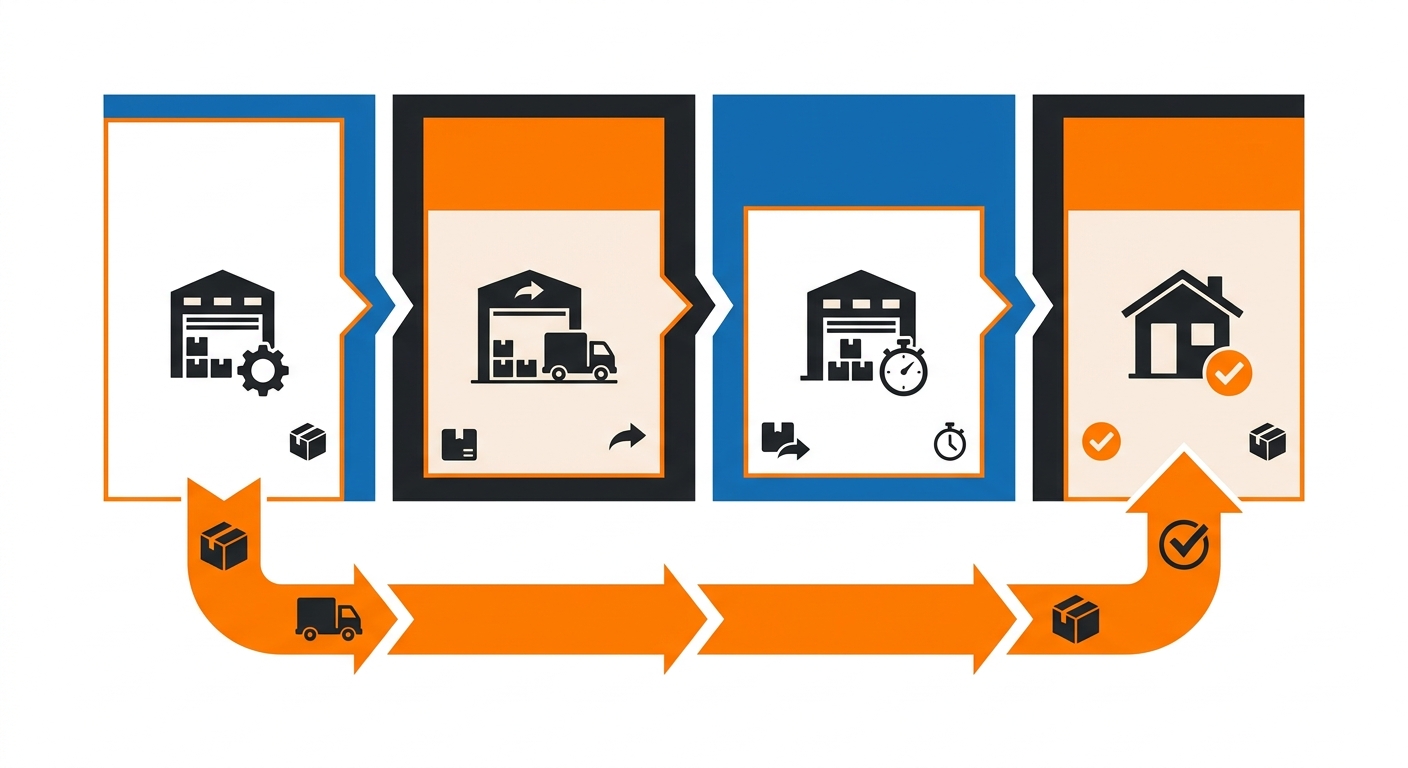
What Zone Skipping Means in Plain Terms
Instead of every package originating from a single warehouse and crossing five or six carrier zones to reach customers, you consolidate those orders into a freight load, transport that load to a regional hub near your customers, and hand off to the carrier for last-mile delivery from there.
3PL operators and high-volume eCommerce brands use it when order density in a specific region is high enough to make the freight leg cheaper than the per-package zone surcharges.
Why Zone Skipping Matters for Your Bottom Line
For high-volume eCommerce brands, the biggest leak in the budget isn’t marketing; it’s shipping cost.
By injecting freight closer to its final destination, you’re cutting out the carrier handling charges that stack up with every single zone crossed. It’s why brands shipping 500+ parcels a day from Los Angeles to New York see per-unit costs drop 20–40% on long-haul lanes when they consolidate into zone-skipped loads.
The impact doesn’t stop at postage. Fewer carrier touchpoints means fewer scan events where packages get misrouted or damaged. WISMO (“Where is my order?”) contacts drop in direct proportion to transit time reduction; customers aren’t watching a package sit in a hub for two days mid-journey.
Peak season is where this compounds the most. During Black Friday through Cyber Monday, carrier networks saturate quickly, and zone-skipped shipments already positioned in regional injection points avoid the worst congestion.
How Zone Skipping Works
-
Carrier origin sort: Instead of tendering individual parcels to a regional carrier hub, your 3PL consolidates all orders destined for a specific geographic band into a single trailer load. The consolidation happens at the origin warehouse before any carrier touches the freight.
-
Line-haul transport: The consolidated load moves via truckload or LTL directly to a destination carrier facility inside that target zone. Your 3PL either owns the line-haul capacity or contracts it through a freight broker, bypassing two to four intermediate sortation hubs the carrier would otherwise route through.
-
Carrier injection: At the destination facility, the carrier accepts the pre-sorted pallet and injects it directly into local last-mile delivery. Because the packages arrive pre-sorted by delivery route, the carrier skips its own sortation step.
-
Last-mile delivery: The carrier delivers from its local facility exactly as it would any standard parcel, with no change to the customer-facing experience. Transit time typically drops by one to two days compared to origin-tendered shipments traveling the full carrier network.
Key Components of Zone Skipping
Origin Consolidation Point
The origin consolidation point is where individual orders or pallets from a single shipper get aggregated before the long-haul move. Without a reliable consolidation facility, you can’t build the volume needed to justify a full truckload or LTL line-haul to a distant region.
Long-Haul Carrier Agreement
A long-haul carrier agreement governs the trunk move from origin to the destination region. This is typically a contracted truckload or intermodal rate, not a spot quote. The savings only materialize when that rate is locked below what the parcel carrier would charge across multiple zones.
Destination Injection Facility
The destination injection facility is the regional sortation hub or carrier facility where freight is handed off for last-mile delivery. Its proximity to your customer base directly determines how many shipping zones get bypassed.
Last-Mile Carrier Integration
Once freight reaches the injection point, a last-mile carrier (a regional carrier or USPS workshare partner) takes over. Coordinating handoff timing, label formats, and tracking data between your 3PL and that carrier is what keeps delivery SLAs intact.
Best Practices for Zone-skipping Execution
-
Audit your order origin data by ZIP code quarterly to confirm volume thresholds still justify bypassing regional sortation.
-
Negotiate minimum volume commitments with your carrier before locking in a zone-skipping lane, most carriers require 250-500 packages per injection point per week to hold rate guarantees.
-
Avoid mixing freight classes on a single injection pallet; mismatched dimensional weights trigger manual re-sorts that erase transit-time gains.
-
Confirm your WMS can generate carrier-compliant labels at the destination SCF, not the origin facility, before your first injection run.
-
Set a 30-day review trigger after launching any new injection lane to catch zone-calculation errors before they compound across thousands of shipments.
-
Avoid scheduling injections during carrier peak windows (November through January) without a confirmed overflow handling agreement in writing.
Ready to Reduce Parcel Shipping Costs?
Zone skipping only works when your fulfillment network, carrier relationships, and regional injection strategy are aligned correctly. Fulfyld helps eCommerce brands consolidate shipments, optimize regional routing, and reduce long-haul parcel costs without sacrificing delivery speed.
Talk to a Fulfyld specialist about building a zone-skipping strategy that fits your order volume and shipping footprint.