

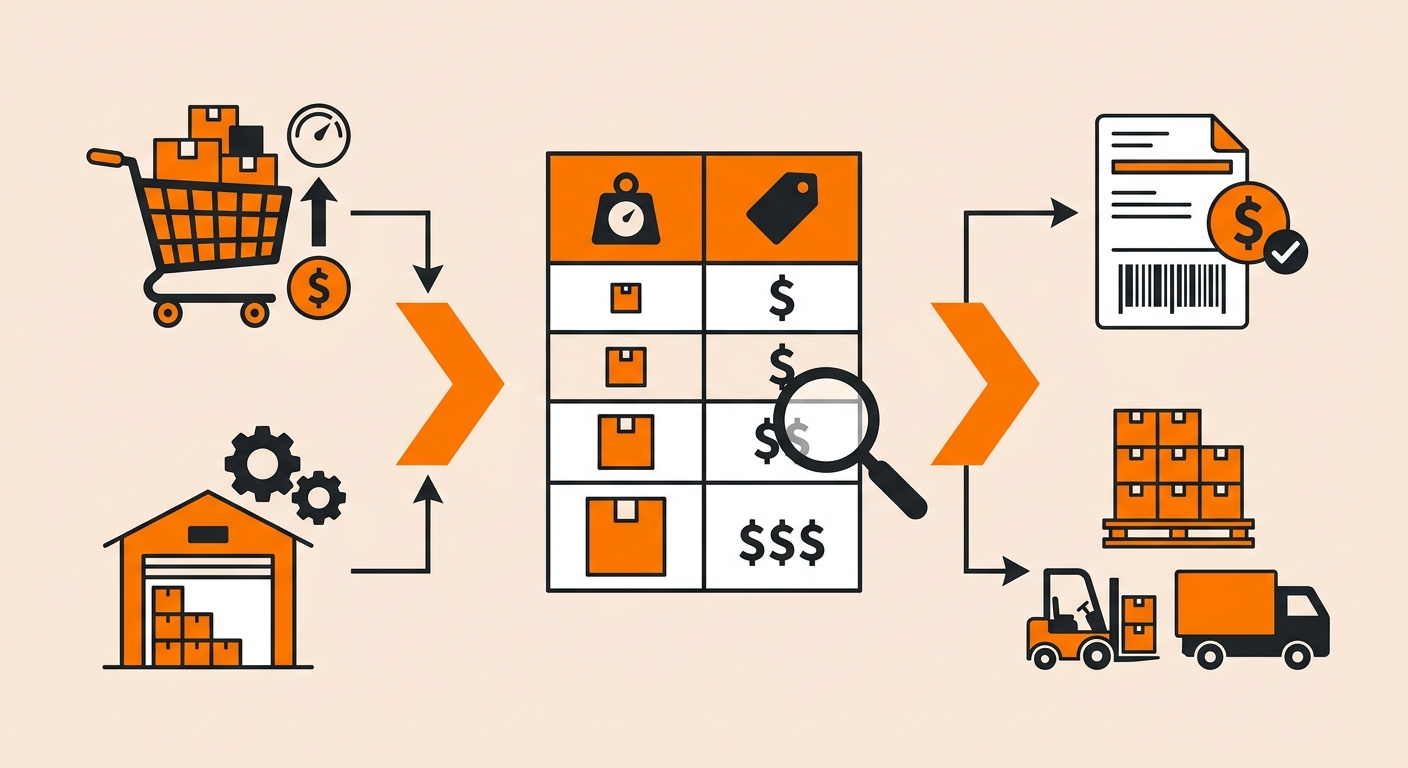
Table rate shipping is a method where you set fixed shipping costs in a lookup table, and the carrier or platform charges the rate that matches a specific combination of conditions, like order weight, destination zone, and cart total, rather than calculating a live quote.
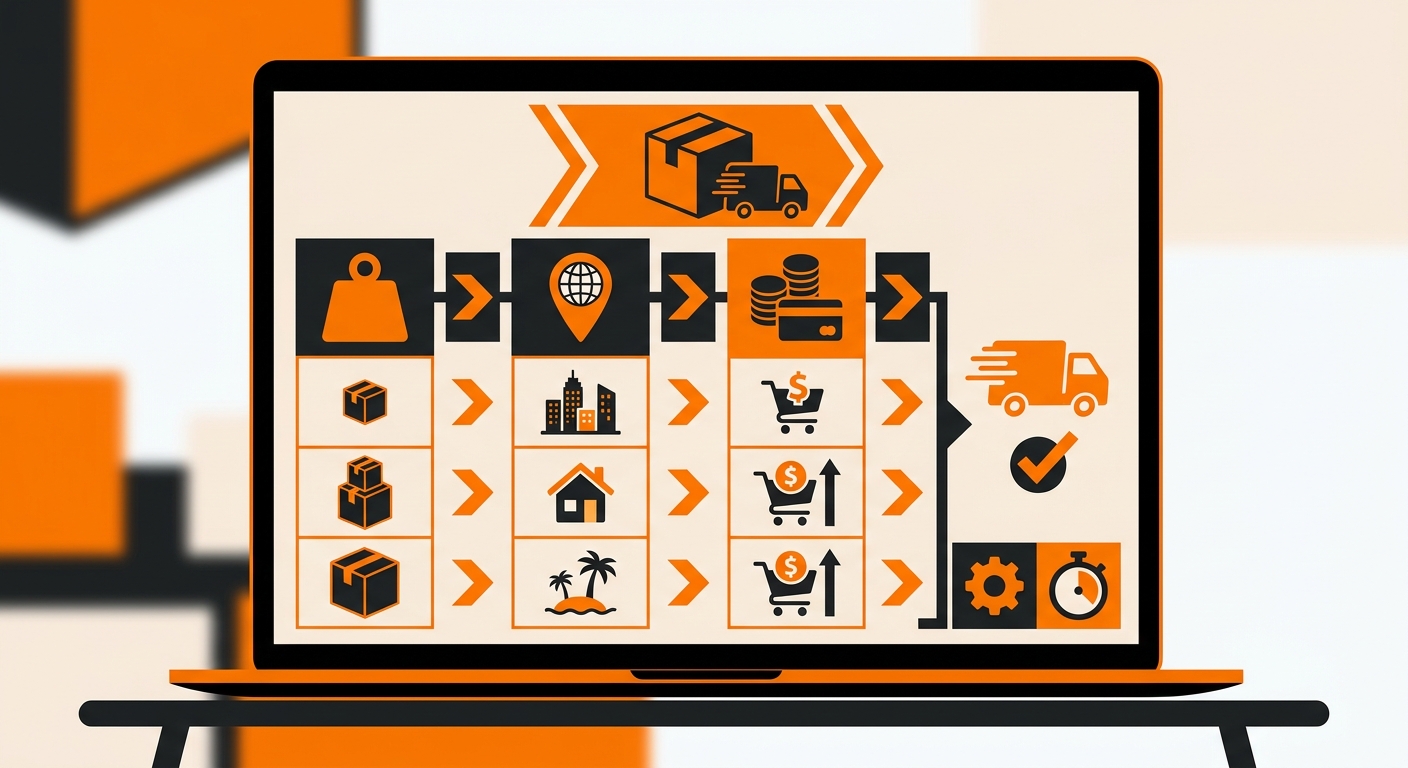
Unlike flat-rate shipping or real-time carrier rates, table rate shipping gives you complete control over what customers pay at checkout.
Why 3PLs and eCommerce Brands Prefer Table Rates
eCommerce brands and 3PL operators use table rates when they need predictable, rule-based pricing that customers see at checkout before an order ships.
It’s especially common for businesses shipping products with wide weight ranges or selling into multiple geographic zones where a flat rate would either eat margin or drive cart abandonment.
The catch: once your table is built, it’s static. If your carrier rates increase mid-year, your table doesn’t update automatically; you’ll need to revise it manually.
How the Lookup Logic Works
When a customer reaches checkout, the system finds the first matching row in your rate table and returns a shipping price. Trigger conditions include:
-
Order weight ranges mapped to a flat fee.
-
Order subtotal thresholds such as free shipping over $75.
-
Destination zone, postal code range, or item count.
Why Table Rate Shipping Matters for Your Bottom Line
Shipping costs are one of the fastest ways to erode margin on an eCommerce order. Table rate shipping gives you direct control by letting you charge based on the exact conditions that drive fulfillment costs: weight, destination zone, or order value, rather than a flat rate that overcharges light orders or bleeds money on heavy ones.
The impact is measurable. Brands switching from flat-rate to tiered rules recover 8–15% of previously absorbed carrier costs on oversized or multi-unit orders. During peak periods like Black Friday, when order weight climbs and carrier surcharges spike, that recovery separates a profitable campaign from a breakeven one.
-
Reduces checkout abandonment from unexpectedly high shipping quotes on small orders
-
Protects margin on heavy or bulky SKUs without penalizing lightweight products
-
Lets your 3PL fulfillment partner align carrier rate tiers to your actual pick-and-pack cost structure
One limitation: table rate logic requires accurate product weight and dimension data. If your SKU data is inconsistent, the rate tables will misfire, and customers will notice.
Key Components of Table Rate Shipping
Rate Matrix
The rate matrix is the core data structure that maps every combination of conditions (weight, destination zone, order value) to a specific shipping cost. Without a well-built matrix, the entire system produces inaccurate quotes at checkout.
Condition Variables
Condition variables are the inputs the system checks against each row in the matrix, typically order weight, item count, cart subtotal, or shipping destination. You define which variable triggers the rate calculation; most stores pick one primary variable per shipping zone.
Shipping Zones
Shipping zones segment your customer base by geography so that a buyer in California and a buyer in Maine don’t pay the same flat rate when carrier costs differ by 30% or more between those regions.
Fallback Rate
A fallback rate catches any order that doesn’t match an existing matrix row, preventing checkout errors when an unusual order combination slips through your defined conditions.
Best Practices for Table Rate Shipping
-
Audit your shipping zones and weight thresholds every quarter to catch rate gaps before customers do.
-
Set a minimum order value tier at your average break-even shipping cost to protect margins on small orders.
-
Avoid building more than six weight brackets per zone; tables with excessive rows create configuration errors and carrier mismatches.
-
Test your rate table against your top 20 SKU combinations before going live to confirm no order profile falls into an unintended tier.
-
Align your table rate cutoffs with your 3PL’s actual dimensional weight billing increments to prevent cost leakage.
-
Review flat-rate exceptions for oversized SKUs separately; never fold them into a general weight-based table.
Ready to Put Table Rate Shipping to Work
Getting table rate shipping configured correctly, with carrier contracts, zone mapping, and weight breaks, is where most brands stall.
Fulfyld gives you the operational infrastructure to treat table rate shipping as a living pricing structure, no dedicated logistics analyst required.
Talk to a Fulfyld fulfillment specialist about table rate shipping today.