

Quick answer: WFS (Walmart Fulfillment Services) is a third-party logistics program operated by Walmart that allows third-party sellers on Walmart Marketplace to outsource their storage, picking, packing, and shipping to Walmart’s own fulfillment network.
How Walmart Fulfillment Services Works

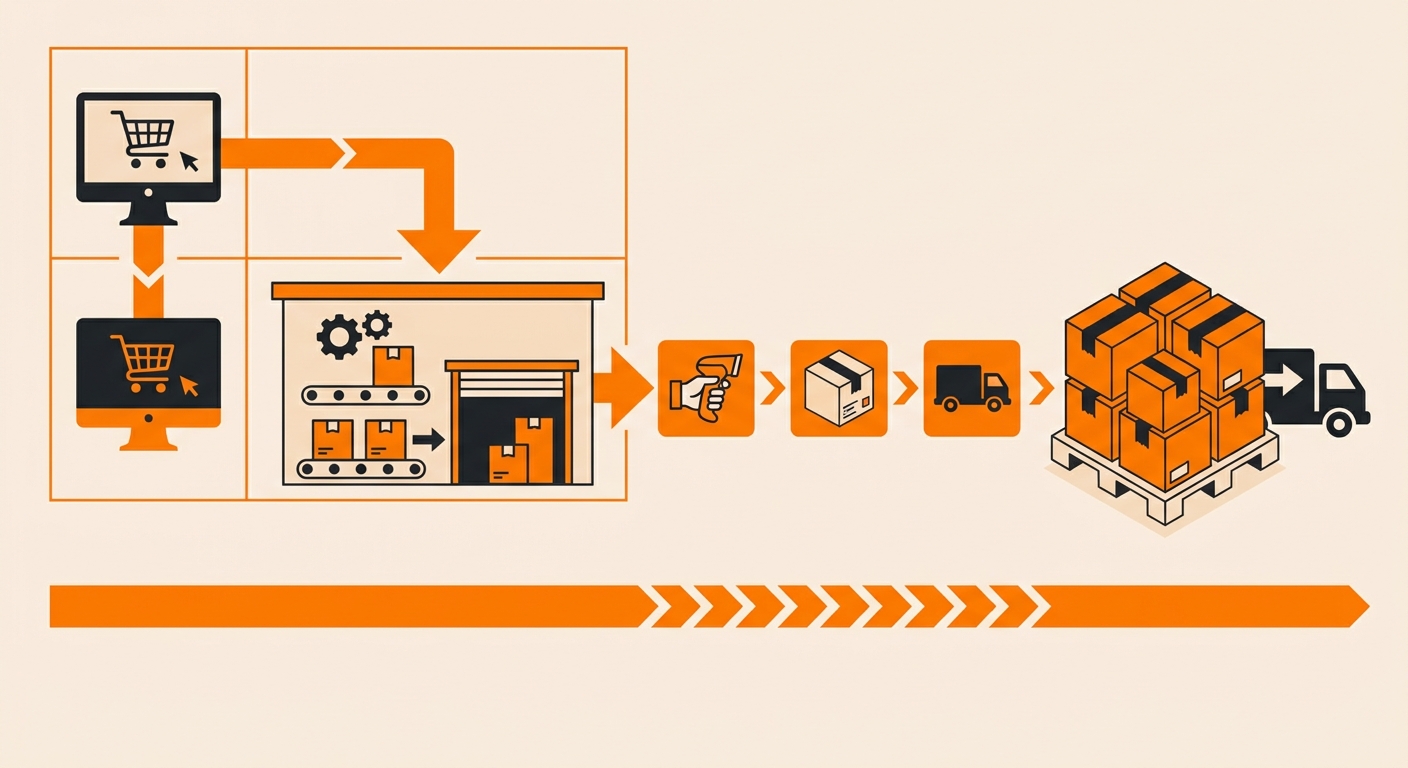
When a seller enrolls in WFS, they send their inventory to a Walmart fulfillment center. From that point, Walmart takes over every step of the order fulfillment process: storing products, picking and packing orders as they come in, and shipping them directly to customers.
Orders fulfilled through WFS are eligible for Walmart’s 2-day delivery badge, which increases visibility and conversion rates on the marketplace. Returns are also managed by Walmart, reducing the operational burden on the seller.
The process follows a straightforward flow:
-
The seller ships inventory to a designated Walmart fulfillment center
-
Walmart stores the products and monitors stock levels
-
When an order is placed, Walmart picks, packs, and ships it
-
Customer service and returns for WFS orders are handled by Walmart
Key Benefits of WFS for eCommerce Sellers

The primary appeal of WFS is access to Walmart’s logistics network and the credibility that comes with it.
Fast shipping eligibility is the most immediate advantage. Products fulfilled through WFS automatically qualify for Walmart’s 2-day delivery promise, which directly impacts search ranking and purchase likelihood on the platform.
Reduced operational overhead is another significant benefit. Sellers don’t need to manage warehouse space, hire fulfillment staff, or coordinate with multiple carriers. Walmart handles all of that within its own infrastructure.
Beyond speed and simplicity, WFS gives sellers access to Walmart’s established carrier relationships and fulfillment technology, resources that would be cost-prohibitive for most small and mid-sized brands to replicate independently.
How WFS Differs from Independent 3PL Providers
The core distinction is control versus convenience. A traditional third-party logistics provider works across multiple sales channels and gives brands more flexibility over branding, packaging, and shipping options. WFS, by contrast, is purpose-built for selling on Walmart Marketplace and operates entirely within Walmart’s ecosystem.
This creates an important tradeoff. WFS simplifies fulfillment significantly for sellers who are channel-focused on Walmart, but it doesn’t support multi-channel fulfillment the way an independent 3PL does. If you sell across Shopify, Amazon, and Walmart simultaneously, you’d need a separate fulfillment strategy for each channel, or a 3PL that can manage all of them from a single inventory pool.
Another key difference is branding. WFS shipments go out in Walmart-branded packaging, which means sellers give up the unboxing experience. Independent 3PLs typically offer custom or white-label packaging options.
When Does WFS Make Sense for a Business?
WFS is best suited for brands that are either Walmart-focused or testing the Marketplace as a growth channel. If a significant portion of your revenue comes from,, or is intended to come from Walmart, plugging into WFS makes operational sense. The 2-day badge, reduced logistics complexity, and lower barrier to entry on the platform are all meaningful advantages.
It becomes a less obvious choice for brands that need multi-channel flexibility, custom fulfillment options, or more direct control over the post-purchase experience. For those businesses, an independent 3PL that integrates with Walmart Marketplace can offer the best of both worlds.