

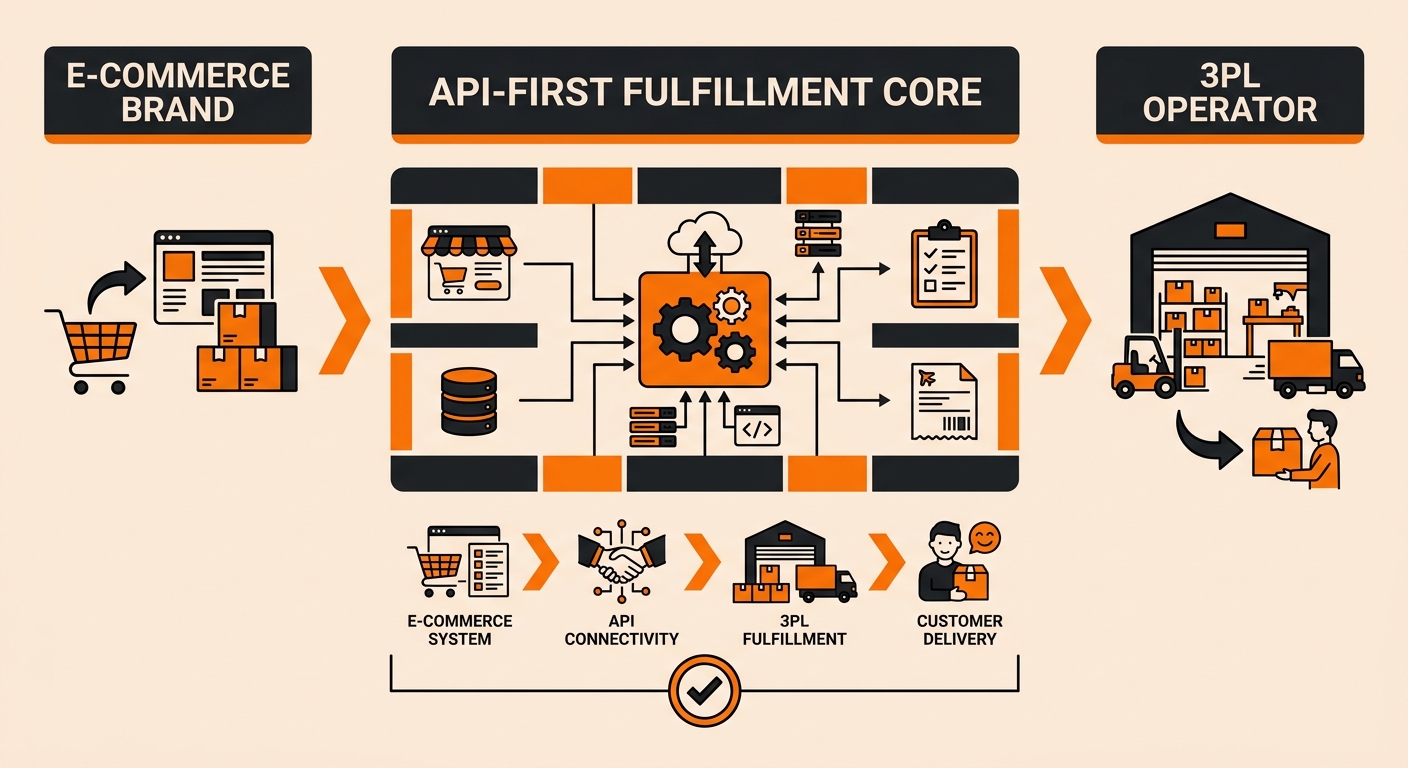
When your 3PL is built API-first, order data moves without human intervention, and your stack stays current without re-implementation every time a sales channel updates its spec.
Why API-First Architecture Matters
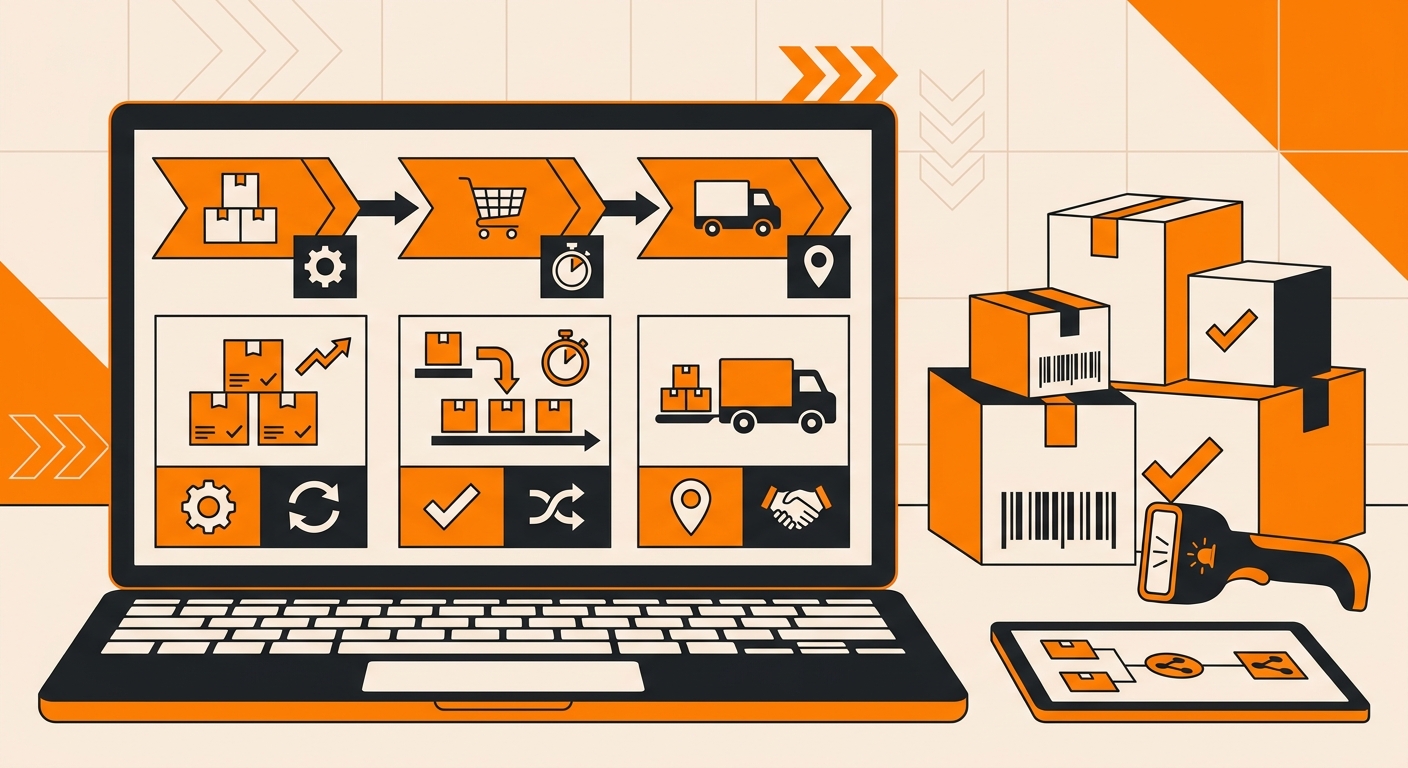
A 3PL that added API access to a legacy WMS is not the same as one built with APIs as the primary integration layer.
-
Legacy systems with API wrappers hit rate limits and queue delays under volume spikes, degrading pick-and-pack throughput
-
Real-time inventory visibility depends on write frequency, not just read access
The architectural difference becomes consequential when scaling or running multiple storefronts.
What API-First Fulfillment Looks Like in Practice
When you connect a Shopify store to an API-first fulfillment provider, a confirmed order triggers an immediate POST request to the WMS- no manual file imports, no batch syncs.
Removing manual re-entry between systems removes the failure point where fulfillment mistakes originate.
How API-First Fulfillment Works
Your store fires an order event via API call.
The moment a customer completes checkout, your OMS or eCommerce platform (Shopify, BigCommerce, custom-built) sends a structured JSON payload to your 3PL’s API endpoint. That payload carries SKU codes, quantities, shipping method, and destination address- no manual data entry, no CSV uploads.
The 3PL’s WMS ingests and validates the order in real time.
The WMS parses the incoming data, checks available inventory against bin locations, and flags any stock discrepancies before a picker ever touches a tote. If a SKU is out of stock, the API returns an error code your OMS can act on immediately.
Pick-and-pack instructions route to the warehouse floor.
The WMS generates a pick task assigned by zone (the most common method) or batch, depending on order volume. High-volume operations above 500 daily orders typically run batch picking to reduce travel time per unit.
Tracking data posts back through the same API connection.
Once the carrier scans the outbound label, the 3PL’s system pushes a tracking number and shipment status back to your platform automatically, triggering customer notifications without any manual hand-off.
Benefits of API-First Fulfillment
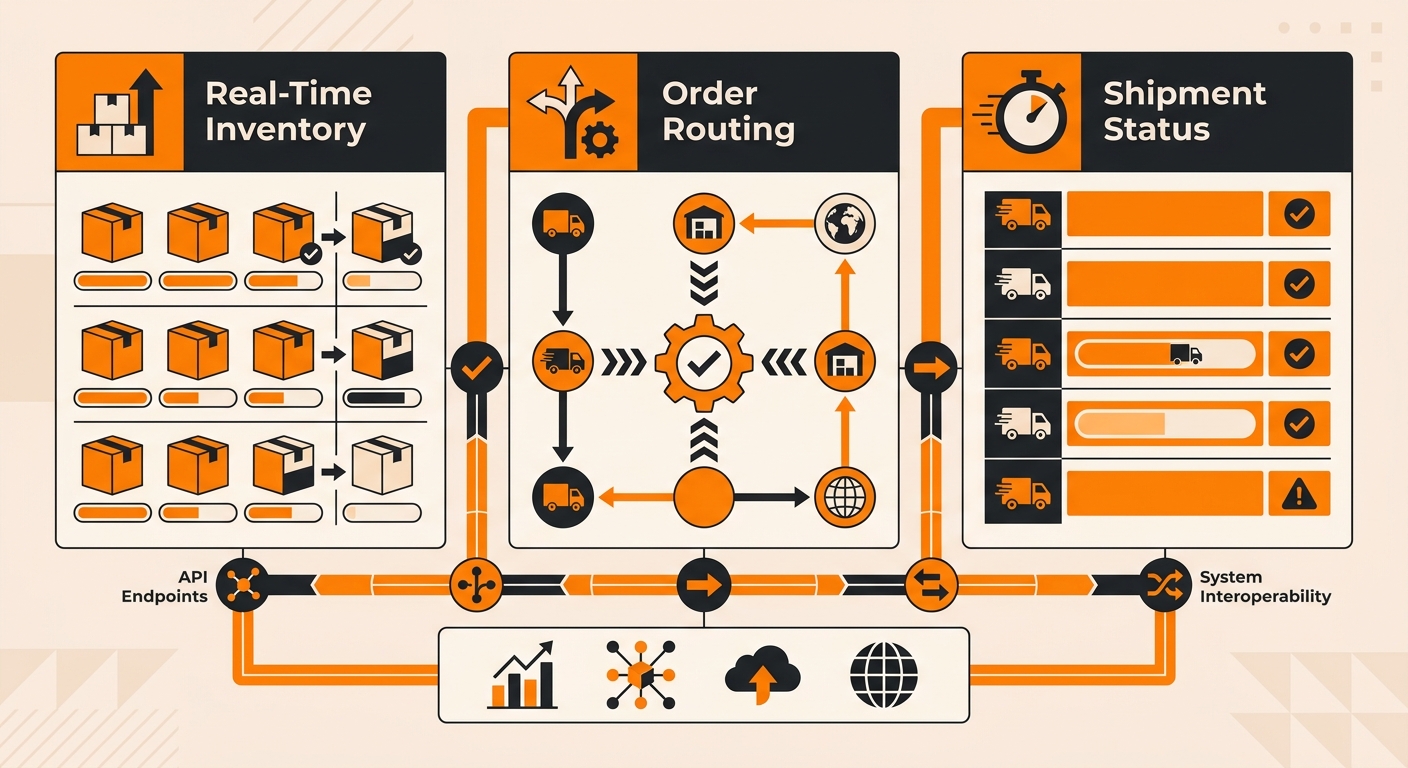
API-first fulfillment helps businesses automate order flow between sales channels and warehouses. Because systems communicate in real time, inventory levels remain more accurate and tracking information updates faster.
As order volume grows, brands can add new storefronts, marketplaces, and software tools without rebuilding their fulfillment process. This makes API-first infrastructure easier to scale than workflows that rely on manual data transfers or batch imports.
Key Components of API-first Fulfillment
Real-Time API Layer
This is the core communication channel between your store, marketplace, or ERP and the fulfillment system. Every order, inventory update, and shipment confirmation moves through this layer; without it, the entire model collapses into manual data entry.
Webhook Event System
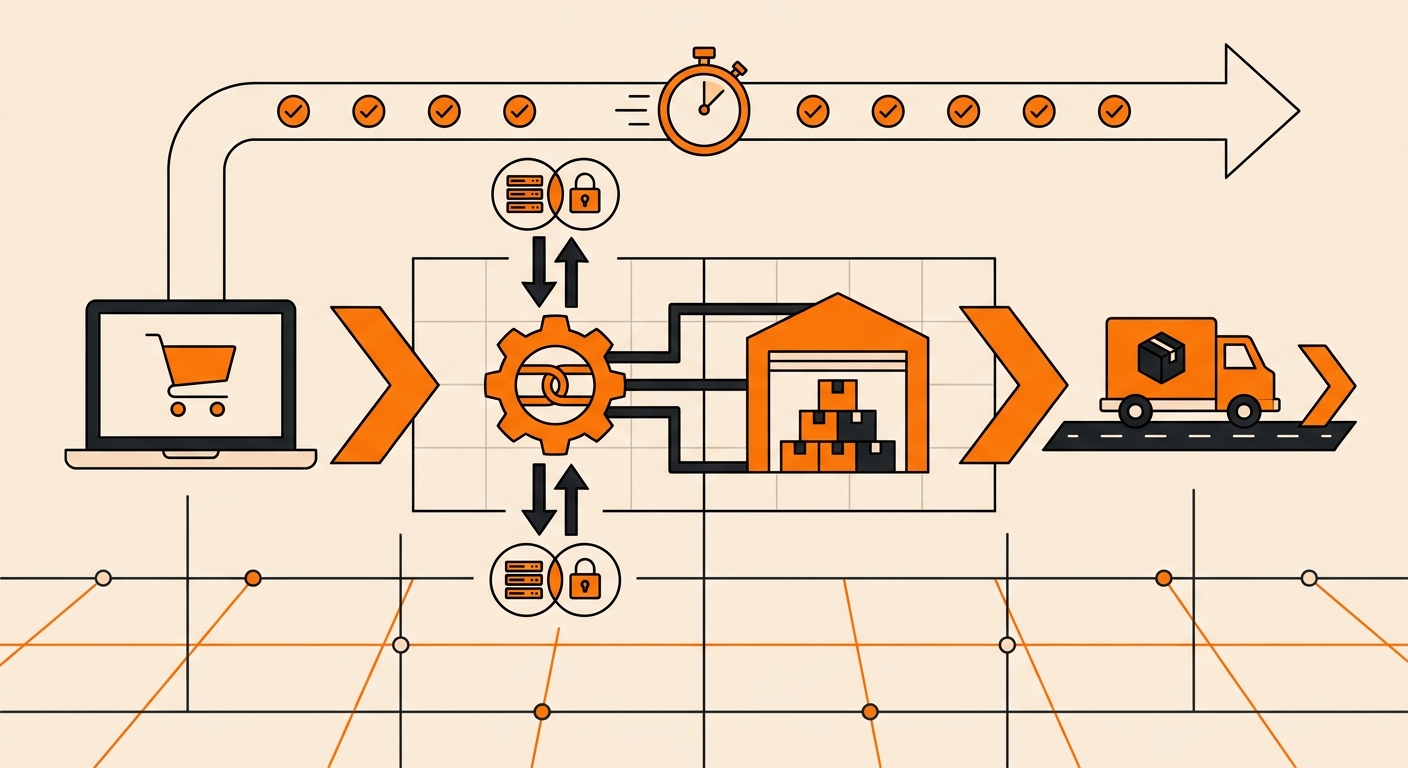
Rather than polling for updates on a schedule, webhooks push data the moment a status changes: an order ships, a SKU drops below threshold, a return is received. This keeps your downstream systems accurate within seconds, not hours.
WMS Integration Points
The warehouse management system must expose endpoints for inventory levels, pick-and-pack triggers, and dock scheduling. Without those endpoints, API calls have nowhere to land and fulfillment execution stays disconnected from order data.
Ready to Build on an API-First Fulfillment Partner?
Finding a 3PL that truly operates with an API-first approach is another challenge. Many fulfillment providers add integrations as an afterthought, leaving teams to deal with data gaps, sync delays, and manual workarounds.
Fulfyld is built for eCommerce brands that need real-time inventory visibility, reliable order routing, and direct system-to-system connectivity. Whether you’re running a DTC subscription business, managing a large SKU catalog, or supporting B2B fulfillment, your technology stack should scale alongside your order volume.
Talk to a Fulfyld fulfillment specialist to learn how API-first fulfillment can streamline your operations and support future growth.