

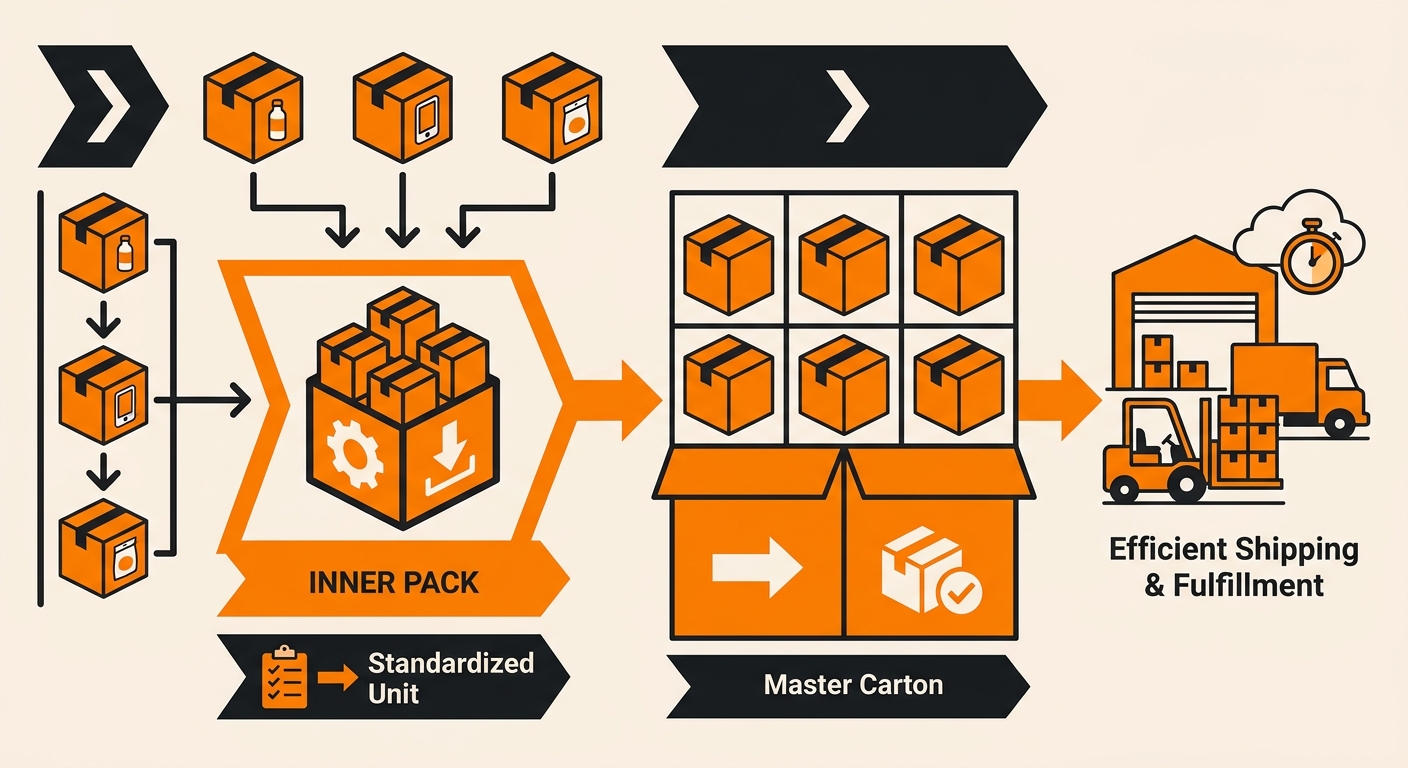
How the Master-Carton-to-Each Hierarchy Works
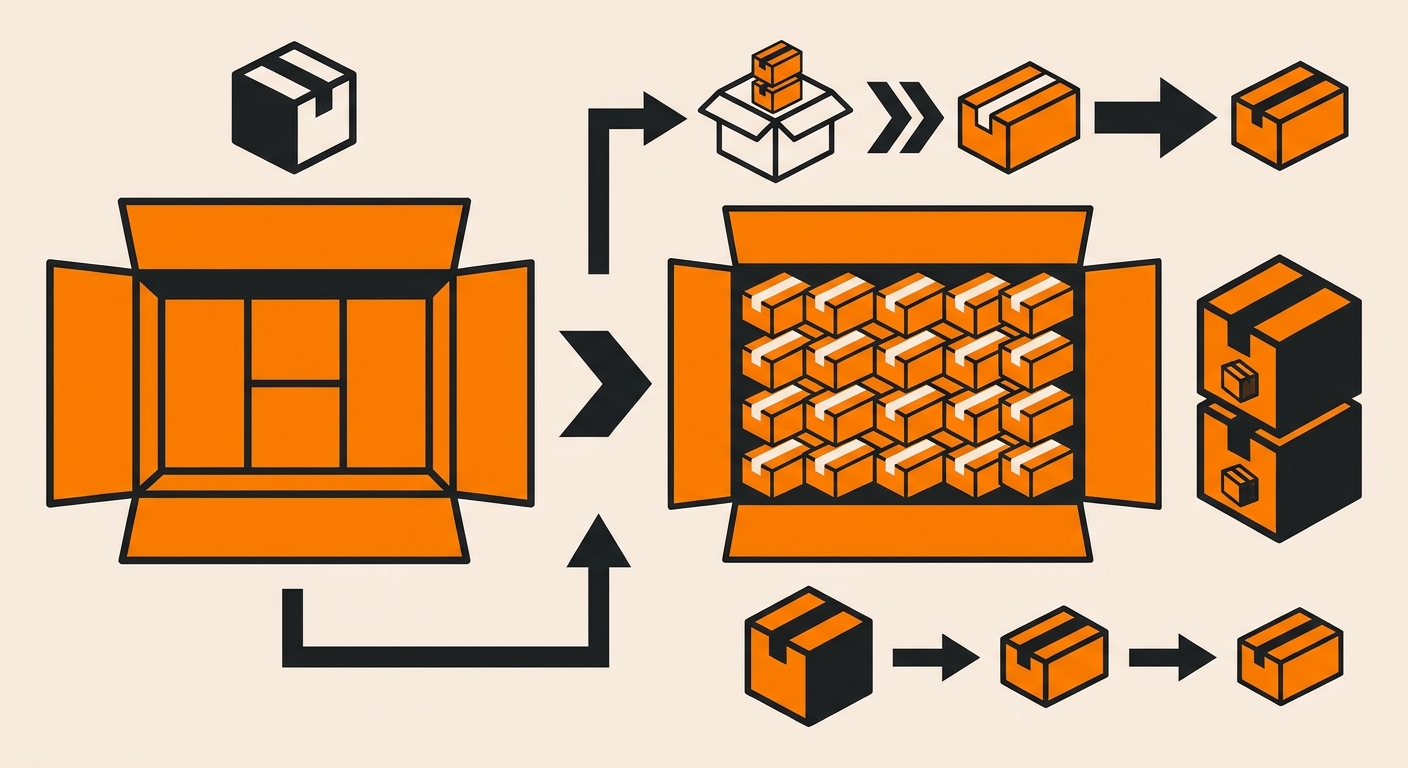
Most consumer goods ship in a three-tier structure: master carton → inner pack → each.
The master carton is the large outer box used to transport and receive inventory. Inside it, you’ll find a set number of inner packs. Each inner pack then contains a fixed quantity of individual units. This ratio is called the pack configuration, and it’s usually expressed as something like 6×4, meaning 6 inner packs per master carton, 4 eaches per inner pack, for a total of 24 units per case.
Knowing the full breakdown matters because most 3PLs and retail buyers receive, count, and bill inventory based on master carton quantities. If your pack configuration is wrong or unlabeled, receiving errors and inventory discrepancies follow quickly.
Key Roles of the Inner Pack
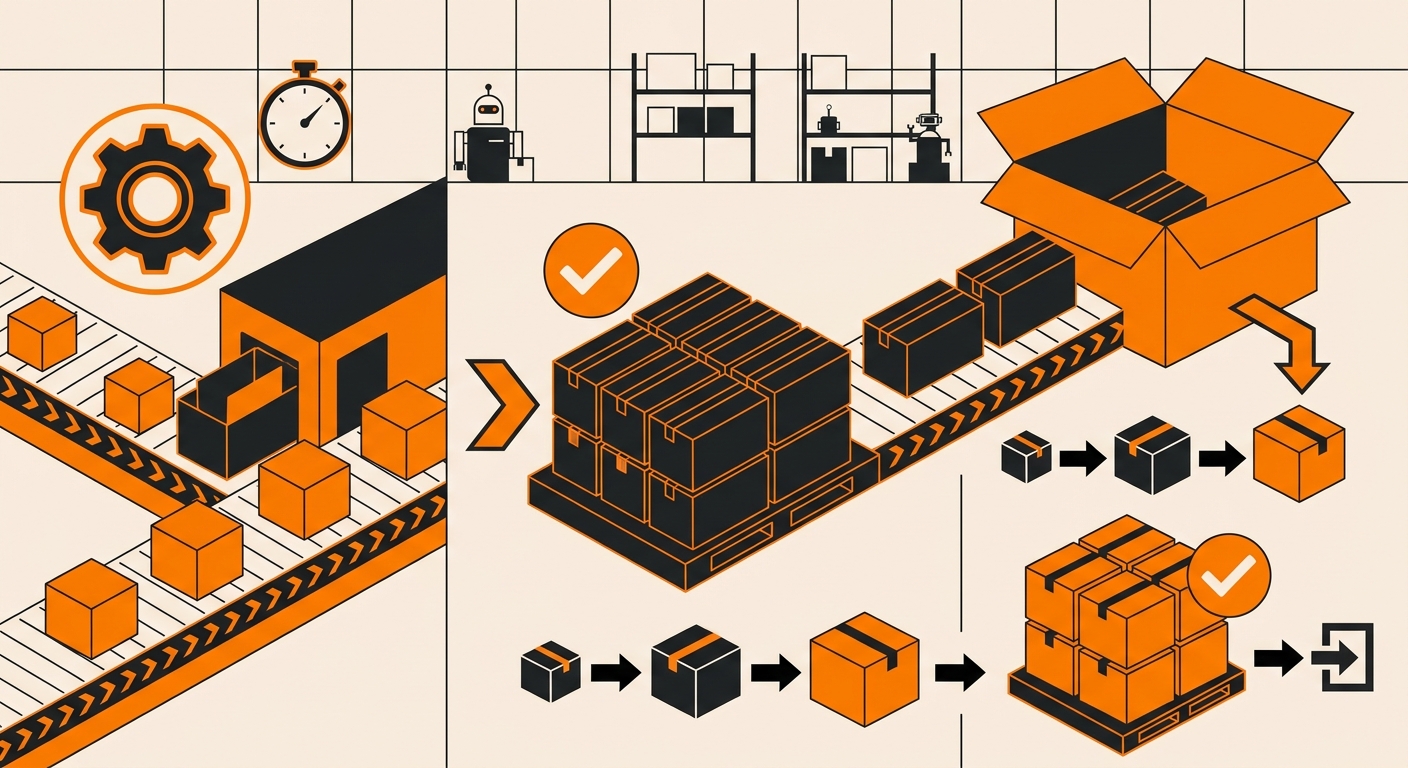
Inner packs serve different functions depending on the sales channel:
-
Retail replenishment: Brick-and-mortar stores often order by inner pack rather than full master carton, especially for high-velocity SKUs. The inner pack becomes the minimum order unit on the retail floor.
-
Display-ready packaging:: Some inner packs double as display units and are placed directly on shelves without additional handling.
-
Warehouse efficiency: Breaking down a master carton into inner packs reduces pick time for partial-case orders, especially in pick and pack fulfillment operations where individual eaches need to be pulled quickly.
How Inner Packs Differ from Eaches and Master Cartons
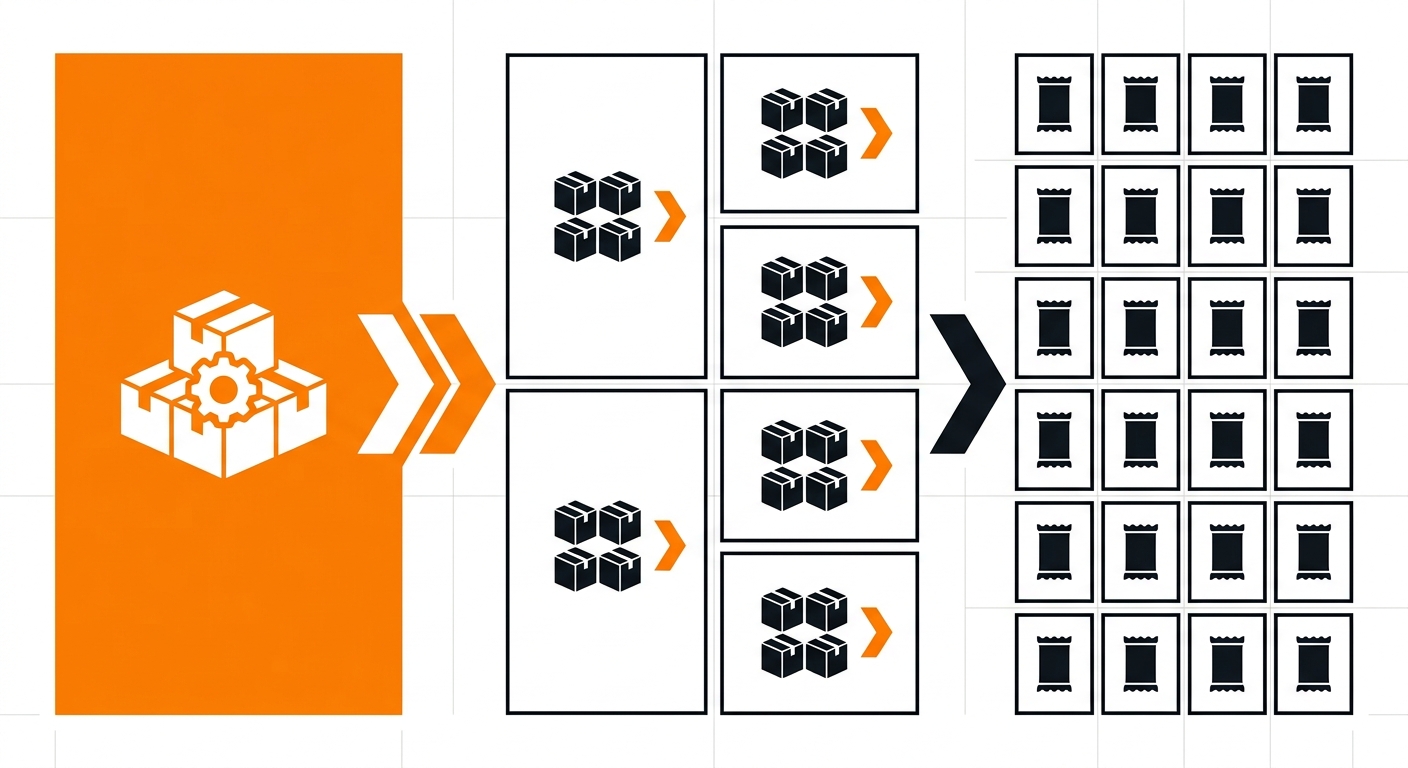
The distinction matters most during receiving and order processing.
An each is the individual consumer unit, the item a customer buys. A master carton is the bulk shipping box. An inner pack is the intermediate grouping that makes partial-case sales and mixed-channel distribution possible.
Where it gets operationally important: some fulfillment systems track inventory only at the each level, others at the inner pack level. If your warehouse management system isn’t configured to recognize inner packs as a distinct unit of measure, you can end up with inaccurate stock counts, mislabeled cartons, and receiving delays.
When Does the Inner Pack Configuration Actually Matter?
For brands selling exclusively DTC through a single channel, inner packs are often irrelevant, product ships as eaches from a 3PL directly to the consumer.
The inner pack becomes critical when:
-
You’re selling into retail or wholesale, where buyers specify order quantities by inner pack;
-
You’re prepping for Amazon FBA, which has strict carton content and label requirements that reference inner pack quantities;
-
Your B2B fulfillment involves EDI purchase orders that define min/max order quantities at the inner pack level;
-
You’re dealing with multi-SKU products where different colorways or sizes are grouped within one inner pack.
In all of these scenarios, your pack configuration needs to be defined, documented, and communicated to your fulfillment partner before inventory arrives, not during receiving.
Inner Packs and Inventory Accuracy
Getting the inner pack configuration right upstream prevents a cascade of downstream problems. Misconfigured pack specs mean a master carton arrives with an unexpected unit count, which creates receiving exceptions, delays putaway, and throws off your inventory records.
For brands managing multiple SKUs across retail and DTC channels, clearly defined inner pack specs,, including dimensions, weight and unit quantity, are a basic requirement for clean inventory management. Fulfillment partners who work across both channels depend on that data to route, count, and store product without manual intervention at the dock.