

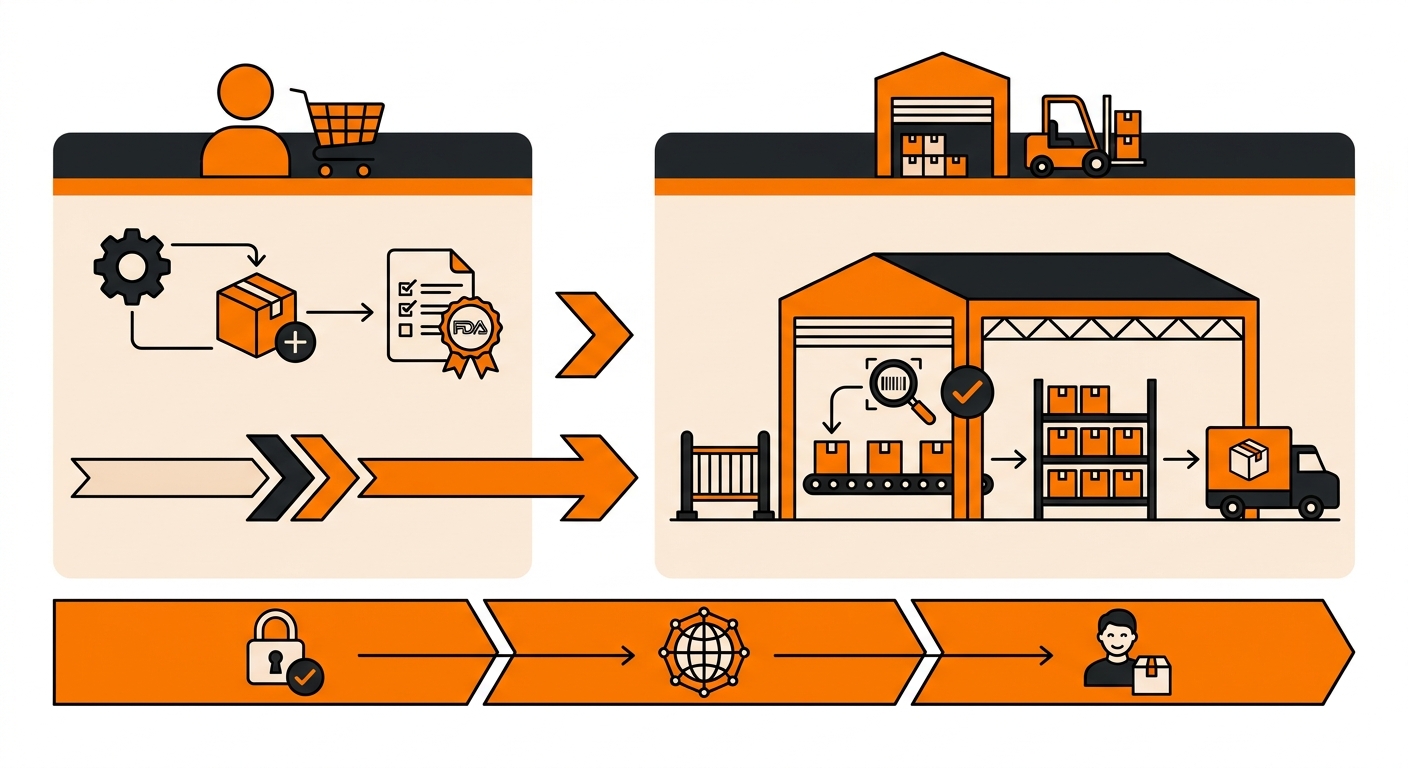
Quick answer: FDA registration is the process by which facilities that manufacture, process, pack, or store certain regulated products formally notify the U.S. Food and Drug Administration of their operations. It is a federal compliance requirement that establishes your facility in the FDA’s official database and makes your business subject to inspection and oversight.

What FDA Registration Actually Covers
The FDA regulates a wide range of product categories, and registration requirements vary depending on what you sell. The most common categories that require registration include:
-
Food and beverages: domestic and foreign facilities that manufacture, process, pack, or hold food for human or animal consumption;
-
Dietary supplements: treated as a subcategory of food, subject to the same facility registration rules under the Food Safety Modernization Act (FSMA);
-
Cosmetics: under the Modernization of Cosmetics Regulation Act (MoCRA), effective since 2023, cosmetic facilities and products must now be registered and listed with the FDA;
-
Over-the-counter drugs: products like sunscreen, acne treatments, or pain relievers sold without a prescription;
-
Medical devices: from wearables to diagnostic tools, most device establishments require registration.
Registration is typically done through the FDA’s online portal and must be renewed or updated on a regular basis. Food facilities, for example, renew biennially.
How FDA Registration Differs from FDA Approval
This is one of the most common points of confusion. Registration and approval are not the same thing.
Registering with the FDA means you’ve notified the agency that your facility exists and what it produces. It does not mean the FDA has reviewed or endorsed your product. FDA approval, which applies to items like new drugs or certain medical devices, is a separate, far more rigorous process that involves clinical data, safety reviews, and formal authorization.
Claiming your product is “FDA approved”” when it’s only registered is a compliance violation that can result in warning letters, product recalls, or legal action.
When eCommerce Brands Need FDA Registration

Not every online seller needs to register, but the threshold is lower than many founders assume. If you’re selling any of the following directly to U..S. consumers, FDA registration likely applies to you:
-
Supplements (protein powders, vitamins, herbal products)
-
Skin care and cosmetics manufactured or imported into the U.S.
-
Food products, including packaged snacks, beverages, or specialty foods
-
Medical or wellness devices, even low-risk ones
Brands sourcing products from overseas manufacturers also need to verify that those facilities are properly registered, importing from an unregistered foreign facility puts your brand at customs risk and potential detention of shipments.
The registration obligation typically falls on the facility producing the goods, not the seller. But if you’re a brand that also manufactures, co-packs, or relabels products, your facility may be required to register.
FDA Registration and eCommerce Fulfillment
For growing eCommerce brands, FDA registration has practical implications that go beyond legal compliance. Third-party logistics providers that handle regulated products, particularly supplements, food, or cosmetics, need to understand your compliance status when managing your inventory.
Some product categories require specific storage and handling conditions that intersect with FDA good manufacturing practices. Working with a 3PL experienced in regulated goods means your fulfillment operations stay aligned with the compliance framework your products are already subject to, reducing the risk of issues that start in the warehouse and end up affecting your customers.