

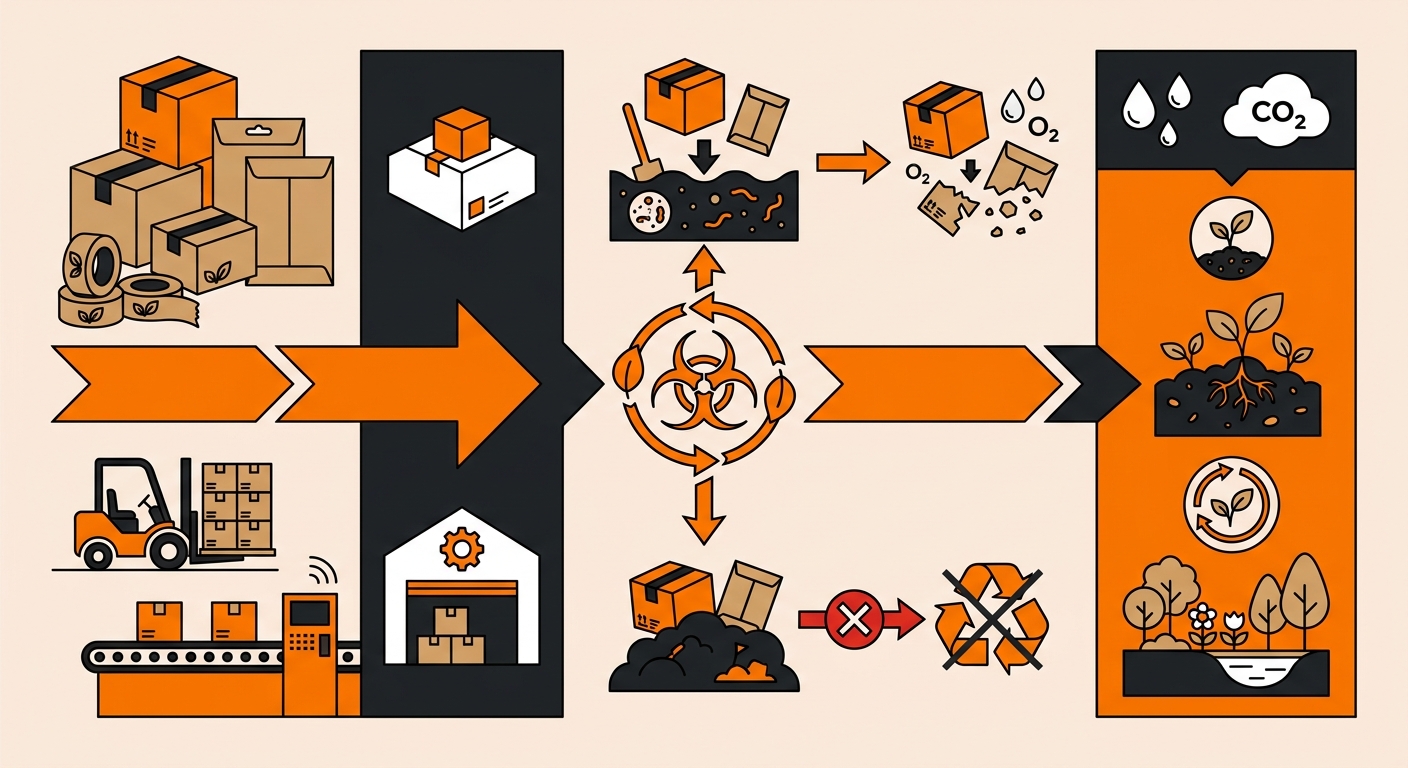
Quick answer: Biodegradable packaging refers to packaging materials that break down naturally through biological processes, primarily decomposition by bacteria, fungi, or other microorganisms, into water, carbon dioxide, and organic matter.
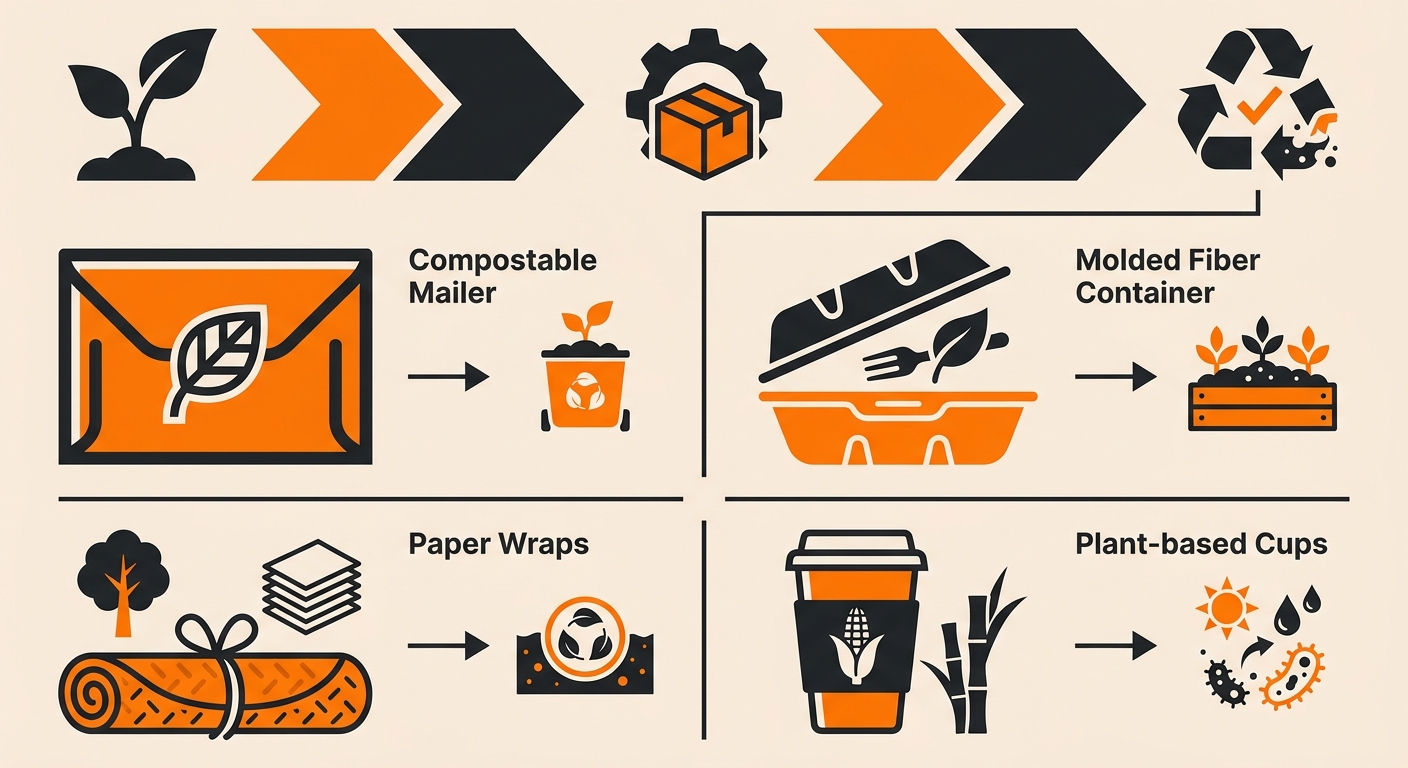
Common Biodegradable Packaging Materials
Not all biodegradable packaging behaves the same way. The material type determines how quickly it breaks down, under what conditions, and how it should be handled after use.
The most widely used options include:
-
Paper and cardboard: widely recyclable and compostable under most conditions. The default choice for eCommerce outer packaging.
-
Plant-based plastics (PLA): derived from corn starch or sugarcane. Biodegradable only in industrial composting facilities, not home bins or landfills.
-
Mushroom (mycelium) packaging: grown from agricultural waste and mycelium. Fully home-compostable and used as a protective void-fill alternative.
-
Seaweed-based materials: an emerging category used for sachets and wraps, breaks down within weeks in the right conditions.
-
Compostable mailers: made from PBAT or PLA blends, certified to break down in industrial composting environments within a defined timeframe.
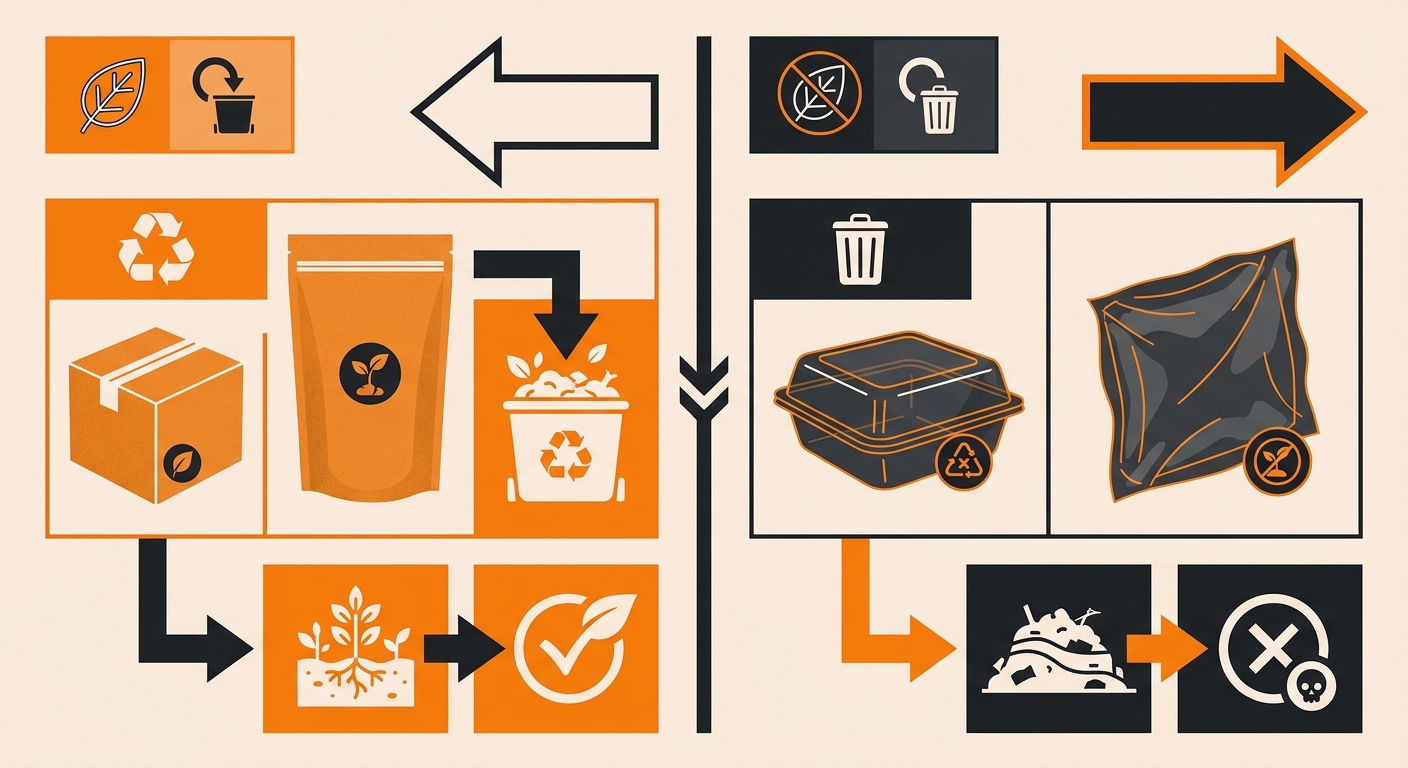
The key distinction between biodegradable and compostable is specificity: compostable materials meet defined standards for breakdown time and residue safety, while biodegradable is a broader term with less regulatory precision.
How Biodegradable Claims Are Regulated
This is where things get complicated and where brands frequently run into compliance issues.
In the United States, the FTC Green Guides govern how environmental claims can be made on packaging. Under these guidelines, a blanket “biodegradable” claim is problematic unless the product will completely break down within a reasonably short period of time under typical disposal conditions. Because most packaging ends up in landfills where biodegradation is severely limited, unqualified biodegradability claims can be considered deceptive.
In the EU, the Green Claims Directive (proposed and advancing through legislation) requires that environmental claims be substantiated, specific, and independently verified before use. Vague terms like “eco-friendly” or “green” are being phased out in favor of claims backed by recognized certifications.
For compostability specifically, look for third-party certifications such as TÜV OK Compost, BPI Certification (US), or EN 13432 (EU standard). These indicate the material has been tested and meets defined breakdown criteria under industrial or home composting conditions.
What eCommerce Brands Need to Understand
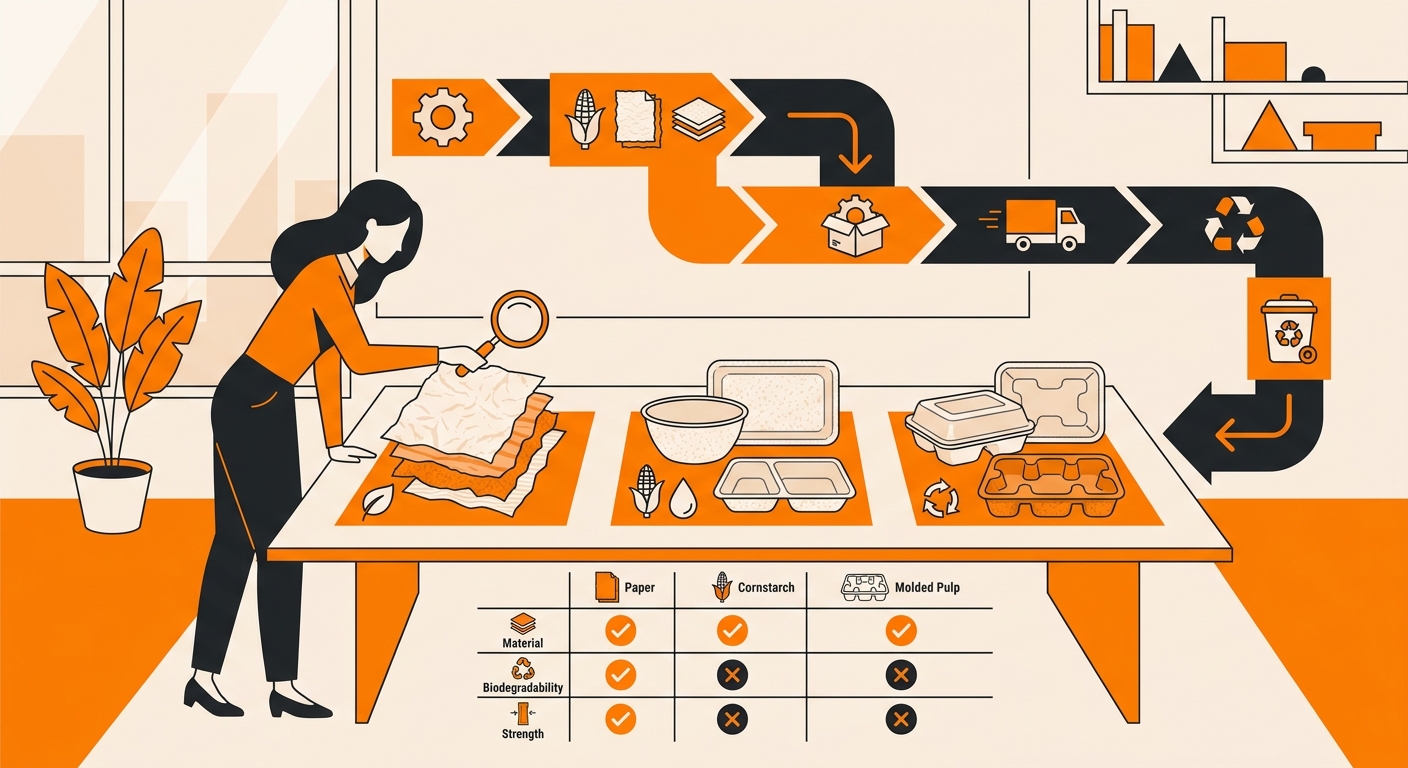
For brands shipping physical products, biodegradable packaging decisions affect more than sustainability optics. They impact consumer packaged goods fulfillment operations, cost structures, and legal exposure.
A few practical considerations:
Material compatibility matters. Some biodegradable materials have different moisture resistance, structural integrity, or storage requirements compared to conventional packaging. This affects how they perform in a warehouse or during pick and pack fulfillment operations.
Claiming “biodegradable”, on your packaging without certification or qualification exposes your brand to greenwashing scrutiny, particularly as regulators tighten enforcement on both sides of the Atlantic.
Consumer confusion is real. Many customers assume biodegradable means compostable at home, when the actual requirement may be an industrial composting facility, something most customers don’t have access to.
Biodegradable Packaging and Sustainable Fulfillment Operations
For eCommerce brands evaluating sustainable packaging, the most defensible approach is to use materials with verified certifications, make specific rather than vague claims, and ensure your packaging choices are operationally viable throughout the supply chain.
Understanding what biodegradable actually means, and what it doesn”t, keeps your brand credible with customers and compliant with an evolving regulatory landscape.